The Princess Bride Budget
 AdventureFamilyFantasyComedyRomance1h 39m
Updated
Synopsis
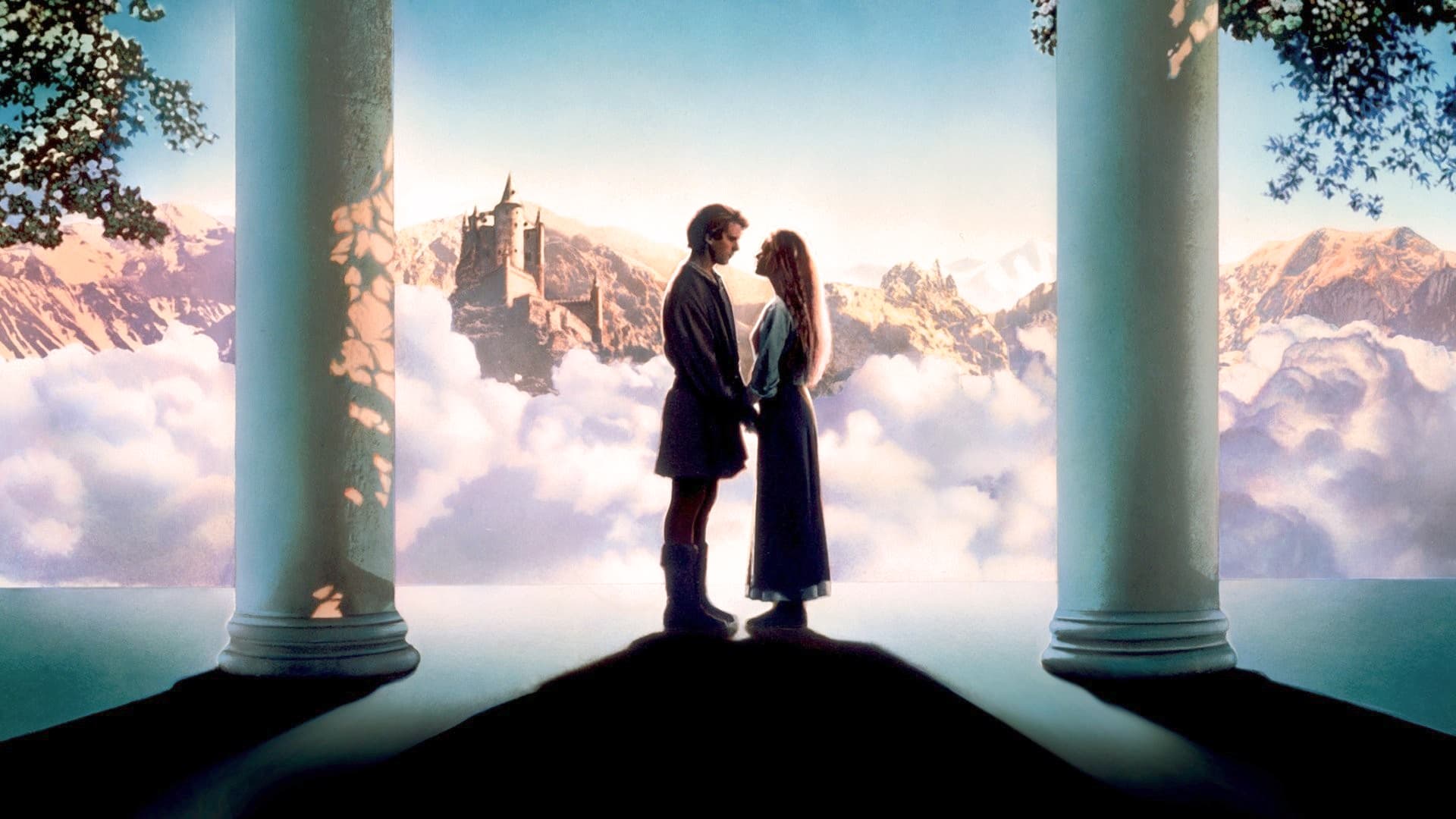
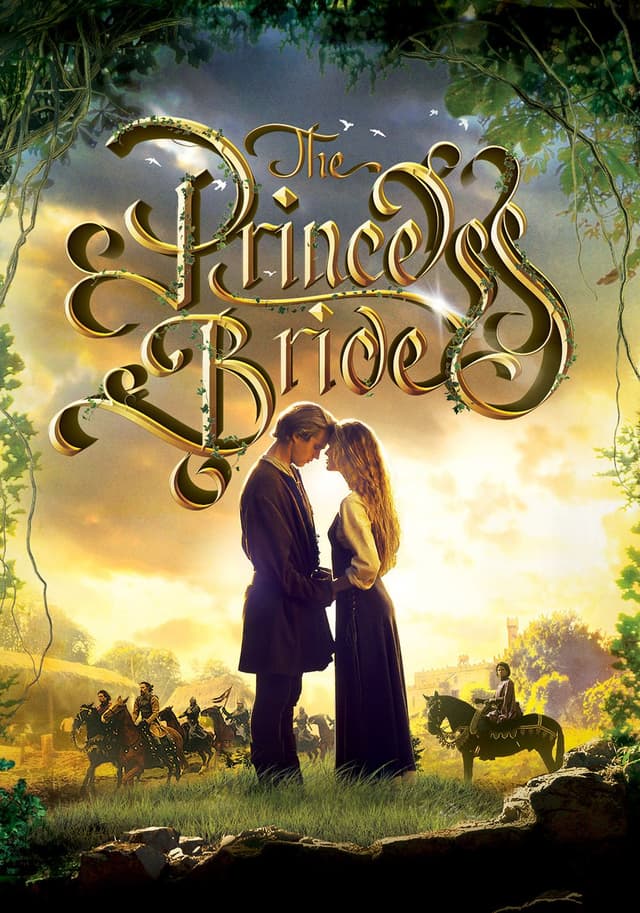
In this enchantingly cracked fairy tale, the beautiful Princess Buttercup and the dashing Westley must overcome staggering odds to find happiness amid six-fingered swordsmen, murderous princes, Sicilians and rodents of unusual size. But even death can't stop these true lovebirds from triumphing.
What is the budget of The Princess Bride?
"The Princess Bride," an adventure released in 1987, was directed by Rob Reiner and stars Cary Elwes, Robin Wright. The production budget was $16,000,000, placing it in the low-budget range for adventure productions of the 1980s.
Key Budget Allocation Categories
While specific budget breakdowns are not publicly available, typical cost drivers for an adventure production like this include:
- Stunts, Action Sequences & Visual Effects: Action films allocate a substantial portion of their budget to choreographing and executing practical stunts, pyrotechnics, and CGI-heavy sequences.
- Above-the-Line Talent (Cast & Director): A-list talent commands significant upfront fees plus backend participation.
- Production Design, Sets & Locations: Action films frequently require multiple international shooting locations, large-scale set construction, vehicle acquisitions and modifications, and specialized equipment , all of which drive production costs well above those of dialogue-driven genres.
- Casting: Reiner had quickly decided on Cary Elwes for Westley, based on his performance in Lady Jane; however, during the casting period in Los Angeles, Elwes was in West Germany on set for Maschenka.
What were the major cost factors in The Princess Bride?
Several factors contributed to the overall production costs of "The Princess Bride."
- Stunts: Stunts, Action Sequences & Visual Effects is one of the primary cost drivers in adventure productions of this scale.
- Above-the-Line Talent (Cast: Above-the-Line Talent (Cast & Director) is one of the primary cost drivers in adventure productions of this scale.
- Production Design: Production Design, Sets & Locations is one of the primary cost drivers in adventure productions of this scale.
How Does The Princess Bride's Budget Compare to Similar Films?
At $16,000,000, The Princess Bride sits in the low-budget range. Here is how it compares to productions with a similar budget:
- Nobody (2021): Budget $16,000,000, Worldwide Gross $57,512,470
- Thelma & Louise (1991): Budget $16,000,000, Worldwide Gross $45,361,000
- 10 Things I Hate About You (1999): Budget $16,000,000, Worldwide Gross $53,478,166
- Bones and All (2022): Budget $16,000,000, Worldwide Gross $15,234,907
- When Harry Met Sally... (1989): Budget $16,000,000, Worldwide Gross $92,823,546
The median budget for wide-release adventure films in the era ranges from $30 to 80M for mid-budget to $150M+ for tentpoles.
The Princess Bride Box Office Performance
"The Princess Bride" earned $30,857,814 domestically and $30,900,000 worldwide at the box office. Against a production budget of $16,000,000, the film showed modest profitability in theatrical release.
A film typically needs to earn approximately twice its production budget to cover marketing and distribution costs. For "The Princess Bride," that break-even threshold was roughly $32,000,000. With worldwide earnings of $30,900,000, the film fell short of that threshold but recouped its production costs in theatrical release.
Box Office Breakdown
The Princess Bride

At 93.1%, "The Princess Bride" returned its production investment but margin was tight after marketing and distribution costs.
The Princess Bride Production History
Reiner had quickly decided on Cary Elwes for Westley, based on his performance in Lady Jane; however, during the casting period in Los Angeles, Elwes was in West Germany on set for Maschenka. Reiner flew out to West Berlin to meet with Elwes, confirming his appropriateness for the role. While Reiner and casting director Jane Jenkins auditioned other actors for Westley, they knew Elwes was perfect for the part.
The film was shot in various locations in England and Ireland in late 1986: * Carl Wark, Sheffield, England * Burnham Beeches, Buckinghamshire, England * Lathkill Dale where it meets Cales Dale (the "battle of wits" scene) * Cave Dale, Castleton, Derbyshire, England * Bradley Rocks and Robin Hood's Stride, Birchover, Derbyshire, England * Cliffs of Moher, County Clare, Ireland (for the Cliffs of Insanity) * Haddon Hall, Bakewell, Derbyshire, England * Penshurst Place, Kent, England The framing story scenes, the last to be filmed, were shot at Shepperton Studios in Surrey. Elwes and Patinkin learned to fence (both left- and right-handed) for the film, and they performed the combat scenes themselves, with the exception of two somersaults performed by stunt doubles. They were trained by fencing instructor Bob Anderson and stunt coordinator Peter Diamond, both of whom had also worked on training the actors in the original Star Wars trilogy.
The original soundtrack album was composed by Mark Knopfler of Dire Straits. It was released by Warner Bros. Records in the United States and Vertigo Records internationally in November 1987.
Awards and Recognition
Nominated for 1 Oscar. 7 wins & 11 nominations total
- Hugo Award for Best Dramatic Presentation
Critical Reception
The Princess Bride was critically acclaimed upon release. On Rotten Tomatoes, The Princess Bride holds a 93% approval rating based on 147 reviews. The site's consensus states, "A delightfully postmodern fairy tale, The Princess Bride is a deft, intelligent mix of swashbuckling, romance, and comedy that takes an age-old damsel-in-distress story and makes it fresh." On Metacritic, the film holds a score of 78 out of 100, based on 20 critics, indicating "generally favorable reviews".
Frequently Asked Questions
How much did it cost to make The Princess Bride (1987)?
The production budget was $16,000,000, covering principal photography, cast and crew salaries, locations, sets, post-production, and music. Marketing and distribution (P&A) costs are estimated at an additional $8,000,000 - $12,800,000, bringing the total studio investment to approximately $24,000,000 - $28,800,000.
How much did The Princess Bride (1987) earn at the box office?
The Princess Bride grossed $30,857,814 domestic, $42,186 international, totaling $30,900,000 worldwide.
Was The Princess Bride (1987) profitable?
The film did not break even theatrically, earning $30,900,000 against an estimated $40,000,000 needed. Ancillary revenue may have improved the picture.
What were the biggest costs in producing The Princess Bride?
The primary cost drivers were above-the-line talent (Cary Elwes, Robin Wright, Mandy Patinkin); visual effects, practical stunts, and A-list talent compensation.
How does The Princess Bride's budget compare to similar adventure films?
At $16,000,000, The Princess Bride is classified as a low-budget production. The median budget for wide-release adventure films in the era ranges from $30 - 80M for mid-budget to $150M+ for tentpoles. Comparable budgets: Nobody (2021, $16,000,000); Thelma & Louise (1991, $16,000,000); 10 Things I Hate About You (1999, $16,000,000).
Did The Princess Bride (1987) go over budget?
There are no widely reported accounts of significant budget overruns for this production. However, studios rarely disclose precise budget overrun figures publicly. The reported production budget reflects the final estimated cost.
What was the return on investment (ROI) for The Princess Bride?
The theatrical ROI was 93.1%, calculated as ($30,900,000 − $16,000,000) ÷ $16,000,000 × 100. This measures gross revenue against production budget only - it does not account for P&A or exhibitor shares.
What awards did The Princess Bride (1987) win?
Nominated for 1 Oscar. 7 wins & 11 nominations total.
Who directed The Princess Bride and who were the key crew members?
Directed by Rob Reiner, written by William Goldman, shot by Adrian Biddle, with music by Mark Knopfler, edited by Robert Leighton.
Where was The Princess Bride filmed?
The Princess Bride was filmed in United States of America. The film was shot in various locations in England and Ireland in late 1986: * Carl Wark, Sheffield, England * Burnham Beeches, Buckinghamshire, England * Lathkill Dale where it meets Cales Dale (the "battle of wits" scene) * Cave Dale, Castleton, Derbyshire, England * Bradley Rocks and Robin Hood's Stride, Birchover, Derbyshire, England * Cliffs of Moher, County Clare, Ireland (for the Cliffs of Insanity) * Haddon Hall, Bakewell, Derbyshire, England * Penshurst Place, Kent, England The framing story scenes, the last to be filmed, were shot at Shepperton Studios in Surrey. Elwes and Patinkin learned to fence (both left- and right-handed) for the film, and they performed the combat scenes themselves, with the exception of two somersaults performed by stunt doubles.
Filmmakers
The Princess Bride

Official Trailer
Build budgets like this one in Saturation
Start from an industry-standard feature film template, import the schedule and rates you already have, and let the cost report keep itself current as you spend. Real-time collaboration, no spreadsheets.