My Neighbor Totoro Budget
 FantasyAnimationFamily1h 26m
Updated
Synopsis
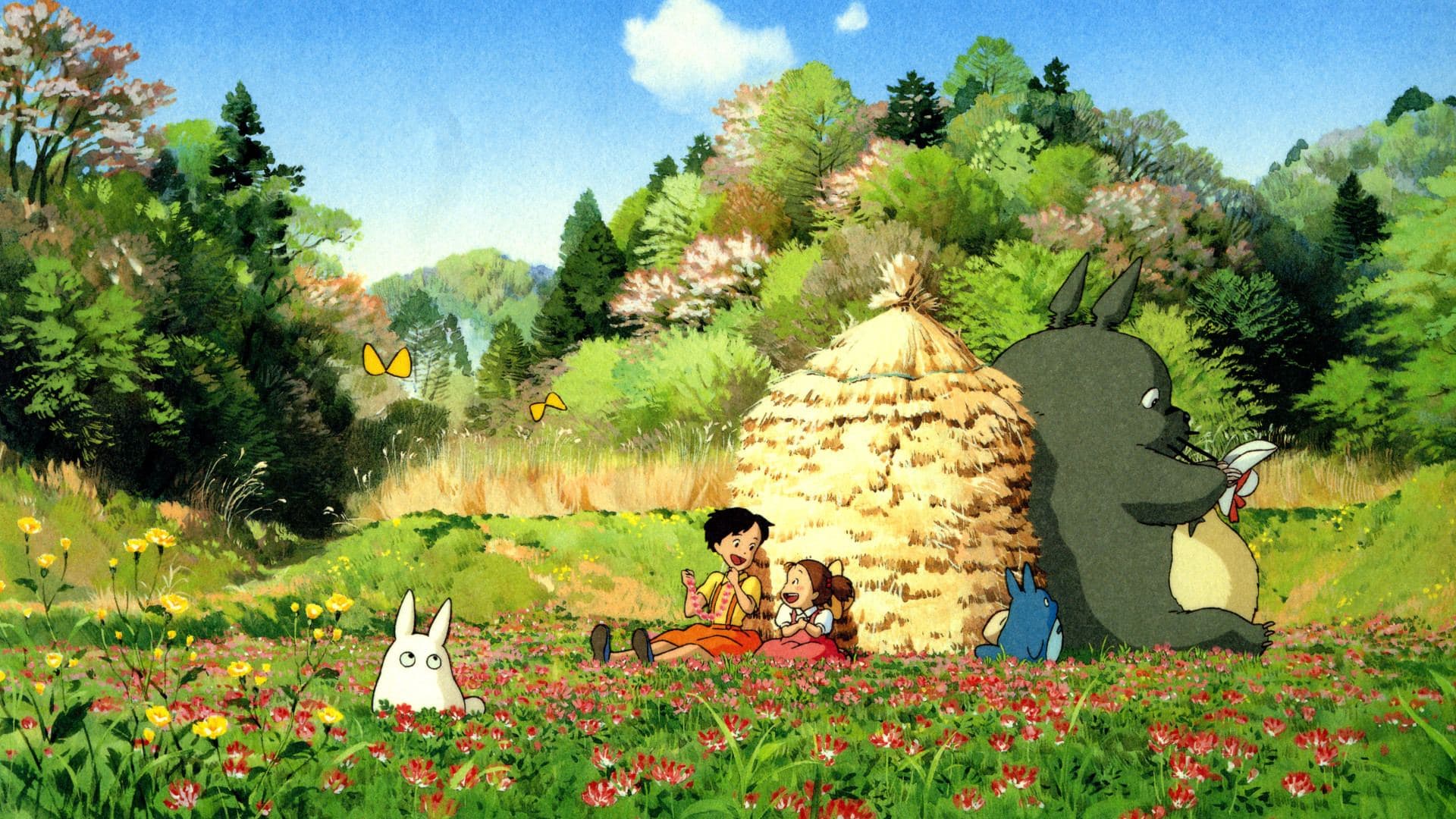
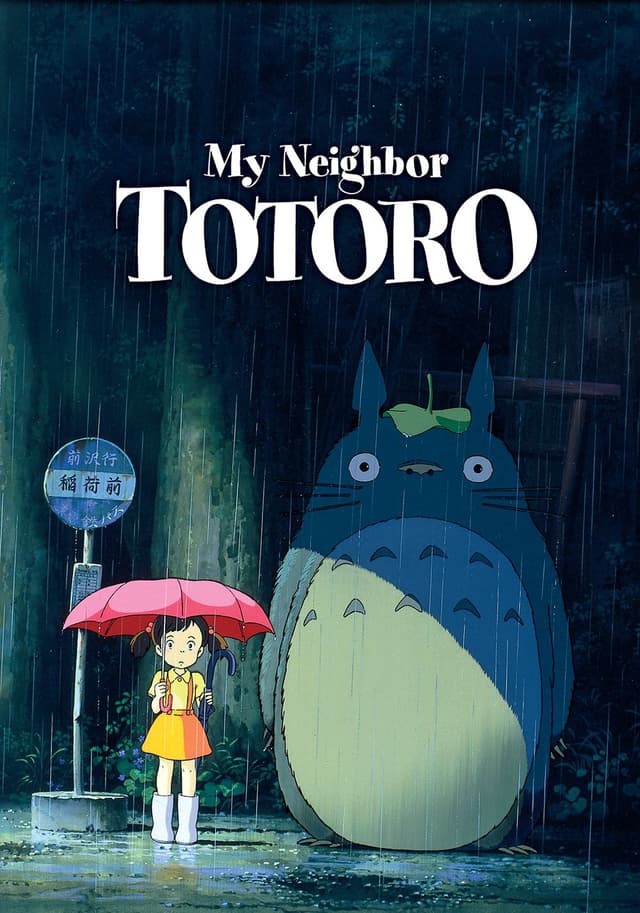
Two young girls, 10-year-old Satsuki and her 4-year-old sister Mei, move into a house in the country with their father to be closer to their hospitalized mother. Satsuki and Mei discover that the nearby forest is inhabited by magical creatures called Totoros (pronounced toe-toe-ro). They soon befriend these Totoros, and have several magical adventures.
What is the budget of My Neighbor Totoro?
"My Neighbor Totoro," a fantasy released in 1988, was directed by Hayao Miyazaki and stars Noriko Hidaka, Chika Sakamoto. The production budget was $3,700,000, placing it in the micro-budget range for fantasy productions of the 1980s.
Key Budget Allocation Categories
While specific budget breakdowns are not publicly available, typical cost drivers for a fantasy production like this include:
- Visual Effects & Creature Design: Fantasy productions require extensive VFX for magical elements, mythical creatures, and fantastical battle sequences.
- Costumes, Prosthetic Makeup & Production Design: Period-inspired or wholly original costumes, elaborate prosthetic and makeup applications, and richly detailed set construction are hallmarks of fantasy filmmaking.
- Music Score & Sound Design: Fantasy epics typically commission full orchestral scores recorded with 80 to 100 piece ensembles, plus extensive sound design for magical effects, creature vocalizations, and immersive world audio.
- Development: After working on 3000 Leagues in Search of Mother, Hayao Miyazaki wanted to make a "delightful, wonderful film" that would be set in Japan with the idea to "entertain and touch its viewers, but stay with them long after they have left the theaters".
What were the major cost factors in My Neighbor Totoro?
Several factors contributed to the overall production costs of "My Neighbor Totoro."
- Visual Effects: Visual Effects & Creature Design is one of the primary cost drivers in fantasy productions of this scale.
- Costumes: Costumes, Prosthetic Makeup & Production Design is one of the primary cost drivers in fantasy productions of this scale.
- Music Score: Music Score & Sound Design is one of the primary cost drivers in fantasy productions of this scale.
How Does My Neighbor Totoro's Budget Compare to Similar Films?
At $3,700,000, My Neighbor Totoro sits in the micro-budget range. Here is how it compares to productions with a similar budget:
- Flow (2024): Budget $3,700,000, Worldwide Gross $17,660,107
- Carandiru (2003): Budget $3,684,600, Worldwide Gross $10,782,155
- The Treasure of the Sierra Madre (1948): Budget $3,800,000, Worldwide Gross $4,307,000
- Network (1976): Budget $3,800,000, Worldwide Gross $23,700,000
- The Children's Hour (1961): Budget $3,600,000, Worldwide Gross $3,000,000
The median budget for wide-release fantasy films in the era ranges from $30 to 80M for mid-budget to $150M+ for tentpoles.
My Neighbor Totoro Box Office Performance
"My Neighbor Totoro" earned $2,250,213 domestically and $41,000,000 worldwide at the box office. Against a production budget of $3,700,000, the film performed strongly at the box office.
A film typically needs to earn approximately twice its production budget to cover marketing and distribution costs. For "My Neighbor Totoro," that break-even threshold was roughly $7,400,000. With worldwide earnings of $41,000,000, the film cleared that threshold comfortably.
Box Office Breakdown
My Neighbor Totoro

At 1008.1%, "My Neighbor Totoro" earned roughly $11.08 for every $1 invested in production.
My Neighbor Totoro Production History
After working on 3000 Leagues in Search of Mother, Hayao Miyazaki wanted to make a "delightful, wonderful film" that would be set in Japan with the idea to "entertain and touch its viewers, but stay with them long after they have left the theaters". and Totoros as "serene, carefree creatures" that were "supposedly the forest keeper, but that's only a half-baked idea, a rough approximation". Oga's conscientious approach to My Neighbor Totoro was a style the International Herald Tribune recognized as "[updating] the traditional Japanese animist sense of a natural world that is fully, spiritually alive".
The music for My Neighbor Totoro was composed by Joe Hisaishi, who previously collaborated with Miyazaki on the movies Nausicaä of the Valley of the Wind and Castle in the Sky. Hisaishi was inspired by the contemporary composers Terry Riley, Philip Glass, Steve Reich, Karlheinz Stockhausen, and John Cage, and described Miyazaki's films as "rich and personally compeling". He hired an orchestra for the soundtrack and primarily used a Fairlight instrument.
Awards and Recognition
5 wins & 2 nominations total
- Kinema Junpo Award for Best Film of the Year
- Blue Ribbon Awards
- Ōfuji Noburō Award
- Mainichi Film Awards
Frequently Asked Questions
How much did it cost to make My Neighbor Totoro (1988)?
The production budget was $3,700,000, covering principal photography, visual effects, cast and crew salaries, locations, sets, post-production, and music. Marketing and distribution (P&A) costs are estimated at an additional $1,850,000 - $2,960,000, bringing the total studio investment to approximately $5,550,000 - $6,660,000.
How much did My Neighbor Totoro (1988) earn at the box office?
My Neighbor Totoro grossed $2,250,213 domestic, $38,749,787 international, totaling $41,000,000 worldwide.
Was My Neighbor Totoro (1988) profitable?
Yes. Against a production budget of $3,700,000 and estimated total costs of ~$9,250,000, the film earned $41,000,000 theatrically - a 1008% ROI on production costs alone.
What were the biggest costs in producing My Neighbor Totoro?
The primary cost drivers were above-the-line talent (Noriko Hidaka, Chika Sakamoto, Hitoshi Takagi); VFX creature work, elaborate costume and prosthetic design, and orchestral scoring.
How does My Neighbor Totoro's budget compare to similar fantasy films?
At $3,700,000, My Neighbor Totoro is classified as a micro-budget production. The median budget for wide-release fantasy films in the era ranges from $30 - 80M for mid-budget to $150M+ for tentpoles. Comparable budgets: Flow (2024, $3,700,000); Carandiru (2003, $3,684,600); The Treasure of the Sierra Madre (1948, $3,800,000).
Did My Neighbor Totoro (1988) go over budget?
There are no widely reported accounts of significant budget overruns for this production. However, studios rarely disclose precise budget overrun figures publicly. The reported production budget reflects the final estimated cost.
What was the return on investment (ROI) for My Neighbor Totoro?
The theatrical ROI was 1008.1%, calculated as ($41,000,000 − $3,700,000) ÷ $3,700,000 × 100. This measures gross revenue against production budget only - it does not account for P&A or exhibitor shares.
What awards did My Neighbor Totoro (1988) win?
5 wins & 2 nominations total.
Who directed My Neighbor Totoro and who were the key crew members?
Directed by Hayao Miyazaki, written by Hayao Miyazaki, shot by Hisao Shirai, with music by Joe Hisaishi, edited by Takeshi Seyama.
Where was My Neighbor Totoro filmed?
My Neighbor Totoro was filmed in Japan.
Filmmakers
My Neighbor Totoro

Official Trailer
Build budgets like this one in Saturation
Start from an industry-standard feature film template, import the schedule and rates you already have, and let the cost report keep itself current as you spend. Real-time collaboration, no spreadsheets.