Modern Times Budget
 ComedyDramaRomance1h 27m
Updated
Synopsis
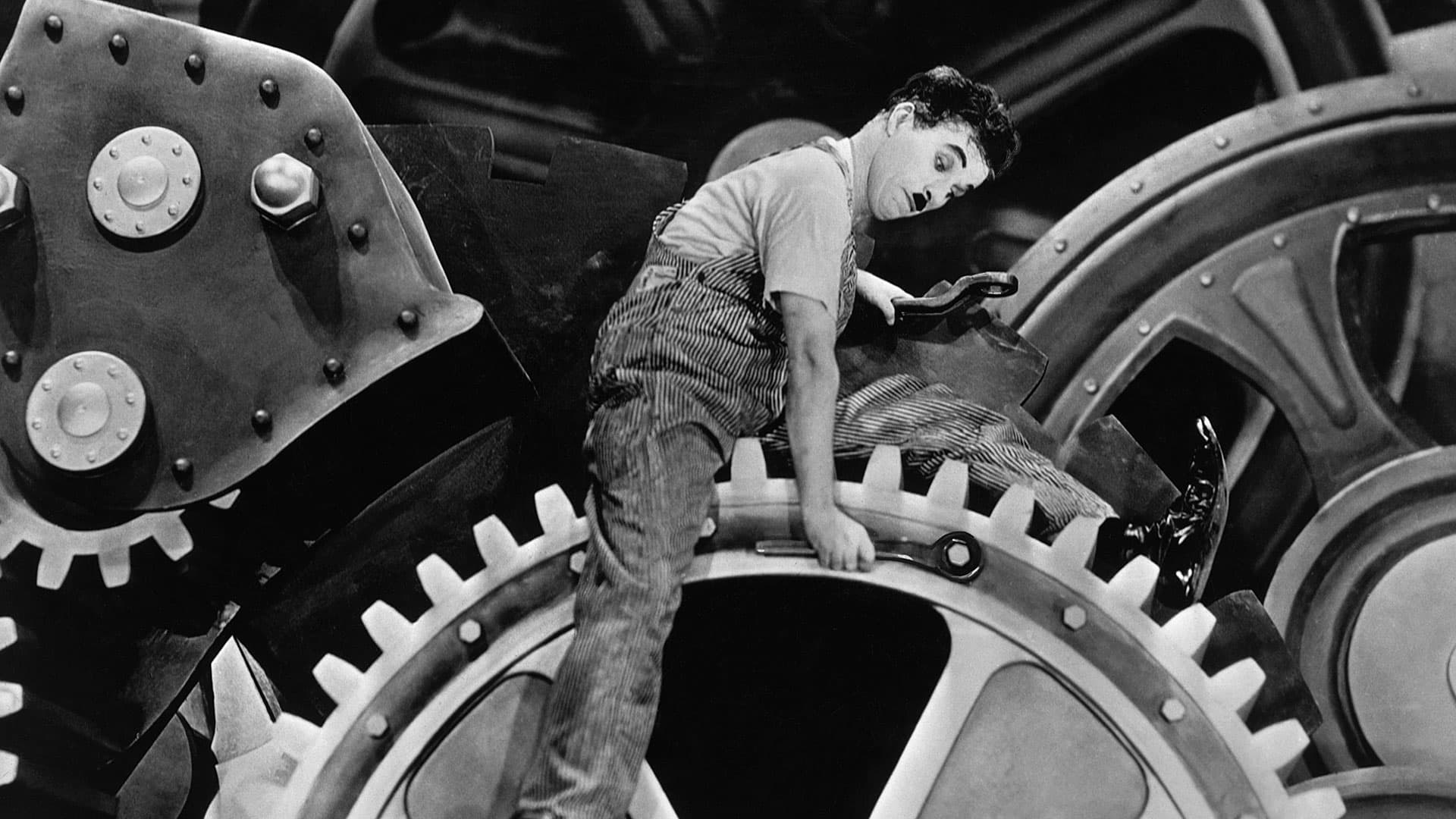
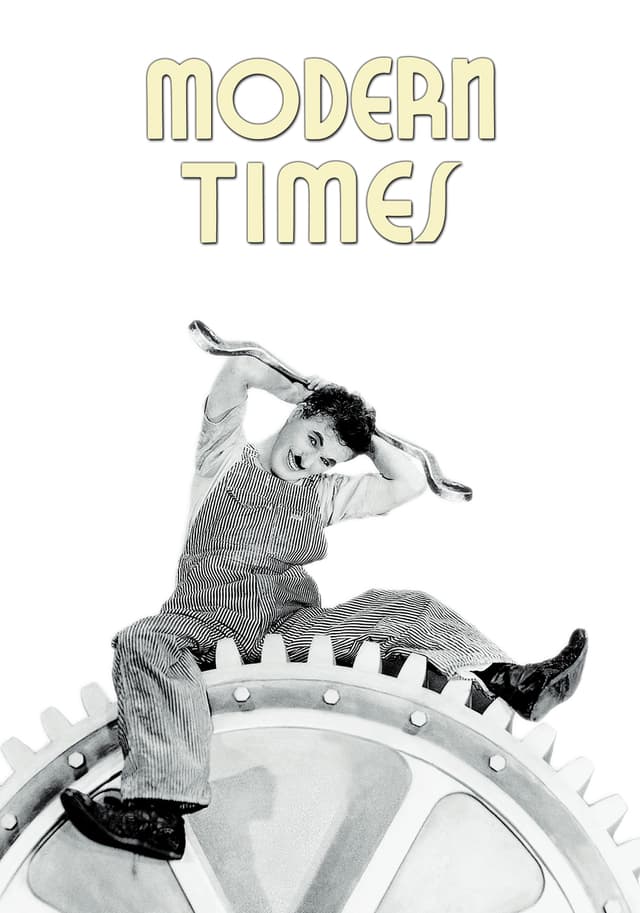
Chaplin's last 'silent' film, filled with sound effects, was made when everyone else was making talkies. Charlie turns against modern society, the machine age, (The use of sound in films ?) and progress. Firstly we see him frantically trying to keep up with a production line, tightening bolts. He is selected for an experiment with an automatic feeding machine, but various mishaps leads his boss to believe he has gone mad, and Charlie is sent to a mental hospital - When he gets out, he is mistaken for a communist while waving a red flag, sent to jail, foils a jailbreak, and is let out again. We follow Charlie through many more escapades before the film is out.
What is the budget of Modern Times?
"Modern Times," a comedy released in 1936, was directed by Charlie Chaplin and stars Charlie Chaplin, Paulette Goddard. The production budget was $1,500,000, placing it in the micro-budget range for comedy productions of the 1930s.
Key Budget Allocation Categories
While specific budget breakdowns are not publicly available, typical cost drivers for a comedy production like this include:
- Talent Salaries & Producing Deals: Established comedic talent can command $15 to 20 million per film, with top-tier stars earning even more through producing credits and backend deals.
- Production & Location Filming: While comedies generally avoid the VFX costs of action films, location shooting in recognizable cities or exotic locales adds meaningful production expense.
- Marketing & P&A (Prints & Advertising): Comedies rely heavily on marketing to build opening-weekend momentum.
- Production: During a European tour promoting City Lights, Chaplin got the inspiration for Modern Times from both the lamentable conditions of the continent through the Great Depression, along with a conversation with Mahatma Gandhi in which they discussed modern technology.
What were the major cost factors in Modern Times?
Several factors contributed to the overall production costs of "Modern Times."
- Talent Salaries: Talent Salaries & Producing Deals is one of the primary cost drivers in comedy productions of this scale.
- Production: Production & Location Filming is one of the primary cost drivers in comedy productions of this scale.
- Marketing: Marketing & P&A (Prints & Advertising) is one of the primary cost drivers in comedy productions of this scale.
How Does Modern Times's Budget Compare to Similar Films?
At $1,500,000, Modern Times sits in the micro-budget range. Here is how it compares to productions with a similar budget:
- Satantango (1994): Budget $1,500,000
- City Lights (1931): Budget $1,500,000, Worldwide Gross $4,250,000
- Tampopo (1985): Budget $1,500,000
- Roman Holiday (1953): Budget $1,500,000, Worldwide Gross $12,000,000
- Rope (1948): Budget $1,500,000, Worldwide Gross $2,200,000
The median budget for wide-release comedy films in the era ranges from $30 to 80M for mid-budget to $150M+ for tentpoles.
Modern Times Box Office Performance
"Modern Times" earned $163,577 domestically and $1,800,000 worldwide at the box office. Against a production budget of $1,500,000, the film showed modest profitability in theatrical release.
A film typically needs to earn approximately twice its production budget to cover marketing and distribution costs. For "Modern Times," that break-even threshold was roughly $3,000,000. With worldwide earnings of $1,800,000, the film fell short of that threshold but recouped its production costs in theatrical release.
Box Office Breakdown
Modern Times

At 20%, "Modern Times" returned its production investment but margin was tight after marketing and distribution costs.
Modern Times Production History
The music score was composed by Chaplin himself, and arranged with the assistance of Alfred Newman, who had collaborated with Chaplin on the music score of his previous film City Lights. Newman and Chaplin had a falling out near the end of the Modern Times soundtrack recording sessions, leading to Newman's angry departure. The romance theme was later given lyrics, and became the pop standard "Smile", first recorded by Nat King Cole.
Awards and Recognition
6 wins & 1 nomination total
- National Board of Review: Top Ten Films
Critical Reception
Modern Times is often hailed as one of Chaplin's greatest achievements, and it remains one of his most popular films. It holds an approval rating of 98% on Rotten Tomatoes based on 108 reviews, with a weighted average of 9.4/10. The website's critical consensus reads, "A slapstick skewering of industrialized America, Modern Times is as politically incisive as it is laugh-out-loud hilarious." Metacritic reports an aggregated score of 96/100 based on 4 critics, indicating "universal acclaim".
Frequently Asked Questions
How much did it cost to make Modern Times (1936)?
The production budget was $1,500,000, covering principal photography, cast and crew salaries, locations, sets, post-production, and music. Marketing and distribution (P&A) costs are estimated at an additional $750,000 - $1,200,000, bringing the total studio investment to approximately $2,250,000 - $2,700,000.
How much did Modern Times (1936) earn at the box office?
Modern Times grossed $163,577 domestic, $1,636,423 international, totaling $1,800,000 worldwide.
Was Modern Times (1936) profitable?
The film did not break even theatrically, earning $1,800,000 against an estimated $3,750,000 needed. Ancillary revenue may have improved the picture.
What were the biggest costs in producing Modern Times?
The primary cost drivers were above-the-line talent (Charlie Chaplin, Paulette Goddard, Henry Bergman); star comedian salaries, location filming, and aggressive marketing campaigns.
How does Modern Times's budget compare to similar comedy films?
At $1,500,000, Modern Times is classified as a micro-budget production. The median budget for wide-release comedy films in the era ranges from $30 - 80M for mid-budget to $150M+ for tentpoles. Comparable budgets: Satantango (1994, $1,500,000); City Lights (1931, $1,500,000); Tampopo (1985, $1,500,000).
Did Modern Times (1936) go over budget?
There are no widely reported accounts of significant budget overruns for this production. However, studios rarely disclose precise budget overrun figures publicly. The reported production budget reflects the final estimated cost.
What was the return on investment (ROI) for Modern Times?
The theatrical ROI was 20.0%, calculated as ($1,800,000 − $1,500,000) ÷ $1,500,000 × 100. This measures gross revenue against production budget only - it does not account for P&A or exhibitor shares.
What awards did Modern Times (1936) win?
6 wins & 1 nomination total.
Who directed Modern Times and who were the key crew members?
Directed by Charlie Chaplin, written by Charlie Chaplin, shot by Ira H. Morgan, Roland Totheroh, with music by Charlie Chaplin, edited by Willard Nico, Charlie Chaplin.
Where was Modern Times filmed?
Modern Times was filmed in United States of America.
Filmmakers
Modern Times

Official Trailer
Build budgets like this one in Saturation
Start from an industry-standard feature film template, import the schedule and rates you already have, and let the cost report keep itself current as you spend. Real-time collaboration, no spreadsheets.