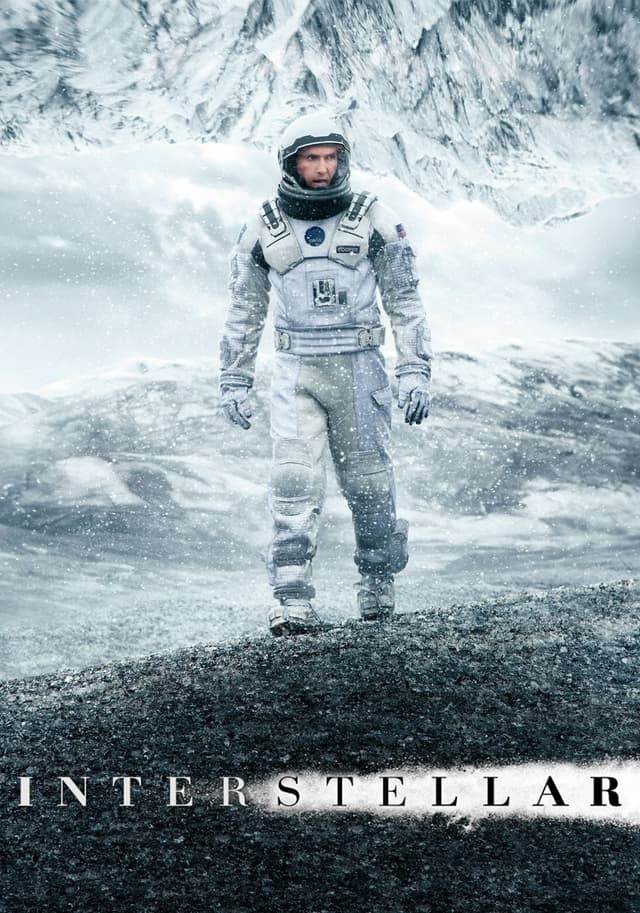
Interstellar Budget
 AdventureDramaScience Fiction2h 49m
Updated
Synopsis
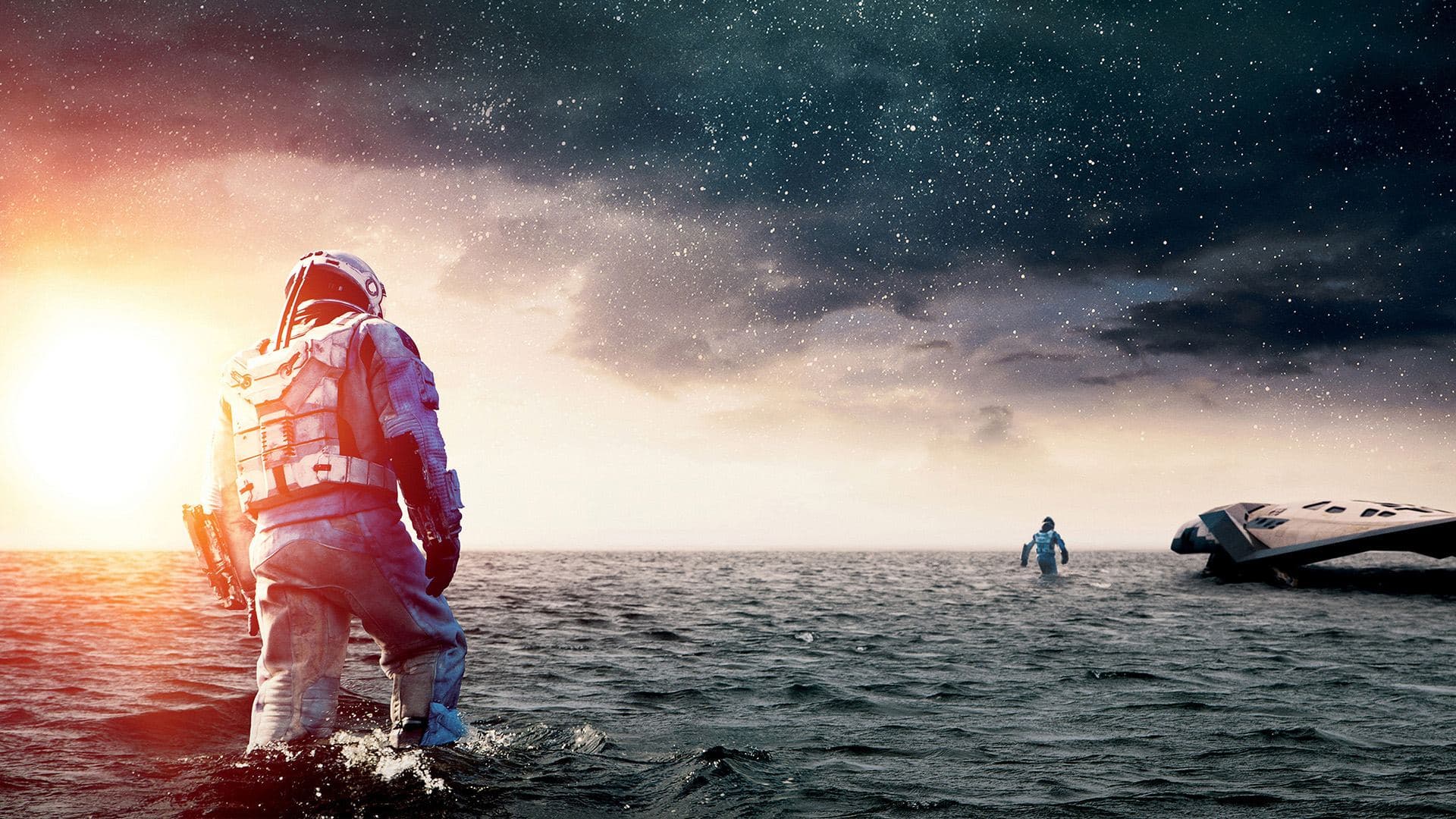
In a near future where blight is destroying Earth's crops, former NASA pilot Joseph Cooper leaves his children, including his daughter Murph, to join a secret mission through a wormhole near Saturn in search of a habitable planet. As time dilation near the black hole Gargantua costs the crew decades, Murph grows up on Earth working on the gravity equation that could save the people left behind.
What Is the Budget of Interstellar?
Interstellar (2014), directed by Christopher Nolan and written with his brother Jonathan Nolan, had a production budget of $165,000,000. That is the figure The Hollywood Reporter published two weeks before release, and it is the budget listed by Box Office Mojo and The Numbers. The cost was not carried by one studio. Paramount Pictures, Warner Bros. and Legendary Pictures split the budget, with Paramount releasing the film in the United States and Canada and Warner Bros. handling the rest of the world.
That three-way split was the result of an unusual trade. Interstellar began as a Paramount project, and Warner Bros., which had released Nolan's Batman films and held an overall deal with his company Syncopy, wanted in badly enough to give Paramount its rights to co-finance the next Friday the 13th film, its share of a future South Park movie and a yet-to-be-named Warner Bros. property in exchange for half of the film. In August 2013, after splitting from Warner Bros. that June, Legendary negotiated to finance 25 percent or more. Nolan's own deal, $20,000,000 against 20 percent of the gross according to The Hollywood Reporter, turned out to be the most valuable stake of all.
Key Budget Allocation Categories
None of the three backers has published a line-item budget for Interstellar, but the production record shows where the money went. The Hollywood Reporter described a four-month shoot that largely used physical sets rather than CGI, and the largest identifiable costs follow from that approach.
- Director Fee: The Hollywood Reporter reported that Nolan was paid $20,000,000 against 20 percent of the gross. The 20 percent backend was paid out of the film's gross rather than the production budget, and Deadline's sources said the full deal earned him around $90,000,000. Deadline called Interstellar "the rare title these days where talent got paid better than the backing studios."
- Practical Locations and Crops: Production designer Nathan Crowley planted 500 acres of corn near Calgary for the farm scenes, following the example of Man of Steel (2013), and Nolan said the production ended up making money on the crop because not enough of it was destroyed. The dust storms were created on location by blowing a biodegradable cellulose dust through large fans.
- IMAX and Film Photography: Cinematographer Hoyte van Hoytema shot on 35mm anamorphic film and IMAX 70mm, with more IMAX cameras than on any previous Nolan film. The crew rebuilt an IMAX camera to be hand-held for interior scenes and mounted another in the nose cone of a Learjet for some sequences.
- Visual Effects and Miniatures: DNEG delivered about 850 effects shots, 150 of them captured in camera by projecting the finished space imagery behind the actors instead of using green screens. Rendering the black hole Gargantua from Kip Thorne's equations took up to 100 hours for some individual frames and 800 terabytes of data, and New Deal Studios built the Endurance, Ranger and Lander as large-scale miniatures, with the 1/15th-scale Endurance more than 7.6 meters across.
- Iceland Location Unit: The crew shipped spacecraft mock-ups weighing about 10,000 pounds to Iceland for two weeks of shooting with around 350 people, 130 of them hired locally, to stage the ice and water planets.
How Does Interstellar's Budget Compare to Similar Films?
At $165,000,000, Interstellar was priced like a franchise film without being one. Figures below are Box Office Mojo's, across all releases, leaving out Australian re-release entries for Big Hero 6 and Tenet that duplicate their original runs.
- Inception (2010): Budget $160,000,000 | Worldwide $839,796,627. Nolan's previous original film cost $5,000,000 less and still out-grossed Interstellar by $93,747,321, even after Interstellar's re-releases.
- Big Hero 6 (2014): Budget $165,000,000 | Worldwide $657,870,525. Disney's animated film had the identical budget and opened the same weekend, beating Interstellar $56,215,889 to $47,510,360, but Interstellar finished ahead on its original run and now leads by $88,178,781.
- The Martian (2015): Budget $108,000,000 | Worldwide $630,621,406. Ridley Scott's space survival film, which also starred Matt Damon and Jessica Chastain, cost $57,000,000 less and grossed $115,427,900 less worldwide, yet earned more in the United States and Canada, $228,433,663 against Interstellar's $203,227,580.
- Dune (2021): Budget $165,000,000 | Worldwide $410,668,500. Another cerebral science fiction epic at exactly the same budget, released in American theaters and on HBO Max on the same day, grossed a little over half of Interstellar's total.
- Tenet (2020): Budget $205,000,000 | Worldwide $365,309,519. Nolan's next science fiction film cost $40,000,000 more and opened in theaters during the pandemic, finishing with less than half of Interstellar's worldwide gross.
Interstellar Box Office Performance
Interstellar opened early in the United States on November 5, 2014 in 249 theaters, most of them projecting 35mm, 70mm or IMAX 70mm film, and took $1,350,209 on its first day. It went wide on November 7 in 3,561 theaters and earned $47,510,360 over its first weekend, finishing second to Big Hero 6. Overseas it opened at number one, and its global IMAX opening of about $20,500,000 from 574 IMAX screens was a record for a November IMAX release. In China it earned $121,990,000 on its original release. The first run ended with $188,020,017 in the United States and Canada and $493,056,382 internationally, for $681,076,399 worldwide, and it was the tenth-highest grossing film of 2014.
Re-releases have added $64,972,907 since then. A 2020 re-release in 31 markets brought in $19,992,744, most of it from China, and the 10th-anniversary re-release in IMAX 70mm on December 6, 2024 opened to $4,602,149 and earned $15,207,563 domestically, pushing the film past $200,000,000 in the United States and Canada. Further international re-releases since 2017, including the anniversary run overseas and a 2025 round led by the United Kingdom and Mexico, account for the rest. That brings Interstellar to $203,227,580 domestic and $542,821,726 international, for $746,049,306 worldwide. Box Office Mojo's all-releases total of $782,948,164 also counts 2025 and 2026 entries in some markets that nearly duplicate the original run's totals, so they are excluded here. None of the studios has published what it spent on marketing, so the measures below that depend on it cannot be calculated.
Box Office Breakdown
Interstellar

What the studios actually kept is known only from Deadline's estimate. Deadline's 2014 Most Valuable Blockbuster analysis, which counted marketing, talent participations and home entertainment and television revenue, estimated that Paramount, Warner Bros. and Legendary would net $47,161,000 between them, a cash-on-cash return of 1.09, and ranked Interstellar 20th among the year's most profitable releases. That figure sits far below the $746,049,306 gross because theaters keep roughly half of every ticket sold and participations come off the top before the studios are paid, most of all Nolan's backend: by Deadline's account he took home around $90,000,000, nearly twice what the three studios made combined.
The film earned 73% of its total outside the United States and Canada, with China its largest overseas market, and The Numbers estimates domestic DVD and Blu-ray sales at a further $55,838,021. All of the re-release grosses came after Deadline's accounting.
Interstellar Production History
Interstellar began with producer Lynda Obst and theoretical physicist Kip Thorne, who had worked together on Contact (1997). In June 2006 Steven Spielberg and Paramount announced a science fiction film based on their eight-page treatment, and by March 2007 Jonathan Nolan had been hired to write it. He spent four years on the script and studied relativity at the California Institute of Technology. After Spielberg moved DreamWorks from Paramount to Disney in 2009, Paramount needed a new director, and Jonathan recommended his brother. Spielberg said in 2026 that he had been attached for a year and that Interstellar "was a much better movie in Chris Nolan's hands than it would have been in mine."
Christopher Nolan joined in 2012 and merged his brother's screenplay with one of his own, keeping the first hour on a dying, Dust Bowl-style Earth and rewriting the journey into space. In January 2013 Paramount and Warner Bros. announced he was in talks to direct, and the film was produced under Syncopy and Lynda Obst Productions. Nolan cast Matthew McConaughey after seeing an early cut of Mud and visited him on the set of True Detective; Anne Hathaway read the script at Nolan's home, and both were cast in early 2013. Hoyte van Hoytema replaced Nolan's longtime cinematographer Wally Pfister, who was directing his own film, and Matt Damon joined in late August 2013. For secrecy the production used the working title Flora's Letter.
Principal photography began on August 6, 2013 in Alberta, Canada, in Nanton, Longview, Lethbridge, Fort Macleod and Okotoks, and ran there until September 9 with about 130 crew, most of them local. The production then moved to Iceland, where Nolan had shot scenes for Batman Begins (2005). The Svínafellsjökull glacier doubled as Dr. Mann's planet, and when safety concerns cancelled a day on the ice, close-ups of the fight were shot in a parking lot painted to match. Hathaway came close to hypothermia when her suit leaked during a water scene. The crew finished with 54 days in Los Angeles, California, at the Westin Bonaventure Hotel, the Los Angeles Convention Center and a Sony Pictures soundstage in Culver City, and wrapped in December 2013.
Hans Zimmer, given only a one-page story about a father leaving his child rather than a script, built the score around the 1926 Harrison and Harrison organ at the Temple Church in London and held 45 scoring sessions. Interstellar premiered at the TCL Chinese Theatre in Los Angeles on October 26, 2014. Paramount, which was moving away from film prints, made Interstellar an exception and opened it on film two days before the digital wide release, part of an effort supported by Nolan, J. J. Abrams, Quentin Tarantino and other filmmakers to preserve the format.
Awards and Recognition
Interstellar was recognized mainly for its craft: its visual effects, score, production design and sound.
- Academy Awards: Won Best Visual Effects (Paul Franklin, Andrew Lockley, Ian Hunter and Scott Fisher) at the 87th Academy Awards, from five nominations that also included Best Original Score for Hans Zimmer, Best Production Design, Best Sound Editing and Best Sound Mixing.
- British Academy Film Awards: Won Best Special Visual Effects and was nominated for Best Original Music, Best Cinematography and Best Production Design.
- Saturn Awards: Won six of eleven nominations, including Best Science Fiction Film, Best Writing for Christopher and Jonathan Nolan, Best Music and Best Performance by a Younger Actor for Mackenzie Foy.
- Critics' Choice Awards: Won Best Sci-Fi/Horror Movie from seven nominations.
- Golden Globes and Grammys: Zimmer's score was nominated for Best Original Score at the 72nd Golden Globe Awards and for Best Score Soundtrack for Visual Media at the 58th Grammy Awards.
- Genre and Guild Awards: Won Best Film and Best Director at the Empire Awards and a Visual Effects Society Award for the tesseract sequence, and was nominated for the Hugo Award for Best Dramatic Presentation.
The American Film Institute named Interstellar one of the top films of 2014, and in 2025 it placed 89th on The New York Times list of the 100 best movies of the 21st century, voted by about 500 directors, actors and others in the film industry.
Critical Reception
Reviews were mostly positive. Interstellar holds 73% on Rotten Tomatoes from 374 critics, with an average rating of 7.1/10, and a Metacritic score of 74 out of 100 from 46 critics, indicating generally favorable reviews. Audiences polled by CinemaScore gave it a B+, and its Rotten Tomatoes audience score is 87%. The Rotten Tomatoes consensus reads: "Interstellar represents more of the thrilling, thought-provoking, and visually resplendent filmmaking moviegoers have come to expect from writer-director Christopher Nolan, even if its intellectual reach somewhat exceeds its grasp."
Scott Foundas of Variety called it "as visually and conceptually audacious as anything Nolan has yet done," and Richard Roeper of the Chicago Sun-Times gave it four stars, calling it "one of the most beautiful films I have ever seen." Todd McCarthy of The Hollywood Reporter found it "never less than engrossing" despite "mixed results" in balancing human emotion and the cosmos. Less impressed critics pointed to the dialogue, the sound mix and thin characters: Henry Barnes of The Guardian called it "a glorious spectacle, but a slight drama," and Scott Mendelson of Forbes listed it among 2014's most disappointing films.
Its standing has risen since. George R. R. Martin called it the most ambitious and challenging science fiction film since 2001: A Space Odyssey (1968), and in 2024 Lindsey Bahr of the Associated Press wrote that in the decade since its release Interstellar "has become beloved, a true classic."
Frequently Asked Questions
How much did it cost to make Interstellar (2014)?
Interstellar had a production budget of $165,000,000, the figure reported by The Hollywood Reporter and listed by Box Office Mojo and The Numbers. Paramount Pictures, Warner Bros. and Legendary Pictures split the cost.
How much did Interstellar make at the box office?
Interstellar has grossed $746,049,306 worldwide including re-releases, with $203,227,580 in the United States and Canada and $542,821,726 internationally, according to Box Office Mojo. Its original 2014 run earned $681,076,399.
Was Interstellar (2014) profitable?
Yes, modestly. Deadline estimated that Paramount, Warner Bros. and Legendary would net $47,161,000 between them after marketing, talent participations and home entertainment revenue, ranking it 20th among 2014's most profitable films. That is far below its $746,049,306 worldwide gross because theaters keep roughly half the gross and Nolan's backend and other participations were paid first.
How much did Christopher Nolan make from Interstellar?
The Hollywood Reporter reported that Nolan was paid $20,000,000 against 20 percent of the gross. Deadline's sources said the deal earned him around $90,000,000, nearly twice the studios' combined profit.
How much has Interstellar made from re-releases?
Re-releases have added $64,972,907 to the original $681,076,399, including $15,207,563 in the United States and Canada from the 10th-anniversary IMAX 70mm re-release on December 6, 2024. Box Office Mojo's all-releases total of $782,948,164 also counts 2025 and 2026 entries in some markets that nearly duplicate the original run's totals, so Saturation excludes them.
How much did Interstellar make on its opening weekend?
Interstellar took $47,510,360 from 3,561 theaters over its first wide weekend, November 7 to 9, 2014, finishing second to Big Hero 6 at $56,215,889. Its global IMAX opening of about $20,500,000 was a record for a November IMAX release.
Who paid for Interstellar?
Paramount developed the film, and Warner Bros. bought half by giving Paramount its co-financing rights to the next Friday the 13th film, its share of a future South Park movie and another Warner Bros. property. Legendary Pictures then agreed to finance 25 percent or more.
Where was Interstellar filmed?
Filming began on August 6, 2013 in Alberta, Canada, including Nanton, Longview, Lethbridge, Fort Macleod and Okotoks. The crew then spent two weeks in Iceland and 54 days in Los Angeles before wrapping in December 2013.
What awards did Interstellar win?
Interstellar won the Academy Award for Best Visual Effects from five nominations, the BAFTA for Best Special Visual Effects, six Saturn Awards including Best Science Fiction Film, and the Critics' Choice Award for Best Sci-Fi/Horror Movie.
How does Interstellar's budget compare to Inception?
Inception (2010) cost $160,000,000, $5,000,000 less than Interstellar's $165,000,000, and has grossed $839,796,627 worldwide, about $93,747,321 more than Interstellar's $746,049,306.
Filmmakers
Interstellar

Official Trailer
Build budgets like this one in Saturation
Start from an industry-standard feature film template, import the schedule and rates you already have, and let the cost report keep itself current as you spend. Real-time collaboration, no spreadsheets.