2001 A Space Odyssey Budget
 Science FictionMysteryAdventure2h 29m
Updated
Synopsis
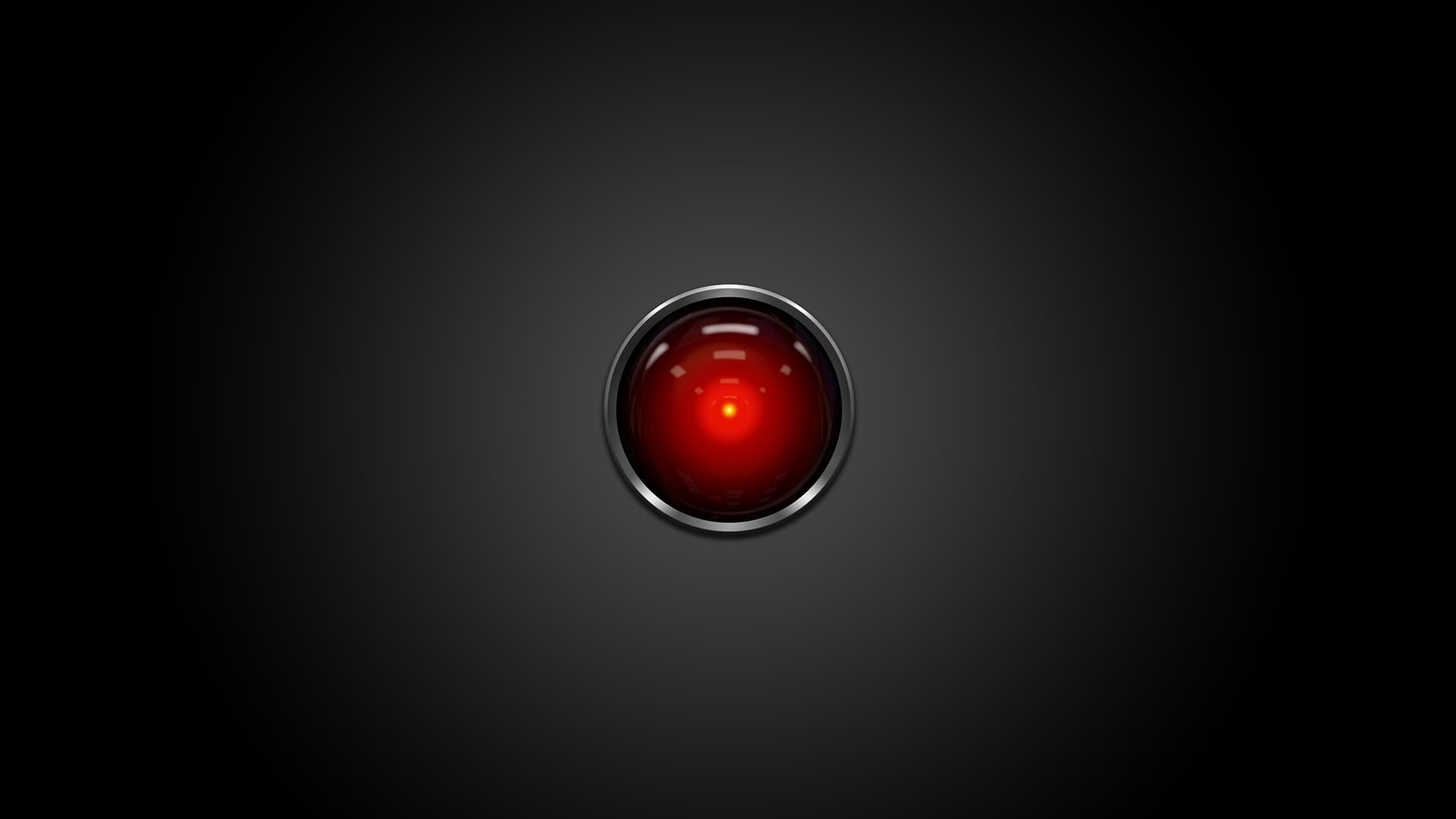
"2001" is a story of evolution. Sometime in the distant past, someone or something nudged evolution by placing a monolith on Earth (presumably elsewhere throughout the universe as well). Evolution then enabled humankind to reach the moon's surface, where yet another monolith is found, one that signals the monolith placers that humankind has evolved that far. Now a race begins between computers (HAL) and human (Bowman) to reach the monolith placers. The winner will achieve the next step in evolution, whatever that may be.
What is the budget of 2001 A Space Odyssey?
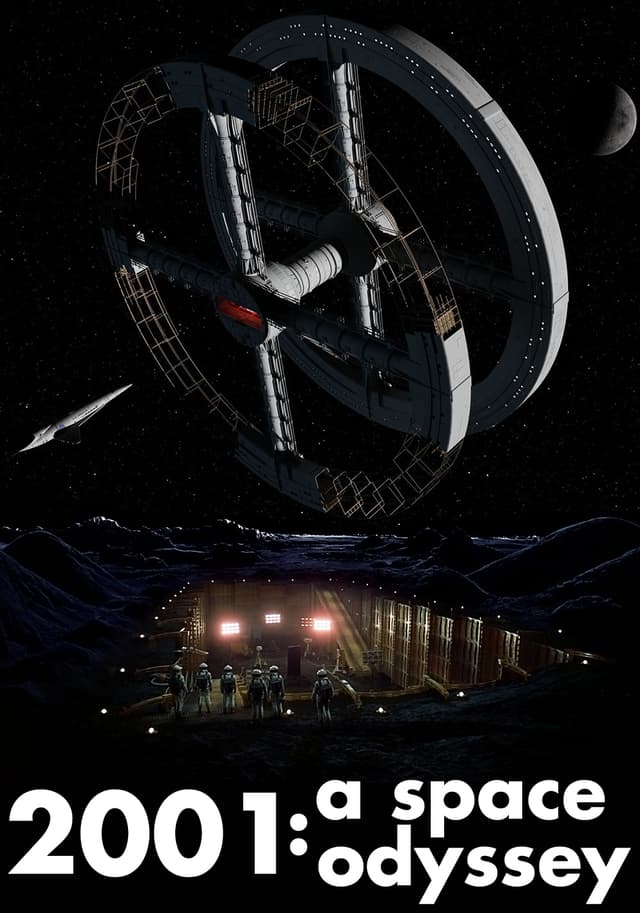
"2001 A Space Odyssey," a science fiction released in 1968, was directed by Stanley Kubrick and stars Keir Dullea, Gary Lockwood. The production budget was $12,000,000, placing it in the low-budget range for science fiction productions of the 1960s.
Key Budget Allocation Categories
While specific budget breakdowns are not publicly available, typical cost drivers for a science fiction production like this include:
- Visual Effects & CGI Pipeline: Sci-fi films are among the most VFX-intensive productions in Hollywood.
- Production Design & World-Building: Creating a believable sci-fi world required significant investment in set construction, prop fabrication, and conceptual design , from physical environments through LED volume stages and virtual production technology.
- Technology & Camera Systems: Cutting-edge camera rigs, motion capture stages, LED volume stages (virtual production), and proprietary rendering technology often push the technical budget far beyond conventional filming costs.
- Development: After completing Dr.
What were the major cost factors in 2001 A Space Odyssey?
Several factors contributed to the overall production costs of "2001 A Space Odyssey."
- Visual Effects: Visual Effects & CGI Pipeline is one of the primary cost drivers in science fiction productions of this scale.
- Production Design: Production Design & World-Building is one of the primary cost drivers in science fiction productions of this scale.
- Technology: Technology & Camera Systems is one of the primary cost drivers in science fiction productions of this scale.
How Does 2001 A Space Odyssey's Budget Compare to Similar Films?
At $12,000,000, 2001 A Space Odyssey sits in the low-budget range. Here is how it compares to productions with a similar budget:
- Goon (2012): Budget $12,000,000, Worldwide Gross $6,985,158
- Jobs (2013): Budget $12,000,000, Worldwide Gross $42,100,000
- All That Jazz (1979): Budget $12,000,000, Worldwide Gross $37,823,676
- Wolfwalkers (2020): Budget $12,000,000, Worldwide Gross $1,310,720
- Past Lives (2023): Budget $12,000,000, Worldwide Gross $28,126,646
The median budget for wide-release science fiction films in the era ranges from $30 to 80M for mid-budget to $150M+ for tentpoles.
2001 A Space Odyssey Box Office Performance
"2001 A Space Odyssey" earned $60,481,243 domestically and $71,923,560 worldwide at the box office. Against a production budget of $12,000,000, the film performed strongly at the box office.
A film typically needs to earn approximately twice its production budget to cover marketing and distribution costs. For "2001 A Space Odyssey," that break-even threshold was roughly $24,000,000. With worldwide earnings of $71,923,560, the film cleared that threshold comfortably.
Box Office Breakdown
2001 A Space Odyssey

At 499.4%, "2001 A Space Odyssey" earned roughly $5.99 for every $1 invested in production.
2001 A Space Odyssey Production History
After completing Dr. Strangelove (1964), director Stanley Kubrick told a publicist from Columbia Pictures that his next project would be about extraterrestrial life, and resolved to make "the proverbial good science fiction movie". How Kubrick became interested in creating a science fiction film is far from clear.
Searching for a collaborator in the science fiction community for the writing of the script, Kubrick was advised by a mutual acquaintance, Columbia Pictures staff member Roger Caras, to talk to writer Arthur C. Clarke, who lived in Ceylon. Although convinced that Clarke was "a recluse, a nut who lives in a tree", Kubrick allowed Caras to cable the film proposal to Clarke.
Principal photography began on 29 December 1965, in Stage H at Shepperton Studios, Shepperton, England. The studio was chosen because it could house the pit for the Tycho crater excavation scene, the first to be shot. In January 1966, the production moved to the smaller MGM-British Studios in Borehamwood, where the live-action and special-effects filming was done, starting with the scenes involving Floyd on the Orion spaceplane; it was described as a "huge throbbing nerve center ...
Awards and Recognition
Won 1 Oscar. 18 wins & 14 nominations total
- National Board of Review: Top Ten Films
- Kansas City Film Critics Circle Award for Best Film
- Hugo Award for Best Dramatic Presentation: Stanley Kubrick
- Hugo Award for Best Dramatic Presentation: Arthur C. Clarke
- Kansas City Film Critics Circle Award for Best Director: Stanley Kubrick
- Academy Award for Best Visual Effects: Stanley Kubrick (41st Academy Awards)
- BAFTA Award for Best Sound
- David di Donatello for best foreign production: Stanley Kubrick
Critical Reception
2001: A Space Odyssey polarised critical opinion, receiving both praise and derision, with many New York,based critics being especially harsh. Kubrick called them "dogmatically atheistic and materialistic and earthbound". Some critics viewed the original 161-minute cut shown at premieres in Washington D.C., New York, and Los Angeles.
Frequently Asked Questions
How much did 2001: A Space Odyssey cost to make?
The production budget was $10,500,000, a significant figure for the era and well above the $6,000,000 originally projected. MGM financed the project with Stanley Kubrick retaining unusual creative control. Production overran significantly, with multiple shooting and post-production extensions.
How much did 2001: A Space Odyssey earn at the box office?
The film grossed approximately $146,000,000 across its initial 1968 release and subsequent re-releases through the 1970s. With theatrical reissues continuing into the 21st century, the cumulative worldwide gross is estimated at over $190,000,000, making it the highest-grossing film of 1968.
Who directed 2001: A Space Odyssey?
Stanley Kubrick directed and produced the film, co-writing the screenplay with science fiction author Arthur C. Clarke. The collaboration was unusual in that the screenplay and Clarke's novelization of the same material were developed simultaneously rather than the film adapting a pre-existing novel.
What is 2001: A Space Odyssey about?
The film traces humanity's evolution from prehistoric ape ancestors through a present-day discovery of an alien artifact on the Moon, a deep-space mission to Jupiter, and a transformative encounter with extraterrestrial intelligence. The deliberately ambiguous structure has been the subject of decades of critical interpretation.
Who stars in 2001: A Space Odyssey?
Keir Dullea stars as Dr. David Bowman with Gary Lockwood as Dr. Frank Poole. Douglas Rain voices the HAL 9000 computer. Supporting cast includes William Sylvester, Daniel Richter, and Leonard Rossiter. The film is notable for its sparse dialogue, with extended sequences featuring no speech at all.
Where was 2001: A Space Odyssey filmed?
Principal photography took place at MGM-British Studios in Borehamwood, England, with additional studio work at Shepperton Studios. The famous prehistoric Dawn of Man sequences were shot with front-projection techniques pioneered for the production. The film did not shoot on location outside of England.
Did 2001: A Space Odyssey win any Oscars?
The film won the Academy Award for Best Visual Effects, awarded directly to Stanley Kubrick. It received three additional nominations, including Best Director, Best Original Screenplay, and Best Production Design. Many critics consider the film's shutout of the major categories one of the great Oscar oversights.
What was the original critical reception of 2001?
The film divided critics on initial release. Many veteran reviewers including Pauline Kael responded negatively, while younger critics and audiences embraced the film. Its commercial breakthrough came in the months following the premiere, particularly with younger viewers who attended repeated showings.
Is 2001: A Space Odyssey on streaming?
The film is available for digital rental and purchase on Amazon Prime Video, Apple TV, Google Play, and Vudu. It is preserved in the United States National Film Registry by the Library of Congress and currently holds a 92% approval rating on Rotten Tomatoes.
How does 2001: A Space Odyssey rank in film history?
The film consistently appears among the top ten greatest films of all time in major critical polls, including Sight and Sound's decennial poll. It is widely cited as the most influential science fiction film ever made, with direct stylistic descendants ranging from Star Wars (1977) to Interstellar (2014) to Ad Astra (2019).
Official Trailer
Build budgets like this one in Saturation
Start from an industry-standard feature film template, import the schedule and rates you already have, and let the cost report keep itself current as you spend. Real-time collaboration, no spreadsheets.