
I Can Only Imagine 2 Budget
Updated
Synopsis
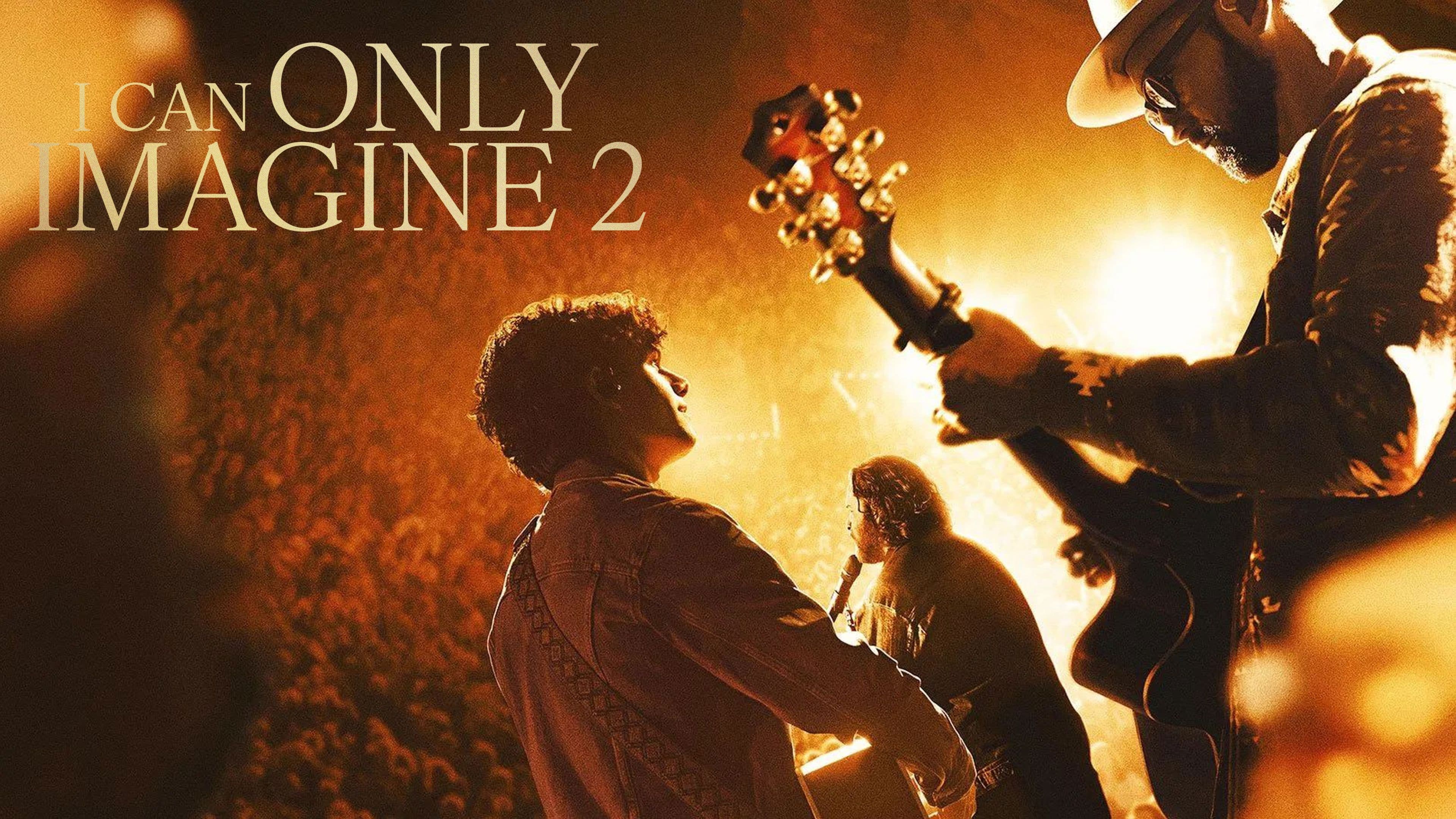
Following the breakout success of the song 'I Can Only Imagine', MercyMe's Bart Millard is living the dream—sold-out arenas, a devoted fanbase, and a thriving career. But behind the spotlight, Bart's past threatens the family he's built, especially the fragile bond with his son Sam. When hopeful newcomer Tim Timmons joins the band for their biggest tour yet, he unknowingly brings a renewed gratitude to Bart's life through their unlikely friendship. Bart soon discovers that Tim carries hardships—and secrets—of his own, forcing him to face his past and repair his relationships with Sam and his wife Shannon before fame costs him what matters most.
What Is the Budget of I Can Only Imagine 2?
I Can Only Imagine 2, directed by Andrew Erwin and Brent McCorkle and distributed by Lionsgate, had a reported production budget of approximately $18,000,000. This represents a significant increase from the original film's $7 million budget, reflecting a scale-up in production, cast, and overall ambition. The film was produced by Kingdom Story Company in partnership with Lionsgate, continuing the hybrid model of independent production combined with studio-level distribution.
Filming and production expanded in scope compared to the first film, with increased resources allocated toward performance, music, and broader storytelling elements. The $18 million investment represents a substantial bet on the audience's appetite for a continuation of Bart Millard's story, a bet that the film's $18,700,000 worldwide result indicates was only marginally returned.
Key Budget Allocation Categories
The $18 million budget for I Can Only Imagine 2 was primarily allocated toward cast, music production, and expanded production scale:
- Above-the-Line Cast — A meaningful portion of the budget supported returning cast members along with new additions such as Milo Ventimiglia, increasing above-the-line costs compared to the original film. Ventimiglia's profile from This Is Us adds mainstream name recognition to the production beyond the faith community audience.
- Music Production and Licensing — Music production and licensing played a more significant role in this sequel, as the story continues to revolve around MercyMe's career and evolving success. This includes recording, performance sequences, and integration of music into the narrative at a scale commensurate with the expanded budget.
- Production Design and Locations — Production design and locations expanded beyond the more contained structure of the first film, reflecting a broader narrative scope. While still grounded, the film required more resources to depict the band's growth and larger environments than the original's focused small-town setting.
- Lionsgate Distribution Partnership — The continued Lionsgate distribution relationship provided mainstream theatrical infrastructure at the scale the larger budget demanded. The financing model remained largely traditional, combining private production capital with studio-backed distribution, with no evidence of crowdfunding tied to production or marketing.
How Does I Can Only Imagine 2's Budget Compare to Similar Films?
At $18,000,000, I Can Only Imagine 2 is one of the larger investments in faith biographical drama and a case study in the risk of scaling a breakout hit into a higher-budget sequel. The relevant comparisons:
- I Can Only Imagine (2018) — Budget $7,000,000 | Worldwide $86,100,000. The original film at less than half the budget achieved more than four times the result. I Can Only Imagine 2 is a clear example of how increasing budget does not translate into proportional increases in audience turnout, particularly when the original's success was driven by a specific cultural trigger that the sequel cannot replicate.
- Jesus Revolution (2023) — Budget $15,000,000 | Worldwide $52,300,000. The Erwin Brothers' faith biographical drama at a slightly lower budget achieved nearly three times I Can Only Imagine 2's result, driven by strong opening weekend performance and sustained community engagement. The comparison illustrates how the Erwin Brothers' own productions can produce very different outcomes at similar budget levels depending on the story's cultural hook.
- Miracles from Heaven (2016) — Budget $13,000,000 | Worldwide $73,800,000. The Sony faith drama at a lower budget achieved a substantially stronger result through mainstream studio marketing. I Can Only Imagine 2's result at $18 million is below what Miracles from Heaven achieved at $13 million, reinforcing that budget scale in faith distribution does not reliably translate to commercial outcome.
- War Room (2015) — Budget $3,000,000 | Worldwide $73,000,000. The Kendrick Brothers' prayer drama at one-sixth the budget achieved nearly four times the result. The contrast between War Room and I Can Only Imagine 2 is one of the most illustrative examples in faith distribution of how the right premise and community mobilization matter more than production investment.
- Unsung Hero (2024) — Budget $6,000,000 | Worldwide $21,200,000. The Kingdom Story Company faith biographical drama released the same year at one-third the budget achieved a comparable worldwide gross, demonstrating how efficiently the distribution model operates at lower budget levels when the subject has a strong community fanbase.
I Can Only Imagine 2 Box Office Performance
I Can Only Imagine 2 opened on February 20, 2026, across 3,105 theaters, earning $7,750,583 in its opening weekend to debut in third place domestically. The opening weekend performance reflected solid faith community engagement but fell well short of the original film's 2018 launch, which had generated one of the most discussed independent openings of the decade. The sequel faced the fundamental challenge of following a film whose commercial result had been driven by a specific cultural trigger — the most-played Christian song in history — that no continuation of the story could replicate. The film ran approximately six weeks wide before exiting most theaters, accumulating $18,588,615 domestically and $154,457 internationally for a worldwide total of $18,743,072 as tracked by Box Office Mojo.
A film typically needs to earn approximately twice its production budget to cover marketing and distribution costs. For I Can Only Imagine 2, that break-even threshold was roughly $36,000,000. Based on its Lionsgate wide release, Prints and Advertising costs are estimated at approximately $12,000,000, bringing the total estimated investment to around $30,000,000. With worldwide earnings of $18,743,072, the film did not recoup its total investment at theatrical.
Box Office Breakdown
I Can Only Imagine 2

After exhibitor splits, I Can Only Imagine 2 returned approximately $0.31 for every $1 invested in production and marketing, a result that reflects the difficulty of converting a faith phenomenon into a profitable franchise at a higher budget tier. The film's overwhelmingly domestic performance ($18,588,615 domestic against $154,457 international, a 99%/1% split) underscores how narrowly faith biographical drama travels outside North American markets. The result is a clear illustration of the risk of scaling a successful low-budget faith film into a higher-budget sequel: while the original benefited from extraordinary word-of-mouth and minimal financial risk, the sequel required substantially greater investment while facing a narrower margin for error.
I Can Only Imagine 2 Production History
I Can Only Imagine 2 was produced by Kingdom Story Company in partnership with Lionsgate, continuing the distribution relationship that had made the original film's extraordinary result possible. The film was directed by Andrew Erwin and Brent McCorkle, with Bart Millard and MercyMe's continued involvement ensuring the sequel maintained its connection to the authentic story. The expanded production scale reflected Kingdom Story Company's ambition to grow the franchise while honoring the personal story at its center.
I Can Only Imagine 2 is a clear example of the risk of scaling a successful low-budget film into a higher-budget sequel. While the original film benefited from strong word-of-mouth and low financial risk, the sequel required significantly higher investment to expand its scope. Increasing budget does not necessarily translate into proportional increases in audience turnout, and the sequel faced the challenge of following a breakout hit that raises expectations while narrowing the margin for error.
Awards and Recognition
I Can Only Imagine 2 won Film Impact of the Year at the 2026 K-LOVE Fan Awards, held on May 24, 2026, at the Grand Ole Opry in Nashville. The K-LOVE Fan Awards honor artists and films selected by the Christian audience, making the Film Impact of the Year category one of the most significant fan-voted recognitions in faith entertainment. MercyMe, whose story anchors the film, also won Group of the Year at the same ceremony. The film falls within the eligibility window for the 57th GMA Dove Awards, scheduled for fall 2026 at Bridgestone Arena in Nashville, and the original I Can Only Imagine (2018) earned Dove Award recognition that established the franchise's standing within Christian film circles. The Dove Awards nominations for the 57th cycle had not yet been announced as of this writing.
Critical Reception
Critical reception for I Can Only Imagine 2 was mixed, with a significant disconnect between professional critics and faith audiences. The film holds a 63% Tomatometer score from 24 critics on Rotten Tomatoes, with the consensus reading: "Lifted greatly by Milo Ventimiglia's warm, engaging performance, I Can Only Imagine 2 retreads a familiar story, yet still manages to uplift and emotionally resonate." The Popcornmeter audience score stands at 99%, one of the highest audience scores of 2026 and a near-perfect reflection of how the core faith audience received the film. On Metacritic, the film holds a 43 out of 100 from 5 critics, indicating mixed reviews. Audiences surveyed by CinemaScore gave the film an A+, matching the original and making the I Can Only Imagine franchise one of only a handful to earn A+ grades on multiple installments.
The $18,743,072 worldwide result, while below the total investment, represents an audience that remained deeply engaged with Bart Millard's story beyond the original film. The 99% Popcornmeter and A+ CinemaScore confirm that the faith audience who saw the film left satisfied, even as the theatrical economics reflect the challenge of converting Christian community enthusiasm into mainstream commercial scale. In the context of faith biographical drama sequels, the result confirms the ongoing connection between the MercyMe community and the Smallbone family story, while the K-LOVE Film Impact of the Year win affirms its lasting resonance within the Christian entertainment space.
Frequently Asked Questions
How much did it cost to make I Can Only Imagine 2 (2026)?
The production budget was $18,000,000, covering principal photography, cast and crew salaries, locations, sets, post-production, and music. Marketing and distribution (P&A) costs are estimated at an additional $9,000,000 - $14,400,000, bringing the total studio investment to approximately $27,000,000 - $32,400,000.
How much did I Can Only Imagine 2 (2026) earn at the box office?
I Can Only Imagine 2 grossed $18,734,382 worldwide.
Was I Can Only Imagine 2 (2026) profitable?
The film did not break even theatrically, earning $18,734,382 against an estimated $45,000,000 needed. Ancillary revenue may have improved the picture.
What were the biggest costs in producing I Can Only Imagine 2?
The primary cost drivers were above-the-line talent (J. Michael Finley, Milo Ventimiglia, Sophie Skelton); talent compensation, authentic period production design, and meticulous post-production.
How does I Can Only Imagine 2's budget compare to similar drama films?
At $18,000,000, I Can Only Imagine 2 is classified as a low-budget production. The median budget for wide-release drama films in the 2020s ranges from $30 - 80M for mid-budget to $150M+ for tentpoles. Comparable budgets: 127 Hours (2010, $18,000,000); A Dog's Way Home (2019, $18,000,000); Amadeus (1984, $18,000,000).
Did I Can Only Imagine 2 (2026) go over budget?
There are no widely reported accounts of significant budget overruns for this production. However, studios rarely disclose precise budget overrun figures publicly. The reported production budget reflects the final estimated cost.
What was the return on investment (ROI) for I Can Only Imagine 2?
The theatrical ROI was 4.1%, calculated as ($18,734,382 − $18,000,000) ÷ $18,000,000 × 100. This measures gross revenue against production budget only - it does not account for P&A or exhibitor shares.
What awards did I Can Only Imagine 2 (2026) win?
N/A.
Who directed I Can Only Imagine 2 and who were the key crew members?
Directed by Brent McCorkle, Andrew Erwin, written by Brent McCorkle, shot by Johnny Derango, with music by Brent McCorkle.
Where was I Can Only Imagine 2 filmed?
I Can Only Imagine 2 was filmed in United States of America.
Filmmakers
I Can Only Imagine 2

Official Trailer
Build budgets like this one in Saturation
Start from an industry-standard feature film template, import the schedule and rates you already have, and let the cost report keep itself current as you spend. Real-time collaboration, no spreadsheets.