I Am Sam Budget
 Drama2h 12m
Updated
Synopsis
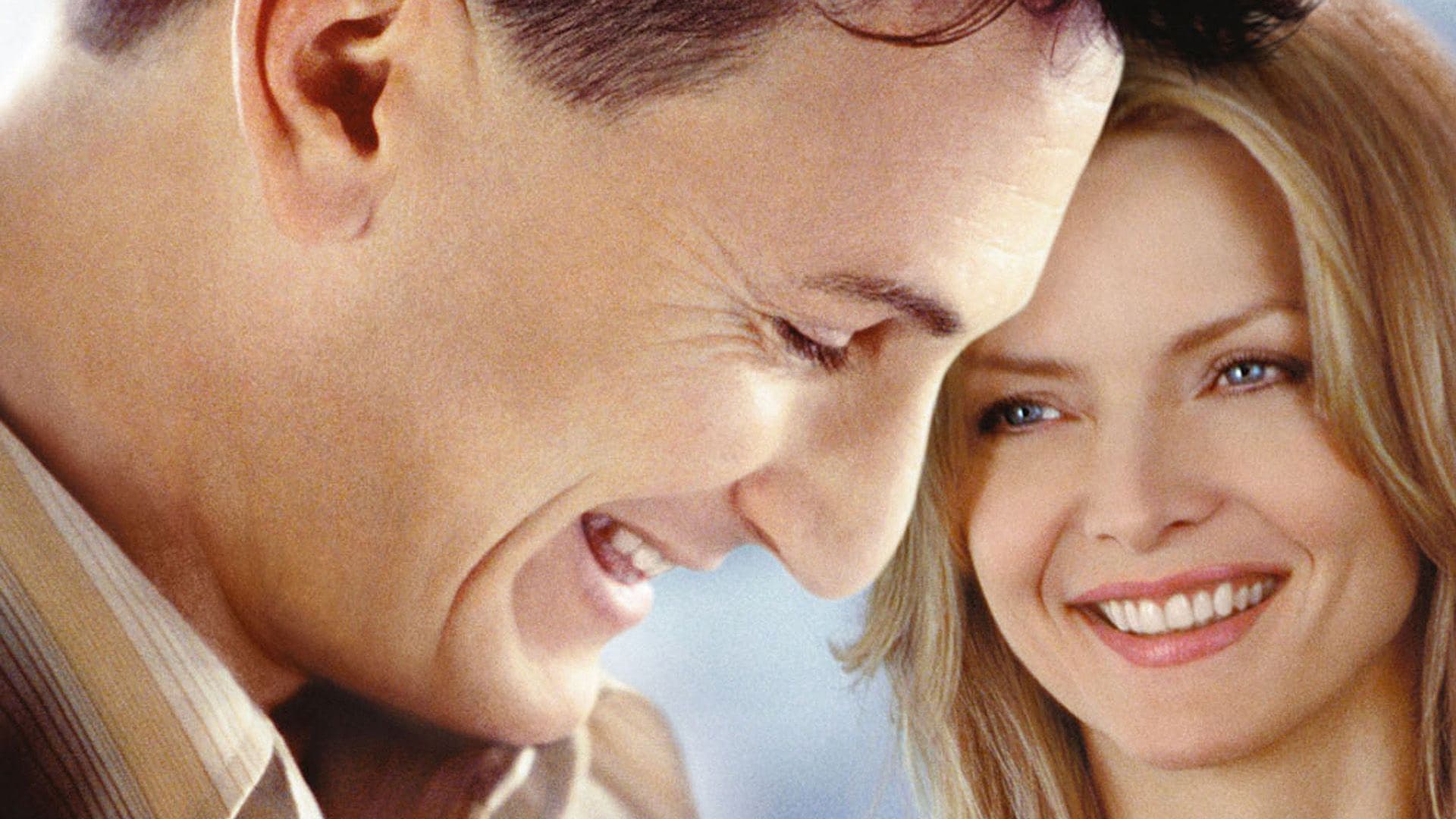
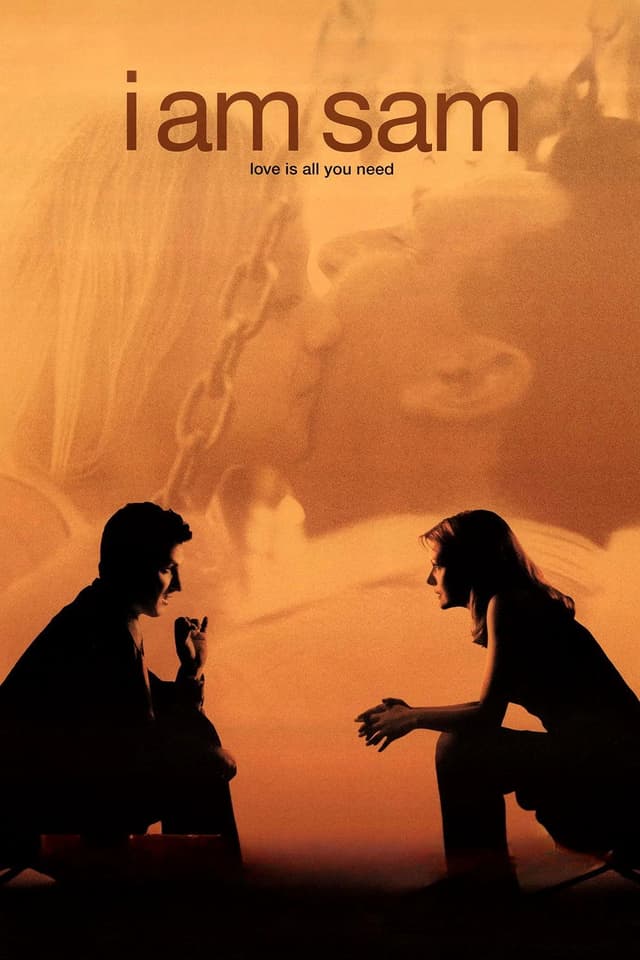
Sam Dawson, a man with the intellectual capacity of a seven-year-old, raises his daughter Lucy with the help of an unusual group of friends. When Lucy turns seven and begins to surpass her father intellectually, a social worker tries to take her away. Sam fights to keep her with the help of a high-powered attorney, Rita Harrison Williams, who takes the case pro bono and finds her own life transformed in the process.
What Is the Budget of I Am Sam (2001)?
I Am Sam (2001), directed and co-written by Jessie Nelson and distributed by New Line Cinema, was produced on a reported budget of $22,000,000. The film was financed and produced by New Line Cinema in association with Bedford Falls Productions, Edward Saxon Productions, and Red Fish Blue Fish Films, with Richard Solomon, Edward Saxon, Marshall Herskovitz, and Barry Mendel producing alongside Jessie Nelson. The mid-budget figure was modest for a star-driven adult drama released in the post-Erin Brockovich, post-A Beautiful Mind awards-season window, reflecting New Line's strategy of pairing a top-tier lead with a contained domestic story rather than a sweeping epic.
A large share of the budget went to above-the-line talent. Sean Penn took the lead role of Sam Dawson, a man with an intellectual disability raising a daughter, with Michelle Pfeiffer as the high-powered attorney Rita Harrison Williams who takes his custody case pro bono. The supporting ensemble included Dianne Wiest, Laura Dern, Loretta Devine, Richard Schiff, and a then seven-year-old Dakota Fanning in her breakthrough performance as Lucy Diamond Dawson. Music licensing also drove a meaningful piece of the spend, with the production clearing rights for an entire soundtrack of Beatles cover versions performed by contemporary artists including Sarah McLachlan, Eddie Vedder, Aimee Mann, and Ben Folds.
Key Budget Allocation Categories
I Am Sam's $22,000,000 budget was distributed across several core production areas:
- Above-the-Line Talent: Sean Penn, coming off Sweet and Lowdown (1999) and his Best Actor nomination from that film, commanded a mid-seven-figure quote against the awards-bait material. Michelle Pfeiffer, an established A-list lead since the late 1980s, was paid in a similar tier. Director Jessie Nelson, writing her second feature after Corrina, Corrina (1994), worked at scale rates appropriate to a mid-budget studio drama. Combined, the leads and producing fees absorbed a sizable share of the production cost.
- Beatles Music Licensing: The soundtrack consists almost entirely of Beatles covers, with Sony/ATV Music Publishing controlling the underlying publishing rights to the Lennon-McCartney catalog. While the production used new cover recordings rather than original masters, publishing-side synchronization fees for an entire Beatles-themed album-length score were substantial, almost certainly running into seven figures across the film and accompanying soundtrack album.
- Los Angeles Production: Principal photography took place primarily in Los Angeles, California, with interiors at sound stages and exteriors in Venice Beach, Santa Monica, and downtown courthouse locations. The Los Angeles shoot kept the production close to talent and crew bases but did not benefit from significant state production incentives, which California did not begin offering at meaningful scale until 2009.
- Casting of Adults with Developmental Disabilities: Nelson cast actors with developmental disabilities in supporting roles, including Brad Allan Silverman, Joseph Rosenberg, Stanley DeSantis, and Doug Hutchison, as Sam's circle of friends. The production worked with consultants from L.A. Goal, an organization supporting adults with developmental disabilities, requiring extended rehearsal time, on-set accommodations, and additional scheduling flexibility.
- Dakota Fanning Coaching and Schooling: Carrying a child actor in nearly every scene required on-set tutoring per California labor law, dedicated child welfare workers, and an acting coach. Fanning's schedule was capped by state regulations governing child performers, which extended the overall shooting schedule and increased crew carry costs.
- Courtroom and Practical Sets: The film's climactic custody trial sequences required dressing a working courtroom, period-correct legal procedural detail, and extensive supporting cast and extras for jury, gallery, and press scenes. Multiple Sam workplace settings, including Starbucks-style coffee shops and a Pizza Hut interior, were dressed practically.
- Post-Production and Score: John Powell composed an original underscore that bridges the Beatles-covers soundtrack across dialogue scenes. Editor Richard Chew, an Oscar winner for Star Wars (1977), assembled the picture, and the post-production schedule supported a December 2001 limited platform release tuned for awards eligibility followed by a January 2002 wide expansion.
How Does I Am Sam's Budget Compare to Similar Films?
At $22,000,000, I Am Sam sits squarely in the mid-budget adult-drama range typical of New Line and other specialty divisions in the early 2000s. Comparing it with other films built around neurodivergent or developmentally disabled lead characters, and other Sean Penn awards-track performances, illustrates how its commercial profile fit the genre:
- Rain Man (1988): Budget $25,000,000 | Worldwide $354,825,435. The Barry Levinson-Tom Cruise-Dustin Hoffman drama about autism was the gold standard for the form, costing roughly the same as I Am Sam in nominal terms (more in inflation-adjusted dollars) and earning sixteen times the worldwide gross while sweeping the major Oscars.
- Forrest Gump (1994): Budget $55,000,000 | Worldwide $678,226,465. Robert Zemeckis' epic about a cognitively disabled protagonist cost more than twice as much and earned roughly seven times I Am Sam's worldwide gross, demonstrating the commercial ceiling for the subgenre when paired with an A-list director and sweeping historical scope.
- Radio (2003): Budget $35,000,000 | Worldwide $53,409,167. The Mike Tollin-Cuba Gooding Jr. drama about a developmentally disabled man and a small-town football coach cost significantly more and earned roughly the same worldwide, suggesting that I Am Sam's lower budget made it the more efficient outcome.
- Mystic River (2003): Budget $30,000,000 | Worldwide $156,597,016. Sean Penn's next major Oscar vehicle, directed by Clint Eastwood, won him Best Actor and grossed roughly 60% more worldwide than I Am Sam against a 36% higher budget, demonstrating how Penn's commercial pull strengthened across the two years between the films.
- Milk (2008): Budget $20,000,000 | Worldwide $54,597,914. Penn's second Best Actor win for Gus Van Sant's Harvey Milk biopic cost slightly less than I Am Sam, earned roughly half as much worldwide, and confirmed Penn's capacity to anchor awards-track mid-budget biopics through the 2000s.
- The Other Sister (1999): Budget $13,000,000 | Worldwide $29,200,290. Garry Marshall's Juliette Lewis-Diane Keaton drama about a young woman with developmental disabilities cost roughly 60% of I Am Sam, earned slightly less worldwide, and was poorly received critically, framing I Am Sam as the more successful execution of a comparable premise.
I Am Sam Box Office Performance
I Am Sam opened in limited release on December 28, 2001, at four theaters in New York and Los Angeles to qualify for that year's awards, earning $32,135 on its opening weekend before expanding nationwide on January 25, 2002 across 1,267 theaters. The wide opening grossed $7,037,022, finishing fifth that weekend behind A Walk to Remember, Black Hawk Down, Snow Dogs, and The Count of Monte Cristo. Domestic legs were strong for a January adult drama, carrying the film to a $40,311,852 final domestic total against $57,206,535 internationally.
Against a reported production budget of $22,000,000, the film needed approximately $50,000,000 in worldwide gross to reach profitability when accounting for marketing and distribution costs. Here is the financial breakdown:
Box Office Breakdown
I Am Sam

I Am Sam returned approximately $2.20 in theatrical revenue for every $1 invested when measured against total estimated production and marketing spend, placing it among the more efficient mid-budget adult dramas of the 2001-2002 awards corridor. International outpaced domestic by a 59/41 split, an unusual reversal for an English-language family drama and a result driven heavily by territories where Sean Penn was a recognized star and by the universal recognition of the Beatles soundtrack.
Strong home video and television performance extended the picture's economic life well beyond its theatrical window. The accompanying soundtrack album, released on Sony Music's V2 imprint, became a multi-platinum hit and a steady catalog seller, generating ongoing publishing revenue that flowed back to Sony/ATV and the production's music partners for years after the theatrical run ended.
I Am Sam Production History
Jessie Nelson, who had directed Corrina, Corrina (1994) and co-written Stepmom (1998), developed I Am Sam with co-writer Kristine Johnson after spending time observing parents with developmental disabilities and the social-services systems that intersect with their lives. Nelson's research included extended visits to L.A. Goal, a Culver City nonprofit serving adults with developmental disabilities, whose members later appeared in the film as Sam's circle of friends. The script went out in 2000 and attracted Sean Penn quickly, with Penn signing on in mid-2000 alongside Michelle Pfeiffer.
Penn prepared for the role through extensive consultation with adults with intellectual disabilities and by spending unscripted time at L.A. Goal, an approach he later described as the most demanding research process of any role he had taken to that point. He was careful in interviews to credit the supporting actors with developmental disabilities and to position the film as a collaboration rather than a solo performance vehicle. Dakota Fanning, then seven, was cast as Lucy after a casting search that auditioned dozens of young actresses, with Nelson describing Fanning's read as preternaturally focused and emotionally specific for a child her age.
Principal photography ran in spring 2001, primarily in California, with location work across Los Angeles including Venice Beach for Sam's apartment exteriors, Santa Monica for the Starbucks and Pizza Hut workplace scenes, and the downtown Los Angeles courthouse for the custody trial. Interior soundstage work covered Rita's office, the foster home, and the courtroom interiors. The Los Angeles shoot kept Penn, Pfeiffer, and Fanning close to home and allowed Nelson to maintain a tight working day around child-labor regulations governing Fanning's on-set hours.
The Beatles soundtrack was central to the production from inception. Nelson and music supervisor Susan Jacobs cleared publishing rights through Sony/ATV Music Publishing for an entire score of Beatles covers performed by contemporary artists, with Sarah McLachlan, Eddie Vedder, Aimee Mann, Ben Folds, Sheryl Crow, Stevie Nicks, Nick Cave, and others recording new versions of songs including "Blackbird," "Strawberry Fields Forever," "Two of Us," and "Let It Be." The accompanying soundtrack album was released on V2 Records in January 2002 ahead of the film's wide opening and went on to become one of the best-selling soundtracks of the year.
Post-production unfolded across summer and fall 2001 with editor Richard Chew, the Oscar-winning editor of Star Wars (1977) and One Flew Over the Cuckoo's Nest (1975). New Line scheduled a December 28, 2001 limited platform release in four theaters for awards eligibility, expanding wide on January 25, 2002. The campaign aggressively positioned Penn for Best Actor consideration against a crowded field that included Russell Crowe in A Beautiful Mind, Denzel Washington in Training Day, Will Smith in Ali, and Tom Wilkinson in In the Bedroom.
Awards and Recognition
I Am Sam earned a single Academy Award nomination, with Sean Penn nominated for Best Actor at the 74th Academy Awards in March 2002. Penn lost to Denzel Washington, who won for Training Day in a year considered one of the closest Best Actor races of the decade. It was Penn's third Oscar nomination after Dead Man Walking (1995) and Sweet and Lowdown (1999), and the campaign positioned him as a perennial contender he would convert into wins for Mystic River (2003) and Milk (2008).
Dakota Fanning won the Broadcast Film Critics Association Critics' Choice Award for Best Young Performer, and at age seven became the youngest person ever nominated for a Screen Actors Guild Award when she was nominated for Outstanding Performance by a Female Actor in a Supporting Role alongside Penn's nomination for Outstanding Performance by a Male Actor in a Leading Role. The cast also received a SAG ensemble nomination for Outstanding Performance by a Cast in a Motion Picture, losing to Gosford Park. Michelle Pfeiffer received a Golden Globe nomination for Best Actress in a Drama, and the soundtrack of Beatles covers became a perennial fixture of best-of-year lists for film music.
Critical Reception
I Am Sam received mixed-to-negative reviews from critics despite strong audience response and Sean Penn's Oscar nomination. The film holds a 35% approval rating on Rotten Tomatoes based on 150 critic reviews, with the critical consensus reading that the film "tries to manipulate the audience with its mawkish sentimentality" and that Penn's performance, while committed, leans into territory the reviewer community found uncomfortable. On Metacritic the film scored 28 out of 100, indicating generally unfavorable reviews. Audiences responded far more warmly: CinemaScore polled exit audiences and recorded an A- grade, and the film has held a 85% audience approval rating on Rotten Tomatoes over time.
Roger Ebert, writing in the Chicago Sun-Times, was among the film's few prominent defenders, giving it three out of four stars and writing that Penn "succeeds against great odds in creating a character we believe in." A.O. Scott in The New York Times was more typical of the negative consensus, writing that the film "exploits the very condition it purports to celebrate" and criticizing what he saw as a sentimental refusal to engage with the practical realities of cognitive disability and custody law. Stephanie Zacharek at Salon wrote that the film's sincerity could not overcome its structural manipulation.
The disconnect between the critical and audience response defined I Am Sam's legacy. Penn's performance became a frequent reference point in disability advocacy and acting-craft discussions through the 2000s and 2010s, and the film remains widely cited in debates about how Hollywood portrays intellectual disability, from the Tropic Thunder (2008) satire of awards-bait performances of disability to ongoing critiques of casting practices that favor neurotypical actors in neurodivergent roles. Dakota Fanning's performance, by contrast, has aged into broad acclaim, frequently cited as one of the strongest child performances of the 2000s and the launching pad for her subsequent work in Man on Fire (2004), War of the Worlds (2005), and Hide and Seek (2005).
Frequently Asked Questions
How much did it cost to make I Am Sam (2001)?
The reported production budget was $22,000,000. The film was financed and produced by New Line Cinema in association with Bedford Falls Productions, Edward Saxon Productions, and Red Fish Blue Fish Films, with Jessie Nelson directing from a screenplay she co-wrote with Kristine Johnson.
How much did I Am Sam earn at the box office?
The film grossed $40,311,852 domestically and $57,206,535 internationally, for a worldwide total of $97,518,387. It opened in limited release on December 28, 2001 in four theaters with $32,135, then expanded wide on January 25, 2002 to 1,267 theaters, grossing $7,037,022 in its first wide weekend.
Was I Am Sam profitable?
Yes. Against a $22,000,000 production budget and an estimated $20,000,000 to $25,000,000 in marketing spend, the film returned approximately $2.20 in worldwide gross for every $1 invested. The accompanying Beatles-covers soundtrack album also became a multi-platinum hit, extending the franchise revenue well beyond the theatrical window.
Who directed I Am Sam?
Jessie Nelson directed I Am Sam from a screenplay she co-wrote with Kristine Johnson. It was Nelson's second feature as director after Corrina, Corrina (1994), and she had previously co-written Stepmom (1998) and The Story of Us (1999).
Where was I Am Sam filmed?
Principal photography took place in spring 2001 primarily in California, with location work across Los Angeles including Venice Beach, Santa Monica, and the downtown Los Angeles courthouse for the custody trial sequences. Interior soundstage work covered the law-firm offices, foster home, and courtroom interiors.
Who composed the music for I Am Sam?
John Powell composed the original underscore, but the soundtrack consists almost entirely of Beatles covers performed by contemporary artists. Sarah McLachlan, Eddie Vedder, Aimee Mann, Ben Folds, Sheryl Crow, Stevie Nicks, and Nick Cave recorded new versions of songs including "Blackbird," "Strawberry Fields Forever," "Two of Us," and "Let It Be." Music supervisor Susan Jacobs cleared the publishing rights through Sony/ATV Music Publishing.
Did Sean Penn win the Oscar for I Am Sam?
No. Sean Penn was nominated for Best Actor at the 74th Academy Awards in March 2002, his third Oscar nomination after Dead Man Walking (1995) and Sweet and Lowdown (1999). He lost to Denzel Washington, who won for Training Day. Penn went on to win Best Actor for Mystic River (2003) and Milk (2008).
How old was Dakota Fanning in I Am Sam?
Dakota Fanning was seven years old when I Am Sam was filmed in spring 2001. The role was her breakthrough performance and made her, at age seven, the youngest person ever nominated for a Screen Actors Guild Award. She won the Broadcast Film Critics Association Critics' Choice Award for Best Young Performer.
Why did critics dislike I Am Sam?
The film holds a 35% approval rating on Rotten Tomatoes and a 28 out of 100 on Metacritic. Critics objected to what they saw as manipulative sentimentality and to a performance approach to intellectual disability that the reviewing community found uncomfortable, an objection later sharpened by the Tropic Thunder (2008) satire of awards-bait performances of disability. Audience response was sharply higher, with an A- CinemaScore and an 85% audience approval rating on Rotten Tomatoes.
What is the I Am Sam soundtrack?
The soundtrack album, released on V2 Records in January 2002, consists entirely of Beatles covers performed by contemporary artists including Sarah McLachlan, Eddie Vedder, Aimee Mann, Ben Folds, Sheryl Crow, Stevie Nicks, Nick Cave, Heather Nova, the Black Crowes, Rufus Wainwright, and the Wallflowers. The album became multi-platinum and remains one of the best-selling movie soundtracks of 2002.
Filmmakers
I Am Sam

Official Trailer
Build budgets like this one in Saturation
Start from an industry-standard feature film template, import the schedule and rates you already have, and let the cost report keep itself current as you spend. Real-time collaboration, no spreadsheets.