
Hope Budget
 Science FictionMysteryAction2h 37m
Updated
Synopsis
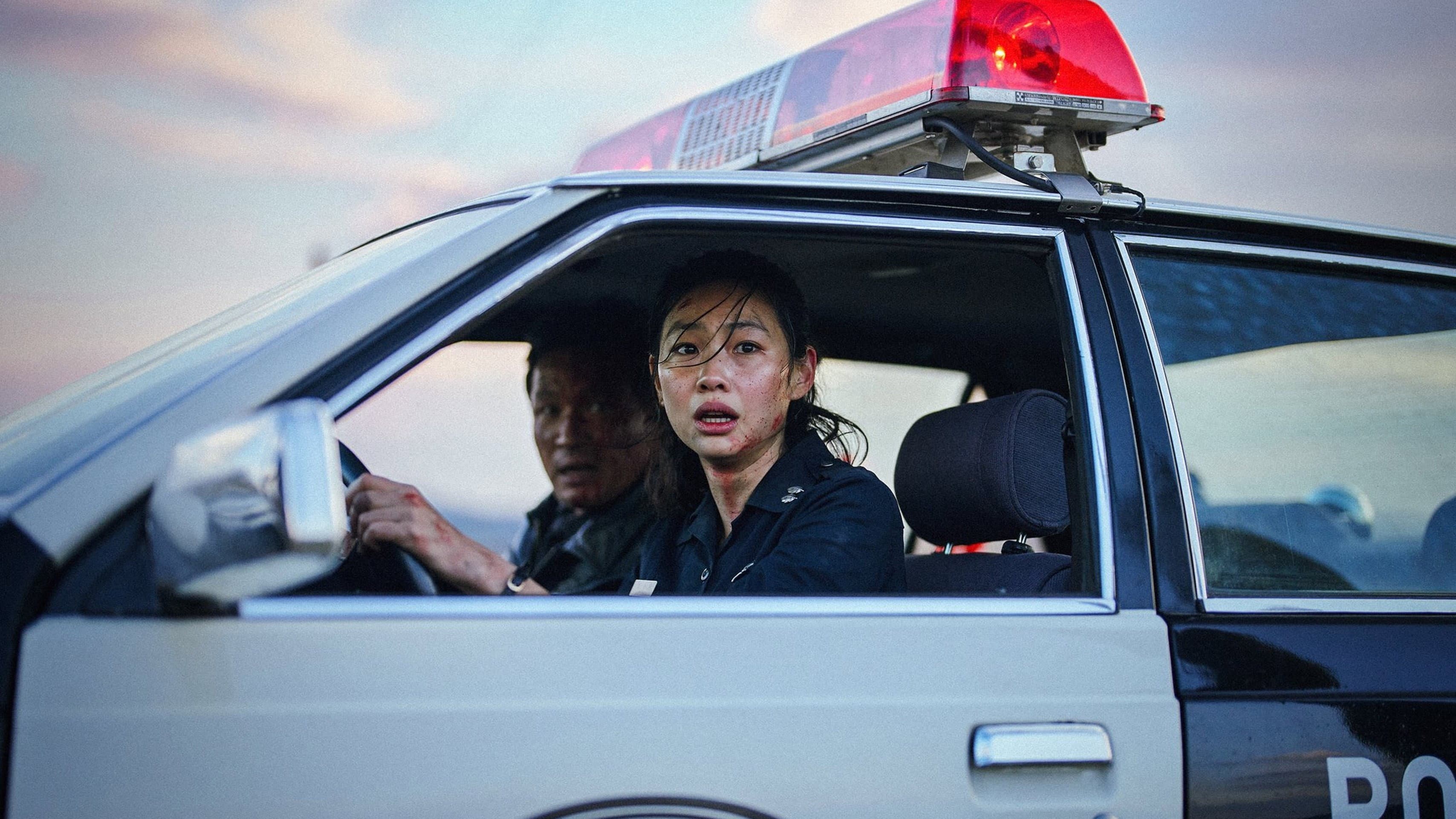
In the fictional coastal village of Hope Harbor, South Korea, police chief Ko Bum-seok and rookie officer Im Sung-ae are drawn into a violent, inexplicable string of killings that upend the town's fragile order. As the two investigators dig deeper, they discover the attacks are connected to a crashed alien vessel and an extraterrestrial family searching for its missing heir, forcing Hope Harbor's residents into an increasingly chaotic fight for survival. Written and directed by Na Hong-jin in his first feature since 2016's The Wailing, Hope stars Hwang Jung-min, Zo In-sung, Hoyeon, Michael Fassbender and Alicia Vikander.
What Is the Budget of Hope?
Na Hong-jin's Hope (2026) carries a reported production budget of $46,000,000, making it one of the most expensive South Korean films ever produced. Korean trade coverage has cited figures as high as ₩60 billion won (roughly $43 million to $46 million depending on the exchange rate and whether marketing costs are folded in), but $46,000,000 is the figure in Saturation's verified data set and is used consistently throughout this page.
The film is a South Korean production from Forged Films, Plus M Entertainment and Westworld Story, written and directed by Na Hong-jin in his first feature since 2016's The Wailing. NEON acquired distribution rights for English-speaking territories and gave Hope the widest U.S. theatrical release for a Korean-language film since Parasite, opening in roughly 1,500 to 1,560 theaters on September 9, 2026.
Key Budget Allocation Categories
- Practical Creature and Motion-Capture Effects: Hope's alien antagonists were built through a mix of animatronics, motion-capture performance, and CGI compositing, with lead actors Michael Fassbender, Alicia Vikander and Taylor Russell physically performing the alien roles rather than voicing them from a booth. Korean press has pointed to this hybrid creature pipeline as the single largest driver of the budget.
- Location Shooting in South Korea and Romania: Principal photography centered on the coastal Bukpyeong-myeon and Namchang areas of Haenam County, South Korea, with an additional unit traveling to Romania's Retezat National Park to capture a horse-riding sequence in natural daylight, adding international logistics on top of a standard domestic Korean shoot.
- A-List International Cast: Casting Michael Fassbender, Alicia Vikander and Taylor Russell alongside Korean stars Hwang Jung-min, Zo In-sung and Hoyeon added above-the-line costs well beyond a typical Korean genre production, and reunited Fassbender and Vikander on screen for the first time since 2016's The Light Between Oceans.
- Extended Post-Production: Development stretched nearly a decade and post-production ran close to three years. Director Na Hong-jin has said the most extensive work done after the Cannes premiere went into re-cutting creature animation and reworking sound design rather than reshoots, a sign of how much of the budget sits in the finishing process rather than the shoot itself.
- Original Score: American composer Michael Abels, known for Get Out, Us and Nope, scored the film, an unusual choice for a Korean production that reflects Hope's deliberately international, crossover positioning from the outset.
How Does Hope's Budget Compare to Similar Films?
- Parasite (2019): Budget $11,363,000 | Worldwide $257,591,776. Bong Joon Ho's Palme d'Or and Best Picture winner, also released by NEON, is the reference point for every Korean crossover release since. Hope needed the Cannes competition slot and NEON's widest Korean rollout since Parasite to chase a similar breakout, but at more than three and a half times Parasite's production budget.
- Train to Busan (2016): Budget $8,500,000 | Worldwide $87,547,518. The last Korean creature feature to become a genuine global hit did it on roughly a fifth of Hope's budget, underscoring how much more capital-intensive Na Hong-jin's alien-invasion approach is than Yeon Sang-ho's zombie outbreak.
- Godzilla Minus One (2023): Budget $15,000,000 | Worldwide $113,676,322. The closest recent comparison for an Asian-language monster movie breaking wide in the United States. Toho's film proved American audiences will turn out for a subtitled creature feature, but did it at roughly a third of Hope's budget with a far higher return.
- Space Sweepers (2021): Budget $21,000,000 | Worldwide $24,571. Korea's previous attempt at a big-budget sci-fi crossover went almost straight to streaming after a token theatrical run and never recouped theatrically, a cautionary comparison for any Korean sci-fi production betting on a wide international release.
Hope Box Office Performance
Hope opened in South Korea on July 15, 2026 to the country's biggest debut of the year, taking in roughly $11.3 million to $11.4 million from 1,504,019 admissions across 2,334 screens and a 64 to 66 percent share of the total Korean box office that weekend. It went on to gross an estimated $37,590,801 internationally, the bulk of it in South Korea, before NEON opened it in the United States on September 9, 2026 across roughly 1,500 to 1,560 theaters, the widest U.S. release for a Korean-language film since Parasite. NEON's domestic run started with early access premium-format showings (Dolby, 4DX, ScreenX, Barco HDR and D-BOX) on September 7, followed by the wide break on September 9.
The domestic figure is worth reconciling explicitly. Early trade estimates during the September 11 to 13 opening weekend put Hope's three-day gross at roughly $2.65 million, and that partial figure is what several databases carried in the hours after the weekend closed. Box Office Mojo's own weekend chart, once the actuals were finalized, listed Hope's three-day weekend at $3,315,000 and its cumulative domestic total since Wednesday previews at $5,010,000. That $5,010,000 figure is the more current and complete number, since it captures the September 9 and 10 preview and early access days the partial estimate missed, and it is the domestic figure used on this page.
Box Office Breakdown
Hope

That worldwide figure combines the $8,025,567 domestic total with the $37,590,801 already earned internationally, almost all of it from the film's run atop the Korean box office through July and August. NEON has not disclosed a prints-and-advertising figure for Hope's release, and no trade outlet has published a reliable estimate of the marketing spend behind its unusually wide, premium-format-heavy rollout, so Total Estimated Investment, Net Return and ROI are not calculated here rather than guessed at.
What can be said plainly from the disclosed figures: Hope's $45,616,368 worldwide gross to date has not yet covered its $46,000,000 reported production budget on its own, before any marketing spend is added on top. South Korean investor Episode Company briefly announced in late July that the film had "surpassed its break-even point" domestically on the strength of roughly 200 territories' worth of international presales, then corrected the statement to say it had merely passed the midpoint toward break-even. Whether Hope ultimately turns a profit will depend heavily on those presale terms and on how the U.S. run holds up in its second and third weekends, neither of which is knowable yet from public data.
Hope Production History
Na Hong-jin has said the idea for Hope came from a single image he conceived around 2017 to 2018. Development stretched nearly a decade before the film reached cameras in 2023, making it his first feature since 2016's The Wailing. Principal photography ran through 2023 in Bukpyeong-myeon and Namchang, two coastal areas of Haenam County in South Korea, with a second unit traveling to Romania's Retezat National Park to shoot a horse-riding sequence in natural daylight. Taylor Russell and Cameron Britton joined the cast in April 2023, and Alicia Vikander and Russell wrapped their work on the film by July 2024, with post-production continuing for close to three years afterward.
Hope premiered in the main competition for the Palme d'Or at the 79th Cannes International Film Festival on May 17, 2026, the first South Korean film to compete for the Palme d'Or since Decision to Leave in 2022 and Na Hong-jin's fourth film to screen at Cannes. The Cannes premiere earned a six-to-seven-minute standing ovation, one of the longest of the festival, though the Palme d'Or itself ultimately went to Cristian Mungiu's Fjord. Reviews out of Cannes were enthusiastic about the film's action and craft but split on its nearly three-hour running time and uneven CGI, and Na re-edited the film afterward, trimming roughly four to five minutes, restructuring the pacing between its concurrent storylines, giving more screen time to the town taxidermist Yang-bae, and reworking the creature animation and sound design around the film's midpoint, arriving at the 156-to-157-minute cut that went into wide release.
The film had its North American premiere as the centerpiece selection of the 25th New York Asian Film Festival on July 20, 2026, and its UK premiere at the Edinburgh International Film Festival on August 16, 2026, before Plus M's roughly 200-territory international presale campaign, one of the largest for a Korean film, helped fund NEON's decision to open Hope on close to 1,500 U.S. screens on September 9, 2026, a scale of theatrical rollout no Korean-language film had attempted since Parasite. NEON acquired English-speaking territories, while Focus Features holds France, Benelux and South Africa, and Sony Pictures Worldwide Acquisitions holds Portugal, Scandinavia, Iceland, the Middle East and Israel.
Awards and Recognition
- Cannes Film Festival, Main Competition (2026): Nominated for the Palme d'Or, one of only 21 films selected into the festival's main competition and the first South Korean film in competition since Decision to Leave in 2022. Hope did not win; the Palme d'Or went to Cristian Mungiu's Fjord.
- New York Asian Film Festival, Daniel A. Craft Award for Excellence in Action Cinema (2026): Na Hong-jin received the award at the festival's 25th edition, given for filmmakers working at the highest level of action cinema; past recipients include Dante Lam and Yuen Woo-ping.
- Festival Selections: Official selection at Cannes (competition), the New York Asian Film Festival (centerpiece, North American premiere) and the Edinburgh International Film Festival (UK premiere).
Formal industry-award nominations from bodies such as the Buil Film Awards had not been announced as of this writing; this section will be updated once nominations are confirmed rather than listing them as pending.
Critical Reception
Hope holds a Certified Fresh 80 percent on Rotten Tomatoes (from roughly 95 to 127 critic reviews, average rating 6.9 out of 10) against a more divided 66 out of 100 on Metacritic, and carries a 6.9 out of 10 audience rating on IMDb. That gap between critics and Metacritic's broader sampling reflects a genuinely split reaction: reviewers agree Hope contains some of the best staged action of the year, and disagree sharply about whether its nearly three-hour running time and tonal swings between horror, comedy and creature-feature spectacle add up to a coherent whole.
Rotten Tomatoes' critics consensus calls it "an unhinged sci-fi epic that boasts awe-inspiring production design and amusingly quaint visual effects," one that "gets the adrenaline pumping whenever it focuses on the unraveling of its hapless human heroes." The Hollywood Reporter's Chase Hutchinson wrote that the film "pulls you in immediately with its virtuoso camerawork, pulse-pounding score, adrenalized pacing and sharply drawn characters." Variety called it, "for much of its runtime, the best action movie you've ever seen," citing "some of the most breathtakingly elegant action moviemaking of this or any year," while still landing on the film as an overlong, bawdy, uneven ride. RogerEbert.com described Hope as "a glorious genre romp that contains more magnificent moments in its opening act than most do in their entire runtime," and the BBC's Nicholas Barber gave it four out of five stars, calling it "2026's must-see monster movie."
The most consistent criticism across reviews is the film's visual effects work on the alien creatures, which multiple critics have called uneven next to the quality of the human-scale action and camerawork surrounding them, and its length, which even sympathetic reviewers have flagged as a drag on the back half of the story. Audiences appear more forgiving than critics: Hope's 79 percent Rotten Tomatoes audience score is close to its Tomatometer, suggesting the film's chaotic, maximalist approach is landing with genre fans largely as intended.
Frequently Asked Questions
What is the budget of Hope (2026)?
Hope's reported production budget is $46,000,000, making it one of the most expensive South Korean films ever made. Some Korean trade reports have cited figures as high as roughly $46,000,000, but $46,000,000 is the verified figure used on this page.
Did Hope make its money back at the box office?
Not yet, based on public figures. Hope's worldwide gross stands at roughly $41,258,665 against its $46,000,000 production budget, before any marketing spend is factored in. South Korean investor Episode Company said in late July 2026 that the film had passed the midpoint toward its domestic break-even point, aided heavily by international presales to roughly 200 territories, but a full return has not been confirmed.
Why did NEON give Hope such a wide U.S. release?
NEON opened Hope in roughly 1,500 to 1,560 U.S. theaters on September 9, 2026, the widest theatrical release for a Korean-language film since NEON's own Parasite in 2019. The decision followed a competition premiere at Cannes, a lengthy standing ovation, an action-cinema award at the New York Asian Film Festival, and a large international presale campaign that had already de-risked much of the film's budget before it opened domestically.
Did Hope win any awards at Cannes?
Hope competed for the Palme d'Or at the 79th Cannes Film Festival in May 2026, the first South Korean film in main competition since Decision to Leave in 2022, and received a six-to-seven-minute standing ovation at its premiere. It did not win; the Palme d'Or went to Cristian Mungiu's Fjord. Director Na Hong-jin separately won the Daniel A. Craft Award for Excellence in Action Cinema at the New York Asian Film Festival.
What is Hope about?
Hope follows a police chief and a rookie officer in the fictional coastal town of Hope Harbor as they investigate a series of killings that turn out to be the work of an alien family searching for its missing heir near the Korean Demilitarized Zone. It stars Hwang Jung-min, Zo In-sung and Hoyeon alongside Michael Fassbender, Alicia Vikander and Taylor Russell as the alien characters.
Is Hope's $2.6 million opening weekend figure correct?
That figure reflects an early, partial estimate. Box Office Mojo's finalized weekend chart lists Hope's three-day domestic weekend (September 11 to 13, 2026) at $3,315,000 and its cumulative domestic total since Wednesday previews at $5,010,000, which is the more complete and current figure and the one used on this page.
Filmmakers
Hope

Build budgets like this one in Saturation
Start from an industry-standard feature film template, import the schedule and rates you already have, and let the cost report keep itself current as you spend. Real-time collaboration, no spreadsheets.