Assassin’s Creed Budget
 ActionAdventureScience Fiction1h 56m
Updated
Synopsis
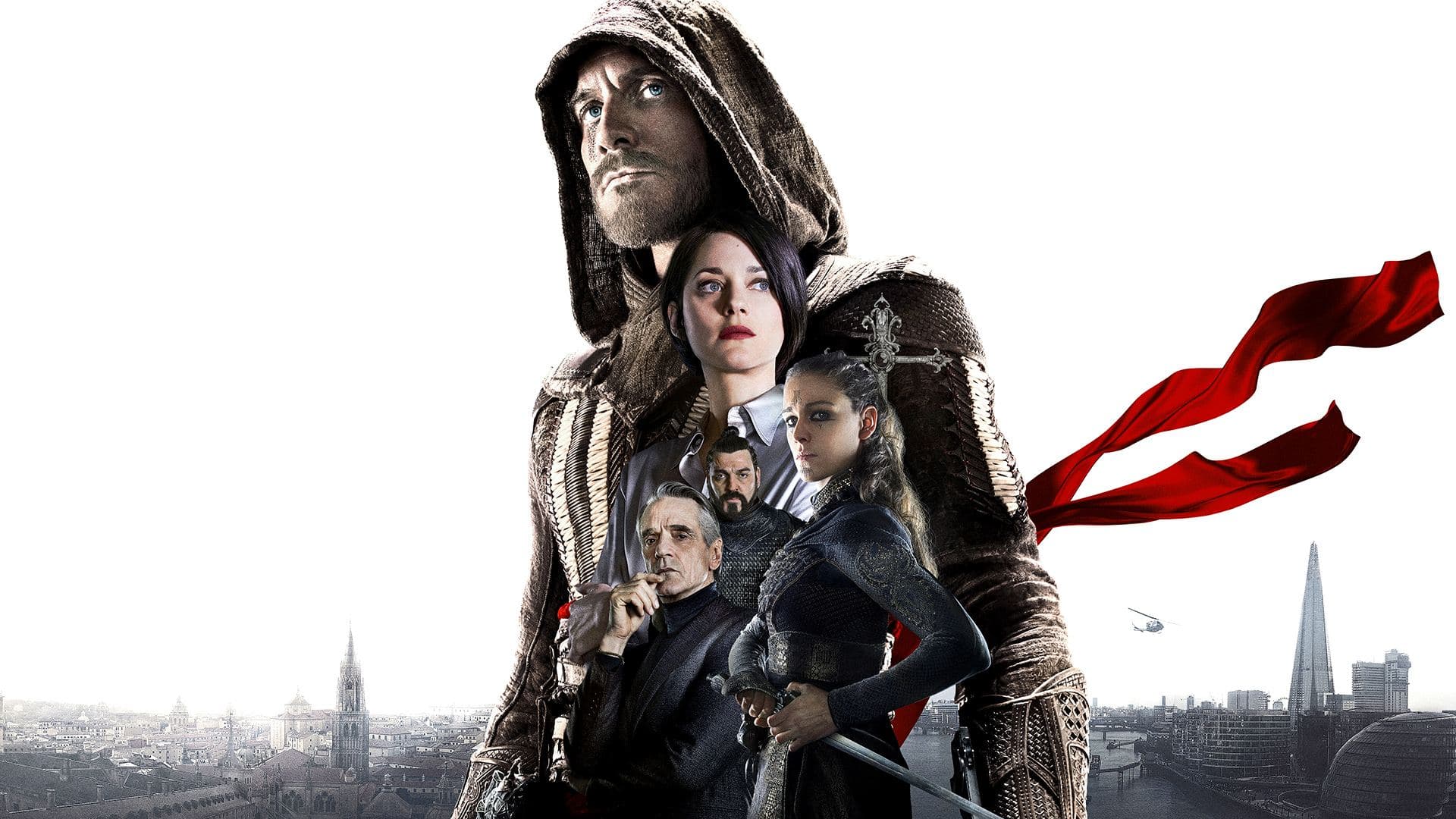
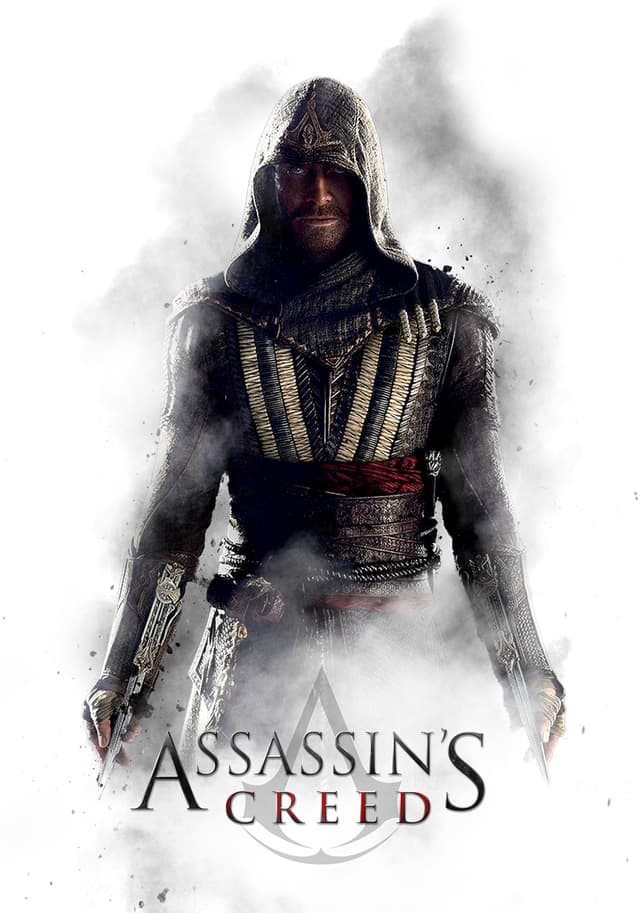
After his execution, Callum Lynch is taken in by the modern-day Templar organization Abstergo Industries, which forces him into the Animus, a machine that lets him relive the memories of his ancestor, the 15th-century Spanish Assassin Aguilar de Nerha. As Callum gains the skills and instincts of his ancestor, he must decide whether to help Abstergo recover the Apple of Eden or join the present-day Assassin Brotherhood in resisting them.
What Is the Budget of Assassin's Creed (2016)?
The production budget of Assassin's Creed was approximately $125,000,000, financed by Twentieth Century Fox, Regency Enterprises, Ubisoft Motion Pictures, and DMC Film. The figure reflected the cost of recreating 15th-century Andalusia and Granada, building the Animus apparatus and Abstergo facility, an extensive parkour-driven action design with a 100-person stunt team, and significant cooperation with Ubisoft to maintain visual continuity with the video game franchise.
Director Justin Kurzel shot Assassin's Creed in Malta, Spain, and at Pinewood Studios in the United Kingdom, with Ubisoft Motion Pictures co-financing as part of the gaming company's push into film. The production prioritized practical parkour and physical stunt work over CGI to differentiate from typical video game adaptations.
Key Budget Allocation Categories
- Cast Compensation: Michael Fassbender's above-the-line salary as Callum Lynch and Aguilar de Nerha, plus Marion Cotillard, Jeremy Irons, Brendan Gleeson, Charlotte Rampling, and Michael K. Williams.
- Parkour and Stunt Choreography: A 100-person stunt team including parkour specialists who performed the most ambitious leap of faith stunt in modern cinema, a 125-foot drop performed practically by Damien Walters.
- Period Production Design: Recreations of 15th-century Granada, the Cathedral of Seville, and the streets of Andalusia, plus the present-day Abstergo Foundation Madrid facility supervised by Andy Nicholson.
- Visual Effects: Approximately 800 effects shots covering Animus transitions, expansion of period environments, the climactic Apple of Eden manifestation, and the destruction of the Sevillian skyline.
- Costumes and Weaponry: Sammy Sheldon's costume design including the bespoke Assassin robes and period 15th-century Spanish attire, plus historically accurate weapons and the iconic hidden blade.
- Marketing and Distribution: A worldwide December 2016 holiday release positioning, with major marketing tie-ins to Ubisoft's gaming community and the Assassin's Creed franchise's November 2016 Wii U release window.
How Does Assassin's Creed's Budget Compare to Similar Films?
- Warcraft (2016): Budget $160,000,000 | Worldwide $439,000,000. A roughly contemporaneous video game adaptation on a higher budget that performed considerably better, particularly in China.
- Prince of Persia: The Sands of Time (2010): Budget $200,000,000 | Worldwide $336,000,000. A previous Ubisoft video game adaptation on a substantially higher budget with a softer return.
- Resident Evil: The Final Chapter (2016): Budget $40,000,000 | Worldwide $312,000,000. A video game adaptation made for less than a third of the budget that posted a substantially stronger return.
- Macbeth (2015): Budget $20,000,000 | Worldwide $16,000,000. Justin Kurzel's previous feature with Fassbender and Cotillard, on a fraction of the budget that demonstrated their working chemistry.
Assassin's Creed Box Office Performance
Assassin's Creed opened to $10,275,400 across 2,970 North American theaters on December 21, 2016, finishing third behind Rogue One: A Star Wars Story and Sing. The opening fell well below tracking projections for a $125 million holiday tentpole, and the picture suffered a 64 percent second-weekend drop.
Box Office Breakdown
Assassin’s Creed

For every $1 invested, the studios recouped roughly $0.58 after the theatrical exhibitor split.
International accounted for 77 percent of worldwide gross, with particularly strong showings in Russia, Mexico, and Brazil. North American performance fell well short of Fox's expectations and effectively ended plans for the franchise extensions Fox and Ubisoft had announced ahead of release. The picture was widely cited as a contributing factor to Fox's eventual retreat from large-budget video game adaptations.
Assassin's Creed Production History
Ubisoft Motion Pictures and Sony first negotiated film rights to Assassin's Creed in 2011, before the project moved to Twentieth Century Fox in 2012 with Michael Fassbender attached as both star and producer through his DMC Film banner. Justin Kurzel, fresh off the Cannes-premiered Snowtown, signed on to direct in summer 2014 following Fassbender's and Cotillard's work with him on Macbeth.
Principal photography began in late August 2015 in Malta, with additional photography in Spain, including Andalusia and Almeria, and at Pinewood Studios in the United Kingdom. The production wrapped in January 2016. The parkour-driven action design was developed in collaboration with stunt coordinator Ben Cooke and parkour specialist Damien Walters, who performed the picture's 125-foot leap of faith stunt as a single practical drop.
Post-production extended into autumn 2016, with extensive Animus transition work and the climactic Apple of Eden manifestation requiring late visual effects iterations. Ubisoft maintained a creative consulting role throughout production, advising on visual continuity with the games, though the studio acknowledged that the film took significant narrative departures, including the entirely new Callum Lynch character. The picture's commercial underperformance ended plans for sequels and franchise extensions that Fox had publicly mentioned ahead of release.
Awards and Recognition
Assassin's Creed received no major Academy Award, Golden Globe, or guild nominations. The picture won the Visual Effects Society Award for Outstanding Created Environment for the Animus chamber and received nominations from the World Soundtrack Academy for Composer of the Year (Jed Kurzel). It received Saturn Award nominations for Best Action / Adventure Film and Best Production Design. The 125-foot practical leap of faith stunt by Damien Walters won the Taurus World Stunt Award for Best High Work, breaking the Guinness World Record for the highest free-fall stunt performed by a single performer in a feature film.
Critical Reception
Assassin's Creed holds an 18 percent rating on Rotten Tomatoes and a Metacritic score of 36, among the lowest critical scores ever recorded for a major studio video game adaptation of its scale. CinemaScore audiences awarded the film a B. A.O. Scott of The New York Times called the picture "a humorless, grim slog." Manohla Dargis wrote that "Kurzel cannot reconcile his serious filmmaking instincts with the demands of the video game source material." Justin Chang at the Los Angeles Times praised the production design and Damien Walters' practical stunt work but said the picture "feels embarrassed by its own premise." Peter Travers gave the film one and a half stars. The 125-foot leap of faith stunt drew almost unanimous praise as one of the genuine theatrical achievements of the decade, and the picture has gradually accumulated a smaller defender community in subsequent years.
Frequently Asked Questions
What was the production budget of Assassin's Creed (2016)?
The production budget of Assassin's Creed was approximately $125 million, financed by Twentieth Century Fox, Regency Enterprises, Ubisoft Motion Pictures, and DMC Film.
How much did Assassin's Creed gross worldwide?
Assassin's Creed grossed $240,576,874 worldwide, including $54,647,948 in the United States and Canada and $185,928,926 internationally.
Was Assassin's Creed a box office success?
No. After P&A and the exhibitor split, the film posted an estimated theatrical loss of approximately $90 million, ending plans for the sequels and franchise extensions Fox and Ubisoft had publicly mentioned ahead of release.
Who directed Assassin's Creed?
Assassin's Creed was directed by Justin Kurzel, fresh off the Cannes-premiered Macbeth with Michael Fassbender and Marion Cotillard. It was Kurzel's first major Hollywood studio feature.
Where was Assassin's Creed filmed?
Assassin's Creed was filmed in Malta, Spain (including Andalusia and Almeria), and at Pinewood Studios in the United Kingdom between August 2015 and January 2016.
Was the leap of faith real in Assassin's Creed?
Yes. Parkour specialist Damien Walters performed a 125-foot free-fall drop practically as a single live stunt, breaking the Guinness World Record for the highest free-fall stunt performed by a single performer in a feature film.
Is Assassin's Creed faithful to the video games?
The film takes significant narrative departures, including the entirely new modern-day character Callum Lynch and a redesigned Animus apparatus. Ubisoft maintained a creative consulting role throughout production to advise on visual continuity, though the film is set in its own continuity rather than adapting any specific game.
How was Ubisoft involved in Assassin's Creed?
Ubisoft Motion Pictures co-financed and co-produced the film through Jean-Julien Baronnet and Gerard Guillemot, with the gaming company maintaining a consulting role on visual continuity, the Animus apparatus design, and the depiction of the Assassin Brotherhood and Templar Order.
Will there be an Assassin's Creed sequel?
No. The commercial underperformance of the 2016 film ended plans for direct sequels. Netflix has since announced a separate live-action Assassin's Creed series in development as part of its broader Ubisoft partnership.
What is Assassin's Creed's Rotten Tomatoes score?
Assassin's Creed holds an 18 percent approval rating on Rotten Tomatoes and a Metacritic score of 36, among the lowest critical scores ever recorded for a major studio video game adaptation.
Filmmakers
Assassin’s Creed

Official Trailer
Build budgets like this one in Saturation
Start from an industry-standard feature film template, import the schedule and rates you already have, and let the cost report keep itself current as you spend. Real-time collaboration, no spreadsheets.