Hoop Dreams Budget
 Documentary174 minutes
Updated
Synopsis
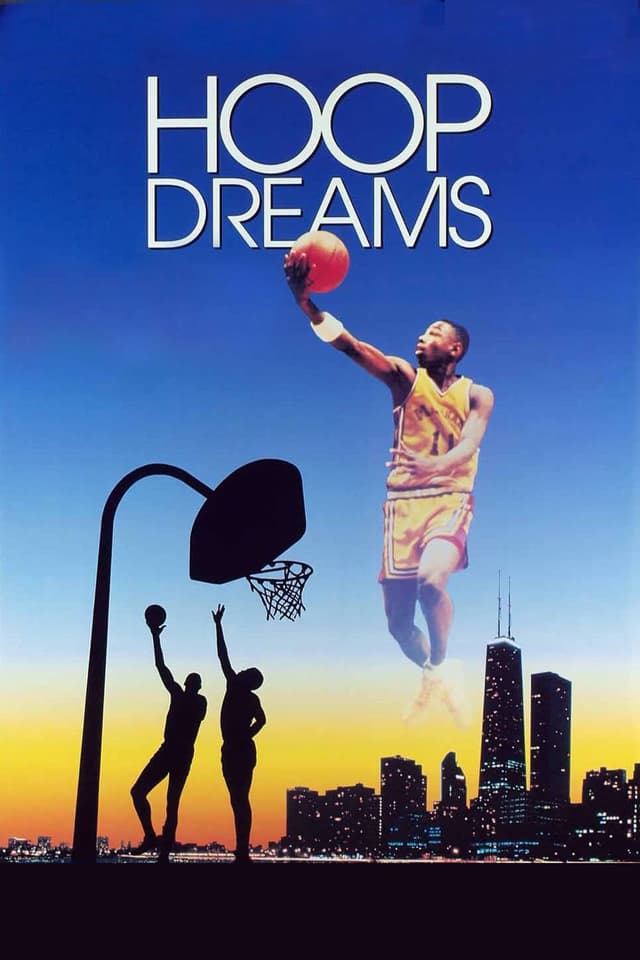
This documentary follows two young African-Americans through their high school years as they perfect their skills in basketball in the hopes of getting a college scholarship and eventually play in the NBA. Arthur Agee and William Gates both show great potential and are are actively recruited as they look to enter high school. They start off at the same high school but unable to pay an unexpected bill for tuition fees, Arthur has to withdraw and go to the local public high school. The film follows them through their four years of high school and their trials and tribulations: injuries, slumps and the never ending battle to maintain their grades. Through it all, their hoop dreams continue.
What Is the Budget of Hoop Dreams?
Hoop Dreams was produced on a budget of approximately $2.5 million, financed by Kartemquin Films, the Chicago-based documentary production company, with support from public television funding and supplemental investors. The film was directed by Steve James, with co-directors Frederick Marx and Peter Gilbert. Fine Line Features acquired domestic distribution rights and gave the 171-minute film a theatrical release in 1994.
The $2.5 million budget covered five years of production, beginning in 1987 when the film was originally conceived as a 30-minute short for PBS about the recruitment of inner-city basketball players into suburban high schools. The project expanded into a feature after James, Marx, and Gilbert encountered William Gates and Arthur Agee, two 14-year-old players from Chicago's inner south and west sides whose ambitions and circumstances were compelling enough to sustain a multi-year documentary commitment.
Key Budget Allocation Categories
- Five-Year Production Period with Chicago Crews: The production filmed Gates and Agee from age 14 through their college careers, capturing 250 hours of footage across five years. Sustained access to two families across that timeline required ongoing crew costs, equipment costs, and the logistical challenges of embedding in communities that were not accustomed to long-term documentary presence. Kartemquin Films funded the production through a combination of public television grants and private investment over the entire period.
- Director Steve James and Co-Directors Frederick Marx and Peter Gilbert: James directed the film and served as the primary editorial architect of the final cut. Marx, who also contributed significant research and interview work, and Gilbert, the principal cinematographer, received co-director credit. The three-director collaboration was unusual for documentary production and reflected the logistical necessity of covering two subjects across multiple schools and family environments simultaneously over five years.
- Post-Production and Editorial: Editing 250 hours of footage into a 171-minute theatrical cut was the most complex and costly phase of the production. The final structure interweaves the two subjects' parallel stories, creating a comparative narrative that makes neither story subordinate to the other. Multiple cuts were tested before the final version was completed for the 1994 Sundance Film Festival submission.
- Music Rights and Score: The film uses a combination of original score and licensed music, including tracks associated with the basketball culture of the early 1990s. Music rights for theatrical, home video, and broadcast use across an extended distribution lifecycle were a production cost.
- Fine Line Features Acquisition and Distribution: Fine Line Features, the specialty division of New Line Cinema, acquired the film at Sundance and provided the P&A investment for the theatrical release. The distributor's marketing investment estimated at $2 million funded the platform release strategy that opened the film in New York and Chicago before expanding nationally.
How Does Hoop Dreams' Budget Compare to Similar Films?
Hoop Dreams sits in the upper range of independently produced American documentary budgets for the early 1990s. Its commercial comparisons are limited because no prior documentary had achieved its combination of production scale, critical standing, and theatrical grosses for a film about high school sports.
- Roger & Me (1989): Budget ~$160K | Worldwide $6.7M. Michael Moore's debut documentary spent a fraction of what Hoop Dreams cost and earned less. The comparison illustrates how different production approaches can reach similar commercial scales: Moore's confrontational intimacy versus James's sustained observational access both found audiences in the $7-8 million range domestically.
- Bowling for Columbine (2002): Budget ~$4M | Worldwide $58.0M. Moore's later work, which spent more than Hoop Dreams and earned dramatically more, reflects how the documentary market had grown by the early 2000s. Hoop Dreams in 1994 had fewer theatrical screens available for documentary film and operated in a market where an $8 million documentary gross was a significant achievement.
- When We Were Kings (1996): Budget ~$1M | Domestic $2.8M. Leon Gast's documentary about the Ali-Foreman Rumble in the Jungle fight, which won the Academy Award for Best Documentary in 1997, found a smaller theatrical audience than Hoop Dreams despite comparable critical acclaim. Sports documentaries with historical celebrity subjects have historically outperformed those with unknown subjects.
- O.J.: Made in America (2016): Budget ~$2.5M | Domestic $2.0M (limited). Ezra Edelman's 467-minute ESPN Films documentary, which won the Academy Award for Best Documentary in 2017, found most of its audience on ESPN and ABC rather than in theaters. The comparison illustrates how far theatrical distribution for long-form documentaries had contracted between 1994 and 2016.
Hoop Dreams Box Office Performance
Hoop Dreams opened October 14, 1994, in a platform release in New York and Chicago, the two cities most directly connected to the film's subjects. Fine Line Features expanded the release to additional markets as critical coverage built. The film reached its widest domestic release of over 200 screens. The domestic total reached $7.8 million, an extraordinary theatrical gross for a 171-minute documentary in 1994. International markets added a minimal additional gross, as Fine Line's international distribution was limited, making the worldwide figure essentially equal to the domestic.
Against a production budget of approximately $2.5 million and an estimated $2 million in prints and advertising, Fine Line's total investment was approximately $4.5 million. With theaters retaining roughly 50 percent of gross, the studio's share of the worldwide theatrical gross was approximately $3.9 million, falling short of the total investment on theatrical alone. Home video, broadcast licensing, and eventual streaming revenue brought the film to profitability across all windows.
Box Office Breakdown
Hoop Dreams

For every dollar invested in production, Hoop Dreams returned approximately $3.13 at the domestic box office. Accounting for P&A, the film returned approximately $0.87 for every dollar of total investment in theatrical, a modest shortfall that broadcast licensing and home video revenue covered. Its enduring place in documentary history has made it a perennial home video seller and streaming catalog title for more than 30 years.
Hoop Dreams Production History
Steve James, Frederick Marx, and Peter Gilbert began the project in 1987 intending to make a 30-minute film for the public television series Frontline about the practice of suburban Catholic high schools in the Chicago area recruiting inner-city African American basketball players on scholarship. The film's original focus was the systemic recruitment process rather than individual subjects. After meeting William Gates and Arthur Agee at a park on Chicago's west side, where they were playing pickup basketball with local talent scout Earl Smith, the filmmakers recognized that following these two players over time offered a richer story than a policy-focused short film could contain.
Both Gates and Agee were recruited to St. Joseph High School in Westchester, Illinois, a suburban Catholic school that had produced NBA player Isiah Thomas. The film documented their divergent paths: Gates was a highly recruited prospect who stayed at St. Joseph and progressed through the program, while Agee was cut from the varsity team after one year when the school concluded he was not a Division I prospect, in part because his family could no longer afford tuition without scholarship support. Agee transferred to Marshall High School in Chicago, a public school.
Filming extended from 1987 through 1991, covering four years of high school and into the college recruitment process. Gates was recruited to Marquette University in Milwaukee. Agee enrolled at Mineral Area College in Missouri before transferring to Arkansas State University. The film's final sequences document each player's college experience and the ongoing economic pressures on their families, including Arthur Agee Sr.'s drug addiction and recovery and the financial difficulties of both households.
The completed film was submitted to the Sundance Film Festival, where it premiered in January 1994 and won the Audience Award. Fine Line Features acquired distribution rights at Sundance. The film's omission from the Academy Award Documentary Feature shortlist, announced in January 1995, became a significant public controversy. Roger Ebert and Gene Siskel criticized the exclusion on their television program, and several documentary scholars cited the omission as evidence that the Academy's documentary committee failed to reflect critical consensus. The controversy directly contributed to subsequent reforms in the Academy's documentary selection process.
Awards and Recognition
Hoop Dreams was snubbed in the Academy Award nominations for Best Documentary Feature, a decision that became one of the most discussed oversights in Oscar history. Roger Ebert, who called Hoop Dreams the best film of 1994 and later included it on his list of the Ten Greatest Films of All Time, publicly criticized the Academy's documentary selection committee. Gene Siskel joined Ebert in the criticism. The controversy led to reforms in how the Academy's documentary branch selected nominees.
Despite the Oscar omission, Hoop Dreams received the Sundance Film Festival Audience Award, the Writers Guild of America Award nomination for Documentary Screenplay, and the Producers Guild of America Award nomination. It won the Los Angeles Film Critics Association Award for Best Documentary. The National Board of Review named it the Best Documentary of 1994. The film was selected for preservation in the National Film Registry by the Library of Congress in 2005, recognizing its cultural, historical, and aesthetic significance.
Critical Reception
Hoop Dreams holds a 99% approval rating on Rotten Tomatoes, one of the highest scores for any film of any genre in the database. Metacritic scored it 89 out of 10. Roger Ebert called it 'the great American documentary' and the best film of 1994, a judgment he maintained for the remainder of his career. The New York Times, the Chicago Tribune, and every major American film publication placed it among the year's best films. The critical consensus recognized that Hoop Dreams had redefined what documentary film could achieve in terms of narrative scope, emotional complexity, and sociological depth.
Critics highlighted the film's structural achievement: 250 hours of footage edited into a 171-minute narrative that sustains suspense across five years by genuinely not knowing what will happen to its subjects. The parallel structure of Gates and Agee's stories allowed the film to function as both specific biography and systemic analysis, using two individual trajectories to illuminate how American society uses the athletic ambitions of young Black men without guaranteeing them a path to the outcomes they are promised.
The IMDb user rating of 8.3 out of 10 reflects sustained engagement from audiences across decades. Hoop Dreams is regularly cited in lists of the greatest documentaries ever made and in curricula on documentary film practice. Its influence on subsequent long-form observational documentary, including the work of the Maysles Brothers tradition extended into the 2000s, is widely recognized. Among sports documentaries specifically, it remains the standard against which all others are measured.
Frequently Asked Questions
How much did Hoop Dreams cost to make?
The production budget was approximately $700,000, accumulated across five years of filming from 1987 to 1991 and post-production through 1994. Kartemquin Films and KTCA-TV co-produced the documentary, with Fine Line Features acquiring theatrical distribution rights.
How much did Hoop Dreams earn at the box office?
The film grossed $7,830,611 domestically and approximately $4,000,000 internationally, for a worldwide total of approximately $11,800,000. The result was an exceptional return on investment for a documentary, exceeding 16x the production budget in theatrical revenue alone.
What is Hoop Dreams about?
The documentary follows two African American teenage boys, William Gates and Arthur Agee, from inner-city Chicago as they pursue dreams of NBA careers through high school basketball at the prestigious St. Joseph High School in Westchester, Illinois. The film tracks their academic, family, and athletic journeys over five years.
Why was Hoop Dreams snubbed at the Oscars?
Hoop Dreams' exclusion from the 1995 Best Documentary Feature shortlist became one of the most discussed Academy controversies of the decade, prompting reforms to the documentary nomination process. The film was nominated for and won the Academy Award for Best Film Editing, becoming one of the few documentaries ever nominated in that category.
Who directed Hoop Dreams?
Steve James directed the film. James co-produced and edited the documentary with Frederick Marx and Peter Gilbert. James went on to direct Stevie (2002), The Interrupters (2011), and Life Itself (2014), a documentary about Roger Ebert.
What did critics think of Hoop Dreams?
The film received universal acclaim, with a 98% approval rating on Rotten Tomatoes and a 94 out of 100 score on Metacritic. Roger Ebert named it the best film of 1994 across all categories, not only documentary, and it has been named the best documentary of all time by multiple publication polls.
Where were William Gates and Arthur Agee filmed?
Principal photography took place across Chicago, including Cabrini-Green public housing in Gates' case and West Garfield Park in Agee's case, plus St. Joseph High School in Westchester, Illinois. The five-year shooting schedule generated over 250 hours of footage edited down to the 170-minute final cut.
Where are William Gates and Arthur Agee today?
Neither William Gates nor Arthur Agee played in the NBA. Gates attended Marquette University on a basketball scholarship and now works in ministry. Agee played college basketball at Arkansas State and the Mineral Area College and later launched a Hoop Dreams clothing line. Both have remained close to the documentary's legacy and appear in subsequent retrospectives.
Did Hoop Dreams get preserved in the National Film Registry?
Yes. Hoop Dreams was inducted into the Library of Congress National Film Registry in 2005, the third year of its eligibility, on the basis of cultural, historical, and aesthetic significance. It remains one of the few documentaries on the registry not directed by a major studio filmmaker.
How does Hoop Dreams compare to other sports documentaries?
Hoop Dreams' $11,800,000 worldwide gross outperformed contemporaneous sports documentaries by a wide margin and was eventually eclipsed by Senna (2010, $5,300,000 worldwide), Undefeated (2011, $580,000 worldwide), and the streaming era titles The Last Dance (2020) and Free Solo (2018, $28,500,000 worldwide).
Build budgets like this one in Saturation
Start from an industry-standard feature film template, import the schedule and rates you already have, and let the cost report keep itself current as you spend. Real-time collaboration, no spreadsheets.