Good Morning Budget
Updated
Synopsis
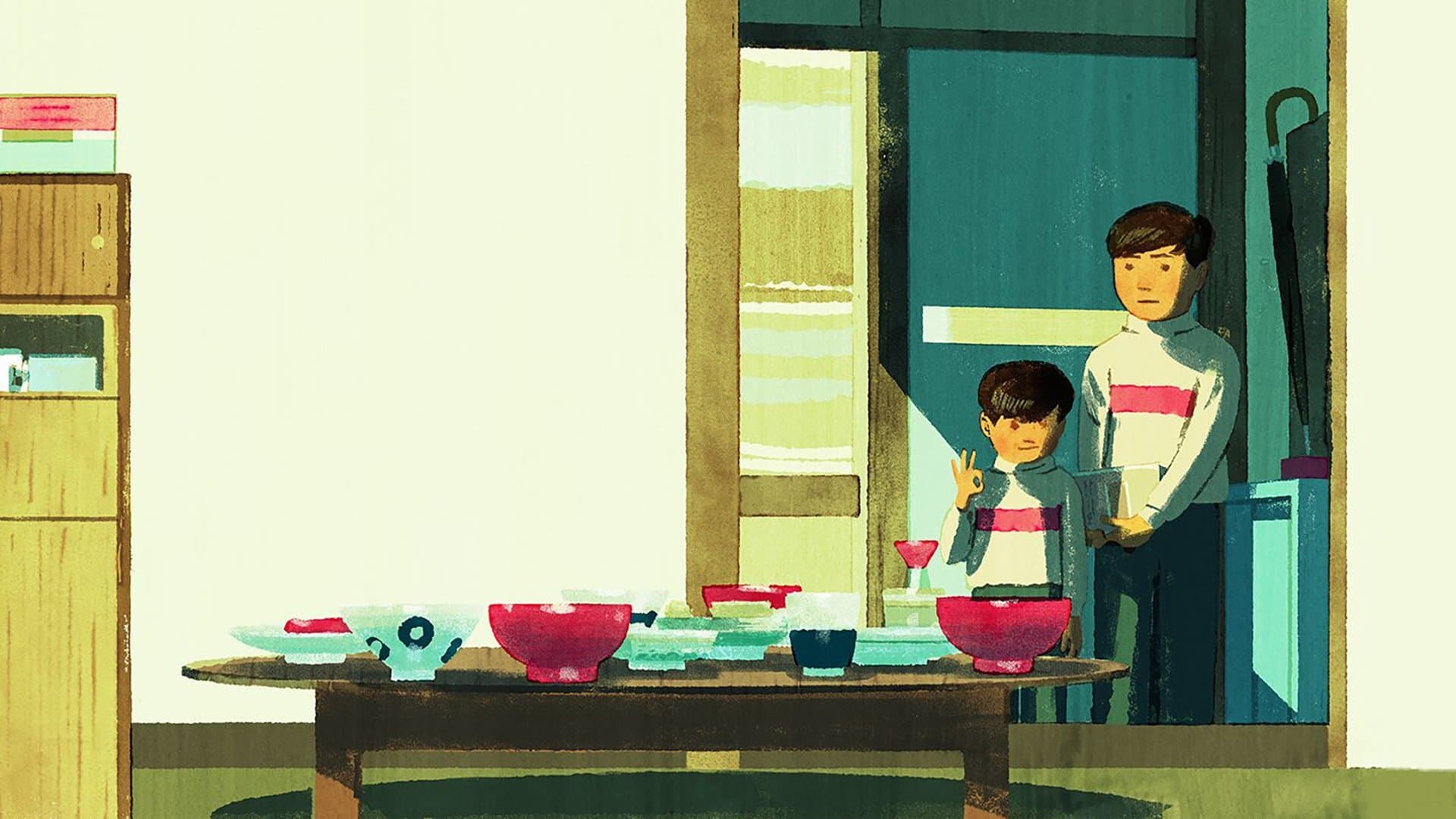
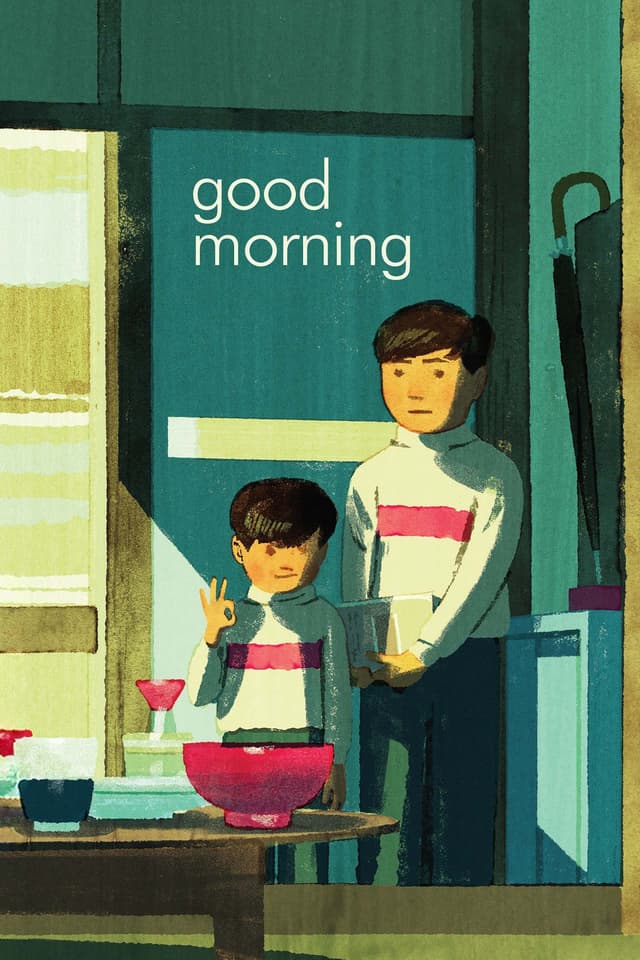
In a small Tokyo suburb in the late 1950s, two young brothers go on a silent strike to pressure their parents into buying the family's first television set. The boys' protest plays out against the gossiping rhythms of the neighborhood housewives and the missed romantic signals of a young aunt and a tutor.
What Is the Budget of Good Morning (1959)?
Good Morning (Ohayō, 1959), directed by Yasujirō Ozu and produced by Shochiku Studios, was made under the late-period Japanese studio system that Ozu had operated within since the 1930s. No public budget figure has ever been released, but Shochiku production reconstructions and Japanese film-industry analysis place the cost at approximately 30 to 50 million Japanese yen of the period, equivalent to approximately $85,000 to $140,000 in 1959 US dollars. Shochiku fully financed the production through its Ofuna studio facility outside Tokyo.
Good Morning was Ozu's second color feature after Equinox Flower (1958), shot on the new Agfa-Color stock that Shochiku had begun using for prestige productions. The color format added a modest cost premium over the studio's black-and-white default but was considered essential for the project given its emphasis on the bright primary colors of late-1950s Japanese suburban consumer culture.
Key Budget Allocation Categories
The estimated budget was distributed across these production areas:
- Above-the-Line Talent. Director Yasujirō Ozu, working at Shochiku since the 1920s, commanded the studio's top director rate. The ensemble cast included Shochiku contract players Keiji Sada, Yoshiko Kuga, Chishu Ryu, Kuniko Miyake, Haruko Sugimura, and child actors Koji Shitara and Masahiko Shimazu, all on studio salary rather than per-film deals.
- Color Film Stock. Agfa-Color stock, imported from West Germany, was the costliest individual line item differential from a comparable black-and-white production. The color processing also required dedicated lab time at Shochiku's Ofuna facility, with quality-control passes that added to the schedule.
- Sets and Production Design. Tatsuo Hamada designed the row of suburban houses, the interior tatami rooms, and the neighborhood retail spaces. Ozu's signature low-angle camera position required custom set construction with rooms designed to be photographed from approximately three feet above floor level rather than at standing eye height.
- Shochiku Studio Overhead. The Ofuna studio facility carried fixed overhead absorbed across all Shochiku productions of the period. Ozu's typical three-to-four-month shooting schedule absorbed a relatively large share of the facility cost relative to faster-turnaround studio productions.
- Costumes and Wardrobe. The film's suburban housewife ensemble required period-appropriate dresses, aprons, and accessories. The boys' school uniforms and tutor wardrobe were standard 1950s Japanese consumer wear, sourced through Shochiku's wardrobe department rather than custom-made.
- Score and Music. Toshiro Mayuzumi composed the gentle theme music and incidental score. Recording took place at Shochiku's sound facility with a chamber-sized ensemble, a budget-controlled approach consistent with Ozu's preference for restrained underscoring.
How Does Good Morning's Budget Compare to Similar Films?
At an estimated $85,000 to $140,000 (1959 dollars), Good Morning sits among other Ozu-era Shochiku productions and contemporary international art cinema:
- Tokyo Story (1953): Budget approximately $50,000 to $80,000 | Worldwide N/A. Ozu's preceding masterpiece cost roughly half of Good Morning in nominal dollars due to its black-and-white format. The film grossed strong returns in Japan and became the international Ozu touchstone over subsequent decades.
- Floating Weeds (1959): Budget approximately $100,000 to $150,000 | Worldwide N/A. Ozu's other 1959 release was shot in color at Daiei rather than Shochiku, costing essentially the same as Good Morning and demonstrating the consistency of Japanese studio-system budgeting across major auteur productions.
- The Naked Island (1960): Budget approximately $30,000 | Worldwide N/A. Kaneto Shindo's contemporaneous independent Japanese feature cost a small fraction of Good Morning, illustrating the gap between studio and independent production scales in late-1950s Japan.
- The 400 Blows (1959): Budget approximately $75,000 | Worldwide $1,000,000. François Truffaut's contemporaneous French New Wave coming-of-age film cost less than Good Morning and earned far higher international art-house returns, illustrating the difference between studio-system and independent New Wave production environments.
Good Morning Box Office Performance
Good Morning released in Japan on May 12, 1959 through Shochiku's domestic distribution network, achieving solid commercial returns within the Japanese theatrical market of the period. Shochiku does not publish individual title revenue from the 1950s, but Japanese cinema historians estimate the film grossed in the range of 100 to 150 million Japanese yen domestically, equivalent to approximately $280,000 to $420,000 in 1959 dollars. International release through Shochiku's overseas distribution arm was limited.
Against an estimated $85,000 to $140,000 production cost, the financial breakdown reflects a comfortably profitable studio release:
Box Office Breakdown
Good Morning

The film returned between two and five dollars in domestic gross for every dollar of production budget, in line with the standard profitability of Ozu's late-career Shochiku productions. The studio system's vertically integrated exhibition arm meant the film recovered its production cost through Shochiku-owned theaters with minimal third-party distribution friction.
Subsequent revenue from international art-house theatrical distribution, Criterion Collection home-video release in 2009 (DVD) and 2017 (Blu-ray), and the streaming licensing on the Criterion Channel has continued to generate compounding returns for the Shochiku rights library across more than six decades. The film's ongoing presence in art-house repertory programming worldwide makes it one of Ozu's most consistently visible titles.
Good Morning Production History
Yasujirō Ozu and longtime co-writer Kogo Noda developed the screenplay in the spring of 1959 at the Tateshina mountain inn where they had collaborated on most of Ozu's late-career projects. The film was conceived as a partial remake or thematic companion to Ozu's 1932 silent film I Was Born, But... (Otona no miru ehon - Umarete wa mita keredo), retaining the central premise of two young brothers staging a strike against their parents while updating the setting from interwar Tokyo to postwar suburban consumer culture.
Principal photography took place at Shochiku's Ofuna studio outside Tokyo, Japan, from late spring through summer 1959. The film was shot entirely on studio soundstages rather than on location, in keeping with Ozu's preference for fully controlled lighting and set conditions. The exterior row of suburban houses was constructed as a complete outdoor set at Ofuna, allowing for the precisely composed long-shot establishing images that anchor the film's neighborhood geography.
Ozu's low-angle camera position required tatami-level mounting equipment and custom-built sets designed for the tatami-mat eye height. The film's visual style continued the rigorous geometric composition Ozu had refined across his preceding fifteen years of work, with the addition of color requiring fresh consideration of palette, costume, and set-decoration choices.
Post-production wrapped in time for the May 1959 domestic release. The Toshiro Mayuzumi score was recorded at Shochiku's sound stage in approximately ten days. The film's premiere coincided with the height of late-1950s Japanese consumer-culture optimism, a moment that the film simultaneously celebrates and gently satirizes through its treatment of the boys' TV-set demand and the neighborhood's gossip-driven social dynamics.
Awards and Recognition
Good Morning received the Kinema Junpo critics' poll placement among the top ten Japanese films of 1959 and the Mainichi Film Award for Best Color Cinematography (Yuharu Atsuta). The film did not win the top Japanese industry prizes that year, which went to Mikio Naruse's When a Woman Ascends the Stairs and Masaki Kobayashi's The Human Condition trilogy, but solidified Ozu's position as a senior figure in the Japanese cinema establishment.
International recognition followed gradually across subsequent decades. The Criterion Collection issued the film on DVD in 2009 and on Blu-ray in 2017, with both releases included in the Criterion canon. The 2017 Blu-ray restoration was named one of the year's best home-video releases by IndieWire, The Film Stage, and Slant Magazine. The film appears on multiple critics' lists of the greatest Japanese films and the greatest comedies of all time.
Critical Reception
Good Morning received highly positive reviews at the time of original release and through subsequent revival and restoration. The film holds a 100% approval rating on Rotten Tomatoes based on 36 critic reviews, with the critical consensus calling it "a charmingly gentle satire of postwar consumer life, with Ozu working in color at the height of his powers." On Metacritic, the Criterion restoration scored 90 out of 100, indicating universal acclaim. The film does not have a CinemaScore because of its specialty release pattern.
Critics responded to the film's precise comedic timing, the children's performances, the bright color palette, and the gentle satire of the neighborhood housewives' gossip dynamics. The New York Times' A.O. Scott called it "an ostensibly slight comedy that opens out into a quiet masterpiece of social observation." The Village Voice's J. Hoberman wrote that "Ozu's color is as carefully composed as his black-and-white, and the result is a film that looks like nothing else in 1959 cinema.
Detractors are essentially absent from the published critical record. The minority view, articulated by some Ozu specialists, is that Good Morning is a minor or transitional work compared with the late-career masterpieces Tokyo Story (1953) and An Autumn Afternoon (1962). The film's reputation has largely steadied in the canonical-Ozu position over the decades since its 1959 release, with the Criterion Collection treatment and ongoing art-house repertory programming cementing its place in the international cinema canon.
Frequently Asked Questions
How much did Good Morning (1959) cost to make?
Shochiku Studios did not disclose a budget. Production reconstructions estimate the cost at approximately 30 to 50 million Japanese yen of the period, equivalent to approximately $85,000 to $140,000 in 1959 US dollars, or roughly $900,000 to $1,500,000 in 2024 dollars.
Who directed Good Morning?
Yasujirō Ozu, the Japanese auteur who worked at Shochiku Studios from the late 1920s through his death in 1963. Good Morning was his second color feature after Equinox Flower (1958) and falls in the late period of his career alongside An Autumn Afternoon (1962).
Is Good Morning related to I Was Born, But... (1932)?
Yes. Good Morning is a partial remake and thematic companion to Ozu's 1932 silent film I Was Born, But..., retaining the central premise of two young brothers staging a strike against their parents while updating the setting from interwar Tokyo to postwar suburban consumer culture.
Was Good Morning Ozu's first color film?
No. Good Morning was Ozu's second color feature, following Equinox Flower (1958). Both films were shot on Agfa-Color stock imported from West Germany, which Shochiku Studios used for prestige productions.
Where was Good Morning filmed?
The film was shot entirely on soundstages at Shochiku's Ofuna studio outside Tokyo, including the exterior row of suburban houses constructed as a complete outdoor set. Ozu preferred fully controlled studio conditions to location shooting throughout his career.
How is Good Morning related to Tokyo Story?
Good Morning (1959) and Tokyo Story (1953) are both late-period Ozu productions at Shochiku Studios with overlapping ensemble cast (Chishu Ryu, Kuniko Miyake, Haruko Sugimura). Tokyo Story is widely considered Ozu's masterpiece, while Good Morning is a lighter color comedy that nonetheless shares the director's precise compositional style and observational sensibility.
Did Good Morning win any awards?
The film received Kinema Junpo critics' poll placement among the top ten Japanese films of 1959 and the Mainichi Film Award for Best Color Cinematography. It did not win the top Japanese industry prizes that year, which went to Mikio Naruse's When a Woman Ascends the Stairs and Masaki Kobayashi's The Human Condition trilogy.
What did critics think of Good Morning?
The film holds a 100% approval rating on Rotten Tomatoes (36 critics) and a 90 out of 100 score on Metacritic for the Criterion restoration release. Critics praised the precise comedic timing, the children's performances, the bright color palette, and the gentle satire of the neighborhood housewives' gossip dynamics.
When was Good Morning released on Criterion?
The Criterion Collection issued Good Morning on DVD in 2009 (Criterion Spine 84) and on Blu-ray in 2017 with a new 4K restoration. Both releases include extensive supplementary essays on Ozu's color cinematography and his late-career style.
Who composed the music for Good Morning?
Toshiro Mayuzumi, the Japanese composer who scored multiple Ozu films and also composed for John Huston's The Bible: In the Beginning... (1966) and Akira Kurosawa's The Whirlpool of Tears (no Japanese release). The score was recorded at Shochiku's sound stage with a chamber-sized ensemble.
Filmmakers
Good Morning

Official Trailer
Build budgets like this one in Saturation
Start from an industry-standard feature film template, import the schedule and rates you already have, and let the cost report keep itself current as you spend. Real-time collaboration, no spreadsheets.