Free Solo Budget
 DocumentaryAdventure100 minutes
Updated
Synopsis
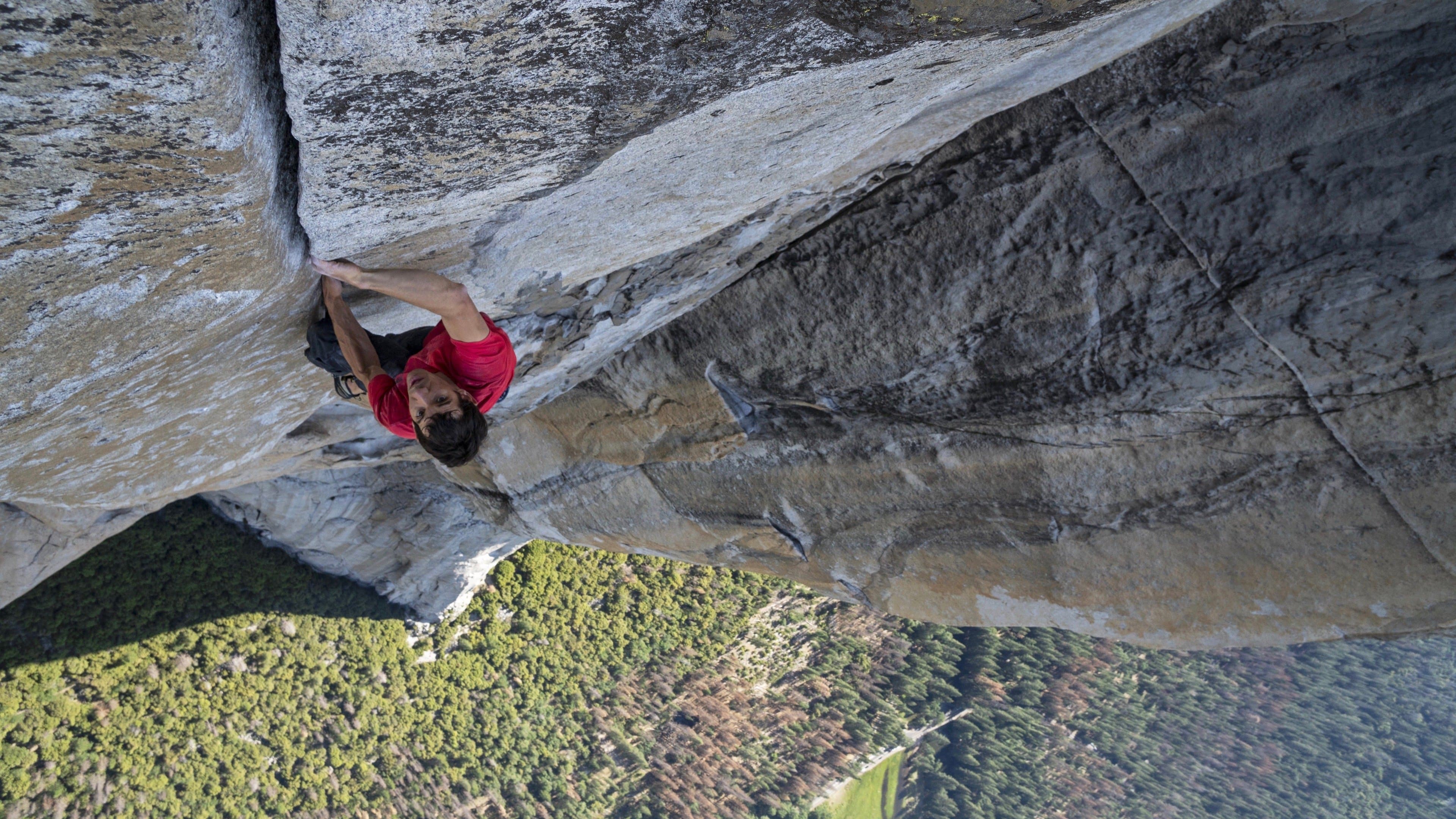
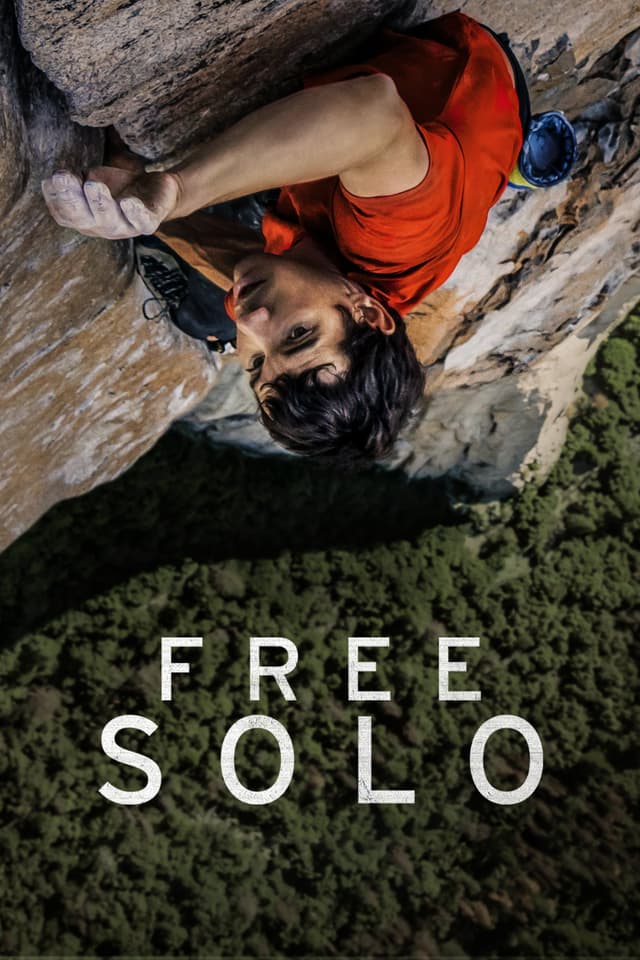
Alex Honnold faces the biggest challenge of his career, climbing El Capitan in Yosemite National Park. He pursues it Free Solo, which means climbing without a rope and alone.
What Is the Budget of Free Solo?
Free Solo was produced on a budget of approximately $5 million, financed by National Geographic Documentary Films. The film followed Alex Honnold over several years as he prepared for and ultimately completed the first free solo climb of El Capitan in Yosemite National Park on June 3, 2017, ascending the 3,000-foot Freerider route without ropes or protective equipment in 3 hours and 56 minutes.
The $5 million budget reflected the extraordinary logistical challenges of embedding a film crew in one of the most technically demanding environments on Earth. Directors Jimmy Chin and Elizabeth Chai Vasarhelyi, both accomplished climbers themselves, designed a production approach that would capture the climb without endangering Honnold or compromising his focus. Cameras were placed on the wall weeks in advance so no crew movement would distract him on summit day.
Key Budget Allocation Categories
- Wall Camera Rigging and Remote Systems: National Geographic and the production team placed cameras at key positions on El Capitan weeks before the summit attempt, requiring specialized rigging teams to ascend and position equipment on the 3,000-foot granite face. Remote-operated camera systems allowed cinematographers Tommy Caldwell and Mikey Schaefer to film from fixed positions without being in Honnold's sightline during the actual climb.
- Multi-Year Production Period: Free Solo was filmed over roughly three years, including Honnold's aborted first attempt in November 2016, which he called off when he felt emotionally unsettled, and the successful summit on June 3, 2017. The extended production timeline meant sustained crew costs, equipment costs, and travel costs across multiple Yosemite expeditions.
- Directors Jimmy Chin and Elizabeth Chai Vasarhelyi: Chin is a professional climber, photographer, and filmmaker who had collaborated with Honnold previously on climbing expeditions. Vasarhelyi directed Meru (2015) with Chin, their debut feature documentary. Their combined expertise in both mountaineering and documentary storytelling was central to the production's ability to access and film the subject safely.
- Post-Production and Score: Composer Marco Beltrami and his son Marcus Trumpp wrote the score, balancing tension and awe through the climb sequences. Post-production included color grading the footage to maximize the visual scale of El Capitan and crafting the editorial structure that juxtaposes the technical preparation with the psychological portrait of Honnold.
- Ethical Consultation and Psychological Coverage: The production faced a documented ethical dilemma: if Honnold fell during filming, the crew would have captured his death on camera. The filmmakers consulted with psychologists and ethicists during production. Honnold's partner Sanni McCandless and his own psychological preparation became a central narrative thread.
How Does Free Solo's Budget Compare to Similar Films?
Free Solo sits at the high end of the documentary budget range but below major narrative productions. Its closest comparisons are other adventure and nature documentaries that required extended location production and specialized technical crews.
- Meru (2015): Budget ~$1M | Domestic $3.9M. Jimmy Chin and Elizabeth Chai Vasarhelyi's debut feature documented Conrad Anker, Jimmy Chin, and Renan Ozturk's climb of the Shark's Fin on Mount Meru. Free Solo spent five times as much and grossed more than four times as much domestically.
- Touching the Void (2003): Budget ~$3.5M | Worldwide $7.5M. Kevin Macdonald's mountaineering documentary used dramatic reconstruction to tell the story of Joe Simpson's survival on Siula Grande in Peru. Free Solo outgrossed it worldwide by $22 million by committing entirely to observational documentation.
- The Rescue (2021): Budget ~$5M | Domestic $2.3M. E. Chai Vasarhelyi and Jimmy Chin's follow-up to Free Solo documented the 2018 Thai cave rescue. Their second National Geographic documentary spent a comparable budget but found a much smaller theatrical audience despite receiving similar critical acclaim.
- Amy (2015): Budget ~$2.5M | Worldwide $23.3M. Asif Kapadia's documentary on Amy Winehouse spent half of Free Solo's budget and earned close to its domestic gross in domestic markets alone. Music subjects historically outperform adventure and sports subjects in documentary theatrical economics.
Free Solo Box Office Performance
Free Solo opened September 28, 2018, in a limited theatrical release in the United States, distributed by National Geographic Documentary Films. The film expanded from 27 screens to over 300 screens on its widest release, unusual for a documentary without a major studio push. The domestic total reached $17.6 million, the highest-grossing domestic theatrical release in National Geographic Documentary Films' history at the time. International markets added $12.1 million for a worldwide total of $29.7 million.
Against a production budget of approximately $5 million and an estimated $3 million in prints and advertising, National Geographic's total investment was approximately $8 million. With theaters retaining roughly 50 percent of gross, the studio's share of the worldwide theatrical gross was approximately $14.9 million, covering the total investment and generating a clear profit in theatrical alone, before streaming and broadcast revenue.
Box Office Breakdown
Free Solo

For every dollar invested in production, Free Solo returned approximately $5.95 at the worldwide box office. Accounting for P&A, the film still returned nearly $1.86 for every dollar of total investment. The Academy Award win for Best Documentary Feature in March 2019 extended the theatrical run and increased streaming uptake on National Geographic's platform, adding substantially to the film's total financial return.
Free Solo Production History
Alex Honnold had been planning a free solo ascent of El Capitan for years before the film came together. Jimmy Chin, who had climbed with Honnold and photographed him on expeditions, approached him about documenting the attempt. Honnold was initially hesitant about cameras being present, concerned that outside attention would affect his mental preparation. After extensive conversations, he agreed to the documentary on the condition that he retained control over when and whether to attempt the climb.
Filming began in 2015 and covered Honnold's methodical preparation: repeated aid-climbing ascents of the Freerider route to memorize every move, physical conditioning, and sessions with a sports psychologist. The production also documented his personal life, including his relationship with Sanni McCandless, which became a significant narrative element. Chin and Vasarhelyi were explicit in the film about the ethical tension of being both Honnold's friends and his documentarians.
Honnold made his first attempt in November 2016 and turned back near the base when he felt psychologically unprepared. The camera crew had been positioned on the wall for the attempt, a sequence the film documents with full transparency, including Chin's visible distress. After months of additional preparation, Honnold set out again before dawn on June 3, 2017. He completed the climb in 3 hours and 56 minutes. The production had positioned cameras at 11 locations on the wall, operated remotely or by crew members who were fixed in position before Honnold reached each section.
The film had its world premiere at the Telluride Film Festival on September 2, 2018, followed by a theatrical release through National Geographic Documentary Films. National Geographic's television broadcast premiere followed the theatrical run, and the film became available on Disney+ after the Disney acquisition of National Geographic Partners was completed.
Awards and Recognition
Free Solo won the Academy Award for Best Documentary Feature at the 91st Academy Awards ceremony on February 24, 2019. The win was notable because the film had been considered a longshot against higher-profile contenders including RBG and Minding the Gap. The Oscar win significantly extended the film's theatrical run and elevated its streaming profile.
The film also won the BAFTA Award for Best Documentary in 2019, the Directors Guild of America Award for Outstanding Directorial Achievement in Documentary, and the Cinema Audio Society Award for Outstanding Achievement in Sound Mixing for Documentary. It received the Producers Guild of America Award nomination in the Documentary category. The American Cinema Editors named it one of the best-edited documentaries of the year.
Critical Reception
Free Solo holds a 99% approval rating on Rotten Tomatoes based on 151 reviews, with the critical consensus noting that it captures both the physical and psychological dimensions of Honnold's achievement with extraordinary clarity. Metacritic scored it 92 out of 100, indicating universal acclaim. The near-perfect scores reflect the unusually direct relationship between subject and achievement: the film promises to capture something unprecedented and does exactly that.
Critics consistently highlighted the impossibility of watching the summit sequence without a physiological stress response. The New Yorker called it "one of the most viscerally thrilling documentaries ever made." The Atlantic noted that the film's psychological portrait of Honnold is as compelling as the climbing footage: the exploration of what kind of person attempts this feat, and what it costs him emotionally, gives the film depth beyond pure spectacle.
The IMDb user rating of 8.2 out of 10 reflects sustained enthusiasm from a broad audience that includes both climbing communities and general viewers who had never seen a climbing film before. Free Solo succeeded in making the stakes of rope-free climbing comprehensible to audiences with no prior knowledge of the sport, and that accessibility is the primary measure of its craft.
Frequently Asked Questions
How much did Free Solo cost to make?
The production budget was approximately $2,000,000. National Geographic Documentary Films financed the project, which followed climber Alex Honnold over two years through the planning and execution of the El Capitan free-solo ascent.
How much did Free Solo earn at the box office?
The film grossed $17,565,212 domestically and $12,800,000 internationally, for a worldwide total of approximately $30,400,000. It became the highest-grossing documentary of 2018 and one of the top ten highest-grossing documentaries of all time.
Did Free Solo win the Oscar for Best Documentary?
Yes. Free Solo won the Academy Award for Best Documentary Feature at the 91st Academy Awards on February 24, 2019, beating out RBG, Hale County This Morning This Evening, Minding the Gap, and Of Fathers and Sons.
Who directed Free Solo?
Jimmy Chin and Elizabeth Chai Vasarhelyi co-directed the film. The husband-and-wife team had previously co-directed Meru (2015), about Chin's own ascent of the Meru Central peak in the Indian Himalayas, which won the Sundance Audience Award.
When did Alex Honnold actually climb El Capitan?
Alex Honnold completed the first free-solo ascent of Freerider on El Capitan on June 3, 2017, summiting the 3,200-foot route in 3 hours and 56 minutes. The climb had been considered one of the great unrealized ambitions in modern rock climbing.
Where was Free Solo filmed?
Principal photography took place in Yosemite National Park, California, with extensive aerial drone work and remote-camera rigs developed specifically for the production. Additional sequences were filmed at Honnold's home base in Las Vegas, Nevada, and at various training crags worldwide.
What did critics think of Free Solo?
The film received nearly universal acclaim, with a 97% approval rating on Rotten Tomatoes and a 83 out of 100 score on Metacritic. Critics praised the ethical complexity of filming a climb that could result in the subject's death, the technical achievement of the cinematography, and the intimate portrait of Honnold's personal life.
How dangerous was filming Free Solo?
The film extensively documents the directors' anxiety about the moral weight of filming. Jimmy Chin assembled an experienced climber-cinematographer team to minimize the risk that a camera operator's presence would distract or endanger Honnold. The directors stated they were prepared to cut all footage if Honnold had died.
How does Free Solo compare to other climbing documentaries?
Free Solo significantly outperformed Meru (2015, $300,000 budget, $2,300,000 worldwide) and The Alpinist (2021, $7,300,000 worldwide). It set a new commercial ceiling for the climbing documentary subgenre and led to the follow-up Chin and Vasarhelyi documentary The Rescue (2021) about the Thai cave rescue.
Where can I stream Free Solo?
The film is available on Disney+ as part of the National Geographic content library. It is also available for digital purchase and rental on Amazon Prime Video, Apple TV, and Google Play.
Build budgets like this one in Saturation
Start from an industry-standard feature film template, import the schedule and rates you already have, and let the cost report keep itself current as you spend. Real-time collaboration, no spreadsheets.