An Inconvenient Sequel: Truth to Power Budget
 Documentary100 minutes
Updated
Synopsis
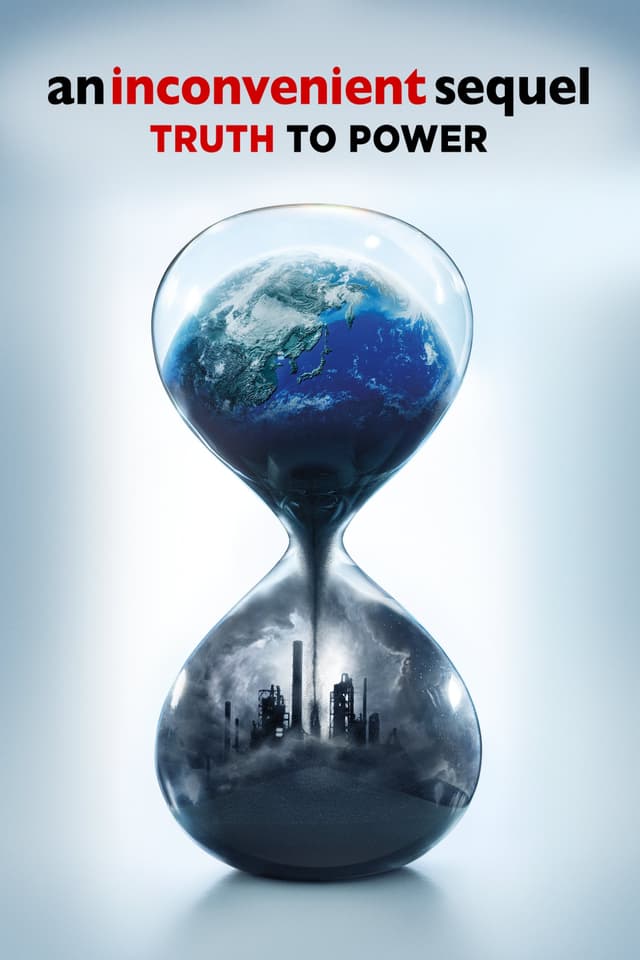
A sequel to The Inconvenient Truth, the follow-up documentary addresses the progress made to tackle the problem of climate change and Al Gore's global efforts to persuade governmental leaders to invest in renewable energy, culminating in the landmark signing of 2016's Paris Climate Agreement.
What Is the Budget of An Inconvenient Sequel: Truth to Power?
An Inconvenient Sequel: Truth to Power was produced on a budget of approximately $1 million, financed by Participant Media. The film was directed by Bonni Cohen and Jon Shenk, with Al Gore returning as the on-screen subject and narrator. It served as a follow-up to An Inconvenient Truth (2006), updating the scientific evidence for climate change across the decade since that film and documenting Gore's ongoing advocacy work including his direct involvement in the negotiations that produced the Paris Climate Agreement in December 2015.
The $1 million budget reflects a production made primarily with Gore's existing advocacy infrastructure and archival materials rather than a new investigative effort. Cohen and Shenk embedded with Gore across multiple international climate conferences and advocacy training events, capturing his interactions with world leaders and his presentation of updated climate science to audiences of trainers who then carried his methodology to communities around the world. The film relied heavily on archival footage of climate events, recent extreme weather incidents, and the Paris Agreement negotiations.
Key Budget Allocation Categories
- Following Al Gore Across International Climate Conferences: Cohen and Shenk filmed Gore at advocacy events in multiple countries, at the Paris Climate Agreement negotiations in December 2015, and at climate science presentations to trainers who would carry his Climate Reality Project methodology globally. The international filming required coordinating access alongside Gore's existing schedule, managing the security and logistics involved in filming at high-level diplomatic events.
- Directors Bonni Cohen and Jon Shenk: Cohen and Shenk are a directing partnership based in San Francisco whose prior work includes Audrie and Daisy (2016) for Netflix, a documentary about rape and cyberbullying, and The Island President (2011), about the Maldives president's climate advocacy. Their experience with environmental and social justice documentary subjects made them natural choices for Participant Media's follow-up to An Inconvenient Truth. The film's tone and structure reflect their observational approach rather than the presentation format of Davis Guggenheim's original.
- Paris Agreement Footage and Diplomatic Access: The film's most significant production achievement is its footage from the Paris Climate Agreement negotiations in December 2015, where Gore is shown working directly with the Indian negotiating team to resolve a dispute over solar power technology licensing that threatened to derail the agreement. Gore's behind-the-scenes role in brokering this resolution is presented as the film's climax, and the footage required production access to diplomatic venues that would normally exclude cameras.
- Archival Climate Event Footage: The sequel updates the scientific and visual evidence presented in the original film with footage of extreme weather events that have occurred in the decade between 2006 and 2016: flooding in Miami, wildfire in Fort McMurray, Hurricane Sandy's storm surge in New York City. Licensing this archival footage from news organizations, satellite imagery providers, and scientific institutions represented a significant research and rights budget.
- Sundance Premiere and Paramount Distribution: The film premiered at the Sundance Film Festival in January 2017 and was distributed theatrically by Paramount Pictures and Participant Media. The Sundance premiere and Paramount distribution represented a significantly larger platform than most Participant documentaries received, reflecting the urgency of the climate communication mission in the immediate aftermath of Donald Trump's election in November 2016 and his announced intention to withdraw the United States from the Paris Agreement.
How Does An Inconvenient Sequel's Budget Compare to Similar Films?
An Inconvenient Sequel's $1 million budget is at the low end of Participant Media documentary productions, reflecting a follow-up made with existing advocacy infrastructure rather than a new investigative effort. Its domestic performance of $3.5 million was reasonable for the subject but dramatically below its predecessor.
- An Inconvenient Truth (2006): Budget ~$1M | Worldwide $49.8M. The original Gore climate documentary spent approximately the same amount as the sequel and found an audience more than fourteen times larger. The cultural moment of 2006, before climate change had become as politically polarized as it became after 2010, allowed An Inconvenient Truth to reach audiences across partisan lines that the sequel could not.
- Before the Flood (2016): Budget undisclosed | Free online release. Leonardo DiCaprio's climate documentary, released by National Geographic for free on YouTube and social media, bypassed theatrical entirely to maximize reach. An Inconvenient Sequel chose theatrical distribution despite Before the Flood's demonstration that climate documentaries could reach far larger audiences through digital release. The theatrical approach reflected Participant's brand and the film's positioning as a sequel rather than a digital-native documentary.
- Chasing Ice (2012): Budget ~$1M | Domestic $1.1M. Jeff Orlowski's documentary about James Balog's glacier photography project, which documented the visual retreat of glaciers across the Arctic, spent a comparable amount and found a smaller domestic theatrical audience than the sequel. An Inconvenient Sequel's Gore brand recognition gave it a commercial advantage over a climate documentary built around a less publicly known advocate.
- 2040 (2019): Budget ~$1.5M | Australian theatrical. Damon Gameau's Australian climate solutions documentary spent slightly more than An Inconvenient Sequel and found its primary audience in Australia rather than globally. The comparison illustrates how the market for theatrical climate documentaries had fragmented into regional audiences rather than global mainstream audiences by the late 2010s.
An Inconvenient Sequel: Truth to Power Box Office Performance
An Inconvenient Sequel: Truth to Power opened July 28, 2017, in a limited New York and Los Angeles platform release through Paramount Pictures, expanding nationally through August. The film was released approximately six weeks after Donald Trump announced the United States' withdrawal from the Paris Climate Agreement on June 1, 2017, a decision the film directly anticipated and addressed. The domestic gross reached $3.5 million. International markets added approximately $1.9 million for a worldwide total of approximately $5.4 million.
Against a production budget of approximately $1 million and an estimated $2 million in prints and advertising for the domestic and international theatrical releases, the total investment was approximately $3 million. With theaters retaining roughly 50 percent of gross, Paramount's share of the worldwide theatrical gross was approximately $2.7 million, below the total investment in theatrical alone. DVD sales, broadcast licensing, and Participant's digital distribution brought the film to overall profitability.
Box Office Breakdown
An Inconvenient Sequel: Truth to Power

For every dollar invested in production, An Inconvenient Sequel returned approximately $5.40 at the worldwide box office. Accounting for P&A, the film returned approximately $0.90 for every dollar of total investment in theatrical. The film's worldwide gross was dramatically below An Inconvenient Truth's $49.8 million, a gap that reflects both the different cultural moment of 2017 relative to 2006 and the degree to which the partisan polarization of climate change as a political issue had reduced the sequel's potential mainstream audience.
An Inconvenient Sequel: Truth to Power Production History
Participant Media approached Bonni Cohen and Jon Shenk in 2015 to develop a documentary that would assess the decade since An Inconvenient Truth and update the scientific and policy evidence for climate change. The production began with Cohen and Shenk embedding with Gore at his Climate Reality Project advocacy training events, where Gore presents updated climate science to groups of trainers from around the world who then carry the methodology to their own communities.
The film's most significant production opportunity came with Gore's involvement in the Paris Climate Agreement negotiations in December 2015. Gore was present at the negotiations and personally engaged with the Indian government delegation over the question of whether India would accept language in the agreement requiring the sharing of solar power technology. The film claims Gore helped broker a resolution that kept India in the agreement; the footage of his behind-the-scenes role, obtained through the production's access to Gore's team during the negotiations, became the film's climactic sequence.
The film premiered at the Sundance Film Festival on January 19, 2017, eight days before Trump's inauguration. The political context of the premiere, with a climate-skeptic administration about to take office, gave the film an urgent backdrop that Cohen and Shenk incorporated into the film's final cut. The announcement of the US withdrawal from the Paris Agreement in June 2017 occurred after the film was complete and was addressed in the film's marketing campaign rather than its content.
The theatrical release in July and August 2017 was accompanied by a significant advocacy campaign organized by Participant Media and the Climate Reality Project, including partnerships with environmental organizations, civic institutions, and corporate sponsors who organized community screenings. The advocacy infrastructure that Participant had built around An Inconvenient Truth was reactivated and updated, though the cultural moment of 2017 was significantly more polarized than 2006 and the campaign's reach into non-partisan audiences was correspondingly limited.
Awards and Recognition
An Inconvenient Sequel: Truth to Power was not nominated for the Academy Award for Best Documentary Feature. The original An Inconvenient Truth won the Academy Award for Best Documentary Feature in 2007, and the Academy documentary branch had nominated Chasing Ice (2012) and Virunga (2014) for climate-related documentary subjects in subsequent years, suggesting that climate documentary was not inherently disadvantaged in the nomination process. The sequel's failure to receive a nomination reflected critical and advocacy community consensus that it was a solid but not exceptional documentary achievement relative to its predecessor.
The film was recognized at the Environmental Media Association Awards in the documentary category and received recognition from environmental advocacy organizations for its contribution to public awareness of climate policy following the Paris Agreement and the US withdrawal announcement. The Climate Reality Project used the film as part of its training materials for climate communicators globally, extending its reach beyond its theatrical audience into advocacy networks in more than 100 countries.
Critical Reception
An Inconvenient Sequel: Truth to Power holds a 76% approval rating on Rotten Tomatoes, significantly below An Inconvenient Truth's 93%, with critics broadly finding it a solid but unmemorable follow-up that lacked the original's freshness. Metacritic scored it 64 out of 100, indicating mixed to positive reviews. The film's IMDb rating of 6.7 out of 10 reflects a general audience that found it informative but less compelling than its predecessor.
Critics who appreciated the film highlighted the Paris Agreement footage and Gore's evident engagement with the climate advocacy work he had been doing since 2006. The footage of Gore at the Paris negotiations was cited as the film's most historically significant contribution, providing a primary source document of behind-the-scenes diplomatic work that would not otherwise have been available to the public. Critics also noted that the updated scientific evidence, including the visual documentation of predictions from the original film that had come true, was effectively presented.
Critics who were less enthusiastic argued that the sequel could not escape comparison to the original and suffered significantly in that comparison. An Inconvenient Truth's structure, built around Gore's presentation as a coherent argument with a clear beginning, middle, and end, gave it a documentary clarity that Cohen and Shenk's more observational approach could not replicate. Several critics noted that the film arrived at a moment when the audience most receptive to its message already agreed with it, and that its ability to persuade skeptics was correspondingly limited. The Guardian called it "worthy but unexceptional."
Frequently Asked Questions
How much did An Inconvenient Sequel cost to make?
The production budget was approximately $1,000,000, consistent with the lean economics of issue-driven theatrical documentaries. Paramount Pictures and Participant Media co-financed the follow-up to An Inconvenient Truth (2006).
How much did An Inconvenient Sequel earn at the box office?
The film grossed $3,531,054 domestically and $1,600,000 internationally, for a worldwide total of approximately $5,100,000. It opened to a limited $129,000 on July 28, 2017, before expanding into a wider 538-theater rollout the following weekend.
Who directed An Inconvenient Sequel?
Bonni Cohen and Jon Shenk co-directed the film. The husband-and-wife filmmaking team had previously directed Audrie & Daisy (2016) for Netflix and have built their careers around issue-driven feature documentaries.
Is An Inconvenient Sequel a sequel to An Inconvenient Truth?
Yes. The film picks up roughly a decade after An Inconvenient Truth (2006), which won the Academy Award for Best Documentary Feature and grossed $50,000,000 worldwide. Al Gore returns as the central voice, tracking his subsequent climate-policy work.
Where was An Inconvenient Sequel filmed?
Filming took place across multiple international locations including Paris during the 2015 United Nations climate conference, India during cross-border energy discussions, and various U.S. locations tied to Gore's lecture and training tour for The Climate Reality Project.
What did critics think of An Inconvenient Sequel?
The film received generally positive reviews, with a 76% approval rating on Rotten Tomatoes and a 62 out of 100 score on Metacritic. Critics praised the urgency of the climate message but noted that the sequel structure lacked the novel impact of the 2006 original.
Did An Inconvenient Sequel win any awards?
The film received nominations at the Critics' Choice Documentary Awards but did not match the Academy Award success of its predecessor. The original An Inconvenient Truth had won Best Documentary Feature and Best Original Song at the 79th Academy Awards.
Was An Inconvenient Sequel profitable?
The theatrical performance fell short of expectations. Against the $1,000,000 production budget and an estimated $8,000,000 to $10,000,000 in Paramount marketing spend, the worldwide gross of approximately $5,100,000 represented a theatrical loss. The original An Inconvenient Truth had grossed roughly 10x more on a similar budget.
How does it compare to An Inconvenient Truth?
An Inconvenient Sequel underperformed dramatically compared with An Inconvenient Truth (2006, $1,000,000 budget, $50,000,000 worldwide). The original benefited from being the first major climate-change theatrical documentary, while the sequel arrived after years of similar programming had saturated audience appetite.
Where can I stream An Inconvenient Sequel?
The film is available on Paramount+ as part of the streamer's climate and documentary collection. It is also available for digital purchase on Amazon Prime Video, Apple TV, and Google Play.
Official Trailer
Build budgets like this one in Saturation
Start from an industry-standard feature film template, import the schedule and rates you already have, and let the cost report keep itself current as you spend. Real-time collaboration, no spreadsheets.