Foxcatcher Budget
 DramaThriller2h 14m
Updated
Synopsis
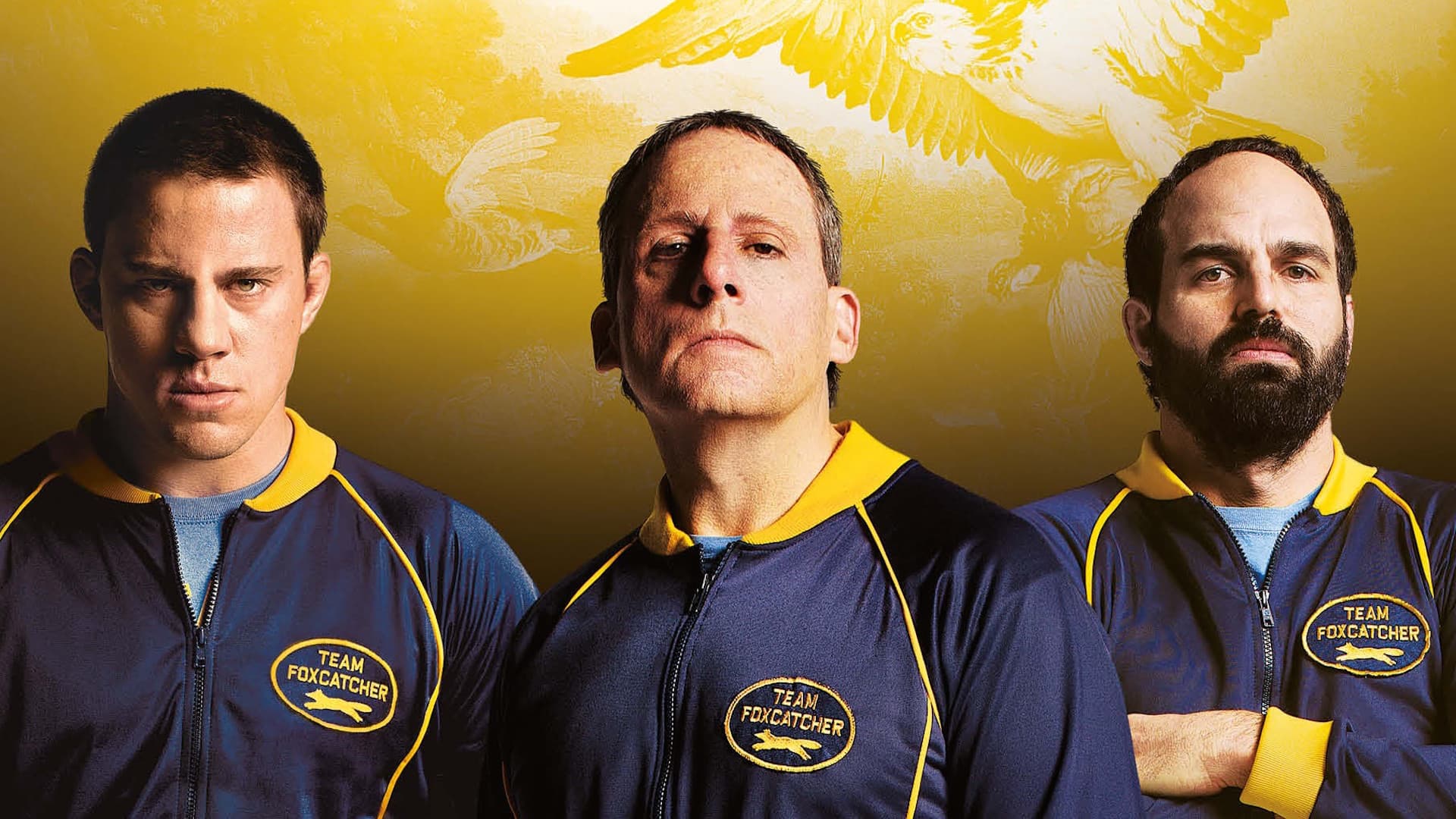
Olympic gold medal wrestler Mark Schultz, lured by the promise of full financial backing and a top-tier training facility, accepts an invitation from eccentric multimillionaire heir John E. du Pont to train at his Foxcatcher Farm estate in Pennsylvania ahead of the 1988 Seoul Olympics. As du Pont's control over Mark intensifies and Mark's older brother Dave, the family's steadying figure, is drawn into the orbit of the Foxcatcher operation, a slow-burning psychological collision builds toward a real-world tragedy.
What Is the Budget of Foxcatcher (2014)?
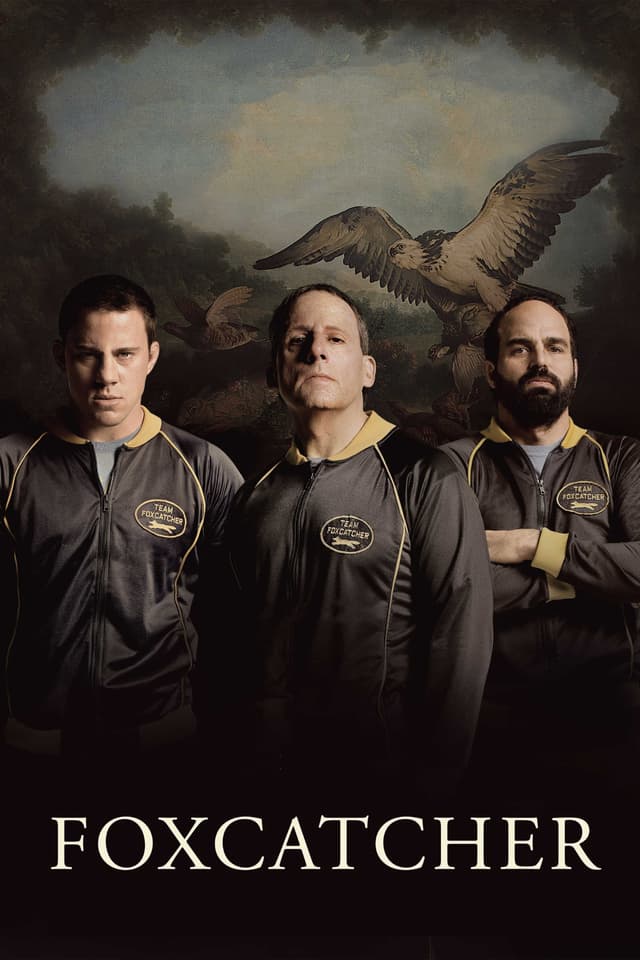
Foxcatcher (2014), directed by Bennett Miller and released by Sony Pictures Classics, was produced on a reported budget of $24,000,000. The film dramatizes the true story of wrestler Mark Schultz, his Olympic champion brother Dave Schultz, and the multimillionaire heir John E. du Pont, who sponsored their training at his Foxcatcher Farm estate in Pennsylvania before murdering Dave Schultz in 1996. Annapurna Pictures financed the project alongside Megan Ellison and Jon Kilik, with Sony Classics handling theatrical distribution after the film premiered in competition at the 2014 Cannes Film Festival.
The budget reflected the economics of a prestige adult drama built around three name actors in heavy character transformations, an extended Pennsylvania location shoot, and a deliberate festival-first release strategy. At $24,000,000, Foxcatcher cost roughly twice as much as Bennett Miller's prior fact-based feature Capote (2005), reflecting the larger ensemble, period detail covering nearly a decade, and the demands of staging competitive wrestling and equestrian sequences on practical estate locations.
Key Budget Allocation Categories
Foxcatcher's $24,000,000 budget was distributed across the following core production areas:
- Above-the-Line Talent: Director Bennett Miller commanded a feature-director rate appropriate to an Academy Award nominee coming off Moneyball, and the three principal cast members, Steve Carell, Channing Tatum, and Mark Ruffalo, each took reduced fees relative to their commercial rates in exchange for prestige roles built around dramatic transformation. Vanessa Redgrave and Sienna Miller filled out supporting positions at scale rates customary for indie character work.
- Prosthetic and Makeup Design: Makeup artist Bill Corso and prosthetics designer Dennis Liddiard built the elaborate facial appliances that transformed Steve Carell into John du Pont, including the prosthetic nose, sunken cheeks, and aged complexion that defined the performance. Mark Ruffalo received a custom hair and beard package and aged-down musculature reference, while Channing Tatum underwent a months-long physical training regimen with USA Wrestling coaches.
- Pennsylvania Location Shoot: The production filmed for roughly 12 weeks beginning in October 2012 across the Pittsburgh region in western Pennsylvania, with the Foxcatcher Farm estate sequences staged at private properties in the area. Pennsylvania Film Production Tax Credits at 25% on qualified in-state spend offset a substantial share of below-the-line costs, including crew, equipment, and stage rental.
- Production Design and Period Detail: Production designer Jess Gonchor recreated the late 1980s through mid 1990s with cars, wardrobe, signage, training facilities, and the wood-paneled interiors of the du Pont mansion. Wrestling mat surfaces, USA Wrestling team uniforms, and the Foxcatcher team singlets were sourced or recreated to period spec.
- Wrestling Choreography and Training: Olympic gold medalist John Giura and USA Wrestling staff coordinated the on-mat sequences, drilling Channing Tatum and Mark Ruffalo for several months before principal photography to make the takedowns, holds, and sparring credible at the freestyle Olympic level. Mark Schultz himself consulted on the film and visited set during the wrestling sequences.
- Cinematography and Score: Cinematographer Greig Fraser shot the film on Arri Alexa with anamorphic Cooke lenses, favoring long lenses, muted tones, and naturalistic available light to match the film's clinical mood. Composer Rob Simonsen delivered a restrained, mostly piano and string-based score that underscored long passages of dialogue-free observation.
- Festival Marketing and Awards Campaign: Sony Pictures Classics ran a sustained awards campaign from the May 2014 Cannes premiere through the February 2015 Oscar ceremony, covering FYC screenings, trade publication advertising, talent appearances, and guild screening events. Awards spending of this scale is customary for serious Oscar contenders and is generally additive to the production budget.
How Does Foxcatcher's Budget Compare to Similar Films?
At $24,000,000, Foxcatcher sits in the prestige indie drama range typical of awards contenders from a specialty division. The comparison set includes Bennett Miller's prior fact-based features and other character-driven sports and true-crime dramas of the era:
- Capote (2005): Budget $7,000,000 | Worldwide $49,432,776. Bennett Miller's feature debut spent less than a third of Foxcatcher and out-grossed it worldwide by roughly two to one, illustrating how the smaller-canvas writer-portrait subject was a more efficient awards vehicle than the multi-character true-crime ensemble.
- Moneyball (2011): Budget $50,000,000 | Worldwide $110,206,216. Miller's second feature cost more than twice Foxcatcher and earned roughly six times its worldwide gross, with Brad Pitt's drawing power and the broader Oakland A's commercial appeal expanding the audience well beyond the awards base.
- The Fighter (2010): Budget $25,000,000 | Worldwide $129,190,869. David O. Russell's Lowell boxing drama matched Foxcatcher's budget almost exactly and earned more than five times its worldwide total, demonstrating the commercial premium of a redemptive sports arc over Foxcatcher's downbeat true-crime ending.
- The Master (2012): Budget $32,000,000 | Worldwide $28,113,061. Paul Thomas Anderson's Annapurna-financed character study, released by The Weinstein Company, offers the closest budgetary and commercial peer, with a similar specialty rollout, comparable awards push, and a comparable worldwide gross at roughly $28 million.
- American Hustle (2013): Budget $40,000,000 | Worldwide $251,171,807. The David O. Russell ensemble offers the contrast case, a much louder period true-crime drama with stylistic flourishes that ran the table commercially while still securing 10 Oscar nominations, the same year Foxcatcher emerged.
- Black Mass (2015): Budget $53,000,000 | Worldwide $99,829,011. The Johnny Depp Whitey Bulger biopic offers a true-crime peer at more than double the budget, also leaning on a heavy prosthetic transformation and a Boston location shoot, with stronger commercial returns and weaker reviews.
Foxcatcher Box Office Performance
Foxcatcher premiered in competition at the Cannes Film Festival on May 19, 2014, where Bennett Miller won the prize for Best Director, before opening in limited release on November 14, 2014 in five theaters and expanding through December and January. The film took in $267,481 on its opening weekend at a per-screen average of $53,496, one of the strongest specialty openings of the fall calendar. It eventually expanded to a wide release peak of 808 theaters in mid-January 2015.
Against a $24,000,000 production budget, the film needed approximately $55,000,000 to $65,000,000 in worldwide gross to reach profitability when accounting for marketing and the awards campaign. Here is the financial breakdown:
Box Office Breakdown
Foxcatcher

Foxcatcher returned approximately $0.57 to $0.64 in worldwide theatrical revenue for every $1 invested when measured against total estimated production and marketing spend. The domestic share of the gross was $12,096,300 against an international share of $12,958,239, an almost exact 48/52 split that reflected the film's strong critical positioning in European markets but a soft domestic ceiling typical of grim true-crime adult dramas.
Theatrical losses were partially offset by home entertainment, television, and streaming licensing revenue over the subsequent years, and the awards profile, with five Oscar nominations including Best Director, Best Actor, and Best Supporting Actor, materially extended the film's commercial tail and Sony Pictures Classics' library value.
Foxcatcher Production History
Development on a film about the John du Pont and Schultz brothers tragedy began in 2008, with Bennett Miller attached to direct from a screenplay by E. Max Frye and Dan Futterman. Futterman had previously written Miller's Capote, and Frye brought a background in true-crime and character-driven material. The project moved through several financing iterations before Megan Ellison's Annapurna Pictures came aboard in 2011, anchoring the production alongside Jon Kilik's Indian Paintbrush.
Casting was central to the long development. Steve Carell was an unconventional choice for John du Pont, having built his career in broad comedy on The Office and the 40-Year-Old Virgin franchise, but Bennett Miller pursued him specifically for the dramatic register he wanted, an unsettling stillness rather than menace. Channing Tatum was cast as Mark Schultz on the strength of his physicality and his willingness to disappear into a sullen, internalized performance. Mark Ruffalo, attached to the film for years through multiple delays, played Dave Schultz with quiet warmth that anchored the family relationship at the film's center.
Principal photography ran from October 2012 through January 2013 in and around Pittsburgh, Pennsylvania, with the Foxcatcher Farm estate sequences staged at private properties in the western part of the state. The Pennsylvania Film Production Tax Credit at 25% on qualified in-state spend offset a substantial portion of below-the-line costs, and Pittsburgh's deep local crew base, built up over a decade of major studio shoots, supplied the bulk of the production team. Steve Carell underwent roughly three hours of prosthetic application each shooting day, including a full prosthetic nose, sunken cheek pieces, and aging makeup applied to neck and hands.
Post-production carried into late 2013 and early 2014, with editor Stuart Levy, Conor O'Neill, and Jay Cassidy shaping the film's deliberate pacing across multiple cuts. The original release date was set for late 2013 to qualify for that year's awards season, but Bennett Miller pulled the film from the calendar to refine the edit, pushing the premiere to the May 2014 Cannes Film Festival. The Cannes selection in competition, and Miller's Best Director prize there, became the foundation of the subsequent Sony Pictures Classics awards campaign.
Awards and Recognition
Foxcatcher received five Academy Award nominations at the 87th Oscars: Best Director for Bennett Miller, Best Actor for Steve Carell, Best Supporting Actor for Mark Ruffalo, Best Original Screenplay for E. Max Frye and Dan Futterman, and Best Makeup and Hairstyling for Bill Corso and Dennis Liddiard. The film did not win in any category, with Birdman taking Best Director and Best Original Screenplay, Eddie Redmayne winning Best Actor for The Theory of Everything, and J.K. Simmons taking Best Supporting Actor for Whiplash, but the five-nomination haul placed it among the most heavily recognized films of the year.
At the 2014 Cannes Film Festival, Bennett Miller won the prize for Best Director, an early signal of the film's critical standing and the foundation of the Sony Pictures Classics awards push. The film also received Golden Globe nominations for Best Actor in a Motion Picture Drama (Carell) and Best Supporting Actor (Ruffalo), and BAFTA nominations for Best Actor (Carell), Best Supporting Actor (Ruffalo), and Best Original Screenplay. Steve Carell won the National Board of Review's Best Actor prize and was widely regarded as a serious contender through awards season for his transformative performance.
Critical Reception
Foxcatcher received broadly positive reviews. The film holds an 87% approval rating on Rotten Tomatoes based on 263 critic reviews, with a critical consensus describing it as a chilly, slow-burning character study anchored by three career-recalibrating lead performances. On Metacritic, the film scored 81 out of 100, indicating universal acclaim. Audiences surveyed by CinemaScore gave the film a C, an unusual disconnect with the critical reception that reflected the grim subject matter, the deliberate pacing, and the downbeat ending well known to viewers familiar with the real-world murder.
Critics singled out Steve Carell's transformation as the central revelation. Manohla Dargis of The New York Times called the performance "a quietly disturbing piece of work," while A.O. Scott described the film as "a horror movie disguised as a sports drama, and a sports drama disguised as a horror movie." Variety's Justin Chang praised Miller's "rigorous, controlled" direction, and David Edelstein of New York Magazine called Channing Tatum's Mark Schultz "an astonishing piece of physical and emotional acting" that recalibrated industry perception of the actor's range.
Dissenting and qualifying coverage focused on the film's deliberate pacing and the historical compressions in the screenplay, including a foreshortened timeline that moves Dave Schultz's 1996 murder closer in narrative time to the 1988 Seoul Olympics than the eight years that separated them in life. Mark Schultz, who had been a paid consultant on the film, publicly objected to its implication of a sexual subtext between his character and John du Pont and to its depiction of his own coaching abilities. Despite these critiques, the film's reputation as one of the strongest character studies of the 2010s, and as a high point in the careers of Carell, Tatum, and Ruffalo, has only strengthened in the years since release.
Frequently Asked Questions
How much did it cost to make Foxcatcher (2014)?
The reported production budget was $24,000,000. The film was financed by Megan Ellison's Annapurna Pictures alongside Jon Kilik's Indian Paintbrush and Media Rights Capital, with Sony Pictures Classics acquiring theatrical distribution rights after the film premiered in competition at the 2014 Cannes Film Festival.
How much did Foxcatcher earn at the box office?
The film grossed $12,096,300 domestically and $12,958,239 internationally, for a worldwide total of $25,054,539. It opened in limited release on November 14, 2014 in five theaters with a per-screen average of $53,496, and expanded to a wide release peak of 808 theaters in mid-January 2015.
Was Foxcatcher profitable?
No. Against a $24,000,000 production budget and an estimated $15,000,000 to $20,000,000 in marketing and awards-campaign spend, the film returned approximately $0.57 to $0.64 in worldwide theatrical revenue for every $1 invested. The theatrical loss was partially offset by home entertainment, television, and streaming licensing revenue over the subsequent years.
Who directed Foxcatcher?
Bennett Miller directed the film, his third feature after Capote (2005) and Moneyball (2011). Miller won the Best Director prize at the 2014 Cannes Film Festival for Foxcatcher and received a subsequent Academy Award nomination in the same category.
Where was Foxcatcher filmed?
Principal photography took place from October 2012 through January 2013 in and around Pittsburgh, Pennsylvania, with the Foxcatcher Farm estate sequences staged at private properties in the western part of the state. The Pennsylvania Film Production Tax Credit at 25% on qualified in-state spend offset a substantial portion of below-the-line costs, and Pittsburgh's deep local crew base supplied the bulk of the production team.
How many Oscar nominations did Foxcatcher receive?
Foxcatcher received five Academy Award nominations at the 87th Oscars: Best Director for Bennett Miller, Best Actor for Steve Carell, Best Supporting Actor for Mark Ruffalo, Best Original Screenplay for E. Max Frye and Dan Futterman, and Best Makeup and Hairstyling for Bill Corso and Dennis Liddiard. The film did not win in any category.
Did Steve Carell wear a prosthetic in Foxcatcher?
Yes. Makeup artist Bill Corso and prosthetics designer Dennis Liddiard built an elaborate facial appliance package that transformed Steve Carell into John du Pont, including a prominent prosthetic nose, sunken cheek pieces, an aged complexion, and matching neck and hand makeup. Carell underwent roughly three hours of prosthetic application each shooting day, and the makeup work earned the film an Academy Award nomination for Best Makeup and Hairstyling.
Is Foxcatcher based on a true story?
Yes. The film dramatizes the real-life relationship between Olympic gold medal wrestlers Mark and Dave Schultz and multimillionaire heir John E. du Pont, who sponsored their training at his Foxcatcher Farm estate in Pennsylvania before murdering Dave Schultz in January 1996. Du Pont was convicted of third-degree murder in 1997 and died in prison in 2010. Mark Schultz consulted on the film during production.
What did critics think of Foxcatcher?
The film received broadly positive reviews, with an 87% approval rating on Rotten Tomatoes based on 263 critic reviews and a Metacritic score of 81 out of 100, indicating universal acclaim. Audiences surveyed by CinemaScore gave it a C, reflecting the grim subject matter and downbeat ending. Critics singled out Steve Carell's prosthetic-driven transformation, Channing Tatum's physical and emotional performance, and Bennett Miller's controlled direction.
How does Foxcatcher compare to other Bennett Miller films?
Foxcatcher cost roughly three times what Capote (2005) spent ($7,000,000) but grossed only half of Capote's $49,432,776 worldwide total. Compared with Moneyball (2011), which cost $50,000,000 and earned $110,206,216 worldwide, Foxcatcher was a more austere awards-targeted release with a much narrower commercial ceiling. All three films secured multiple Academy Award nominations, and Bennett Miller has received personal Oscar nominations for two of them.
Filmmakers
Foxcatcher

Official Trailer
Build budgets like this one in Saturation
Start from an industry-standard feature film template, import the schedule and rates you already have, and let the cost report keep itself current as you spend. Real-time collaboration, no spreadsheets.