Capote Budget
 CrimeDrama1h 54m
Updated
Synopsis
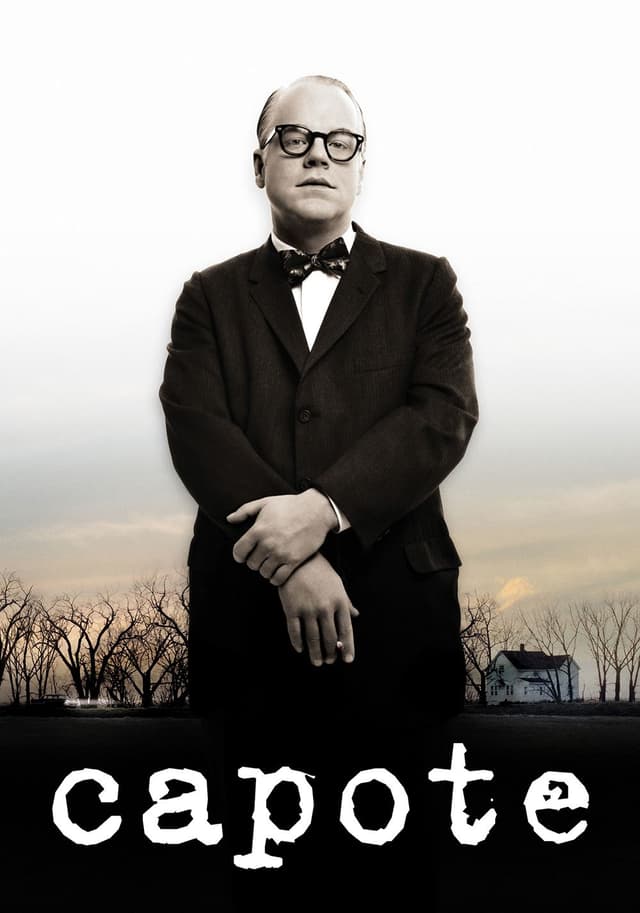
Famed writer Truman Capote, southern born and bred but now part of the New York City social circle, is growing weary of his current assignment of writing autobiographical type pieces for the New Yorker. After reading a newspaper article about the just occurred November 14, 1959 cold blooded murders of the Clutter family in their rural Kansas home, Truman feels compelled to write about that event as his next article. So he and his personal assistant Nelle Harper Lee, also a southern born New Yorker and an aspiring writer of her own, head to Kansas to research the story first-hand. Truman hopes to use his celebrity status to gain access to whomever he needs, such as to Laura Kinney, a friend of the Clutter daughter she who discovered the bodies, and to Alvin Dewey, the lead police investigator and also a Clutter family friend. If his celebrity doesn't work, Truman will grease the wheels by whatever means necessary. When the police eventually charge suspects, two young men named Dick Hickcock and Perry Smith, Truman uses those same tactics to gain access to them. Truman's fascination with the story makes him believe that he can revolutionize writing by expanding the germ of the article into what he calls a non-fiction novel. His personal involvement also changes as he grows emotionally attached to Perry, the seemingly sensitive and thus probable submissive in the criminal pairing, thus Truman becoming part of the story itself. Article or non-fiction novel, Truman knows that he has to take it to its natural conclusion, something which he cannot force. But also missing are the details of the November 14, 1959 event itself, something that neither Dick or Perry have divulged even in testimony.
What Is the Budget of Capote?
Capote was produced on a budget of approximately $7,000,000, making it one of the most remarkably lean productions ever to compete for Best Picture at the Academy Awards. The film was financed and distributed by Sony Pictures Classics, the specialty label known for championing exactly this kind of small, character-driven work that would be invisible at a major studio.
For a budget of $7 million, the returns were extraordinary. The film earned $28,750,530 domestically and $49,327,405 worldwide, generating a multiple of roughly 7x its production cost before home video revenue. On an investment of that size, few films in recent awards history have delivered comparable returns while also sweeping the acting prizes at the Oscars, BAFTAs, Golden Globes, and SAG Awards.
The tight budget shaped every creative decision. Filming in Winnipeg, Manitoba rather than on location in Kansas and New York kept costs manageable. The production relied on the extraordinary chemistry of its cast rather than spectacle or visual effects. What the film lacked in resources it more than compensated for in precision.
Key Budget Allocation Categories
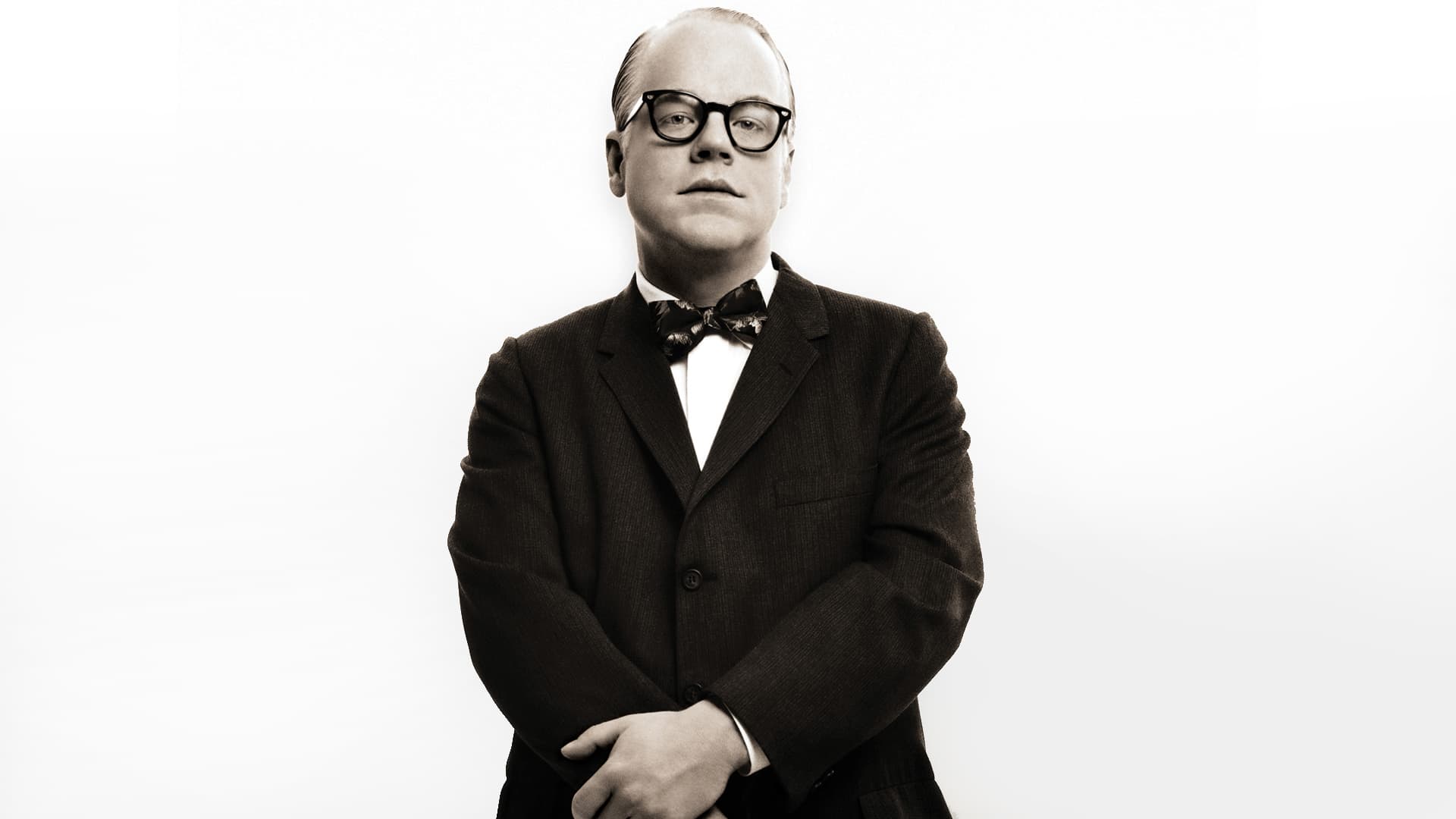
- Lead Performance and Preparation -- Philip Seymour Hoffman received top billing and substantial preparation costs. He spent months studying recordings of Capote, working with dialect coaches to perfect the writer's unusual high pitch and cadence, and developing the physical mannerisms that defined the performance. Costume designer Kasia Walicka-Maimone created bespoke suits with tightened shoulders to alter the appearance of Hoffman's larger frame. Camera positioning and strategic casting of taller actors around him further closed the 8-inch height gap between the 5'2" Capote and the 5'10" Hoffman.
- Location Work in Winnipeg, Manitoba -- The production chose Winnipeg to stand in for 1950s rural Kansas, a practical decision that preserved a significant portion of the budget. The Canadian city provided period-appropriate architecture and landscape at lower cost than shooting on location in Kansas or New York, while Canadian co-production arrangements offered additional savings.
- Period Production Design -- Re-creating the late 1950s required detailed work on costumes, set dressing, vehicles, and props for both the Kansas farmland scenes and the New York society sequences. Production designer Jess Gonchor built environments that evoked two worlds: the bleak Plains landscape where the Clutter murders occurred and the glittering Manhattan literary scene Capote inhabited.
- Supporting Cast -- Catherine Keener, Chris Cooper, Clifton Collins Jr., Bruce Greenwood, and Bob Balaban brought significant experience to supporting roles. Collins Jr. in particular required multiple hours of scenes establishing the intimacy between Perry Smith and Capote that the film's moral tension depends on.
- Mychael Danna Score -- Composer Mychael Danna created an understated, almost elegiac score that reinforced the film's tone of moral ambiguity without ever underlining the drama. The music was recorded live with a small ensemble, consistent with the film's overall economy of means.
- Post-Production for the Prestige Circuit -- Sony Pictures Classics employed a platform release strategy, opening the film in limited markets in late September 2005 and expanding gradually as awards attention built. The marketing and awards campaign costs were kept proportionate to the film's indie positioning, relying on critical acclaim and word of mouth rather than saturation advertising.
How Does Capote's Budget Compare to Similar Films?
Capote occupies a specific niche: the ultra-low-budget prestige drama that competes directly against studio films costing 10 to 20 times as much. In the mid-2000s, several films operated in this space:
- Good Night, and Good Luck (2005) -- Budget approximately $7,500,000 | Worldwide approximately $54,600,000. George Clooney's black-and-white examination of Edward R. Murrow operated on a nearly identical budget and performed comparably at the box office. Both films demonstrate that a precisely written drama anchored by a transformative performance needs no more than $7-8 million to compete at the highest awards level.
- Brokeback Mountain (2005) -- Budget approximately $14,000,000 | Worldwide approximately $178,000,000. Ang Lee's film cost twice as much as Capote and benefited from spectacular location work in Alberta. Both films premiered at festivals in late summer 2005 and dominated the awards conversation that autumn.
- Million Dollar Baby (2004) -- Budget approximately $30,000,000 | Worldwide approximately $216,800,000. Clint Eastwood's Best Picture winner shows how much additional cost studio distribution and a more commercially accessible subject matter adds, even within the prestige drama category.
- Monster (2003) -- Budget approximately $8,000,000 | Worldwide approximately $60,400,000. Charlize Theron's transformative performance as Aileen Wuornos drew direct comparisons to Hoffman's work in Capote. Both films relied almost entirely on a single lead performance to justify their existence, and both delivered returns well above their modest investments.
- Infamous (2006) -- Budget approximately $13,000,000 | Worldwide approximately $2,400,000. The rival Capote film starring Toby Jones, released a year after Capote, demonstrates how quickly the market for a given subject can be exhausted. Capote arrived first and commanded the territory entirely.
Capote Box Office Performance
Sony Pictures Classics opened Capote in only 5 theaters on September 30, 2005, the date that would have been Truman Capote's 81st birthday. The film grossed $324,857 in its opening weekend from that tiny platform, establishing a per-theater average that generated immediate critical buzz. Sony then expanded the release methodically through October and November as awards nominations accumulated, a strategy the specialty label had refined over years of similar campaigns.
Box Office Breakdown
Capote

For every $1 invested in production, Capote returned approximately $7 at the worldwide box office, a ratio that ranks among the most efficient Best Picture nominees of the decade.
Sony Pictures Classics' platform release strategy proved ideal for this film. Rather than opening wide and competing against blockbusters on opening weekend, the specialty distributor built momentum through critical awards from the National Society of Film Critics, the New York Film Critics Circle, and the Gotham Awards, each announcement bringing new audiences into theaters. The domestic run sustained through the Academy Awards ceremony in March 2006, with the film still in wide release when Hoffman accepted his Oscar.
Capote Production History
The film's origins lie in a chance conversation between two old friends. Dan Futterman and Bennett Miller had known each other since their youth in New York, and Miller had gone on to direct the acclaimed documentary The Cruise (1998). Futterman, primarily an actor at that point, had been reading Gerald Clarke's 1988 biography of Truman Capote and sensed that the period covered by the book, Capote's research in Kansas and his five-year writing process for In Cold Blood, contained a self-contained dramatic narrative unlike any standard biopic. He called Miller with the idea.
Miller's first reaction was skepticism. Futterman had never written a screenplay. But when the first draft arrived, Miller recognized something genuinely unusual. Futterman had found the moral engine of the story: not what Capote did in Kansas, but what doing it cost him. The script focused on the question that the film never fully answers, namely whether Capote, consciously or otherwise, needed Perry Smith to be executed so that In Cold Blood could have an ending.
Casting was the next seemingly impossible problem. Capote was famously 5 feet 2 inches tall, effeminate, and distinctive in voice and manner, a writer whose public persona was a performance in itself. Miller turned to his longtime friend Philip Seymour Hoffman. The decision was, by Miller's own description, insane on the surface. Hoffman was 5 feet 10 inches, weighed close to 240 pounds, and had a deep baritone voice. Miller later explained that none of those gaps mattered because Hoffman could own something essential about the character that no physically similar actor could have accessed.
Hoffman spent four months in intensive preparation before production began. He watched every available video recording of Capote, studying the writer's distinctive high-pitched voice and the slight drawl that marked his speech. He worked with a dialect coach to replicate the cadence without caricature. He told interviewers he was not interested in impersonation but in expressing what he called the vitality and nuances of the man, starting with Capote's troubled childhood and the abandoned boy who became one of the most celebrated writers in America.
Principal photography took place largely in Winnipeg, Manitoba, which stood in for Holcomb, Kansas, the small town where the Clutter family was murdered in November 1959. The flat Canadian Prairie provided period-appropriate landscapes at substantially lower cost than shooting on location in Kansas. New York scenes were filmed on location. Miller and cinematographer Adam Kimmel shot on Fuji film stock, using natural and practical light sources to give the film the slightly cold, muted quality that distinguishes its visual texture from warmer period dramas of the era.
The moral argument at the film's center is one of the most precise in American cinema of the 2000s. Capote develops genuine intimacy with Perry Smith, the more reflective and artistic of the two killers, while keeping Smith's co-defendant Dick Hickock at arm's length. The film asks its audience to watch Capote exploit that intimacy, extracting the material he needs while working the appeals process just enough to maintain access without actually preventing the outcome he needs for his book. Catherine Keener's Harper Lee, Capote's childhood friend and traveling companion in Kansas, watches this process with growing discomfort, and her line near the film's end, suggesting that Capote did not want to save Smith, functions as the film's verdict.
Infamous, a competing Capote biopic starring Toby Jones and directed by Douglas McGrath, had been in production at roughly the same time. It was released in October 2006, a full year after Capote and in the wake of Hoffman's Oscar win. The earlier film had so thoroughly defined the subject in the public imagination that Infamous earned only $2.4 million worldwide despite its larger budget and a strong supporting cast including Sandra Bullock, Daniel Craig, and Sigourney Weaver.
Awards and Recognition
Capote received five Academy Award nominations at the 78th Academy Awards ceremony on March 5, 2006: Best Picture, Best Actor for Philip Seymour Hoffman, Best Director for Bennett Miller, Best Supporting Actress for Catherine Keener, and Best Adapted Screenplay for Dan Futterman. Hoffman won Best Actor, the only Oscar of his career.
The performance swept every major acting prize that season. At the 63rd Golden Globe Awards in January 2006, Hoffman won Best Actor in a Motion Picture Drama. At the 59th BAFTA Awards in February 2006, Hoffman won Best Actor, and the film received four additional BAFTA nominations: Best Film, Best Director, Best Supporting Actress, and Best Adapted Screenplay. At the 12th Screen Actors Guild Awards, Hoffman won Outstanding Performance by a Male Actor in a Leading Role, and the cast received a nomination for Outstanding Performance by a Cast.
The critics' organizations were equally emphatic. The National Society of Film Critics named Capote the best film of 2005 and Hoffman the best actor. The Los Angeles Film Critics Association gave the film three awards: Best Actor, Best Supporting Actress, and Best Screenplay. The New York Film Critics Circle named it the year's best first film. The Boston Society of Film Critics, the Toronto Film Critics Association, and the San Diego Film Critics Society each gave the film three awards.
At the Independent Spirit Awards, the film won three prizes: Best Male Lead for Hoffman, Best Screenplay for Futterman, and the Producers Award for Caroline Baron. At the Gotham Awards, it took Best Feature and Breakthrough Director. Both the American Film Institute and the National Board of Review named it among the top ten films of 2005.
The film accumulated 55 wins from 119 nominations across 54 award organizations, one of the widest critical sweeps of any film that decade. Its only significant defeat was losing Best Picture to Crash at the Academy Awards.
Critical Reception
Capote holds a 89% approval rating on Rotten Tomatoes from 197 reviews, with an average score of 8.20/10. The site's consensus reads: "Philip Seymour Hoffman's riveting central performance guides a well-constructed retelling of the most sensational and significant period in author Truman Capote's life." On Metacritic, the film scores 88 out of 100 from 40 critics, a rating the site categorizes as indicating universal acclaim.
Roger Ebert awarded the film four stars, writing that Capote is "a film of uncommon strength and insight, about a man whose great achievement requires the surrender of his self-respect." Ebert described Hoffman's performance as one that "doesn't imitate the author so much as channel him, as a man whose peculiarities mask great intelligence and deep wounds." He noted that the film makes no apology for Capote and takes no easy position on whether his behavior toward Perry Smith was exploitative, leaving that judgment entirely to the viewer.
Critics were in particular agreement that the performance transcended imitation. The consensus across reviews was that Hoffman had done something rarer than a great impression: he had located the loneliness and self-invention underneath the public persona and made an audience feel something for a man who, in the film's account, behaves with genuine moral cowardice at several critical moments. The National Society of Film Critics, choosing his work as the year's best, noted that the performance demonstrated complete immersion without any of the self-congratulatory showing-off that can undermine this kind of transformative role.
The film's moral complexity was the dominant critical theme. Reviewers appreciated that Miller and Futterman presented Capote's relationship with Perry Smith without sentimentalizing it or condemning it. The film's willingness to implicate its subject, to suggest that the great book Capote produced came at the cost of a man's life and his own soul, was widely cited as the quality that separated it from conventional biopics. Critics also recognized Catherine Keener's Harper Lee as a structural masterstroke, a moral witness whose growing discomfort with Capote's methods gives the audience a point of identification even as the film refuses to make her judgment the film's final word.
Frequently Asked Questions
What was the production budget for Capote?
Capote was produced on a budget of approximately $7,000,000. This remarkably lean budget made it one of the most cost-efficient Best Picture nominees in Academy Award history. The film was financed and distributed by Sony Pictures Classics, which specializes in prestige independent productions of exactly this scale.
How much did Capote make at the box office?
Capote earned $28,750,530 at the domestic box office and $49,327,405 worldwide. Sony Pictures Classics opened the film on only 5 screens on September 30, 2005, and expanded it gradually through the awards season as critical momentum built. The worldwide gross represented approximately 7 times the production budget, making it one of the most financially successful prestige dramas of the mid-2000s.
Did Philip Seymour Hoffman win an Oscar for Capote?
Yes. Philip Seymour Hoffman won the Academy Award for Best Actor at the 78th Academy Awards on March 5, 2006. It was the only Oscar of his career. The performance also won him the Golden Globe for Best Actor in a Drama, the BAFTA Award for Best Actor, and the Screen Actors Guild Award for Outstanding Male Actor, making Hoffman the sweep winner of every major individual acting prize that season.
What is Capote about?
Capote follows author Truman Capote during the period from 1959 to 1965, when he traveled to Kansas to research the murders of the Clutter family for what would become his landmark nonfiction book In Cold Blood. The film centers on Capote's relationship with Perry Smith, one of the two convicted killers, and examines how that relationship, and the moral compromises Capote made to sustain it, transformed and ultimately damaged him. Philip Seymour Hoffman plays Capote, with Catherine Keener as his childhood friend and traveling companion Harper Lee.
Is Capote based on a true story?
Yes. Capote is based on documented historical events drawn primarily from Gerald Clarke's 1988 biography Capote, which itself drew on extensive interviews with Capote and those who knew him. The film depicts real people, including Truman Capote, Harper Lee, Perry Smith, and Dick Hickock, and follows events that are part of the historical record. Screenwriter Dan Futterman condensed and dramatized the timeline but remained closely grounded in the biographical source material.
Did Truman Capote really befriend Perry Smith?
Yes. The historical record confirms that Capote developed a genuine and complicated connection with Perry Smith over the years he spent researching In Cold Blood. Capote visited Smith repeatedly on death row in Kansas, conducted extensive interviews, and expressed sympathy for Smith's troubled background. The extent to which Capote's feelings for Smith were sincere versus strategic has been debated by biographers. The film takes the position that both were true simultaneously, and that Capote's exploitation of the relationship was inseparable from his genuine attachment to the man.
Filmmakers
Capote

Official Trailer
Build budgets like this one in Saturation
Start from an industry-standard feature film template, import the schedule and rates you already have, and let the cost report keep itself current as you spend. Real-time collaboration, no spreadsheets.