Food, Inc. Budget
 Documentary94 minutes
Updated
Synopsis
The current method of raw food production is largely a response to the growth of the fast food industry since the 1950s. The production of food overall has more drastically changed since that time than the several thousand years prior. Controlled primarily by a handful of multinational corporations, the global food production business - with an emphasis on the business - has as its unwritten goals production of large quantities of food at low direct inputs (most often subsidized) resulting in enormous profits, which in turn results in greater control of the global supply of food sources within these few companies. Health and safety (of the food itself, of the animals produced themselves, of the workers on the assembly lines, and of the consumers actually eating the food) are often overlooked by the companies, and are often overlooked by government in an effort to provide cheap food regardless of these negative consequences. Many of the changes are based on advancements in science and technology, but often have negative side effects.The products made have been shown in several studies to enlarge male sexual organs and increase male breast size. The answer that the companies have come up with is to throw more science at the problems to bandage the issues but not the root causes. The global food supply may be in crisis with lack of biodiversity, but can be changed on the demand side of the equation.
What Is the Budget of Food, Inc.?
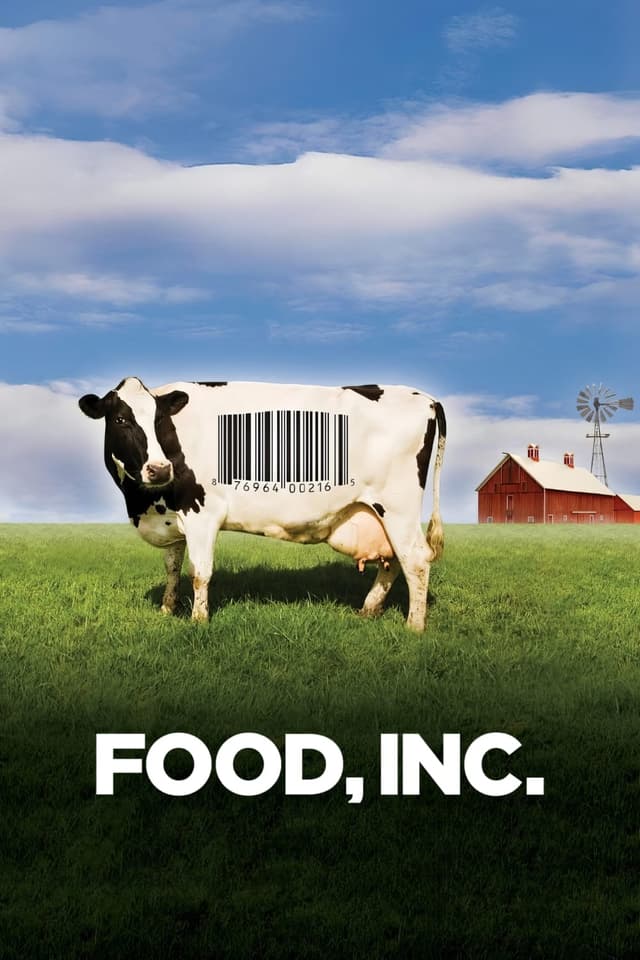
Food, Inc. was produced on a budget of approximately $5 million, financed by Participant Media and River Road Entertainment. The film was directed by Robert Kenner and drew extensively from the investigative journalism of Eric Schlosser, whose book Fast Food Nation (2001) had exposed the American fast food industry, and Michael Pollan, whose The Omnivore's Dilemma (2006) had examined the industrial food chain. Both Schlosser and Pollan appear as interview subjects and served as research consultants throughout production.
The $5 million budget reflected the film's ambition to document the American industrial food system across multiple sectors including beef, chicken, pork, soybeans, and corn, investigating companies including Tyson Foods, Smithfield Foods, and Monsanto. The production was challenged by the refusal of all major food corporations to grant camera access, requiring Kenner to film processing facilities and agricultural operations from public roads and through contacts who risked professional and legal retaliation for cooperating with the filmmakers.
Key Budget Allocation Categories
- Multi-Sector Industrial Investigation Across the United States: The film documents the beef, chicken, pork, soybean, and corn sectors of American industrial agriculture, requiring production presence at farms, processing facilities, and corporate headquarters across multiple states. The research phase, during which Kenner and his team identified the farmers, workers, and experts willing to speak on camera despite the risk of corporate retaliation, represented a significant pre-production cost. Tyson Foods refused all access; the chicken operation sequences were filmed through contacts willing to cooperate confidentially.
- Eric Schlosser and Michael Pollan as Research Partners: Schlosser and Pollan had spent years researching the American food system before Kenner began production, and their networks of sources, farmers, and experts opened doors that a documentary team approaching cold could not have opened. The cost of integrating their research into the production and compensating them for their on-screen participation and consultancy was built into the budget. Their involvement also provided the film with the credibility that secured Magnolia Pictures' theatrical distribution interest.
- Farmer Interviews and Source Protection: A chicken farmer who agreed to appear in the film, allowing cameras to show the conditions of her Perdue contract operation, lost her contract shortly after the film's release. The production team was aware of the professional risk faced by farmers and workers who agreed to be filmed, and invested in source protection measures including anonymization where requested and legal support for interviewees who faced retaliation. One Missouri beef operation was filmed from a public road after the owner refused access but the film's crew documented the facility's condition from the road.
- Undercover and Hidden Camera Sequences: Several sequences in the film required filming in conditions where corporate subjects did not know they were being documented. Kenner's team filmed in grocery stores, fast food restaurants, and agricultural markets with cameras that did not identify the production, requiring specialized camera equipment and crew training to capture footage unobtrusively in locations where the film's investigative agenda would have prevented official access.
- Magnolia Pictures Theatrical Distribution: Magnolia Pictures, the theatrical distributor owned by Mark Cuban and Todd Wagner, acquired the film and positioned it as an art house and crossover documentary release. The distribution campaign, which included national expansion and a substantial DVD distribution deal with Walmart (whose food section the film criticizes), demonstrated the commercial calculation that documentary advocacy films required even when their content challenged the retail partners involved in their distribution.
How Does Food, Inc.'s Budget Compare to Similar Films?
Food, Inc. sits at the mid-range of Participant Media advocacy documentary budgets. Its domestic performance of $4.4 million was solid for a food-industry documentary but significantly below the theatrical returns of Participant's most commercially successful titles.
- An Inconvenient Truth (2006): Budget ~$1M | Worldwide $49.8M. The Participant Media advocacy documentary that set the commercial standard for the format spent approximately one-fifth what Food, Inc. cost and found an audience more than ten times larger. Al Gore's political profile and the timeliness of the climate change subject in 2006 explain much of the gap, but the comparison illustrates how widely variable advocacy documentary performance can be.
- Super Size Me (2004): Budget ~$65K | Domestic $11.5M. Morgan Spurlock's McDonald's documentary spent a tiny fraction of Food, Inc.'s budget and found nearly three times its domestic gross. The comparison illustrates how the personal participatory format, with Spurlock as the on-screen subject eating only McDonald's for 30 days, generates commercial traction that an investigative documentary approach cannot replicate regardless of budget.
- Fast Food Nation (2006): Budget $5.5M | Domestic $1.5M. Richard Linklater's narrative fiction adaptation of Schlosser's book, released the same year Pollan's Omnivore's Dilemma appeared, spent nearly the same as Food, Inc. and found dramatically less domestic theatrical audience. The comparison suggests that the documentary format was more commercially effective than narrative fiction for this subject matter at this budget level.
- Forks Over Knives (2011): Budget ~$1.5M | Domestic $1.2M. The plant-based diet advocacy documentary spent less than one-third what Food, Inc. cost and found a smaller domestic theatrical audience, though it found a much larger audience through Netflix streaming and DVD sales. Food, Inc.'s investment in production quality and its integration of two high-profile author-journalists justified its higher budget relative to the streaming-first food documentary model that followed.
Food, Inc. Box Office Performance
Food, Inc. opened June 12, 2009, in New York and Los Angeles through Magnolia Pictures in a limited platform release, expanding nationally through the summer. The film reached its widest release of over 200 theaters, substantial for a food-industry investigative documentary. The domestic total finished at $4.4 million. International markets, where Participant Media's distribution network gave the film European theatrical access, added approximately $5.6 million for a worldwide total of approximately $10 million.
Against a production budget of approximately $5 million and an estimated $2 million in prints and advertising across US and international theatrical releases, the total investment was approximately $7 million. With theaters retaining roughly 50 percent of gross, the distributors' share of the worldwide theatrical gross was approximately $5 million, falling short of the total investment in theatrical alone. The film's profitability depended on a major DVD distribution deal with Walmart and Netflix streaming, which significantly extended its commercial reach beyond the theatrical window.
Box Office Breakdown
Food, Inc.

For every dollar invested in production, Food, Inc. returned approximately $2.00 at the worldwide box office. Accounting for P&A, the film returned approximately $0.71 for every dollar of total investment in theatrical alone. The Walmart DVD deal, which made the film available at the same retail chain whose food supply chain the film investigates, was noted as a commercial irony in media coverage of the film's distribution. That deal and the subsequent Netflix placement brought the film's total audience substantially beyond its theatrical reach.
Food, Inc. Production History
Robert Kenner began developing Food, Inc. after reading Fast Food Nation and becoming interested in the systemic dimensions of industrial food production that Schlosser's journalism had identified. Participant Media, which had made advocacy documentary filmmaking central to its production mandate, agreed to finance the project. Kenner engaged both Schlosser and Michael Pollan as participants, combining their two distinct investigative frameworks, Schlosser's focus on the fast food industry and Pollan's analysis of the corn and soybean monoculture, into a single documentary narrative.
The production team spent months attempting to obtain access to food processing facilities, corporate farms, and company headquarters. Tyson Foods, Smithfield Foods, Perdue Farms, and Monsanto all declined to participate. The refusal of corporate access forced Kenner to develop the film's investigative sequences through farmers and workers who were willing to cooperate despite the professional risk, and through filming from public roads and locations where camera access could not be legally blocked. The chicken farmer who appears in the film discussing her Perdue contract operation lost that contract after the film's release.
The film was nominated for the Academy Award for Best Documentary Feature at the 82nd Academy Awards in March 2010, losing to The Cove, a film about dolphin hunting in Japan. The nomination placed Kenner among a small group of advocacy documentary filmmakers who had received Academy recognition for films that challenged major American corporate interests.
Monsanto filed no legal action against the film despite its extensive coverage of the company's practices regarding genetically modified soybean seeds and its legal actions against farmers who saved seeds from one harvest to plant the next. The film's coverage of Monsanto's seed patent enforcement, in which farmers were sued for saving seeds after their fields were cross-pollinated by wind from neighboring GMO farms, became one of its most widely discussed sequences and the most frequently cited element in the policy debates the film contributed to.
Awards and Recognition
Food, Inc. was nominated for the Academy Award for Best Documentary Feature at the 82nd Academy Awards (2010), losing to The Cove. The film received the International Documentary Association Award nomination for Best Feature Documentary, the Directors Guild of America nomination for Outstanding Directorial Achievement in Documentary, and the Producers Guild of America nomination in the Documentary category. The Academy nomination cemented the film's status as a significant cultural document rather than a niche interest film.
The film is included in the curricula of high school and university courses on food systems, public health, environmental policy, and corporate governance across the United States. Its influence on public awareness of industrial agriculture practices and on subsequent food documentary filmmaking, including Forks Over Knives (2011), Fed Up (2014), and What the Health (2017), is consistently cited by documentary filmmakers working in the food advocacy space. The film is considered among the documentary works that contributed to the consumer movement toward organic, locally sourced, and sustainably produced food that accelerated after 2010.
Critical Reception
Food, Inc. holds a 96% approval rating on Rotten Tomatoes, with critics broadly praising the film's clarity of argument, the quality of its reporting, and Kenner's skill in making complex industrial systems visually comprehensible and emotionally immediate. Metacritic scored it 73 out of 100, indicating generally favorable reviews with some reservations about the film's advocacy framing. The film's IMDb rating of 7.8 out of 10 reflects a general audience that found it disturbing, informative, and persuasive.
Critics who praised the film highlighted the integration of Schlosser and Pollan's research frameworks with the human stories of farmers, workers, and consumers affected by the industrial food system. The sequence following a mother whose young son died from an E. coli infection traced to contaminated ground beef from a Tyson supplier was cited by multiple critics as the film's most effective and emotionally devastating argument, combining personal tragedy with systemic analysis in a way that pure statistics cannot achieve.
Critics who were more reserved noted that the film's selective presentation of industrial agriculture, focusing on worst-case practices and corporations with the worst records, left viewers without sufficient context to evaluate the full range of industrial food production. Agricultural industry representatives argued that the film was advocacy masquerading as journalism, and that Kenner's refusal to give Tyson, Smithfield, and Monsanto adequate response time was a violation of documentary fairness standards. This debate, which replicated the controversy around Waiting for "Superman" in education, contributed to the film's media footprint and extended its policy impact.
Frequently Asked Questions
How much did Food, Inc. (2008) cost to make?
The production budget was approximately $1,000,000, sourced largely through the Participant Media social-impact production model. Participant co-financed the project alongside River Road Entertainment, with Magnolia Pictures handling theatrical distribution.
How much did Food, Inc. earn at the box office?
The film grossed $4,417,070 domestically and approximately $300,000 internationally, for a worldwide total of approximately $4,700,000. It opened to $60,300 in a single-theater premiere on June 12, 2009, before expanding through 152 screens at its widest release.
Who directed Food, Inc.?
Robert Kenner directed the film. Kenner had previously directed numerous PBS documentaries including Two Days in October (2005), which won a Peabody Award. Food, Inc. became his breakthrough theatrical release.
What is Food, Inc. about?
The documentary examines the consolidated American industrial food system, focusing on the corporate control exercised by companies including Tyson Foods, Monsanto, Smithfield Foods, and Perdue Farms. Authors Michael Pollan (The Omnivore's Dilemma) and Eric Schlosser (Fast Food Nation) appear as key on-screen guides.
Did Food, Inc. win any awards?
The film received an Academy Award nomination for Best Documentary Feature at the 82nd Oscars, losing to The Cove. It won a News and Documentary Emmy for Outstanding Informational Programming and was nominated for an Independent Spirit Award for Best Documentary.
What did critics think of Food, Inc.?
The film received strong reviews, with a 95% approval rating on Rotten Tomatoes and an 80 out of 100 score on Metacritic. Critics praised the film's accessible explanation of agricultural-industry concentration while noting its advocacy posture.
Did the corporations featured in Food, Inc. respond?
Yes. Monsanto, Tyson Foods, Smithfield Foods, and Perdue Farms all declined on-camera interviews during production and subsequently issued public statements rebutting specific claims in the film. Monsanto produced an extensive response page on its corporate website addressing the documentary by name.
How does Food, Inc. compare to other food documentaries?
Food, Inc. became the most commercially successful food-system documentary at the time of release, outperforming Super Size Me (2004, $65,000 budget, $30,500,000 worldwide) on critical reception while trailing on commercial scale. It set the template for later releases including Forks Over Knives (2011) and Cowspiracy (2014).
Where can I watch Food, Inc.?
The film is available for digital rental and purchase on Amazon Prime Video, Apple TV, and Google Play. It also streams on Tubi, Hoopla, and Kanopy through their public-library and free ad-supported tiers. A theatrical sequel titled Food, Inc. 2 was released in 2024.
Was a Food, Inc. sequel produced?
Yes. Food, Inc. 2, directed again by Robert Kenner alongside Melissa Robledo, was released theatrically and on demand on April 12, 2024. The sequel updates the original investigation through the lens of the COVID-19 supply-chain disruptions and renewed labor activism in meatpacking plants.
Official Trailer
Build budgets like this one in Saturation
Start from an industry-standard feature film template, import the schedule and rates you already have, and let the cost report keep itself current as you spend. Real-time collaboration, no spreadsheets.