Fear Street 1978 Budget
 HorrorMystery1h 51m
Updated
Synopsis
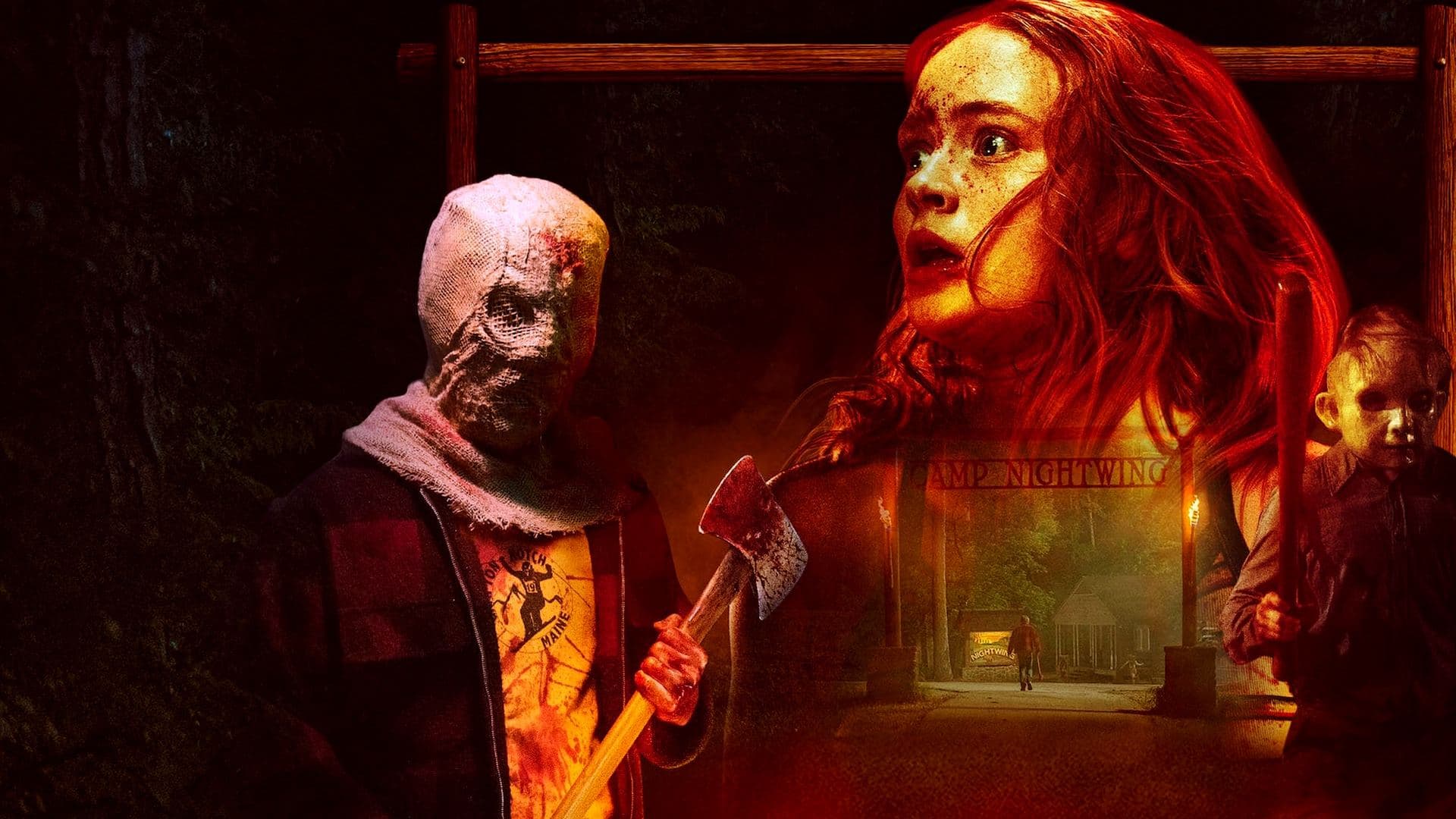
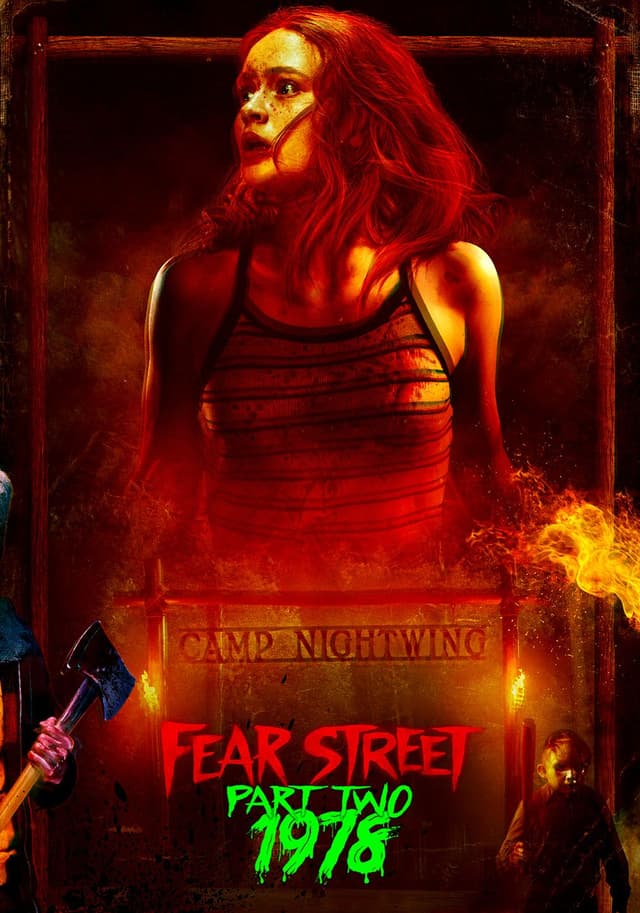
In the summer of 1978, two sisters at the cursed Camp Nightwing are stalked by a possessed counselor, in a story being recounted to the 1994 protagonists by C. Berman, the camp's sole survivor. Leigh Janiak's middle entry in Netflix's Fear Street trilogy adapts R.L. Stine's YA horror series in a 1978 summer-slasher framework.
What Is the Budget of Fear Street: 1978 (2021)?
Fear Street: 1978 (2021), directed by Leigh Janiak and distributed by Netflix, was produced as the middle entry in Netflix's Fear Street trilogy, with the three films sharing a combined production budget that industry sources estimated in the $30,000,000 to $40,000,000 range across all three installments, implying a per-film budget of approximately $10,000,000 to $14,000,000. The trilogy was financed by Chernin Entertainment and Netflix as a single connected production, with director Leigh Janiak helming all three films back-to-back in a single extended shoot that began in March 2019 and continued through fall 2019.
The shared-production approach allowed substantial cost amortization across the three films, with sets, locations, costumes, and crew commitments rolling forward between installments. The 1978 film, set at the fictional Camp Nightwing during the summer of 1978, required period production design (1970s costumes, summer camp set construction, period vehicles, period soundtracks) and was structured as a deliberate Friday the 13th / Sleepaway Camp summer-slasher homage in the middle of the broader Fear Street curse narrative.
Key Budget Allocation Categories
The film's share of the trilogy budget was distributed across these areas:
- Above-the-Line Talent: Leads Sadie Sink (Stranger Things, The Whale) as Ziggy Berman and Emily Rudd as Cindy Berman anchored the 1978 ensemble alongside Ryan Simpkins, McCabe Slye, Ted Sutherland, and Jordana Spiro. The cast was deliberately drawn from emerging young actors at indie or television scale, with the production benefiting from the rising visibility of multiple cast members during the shoot. Director Leigh Janiak (Honeymoon, MTV's Scream series) operated at indie scale across all three films.
- Atlanta Production: Principal photography for all three Fear Street films ran in Atlanta, Georgia from March 2019 through fall 2019, with the production qualifying for the Georgia Film Tax Credit. The Atlanta-based shoot allowed substantial cost efficiencies through shared sets, locations, and crews across the trilogy.
- Camp Nightwing Set Construction: The fictional Camp Nightwing was constructed on Georgia woodland locations, with the production building a fully period-accurate 1978 summer camp including the camp lodge, the counselor cabins, the dining hall, and the surrounding wooded paths and waterfront. The set was largely struck and not reused for the other two installments, accounting for a substantial 1978-specific portion of the trilogy budget.
- Practical Effects and Gore: The film's extensive practical gore (including the centerpiece axe murders and the climactic possessed-counselor rampage) was built by Georgia-based effects houses with Leigh Janiak personally storyboarding the slasher set pieces. The practical-first approach drew on the source genre's Tom Savini tradition.
- Period Costumes and Production Design: Costume designer Amy Andrews dressed the 1978 cast in researched-accurate late-1970s summer camp counselor attire (hot pants, camp T-shirts, period jewelry). Production designer Scott Kuzio constructed the period-accurate interior sets including the camp lodge, counselor cabins, and the climactic ritual chamber.
- Music Licensing: The film's soundtrack drew on 1970s rock and pop including The Doobie Brothers, David Bowie, Carly Simon, and KISS. Music licensing costs covered both the period needle drops and the trilogy's thematic original score by Marco Beltrami and Marcus Trumpp.
How Does Fear Street: 1978's Budget Compare to Similar Films?
Fear Street: 1978 operates in the mid-budget streaming horror tier, with directly comparable Netflix and theatrical peer comparisons:
- Fear Street: 1994 (2021): Budget approximately $10,000,000 to $14,000,000 | Netflix exclusive. The trilogy's first installment offers the direct peer comparison.
- Fear Street: 1666 (2021): Budget approximately $10,000,000 to $14,000,000 | Netflix exclusive. The trilogy's third installment completes the comparison set.
- Friday the 13th (1980): Budget approximately $550,000 (1980 dollars, roughly $1,800,000 in 2021 inflation-adjusted) | Worldwide $59,754,601 (1980). The defining 1980 summer-slasher illustrates the genre's ancestral budget floor.
- Sleepaway Camp (1983): Budget approximately $350,000 (1983 dollars) | Worldwide $11,000,000 (1983-1984). The other defining 1980s summer-camp slasher peer at a much lower budget.
- Apostle (2018): Budget approximately $20,000,000 to $30,000,000 (estimated) | Netflix exclusive. The contemporaneous Netflix horror release illustrates the platform's comparable but higher-budget peer in folk-horror territory.
Fear Street: 1978 Box Office Performance
Fear Street: 1978 premiered on Netflix on July 9, 2021 as a streaming exclusive, the second of three weekly releases across July 2021 (Fear Street: 1994 on July 2, Fear Street: 1978 on July 9, Fear Street: 1666 on July 16). The deliberately compressed three-week trilogy release was Netflix's most ambitious horror programming strategy of 2021 and became one of the platform's most-watched releases of the year.
Netflix's Top 10 daily charts showed the trilogy occupying multiple slots throughout July 2021, with the films jointly accumulating approximately 88,000,000 hours viewed across the trilogy's first 28 days according to Netflix's engagement data. The 1978 installment specifically reached #2 on the Netflix U.S. daily chart on its launch weekend, behind only the contemporaneous July 9 launch of Manifest season 3. The financial breakdown:
Box Office Breakdown
Fear Street 1978

The Fear Street trilogy successfully demonstrated Netflix's capacity to launch a multi-film horror event in a compressed release window, with the three-week rollout generating sustained social-media discussion across July 2021 and establishing the trilogy as a defining example of platform-specific horror programming.
Fear Street: 1978 Production History
Development on the Fear Street trilogy began in 2017 at Chernin Entertainment, which optioned R.L. Stine's YA horror book series (originally published 1989-1999, with revival series in the 2000s and 2010s). Leigh Janiak (Honeymoon, MTV's Scream series) was hired to direct all three films as a single continuous project, with screenwriters Janiak, Phil Graziadei, and Kate Trefry developing the connected three-installment narrative.
The trilogy structure was a deliberate creative and commercial decision: each film would operate as a standalone genre exercise (1994 as a 90s teen slasher in the Scream tradition, 1978 as a 1970s summer-camp slasher in the Friday the 13th tradition, 1666 as a Puritan-era origin story in the folk-horror tradition) while collectively delivering the Fear Street curse narrative anchoring the connected R.L. Stine source material.
Principal photography began in March 2019 in Atlanta, Georgia and continued through fall 2019, with the three films shot largely back-to-back to amortize production costs and to maximize cast availability across the connected timeline. The 1978 portion of the shoot took place in the Georgia summer of 2019, with the Camp Nightwing set constructed on a Georgia woodland location.
Casting Sadie Sink and Emily Rudd as the Berman sisters followed extensive young-actor searches. Sink, then in her breakout role on Netflix's Stranger Things (2016-present), committed to the project as a deliberate transition between her Stranger Things ensemble work and a lead horror franchise role. The supporting Camp Nightwing ensemble was largely cast from rising young actors.
20th Century Fox originally held the trilogy rights, with theatrical release planned. The Disney acquisition of 20th Century Fox in 2019 led to the project's transfer to Disney's Searchlight Pictures, which subsequently sold the trilogy to Netflix in August 2020 for streaming-exclusive release. Netflix's acquisition fee was reported as approximately $30,000,000 for all three films, more than recouping the Chernin Entertainment production investment. The compressed July 2021 weekly release schedule was Netflix's strategic choice.
Awards and Recognition
Fear Street: 1978 received recognition primarily within genre awards circuits. At the 2022 Saturn Awards by the Academy of Science Fiction, Fantasy, and Horror Films, the Fear Street trilogy collectively received multiple nominations including Best Horror Television Presentation. Leigh Janiak received the Award for Outstanding Direction at the 2021 Hollywood Critics Association Television Awards in a streaming-original category.
At the Fangoria Chainsaw Awards, the trilogy received nominations in multiple categories. The film was named to multiple critics' Best Horror Films of 2021 lists. No major mainstream awards bodies recognized the trilogy in narrative-feature categories, in part because of the streaming-exclusive distribution model and the trilogy structure.
Critical Reception
Fear Street: 1978 received positive reviews. The film holds a 91% approval rating on Rotten Tomatoes based on 121 critic reviews and a 72 out of 100 score on Metacritic, the strongest critical reception of the three Fear Street films. Critics broadly identified the 1978 installment as the most genre-confident entry in the trilogy, with the summer-camp slasher framework allowing for elaborate practical effects, period-accurate atmosphere, and clear horror conventions.
The New York Times's Beatrice Loayza wrote that the film "earns its Friday the 13th heritage through committed period craft and genuine slasher craftsmanship," and Variety's Owen Gleiberman praised "Leigh Janiak's confident genre direction." The Hollywood Reporter's Frank Scheck called the film "the trilogy's strongest entry, delivering on the period summer-camp slasher promise without sacrificing the broader Fear Street curse narrative." IndieWire's David Ehrlich singled out Sadie Sink's lead performance as "a study in 1978 final-girl energy that elevates the period setting."
Some criticism focused on the trilogy's connected-narrative structure requiring viewers to commit to all three films for full narrative payoff, and on the 1978 installment's reliance on familiar 1980s slasher conventions. The Atlantic's David Sims wrote that "the trilogy's ambition occasionally outpaces individual-film coherence." The positive overall reception nonetheless established the Fear Street trilogy as one of Netflix's most successful horror programming exercises and validated the platform's compressed-release-window strategy.
Frequently Asked Questions
How much did Fear Street: 1978 (2021) cost to make?
Netflix and Chernin Entertainment did not publicly disclose per-film budgets, but industry sources estimated the Fear Street trilogy combined production budget in the $30,000,000 to $40,000,000 range across all three installments, implying a per-film budget of approximately $10,000,000 to $14,000,000 for Fear Street: 1978.
Did Fear Street: 1978 have a theatrical release?
No. The Fear Street trilogy premiered on Netflix in compressed weekly release windows in July 2021 (1994 on July 2, 1978 on July 9, 1666 on July 16) as a streaming exclusive with no theatrical release. 20th Century Fox had originally planned a theatrical release before Disney's acquisition of Fox transferred the trilogy to Searchlight Pictures, which subsequently sold the films to Netflix in August 2020.
Who directed Fear Street: 1978?
Leigh Janiak directed all three Fear Street films as a single continuous project, having helmed all three back-to-back from March 2019 through fall 2019. Janiak's prior credits included the 2014 horror film Honeymoon and the 2015-2016 MTV Scream television series.
Where was Fear Street: 1978 filmed?
Principal photography ran in Atlanta, Georgia from March 2019 through fall 2019, with the production qualifying for the Georgia Film Tax Credit. The Camp Nightwing summer camp set was constructed on a Georgia woodland location, with the 1978 portion of the shoot taking place during the Georgia summer of 2019.
Is Fear Street: 1978 based on the R.L. Stine books?
Yes. The trilogy is loosely based on R.L. Stine's Fear Street YA horror book series, originally published from 1989-1999 with revival series in the 2000s and 2010s. The connected-trilogy narrative structure was a deliberate creative addition to the source material, with screenwriters Leigh Janiak, Phil Graziadei, and Kate Trefry developing the three-film curse storyline.
Who stars in Fear Street: 1978?
Sadie Sink (Stranger Things, The Whale) plays Ziggy Berman, with Emily Rudd as her sister Cindy Berman. The supporting Camp Nightwing ensemble includes Ryan Simpkins, McCabe Slye, Ted Sutherland, Jordana Spiro, and Gillian Jacobs in a key framing-device cameo as the 1994 narrator C. Berman.
How does Fear Street: 1978 fit into the trilogy?
Fear Street: 1978 is the middle entry in the trilogy, with the 1978 events being recounted to the 1994 protagonists by C. Berman, the sole survivor of the Camp Nightwing massacre. The trilogy structure operates each film as a standalone genre exercise (1994 as a 90s teen slasher, 1978 as a 1970s summer-camp slasher, 1666 as a Puritan-era folk horror origin story) while collectively delivering the Fear Street curse narrative.
What did critics think of Fear Street: 1978?
The film received positive reviews, with a 91% approval rating on Rotten Tomatoes and a 72 out of 100 score on Metacritic, the strongest critical reception of the three Fear Street films. Critics broadly identified the 1978 installment as the most genre-confident entry in the trilogy, with the summer-camp slasher framework allowing for elaborate practical effects and period-accurate atmosphere.
Was Fear Street: 1978 supposed to be in theaters?
Yes. 20th Century Fox had originally planned a theatrical release for the Fear Street trilogy. The Disney acquisition of 20th Century Fox in 2019 led to the project's transfer to Disney's Searchlight Pictures, which subsequently sold the trilogy to Netflix in August 2020 for streaming-exclusive release. Netflix's acquisition fee was reported as approximately $30,000,000 for all three films.
How does Fear Street: 1978 compare to Friday the 13th?
Fear Street: 1978 is a deliberate Friday the 13th and Sleepaway Camp homage, set at a summer camp during the summer of 1978 with possessed-counselor and machete-murder set pieces directly modeled on the 1980 Friday the 13th template. Friday the 13th was produced on approximately $550,000 in 1980 dollars (roughly $1,800,000 in 2021 inflation-adjusted), while Fear Street: 1978 operated at an estimated $10,000,000 to $14,000,000 budget, demonstrating the dramatic budget escalation of contemporary streaming-platform horror.
Filmmakers
Fear Street 1978

Official Trailer
Build budgets like this one in Saturation
Start from an industry-standard feature film template, import the schedule and rates you already have, and let the cost report keep itself current as you spend. Real-time collaboration, no spreadsheets.