Evan Almighty Budget
 FantasyComedyFamily1h 36m
Updated
Synopsis
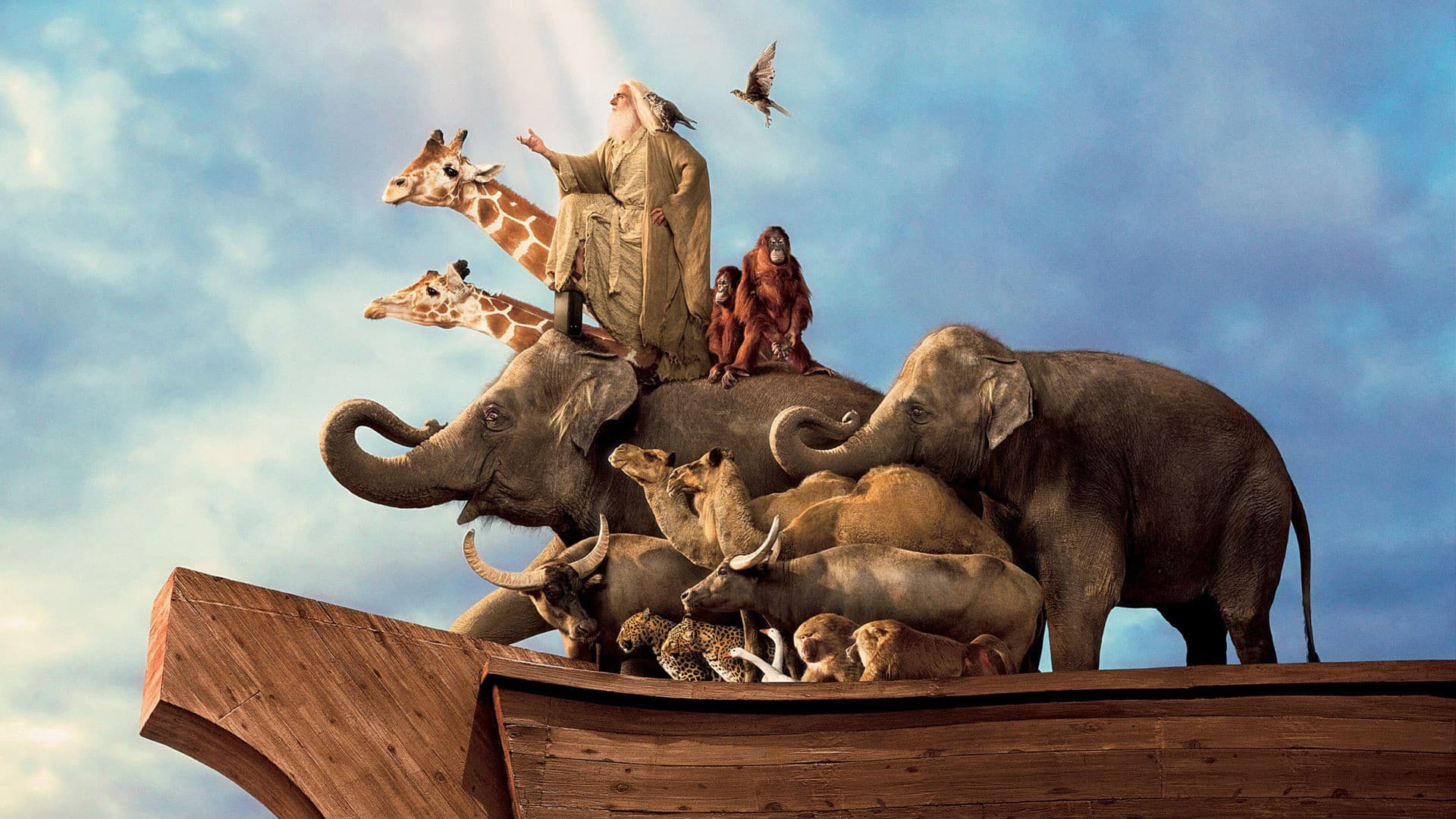
Newly elected congressman Evan Baxter has moved his family from Buffalo to Washington, D.C., where his prayer for a chance to "change the world" is answered when God appears and instructs him to build an ark in preparation for a great flood. As Evan reluctantly grows a beard, gathers pairs of animals, and assembles the vessel in his suburban backyard, his family, his colleagues, and a powerful congressman scheme to derail what they believe is a public breakdown.
What Is the Budget of Evan Almighty (2007)?
Evan Almighty (2007), directed by Tom Shadyac and distributed by Universal Pictures, was produced on a reported budget of $175,000,000, with industry estimates placing total spend including marketing closer to $250,000,000. At the time of its release, the film was widely cited as the most expensive comedy ever made, surpassing prior benchmarks set by Mike Myers and Adam Sandler vehicles. Spyglass Entertainment, Relativity Media, Shady Acres Entertainment, and Original Film co-financed the production as a follow-up to Bruce Almighty (2003), which had grossed $484,592,874 worldwide against an $81,000,000 budget four years earlier.
The budget reflected an ambitious creative pivot rather than a comedy expansion. The screenplay required Universal to build a full-scale 450-foot ark, populate the climactic flood sequence with hundreds of digital animals and water simulation work from Industrial Light & Magic and Rhythm & Hues, and shoot extensively on practical locations across Virginia rather than soundstages. The math assumed Evan Almighty would need to clear roughly $350,000,000 worldwide to break even against production and global marketing, a target the film missed by more than $175,000,000.
Key Budget Allocation Categories
Evan Almighty's reported $175,000,000 budget was distributed across several core production areas:
- Above-the-Line Talent: Director Tom Shadyac, coming off the $484M-grossing Bruce Almighty, commanded a top-tier directing fee. Steve Carell, who had broken out with The 40-Year-Old Virgin (2005) and the launch of NBC's The Office, signed for $5,000,000 in his first true studio-tentpole lead. Morgan Freeman reprised God for a substantial paycheck, with additional fees attached to Lauren Graham, John Goodman, Wanda Sykes, John Michael Higgins, and Jonah Hill in early-career supporting work.
- Ark Construction: The production built a full-scale wooden ark to biblical specifications, measuring 450 feet long, 80 feet wide, and 51 feet high. The structure was erected on a concrete foundation in the Old Trail subdivision of Crozet, Virginia, and required months of carpentry, steel reinforcement, and weatherproofing. After filming wrapped, the ark was dismantled within two weeks and its materials donated to Habitat for Humanity.
- Visual Effects: Industrial Light & Magic, Rhythm & Hues Studios, C.I.S. Hollywood, and Cafe FX shared an unusually heavy VFX load for a comedy. The 200-shot ark flooding climax alone occupied 30 to 60 ILM artists across a 13-month post window from April 2006 to May 2007. Rhythm & Hues spent six to seven months perfecting the look and animation cycles for the digital animal pairs before delivering its first finished shot.
- Animal Wrangling and Digital Pairs: The American Humane Association oversaw 177 live species working on set, while 300 additional animal pairs were created entirely in CGI to avoid predator-prey safety conflicts. The hybrid live-and-digital approach required dedicated trainers, on-set veterinary supervision, climate-controlled holding facilities, and double-tracked VFX plates for every animal shot.
- Virginia Location Production: Principal photography ran across Crozet, Waynesboro, Richmond, Charlottesville, and Staunton, supplemented by stage work at Universal Studios Hollywood. The Virginia shoot required long-term lodging, local crew hiring, road closures, and the construction of the Capitol Hill suburb of Prestige Crest as a standing exterior set.
- Score and Music: John Debney, fresh off The Passion of the Christ and reuniting with Shadyac after Bruce Almighty, composed the orchestral score. The soundtrack budget covered original composition, a full orchestra recording, and licensed needle drops including the recurring use of Patti LaBelle's rendition of "God Is Trying to Tell You Something."
- Marketing and Carbon Offsets: Universal mounted a Grace Hill Media-led religious-audience screening campaign across 50 cities, paired with a broad family-targeted television buy. The production also funded a publicized carbon-offset program, planting 2,050 trees at the Rappahannock River Valley and San Joaquin River National Wildlife Refuges and distributing more than 400 bicycles to crew members.
How Does Evan Almighty's Budget Compare to Similar Films?
At $175,000,000, Evan Almighty sits in a narrow tier of biblical and faith-themed studio productions, and far above the typical Steve Carell vehicle of the same era. The comparison set illustrates how its commercial outcome diverged from both groups:
- Bruce Almighty (2003): Budget $81,000,000 | Worldwide $484,592,874. The Jim Carrey original cost less than half what its sequel did and grossed nearly three times as much, a clean demonstration that audiences came for Carrey and the high-concept God premise rather than the supporting Evan Baxter character.
- Noah (2014): Budget $125,000,000 | Worldwide $362,637,473. Darren Aronofsky's revisionist take on the same Genesis source cost $50,000,000 less than Evan Almighty and earned more than twice as much worldwide, with most of the upside coming from international markets that Evan Almighty failed to convert.
- Exodus: Gods and Kings (2014): Budget $140,000,000 | Worldwide $268,175,631. Ridley Scott's Moses epic was another costly biblical swing that underperformed domestically but still out-grossed Evan Almighty internationally by a wide margin, reflecting the deeper global appetite for Old Testament drama than Old Testament family comedy.
- The 40-Year-Old Virgin (2005): Budget $26,000,000 | Worldwide $177,378,825. Carell's prior R-rated breakout cost roughly 15% of what Evan Almighty did and earned slightly more worldwide, the cleanest evidence that mid-budget comedy was the lane Universal should have stayed in.
- Get Smart (2008): Budget $80,000,000 | Worldwide $230,684,914. Carell's very next studio lead cost less than half of Evan Almighty and out-grossed it worldwide, signaling that the post-Evan correction in Carell's star vehicles delivered better unit economics for Warner Bros. and New Line.
- Anchorman 2: The Legend Continues (2013): Budget $50,000,000 | Worldwide $173,649,815. Adam McKay's Will Ferrell sequel offers the closest legacy-comedy-sequel comparison, costing less than 30% of Evan Almighty while earning a nearly identical worldwide haul, an outcome that would have been considered a hit had Universal hit Anchorman 2 economics on Evan Almighty.
Evan Almighty Box Office Performance
Evan Almighty opened on June 22, 2007, landing at the number one position at the domestic box office with $31,170,000 across 3,604 theaters and 5,200 screens. While the opening secured the weekend, it underperformed Universal's internal projections by a wide margin: Bruce Almighty had opened to $67,953,330 four years earlier, more than double Evan Almighty's start despite the substantially smaller predecessor budget. The sequel never recovered its momentum, dropping more than 50% in week two and finishing its theatrical run well below the threshold required for profitability.
Against a reported production budget of $175,000,000, the film needed approximately $350,000,000 in worldwide gross to reach profitability after marketing and distribution costs. Here is the financial breakdown:
Box Office Breakdown
Evan Almighty

Evan Almighty returned approximately $0.63 in theatrical revenue for every $1 invested when measured against total estimated production and marketing spend, making it one of the most decisive studio losses of the 2007 calendar year. The domestic share of the gross was $100,462,298 against an international share of just $73,956,483, a 58/42 split that pointed to a property whose biblical-comedy hybrid translated poorly to non-English-speaking markets.
The collapse ended any path to a third entry in the Almighty franchise. Universal quietly shelved development on additional sequels, Tom Shadyac directed only one more narrative feature (I Am, 2010) before pivoting to documentary and teaching work, and the financial loss was widely credited as a contributing factor to Shadyac's public falling-out with the studio system. Carell's subsequent star vehicles, beginning with Get Smart (2008), were budgeted at less than half of Evan Almighty's level.
Evan Almighty Production History
The project originated not as a Bruce Almighty sequel but as a stand-alone spec script titled The Passion of the Ark, written by Bobby Florsheim and Josh Stolberg. In April 2004, the screenplay triggered a seven-studio bidding war and was acquired by Sony Pictures for $2.5 million plus a percentage of profits, then a record sale for a spec from previously unproduced writers. The script was subsequently moved to Universal and reconceived as a vehicle for the Evan Baxter character that Steve Carell had played in a supporting capacity in Bruce Almighty, with Steve Oedekerk delivering the final shooting script alongside story credits for Joel Cohen and Alec Sokolow.
Jim Carrey declined to return as Bruce Nolan, citing his disinterest in repeating characters, which prompted Tom Shadyac to recruit Carell as the lead. Carell had recently broken out in The 40-Year-Old Virgin (2005) and was anchoring the U.S. version of The Office, making him the obvious heir to the Almighty franchise. Morgan Freeman returned as God, and the project was greenlit at a budget level that explicitly assumed it could match Bruce Almighty's commercial profile.
Principal photography began in January 2006 in Virginia, with the Crozet area serving as the primary base. The production constructed a 450-foot wooden ark on a concrete foundation in the Old Trail subdivision, requiring months of carpentry, structural engineering, and weatherproofing. Additional Virginia locations included Waynesboro, Richmond, Charlottesville, and Staunton, with the fictional Prestige Crest suburb built as a standing exterior set. Stage work was completed at Universal Studios Hollywood.
Post-production stretched across 13 months from April 2006 to May 2007 as Industrial Light & Magic, Rhythm & Hues, C.I.S. Hollywood, and Cafe FX shared the visual effects load. The climactic ark-flooding sequence alone required 200 shots and consumed 30 to 60 ILM crew members at its peak, while Rhythm & Hues spent six to seven months perfecting digital animal pairs before delivering its first finished shot. In May 2007, weeks before release, Shadyac publicly clashed with Universal over what he characterized as insufficient advertising support, then apologized days later. The film premiered on June 10, 2007, and went wide on June 22.
Awards and Recognition
Evan Almighty received no significant awards recognition. The film was nominated at the 2007 MTV Movie Awards for Best Summer Movie You Haven't Seen Yet (a category it shared with Transformers, which won), and Steve Carell received three Teen Choice Award nominations in summer 2007 across Choice Movie Actor: Comedy and related categories, all of which it lost.
At the 2008 Golden Raspberry Awards, the film was nominated for Worst Prequel or Sequel, losing to Daddy Day Camp. It did not receive nominations at the Saturn Awards, the Visual Effects Society Awards (despite the ILM and Rhythm & Hues effects work), or the Annie Awards. Its place in the awards conversation has been almost entirely absent in the years since release, reflecting both the commercial collapse and the mixed-to-negative critical reception.
Critical Reception
Evan Almighty received mixed-to-negative reviews from critics but a sharply more positive response from audiences. The film holds a 24% approval rating on Rotten Tomatoes based on 195 critic reviews, with an average score of 4.5 out of 10, and a 37 out of 100 score on Metacritic, indicating generally unfavorable reviews. Audiences surveyed by CinemaScore gave the film an A-, an unusually wide gap between professional and audience reception that reflected the success of the Grace Hill Media religious-audience screening campaign and the family-friendly PG rating.
Richard Roeper called the film "a paper-thin alleged comedy with a laugh drought of biblical proportions, and a condescendingly simplistic spiritual message," and grouped it among the three worst sequels of all time. Peter Travers of Rolling Stone gave the film one star out of four and later included it on his worst films of 2007 list. Critics who were less harsh, including some genre and family-press outlets, praised John Debney's score, the visual effects sequences, and Carell's physical comedy work but objected to a thin script that stretched a one-joke premise across nearly two hours.
The audience-versus-critic gap on Evan Almighty has become a recurring reference point in faith-based-marketing case studies, alongside The Passion of the Christ (2004) and the Kendrick Brothers films, as evidence that targeted religious-audience outreach can produce strong CinemaScore numbers and meaningful opening-weekend lift even when mainstream reviews are dismissive. The financial loss, however, demonstrated that a strong CinemaScore alone could not rescue a budget the size of Evan Almighty's.
Frequently Asked Questions
How much did it cost to make Evan Almighty (2007)?
The reported production budget was $175,000,000, with industry estimates placing total spend including marketing closer to $250,000,000. At the time of its release, it was widely cited as the most expensive comedy ever made. Universal Pictures co-financed the production with Spyglass Entertainment, Relativity Media, Shady Acres Entertainment, and Original Film.
How much did Evan Almighty earn at the box office?
The film grossed $100,462,298 domestically and $72,956,483 internationally, for a worldwide total of $174,418,781. It opened to $31,170,000 in the United States, finishing first on its June 22, 2007 opening weekend.
Was Evan Almighty a box office bomb?
Yes. Against a $175,000,000 production budget and an estimated $75,000,000 to $100,000,000 in marketing spend, the film returned approximately $0.63 in worldwide gross for every $1 invested. It is widely cited as one of the most decisive studio losses of 2007 and ended any path to a third entry in the Almighty franchise.
Who directed Evan Almighty?
Tom Shadyac directed the film, returning from Bruce Almighty (2003) and working from a screenplay by Steve Oedekerk based on a story by Oedekerk, Joel Cohen, and Alec Sokolow. The project originated as an unrelated spec script titled The Passion of the Ark by Bobby Florsheim and Josh Stolberg.
Where was Evan Almighty filmed?
Principal photography began in January 2006 across Virginia, with Crozet serving as the primary base. Additional locations included Waynesboro, Richmond, Charlottesville, and Staunton. The production built a full-scale 450-foot wooden ark on a concrete foundation in the Old Trail subdivision of Crozet. Stage work was completed at Universal Studios Hollywood.
How big was the ark in Evan Almighty?
The ark was built to biblical specifications, measuring 450 feet long, 80 feet wide, and 51 feet high. It was erected on a concrete foundation in the Old Trail subdivision of Crozet, Virginia, and required months of carpentry and structural engineering. After filming wrapped, the ark was dismantled within two weeks and its materials were donated to Habitat for Humanity.
How does Evan Almighty compare to Bruce Almighty?
Bruce Almighty (2003) was made for $81,000,000 and grossed $484,592,874 worldwide. Evan Almighty cost more than twice as much at $175,000,000 and grossed barely a third of its predecessor at $174,418,781. The sequel's opening weekend of $31,170,000 was less than half of Bruce Almighty's $67,953,330 debut.
Why did Jim Carrey not return for Evan Almighty?
Jim Carrey declined to reprise his role as Bruce Nolan, citing his general disinterest in repeating characters. Director Tom Shadyac then recruited Steve Carell, who had played the supporting Evan Baxter role in Bruce Almighty and was breaking out as a lead through The 40-Year-Old Virgin and NBC's The Office. Carell signed for a reported $5,000,000 fee.
What did critics think of Evan Almighty?
The film received mixed-to-negative reviews, with a 24% approval rating on Rotten Tomatoes (based on 195 critics) and a 37 out of 100 score on Metacritic. Audiences gave it an A- CinemaScore, an unusually wide critic-versus-audience gap that reflected the success of the Grace Hill Media religious-audience screening campaign. Richard Roeper called it "a paper-thin alleged comedy with a laugh drought of biblical proportions."
Did Evan Almighty win any awards?
No. Evan Almighty received no significant awards recognition. It was nominated at the 2007 MTV Movie Awards for Best Summer Movie You Haven't Seen Yet (lost to Transformers), at the 2008 Golden Raspberry Awards for Worst Prequel or Sequel (lost to Daddy Day Camp), and at the 2007 Teen Choice Awards in three categories (all losses for Steve Carell). It was not nominated at the Saturn Awards, Visual Effects Society Awards, or the Annie Awards.
Filmmakers
Evan Almighty

Official Trailer
Build budgets like this one in Saturation
Start from an industry-standard feature film template, import the schedule and rates you already have, and let the cost report keep itself current as you spend. Real-time collaboration, no spreadsheets.