Dylan Dog: Dead of Night Budget
 ActionComedyFantasyHorrorMysteryScience FictionThriller1h 47m
Updated
Synopsis
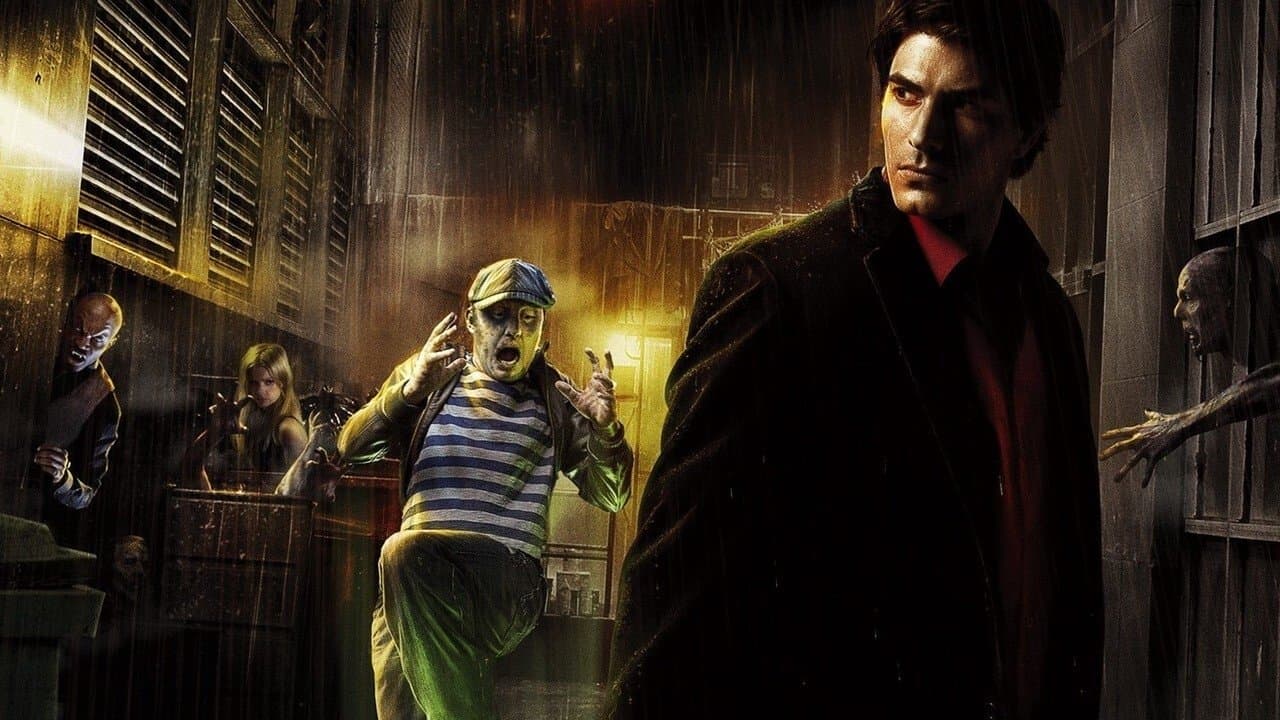
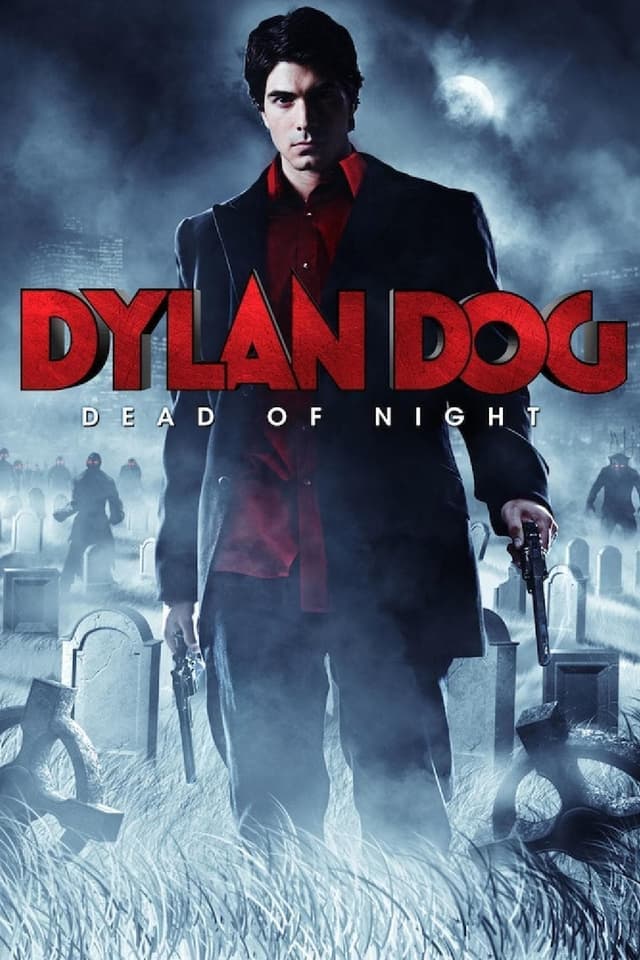
In New Orleans, paranormal investigator Dylan Dog reluctantly returns to active casework after a young woman recruits him to find the killer of her father. As Dylan navigates the city's rival factions of vampires, werewolves, and zombies, he uncovers an ancient artifact tied to the resurrection of a demonic creature that threatens to upend the supernatural balance he had long since walked away from.
What Is the Budget of Dylan Dog: Dead of Night (2011)?
Dylan Dog: Dead of Night (2011), directed by Kevin Munroe and distributed by Freestyle Releasing in partnership with Australia's Omnilab Media, was produced on a reported budget of $20,000,000. The project was an independently financed adaptation of Tiziano Sclavi's long-running Italian horror comic Dylan Dog, published since 1986 by Sergio Bonelli Editore and one of the best-selling comics in Italian publishing history. Platinum Studios, the Hollywood-based comics-to-film shop run by Scott Mitchell Rosenberg, optioned the property in the late 1990s and shepherded it through more than a decade of development before financing came together through Hyde Park Entertainment and Omnilab.
The $20,000,000 figure was modest by studio standards but ambitious for an indie genre title with no domestic theatrical partner attached at greenlight. The production deliberately relocated the story from Sclavi's rain-soaked London to New Orleans, exchanging the comic's European Gothic for the Louisiana state film tax incentive and a city whose built-in supernatural texture could absorb monster movie set pieces without elaborate world-building. The math assumed Dylan Dog would clear roughly $45,000,000 to $50,000,000 worldwide to recoup print and advertising costs alongside the production spend, a target the film missed by a margin of more than 85 percent.
Key Budget Allocation Categories
Dylan Dog's reported $20,000,000 budget was distributed across the following core production areas:
- Above-the-Line Talent: Brandon Routh, fresh off the lead in Superman Returns (2006), headlined the cast as paranormal investigator Dylan Dog. Supporting roles for Sam Huntington (Fanboys), Anita Briem (Journey to the Center of the Earth), Peter Stormare (Fargo, Constantine), and Taye Diggs (Rent) filled out a recognizable ensemble. Director Kevin Munroe, coming off TMNT (2007), and editor Paul Hirsch, an Oscar winner for Star Wars and a frequent Brian De Palma collaborator, anchored the above-the-line spend.
- New Orleans Location Shoot: Principal photography ran on location across New Orleans, capturing the French Quarter, above-ground cemeteries, and warehouse districts that doubled for the comic's gothic backdrops. Louisiana's film tax credit program offset a meaningful portion of qualified spend, and the city's existing crew base and stage capacity kept day rates competitive with Vancouver or Atlanta alternatives.
- Creature and Makeup Effects: The film featured vampires, zombies, werewolves, and a hulking demon called Belial. Practical creature suits, prosthetic makeup, and animatronic puppetry sat alongside digital augmentation, with a heavy reliance on in-camera effects to stretch the budget. The zombie sidekick Marcus required ongoing makeup application across the schedule, and the werewolf transformation sequences combined suit work with CG enhancement.
- Visual Effects: Digital effects vendors handled the demon climax, undead crowd extensions, the heart-extraction set piece, and various supernatural energy shots. The VFX shot count was modest by tentpole standards but absorbed a disproportionate share of the budget because of the volume of creature integration work required for a horror-comedy heavy on monster reveals.
- Score and Music: German composer Klaus Badelt, known for Pirates of the Caribbean: The Curse of the Black Pearl, delivered an orchestral score with electric guitar accents. Additional music was supplied by Andrew Reiher. The soundtrack budget covered original composition, ensemble recording, and licensing of period needle drops used in trailers and key sequences.
- Stunts and Action: Foot chases, brawls in zombie nightclubs, and a climactic battle with the resurrected demon required a full stunt department, fight choreography, and rigging for wirework. The action design favored physical, on-set staging over digital substitution to control cost and keep the practical horror aesthetic consistent.
- Marketing and Acquisition: With no major studio attached at production, Omnilab and Platinum Studios shopped distribution rights territory by territory. Freestyle Releasing eventually picked up the U.S. theatrical, releasing the film day-and-date with limited screens on April 29, 2011, after the Italian theatrical opening on March 16. International sales covered a portion of the negative cost but left a significant gap that domestic theatrical needed to fill, and did not.
How Does Dylan Dog: Dead of Night's Budget Compare to Similar Films?
At $20,000,000, Dylan Dog: Dead of Night sits in the low-budget range of supernatural detective and comic book monster-hunter films. The comparison set illustrates how its commercial outcome diverged from peers with comparable concepts:
- Constantine (2005): Budget $100,000,000 | Worldwide $230,884,728. Warner Bros.' Keanu Reeves vehicle spent five times Dylan Dog's budget on the same paranormal-investigator-faces-demons premise and earned forty times Dylan Dog's worldwide gross, the upside case the Dylan Dog producers were chasing.
- Hellboy (2004): Budget $66,000,000 | Worldwide $99,318,987. Guillermo del Toro's comic adaptation cost three times Dylan Dog and grossed seventeen times more worldwide, demonstrating that the audience appetite for stylized monster-hunter material existed when the property had a recognizable director and effects pedigree.
- Underworld (2003): Budget $22,000,000 | Worldwide $95,708,457. Screen Gems' vampires-versus-werewolves film cost almost exactly the same as Dylan Dog and grossed more than sixteen times the worldwide haul, launching a five-film franchise on the strength of a $51,500,000 domestic gross alone.
- R.I.P.D. (2013): Budget $130,000,000 | Worldwide $78,313,131. Universal's undead-detective movie cost more than six times Dylan Dog's budget and posted a similarly disastrous result, a $52,000,000 loss against budget that confirmed studio appetite for the supernatural-cop subgenre had cooled after a string of failures including Dylan Dog itself.
- I, Frankenstein (2014): Budget $65,000,000 | Worldwide $76,950,720. Lionsgate's monster-mythology film borrowed Dylan Dog's monster-faction template and posted comparable failure metrics at three times the production cost, reinforcing the high mortality rate for legacy supernatural properties launched without an existing audience.
- Priest (2011): Budget $60,000,000 | Worldwide $78,309,131. Screen Gems' Paul Bettany vampire-hunter film opened the same spring as Dylan Dog at triple the budget, posted a 30 percent loss against negative cost, and reinforced the pattern of 2011 supernatural action releases failing to find traction.
Dylan Dog: Dead of Night Box Office Performance
Dylan Dog: Dead of Night opened in Italy on March 16, 2011 to $1,121,158, an underperformance even in the property's home market where Sclavi's comic remains a cultural touchstone. The U.S. theatrical release followed on April 29, 2011, where Freestyle Releasing platformed the film on fewer than 900 screens. The domestic opening weekend totaled $754,779, finishing well outside the top ten on a weekend dominated by Fast Five's $86,000,000 launch, and the film never expanded.
Against a $20,000,000 production budget, the film needed approximately $45,000,000 to $50,000,000 in worldwide gross to break even after marketing and distribution costs. Here is the financial breakdown:
Box Office Breakdown
Dylan Dog: Dead of Night

Dylan Dog returned approximately $0.17 to $0.19 in theatrical revenue for every $1 invested when measured against total estimated production and marketing spend, placing it among the most decisive supernatural-genre flops of the early 2010s. The domestic share of the gross was $1,186,538 against an international share of $4,596,977, a 21/79 split that reflected the property's European fanbase and the U.S. distributor's inability to engineer crossover awareness.
The collapse killed the planned franchise. A sequel that the producers had floated publicly during pre-release press was quietly shelved. The film's commercial trajectory also damaged the broader Platinum Studios film slate strategy, and Omnilab Media's theatrical ambitions effectively retreated after the result. The property has since reverted to Sergio Bonelli Editore, with subsequent international adaptation talks centered on television rather than theatrical features.
Dylan Dog: Dead of Night Production History
Development on a Dylan Dog film adaptation began in 1998, when screenwriters Thomas Dean Donnelly and Joshua Oppenheimer wrote a first draft at Dimension Films. The Weinstein-era Dimension script set the story in Dylan's comic-canonical London and leaned harder into the source material's European existential horror. The project stalled when Dimension passed and the rights bounced between development homes for nearly a decade. Platinum Studios, founded by former Marvel editor-in-chief Scott Mitchell Rosenberg as a comic IP factory aimed at film adaptation, secured the rights and shepherded the property through several aborted starts before partnering with Hyde Park Entertainment's Ashok Amritraj on financing.
A key creative decision in pre-production was the geographic relocation. To qualify for state film tax credits and contain costs, the producers moved the story from London to New Orleans, Louisiana, exchanging the comic's perpetual urban gloom for the city's built-in voodoo iconography and a tax incentive that materially closed the financing gap. The relocation alienated portions of the comic's European readership before a frame was shot but kept the project viable on a $20,000,000 negative cost.
Kevin Munroe, who had directed the 2007 CGI feature TMNT, was attached to direct in 2009. Brandon Routh, whose Superman Returns sequel had collapsed at Warner Bros., signed on as Dylan in early 2010 to reset his post-Superman career around a horror-tinged property. Sam Huntington joined as zombie sidekick Marcus, Anita Briem as the love interest Elizabeth Ryan, Peter Stormare as werewolf clan leader Gabriel, and Taye Diggs as vampire faction head Vargas. Principal photography ran in New Orleans across the spring of 2010.
Post-production stretched into early 2011 as the film cycled through visual effects vendors and a late-stage tonal recut intended to play up the comedic Marcus-and-Dylan banter at the expense of the horror beats. The Italian release on March 16, 2011 preceded the U.S. release by six weeks. Editor Paul Hirsch, brought in late in post for his industry-veteran credibility, was unable to address the structural issues critics later flagged. Notably, the film exists in an awkward relationship with Cemetery Man (1994), Michele Soavi's cult film also drawn from Sclavi's writing, which had introduced English-speaking horror audiences to the world of Dylan Dog 17 years earlier without using the character by name due to rights complications.
Awards and Recognition
Dylan Dog: Dead of Night received no significant awards recognition. The film was not nominated at the Saturn Awards for genre filmmaking, the Visual Effects Society Awards, the Motion Picture Sound Editors Golden Reels, or the Fangoria Chainsaw Awards, despite Fangoria typically casting a wide net across independent horror titles. The Italian release also failed to register at the David di Donatello or Nastri d'Argento, the country's two main film awards bodies, where Sclavi's source material might otherwise have generated heritage interest.
The film was nominated for the 2012 Razzie Award for Worst Picture, ultimately losing to Jack and Jill. Brandon Routh's performance was also flagged in genre-press year-end disappointment lists. Within awards conversation Dylan Dog has been almost entirely absent, reflecting both its limited cultural footprint outside Italy and the genre ceiling that affects most low-budget supernatural action adaptations.
Critical Reception
Dylan Dog: Dead of Night received overwhelmingly negative reviews. The film holds a 5% approval rating on Rotten Tomatoes based on 43 critic reviews, with a critical consensus calling it "an uninspired, feebly-acted horror/comedy that produces little scares and laughs." On Metacritic, the film scored 31 out of 100, indicating generally unfavorable reviews. The audience score on Rotten Tomatoes reached 29 percent, an unusually low audience figure even for a poorly reviewed genre release where built-in fanbases typically lift the popcornmeter.
Critics broadly objected to the script's flat dialogue, the indifferent pacing, and the loss of Sclavi's European psychological texture in the transition to a New Orleans horror-action setting. Tim Grierson of Screen International wrote that the film "is kneecapped by mediocre effects, indifferent performances." Alonso Duralde at Movies.com called it "a crushingly dull 107 minutes." Brian Eggert at Deep Focus Review characterized it as feeling "like a failed SyFy Channel series pilot," a comparison that surfaced repeatedly across reviews. Marc Savlov at the Austin Chronicle wrote simply that "some things just don't translate that well."
European response was particularly harsh. Italian critics writing for La Repubblica, Corriere della Sera, and the genre site Nocturno Cinema treated the film as a betrayal of a beloved national property, faulting the New Orleans relocation, the loss of Dylan's signature melancholic interior monologue, and Routh's casting in a role Italian readers had long associated with Sclavi's deliberately Rupert Everett-modeled character design. The mixed-to-hostile reception, combined with the commercial collapse, has cemented Dylan Dog's reputation as a cautionary example of how a beloved foreign-language comic property can fail in English-language adaptation when its core European specificity is engineered out for tax-credit-driven location decisions.
Frequently Asked Questions
How much did it cost to make Dylan Dog: Dead of Night (2011)?
The reported production budget was $20,000,000. The film was independently financed by Platinum Studios, Hyde Park Entertainment, and Australia's Omnilab Media Group, with U.S. theatrical distribution picked up by Freestyle Releasing.
How much did Dylan Dog: Dead of Night earn at the box office?
The film grossed $1,186,538 domestically and $4,596,977 internationally, for a worldwide total of $5,782,515. It opened to $754,779 in the United States on April 29, 2011, finishing well outside the top ten in a weekend dominated by Fast Five.
Was Dylan Dog: Dead of Night a box office bomb?
Yes. Against a $20,000,000 production budget and an estimated $10,000,000 to $15,000,000 in marketing spend, the film returned approximately $0.17 to $0.19 in worldwide gross for every $1 invested. It is among the most decisive supernatural-genre flops of the early 2010s and is widely cited as the reason the planned Dylan Dog film franchise was abandoned.
Who directed Dylan Dog: Dead of Night?
Kevin Munroe directed the film, working from a screenplay by Thomas Dean Donnelly and Joshua Oppenheimer that originated at Dimension Films in 1998. Munroe had previously directed the 2007 CGI feature TMNT.
Where was Dylan Dog: Dead of Night filmed?
Principal photography took place in New Orleans, Louisiana across the spring of 2010. The producers relocated the story from Sclavi's comic-canonical London to New Orleans to qualify for Louisiana state film tax credits and leverage the city's built-in supernatural iconography.
What Italian comic is Dylan Dog: Dead of Night based on?
The film adapts Tiziano Sclavi's Dylan Dog, an Italian horror comic published since 1986 by Sergio Bonelli Editore. Dylan Dog is one of the best-selling comics in Italian publishing history and a major cultural touchstone in Italy, where the character was modeled after the actor Rupert Everett.
Who plays Dylan Dog in the 2011 film?
Brandon Routh plays Dylan Dog. Routh took the role in early 2010 to reset his career after the planned sequel to Superman Returns (2006) collapsed at Warner Bros. Supporting roles went to Sam Huntington as zombie sidekick Marcus, Anita Briem as Elizabeth Ryan, Peter Stormare as werewolf leader Gabriel, and Taye Diggs as vampire boss Vargas.
How does Dylan Dog compare to other supernatural detective films?
Dylan Dog cost a fraction of Constantine (2005) at $100,000,000 and Hellboy (2004) at $66,000,000 yet underperformed both by orders of magnitude. Constantine grossed $230,884,728 worldwide and Hellboy grossed $99,318,987. At a comparable $22,000,000 budget, Underworld (2003) grossed $95,708,457 and launched a five-film franchise, while Dylan Dog's $5,782,515 worldwide gross effectively ended the property's theatrical future.
What did critics think of Dylan Dog: Dead of Night?
The film received overwhelmingly negative reviews, with a 5% approval rating on Rotten Tomatoes (43 critics) and a 31 out of 100 score on Metacritic. Critics objected to the flat dialogue, the indifferent pacing, and the loss of Sclavi's European psychological texture. Brian Eggert at Deep Focus Review compared it to "a failed SyFy Channel series pilot."
Is Dylan Dog: Dead of Night connected to Cemetery Man (1994)?
Indirectly. Cemetery Man, directed by Michele Soavi, was based on the novel Dellamorte Dellamore by Tiziano Sclavi, who also created Dylan Dog. The two films share Sclavi's authorial voice and gothic-horror sensibility but exist separately because of rights complications around the Dylan Dog character name. Dylan Dog: Dead of Night was the first English-language film to use the character directly.
Filmmakers
Dylan Dog: Dead of Night

Official Trailer
Build budgets like this one in Saturation
Start from an industry-standard feature film template, import the schedule and rates you already have, and let the cost report keep itself current as you spend. Real-time collaboration, no spreadsheets.