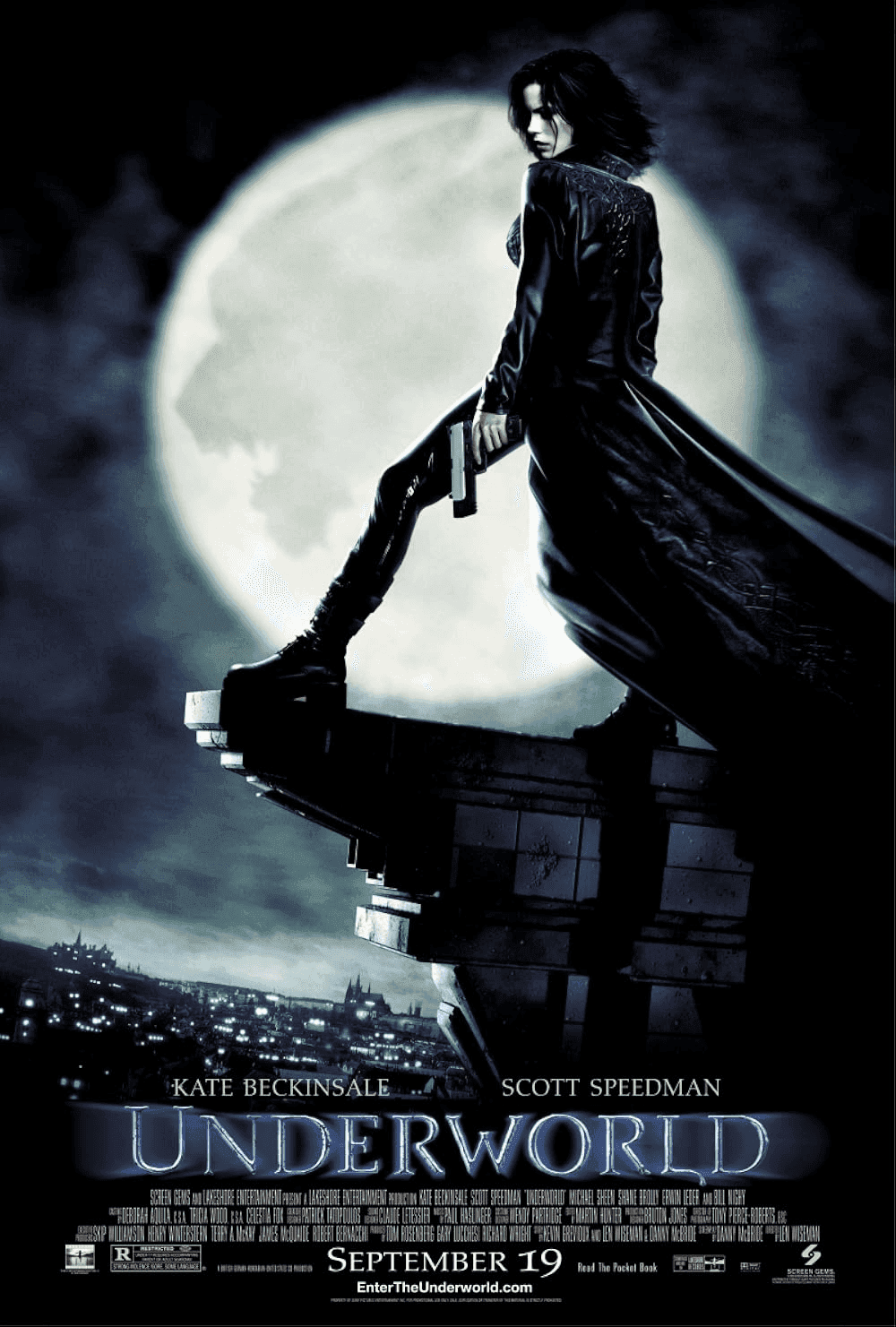
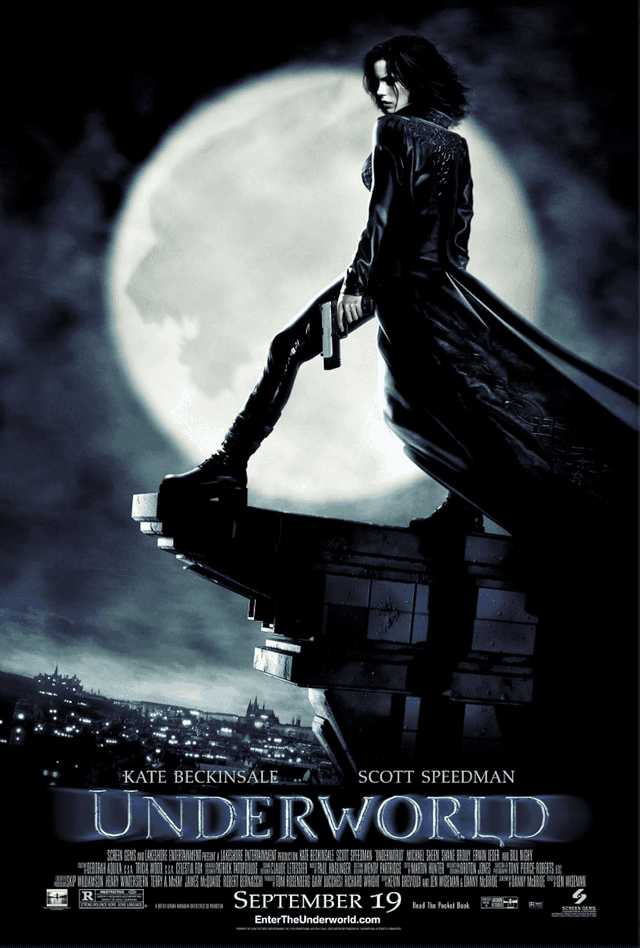
Underworld Budget
 Action
Updated
Synopsis
"Underworld" (2003) is a dark fantasy action film that delves into the secret war between vampires and werewolves, known as Lycans. The story follows Selene, a skilled vampire death dealer, who is on a relentless quest to eliminate the Lycans. As she investigates their activities, she discovers a human named Michael who is caught in the crossfire of this ancient feud. Unbeknownst to Selene, Michael holds a key to the future of both species. As tensions escalate, Selene must confront her own beliefs and the hidden truths about her past, leading to a thrilling confrontation that could change the fate of both vampires and Lycans forever. The film combines elements of horror, action, and romance, set against a visually striking gothic backdrop.
What Is the Budget of Underworld?
Underworld was produced on a budget of $22 million, financed by Lakeshore Entertainment and distributed theatrically in North America by Screen Gems, a genre-focused subsidiary of Sony Pictures. The film arrived in September 2003 and went on to earn $95.71 million worldwide, delivering a significant return on its modest investment and establishing one of the more durable action horror franchises of the 2000s.
The decision to shoot in Budapest, Hungary was central to keeping the budget manageable. Hungarian production costs in the early 2000s were a fraction of equivalent expenditures in the UK or Los Angeles, and the city's Gothic architecture gave production designer Bruton Jones ready-made environments for both Vampire aristocrat enclaves and Lycan-controlled tunnels. The savings on locations freed funds for costume design, practical effects, and the all-blue color grade that defined the film's signature visual style.
Key Budget Allocation Categories
- Above-the-Line Talent: Kate Beckinsale was paid a relatively modest fee by studio standards, as Underworld was her first action film and Lakeshore was not a major studio. Bill Nighy (Viktor) and Michael Sheen (Lucian) were supporting presences rather than above-the-line marquee names. The lean above-the-line total likely fell in the $4 to $6 million range, leaving the majority of the budget for production design and action sequences.
- Production Design and Locations: Budapest provided a ready-made Gothic backdrop at significantly lower cost than equivalent UK or US sets. The production built interior Lycan tunnels and Vampire mansion sets on Hungarian soundstages, while using real Budapest streets, ornate interiors, and castle exteriors for atmospheric establishing shots. The location choice is estimated to have saved $5 to $8 million compared to a UK-based shoot.
- : Underworld's visual identity rests heavily on costume design. Selene's signature black leather catsuit, the Vampire aristocrats' period-inflected formalwear, and the Lycan soldiers' layered tactical gear were all custom-built by costume designer Wendy Partridge. The all-black and deep-blue wardrobe for a large ensemble across both factions represented a meaningful share of the production budget.Costume and Character Design
- Practical Effects and Action Sequences: The film relied heavily on practical stunt work, wirework, and in-camera gunplay rather than CGI for most of its action set pieces. The Lycan transformation sequences combined prosthetic makeup and limited CGI. Director Len Wiseman kept the CGI budget tight by designing action around physical stunts, which was both a cost decision and a stylistic one.
- Score and Music Licensing: Composer Paul Haslinger, a former Tangerine Dream member, delivered an electronic-orchestral score that reinforced the film's cold industrial tone. The soundtrack also licensed tracks from Rammstein, Finch, and A Perfect Circle. Music licensing and score production together represented a standard mid-budget allocation, roughly $1 to $2 million.
How Does Underworld's Budget Compare to Similar Films?
Underworld's $22 million budget placed it in the upper tier of independent horror productions but well below the studio tentpole range. Its closest comparisons are other action horror hybrids from the same era that blended genre filmmaking with franchise ambitions.
- Blade (1998): Budget $45M | Worldwide $131M. Blade was New Line Cinema's first major vampire action franchise, with nearly double Underworld's budget. The comparison shows how Underworld's Lakeshore-backed production matched much of Blade's genre ambition at half the cost, using offshore shooting and a leaner cast deal structure.
- Van Helsing (2004): Budget $160M | Worldwide $300M. Universal's monster-action tentpole released the following year illustrates the opposite end of the spectrum: a bloated effects budget and A-list cast that generated absolute returns but a poor ROI. Underworld earned a superior return on capital despite a fraction of the marketing power.
- Resident Evil (2002): Budget $33M | Worldwide $102M. Screen Gems distributed both Underworld and Resident Evil, establishing the label as the studio home for female-led action horror. The comparison shows a consistent production model: mid-range budgets, offshore shooting, strong female protagonists, and reliable franchise potential.
- Underworld: Evolution (2006): Budget $50M | Worldwide $111M. The direct sequel more than doubled Underworld's budget following the franchise's success, but the incremental worldwide return was modest. The original's cost discipline produced a stronger multiple: $95.7M on $22M versus $111M on $50M.
Underworld Box Office Performance
Underworld opened on September 19, 2003, in 2,940 North American theaters and earned $9.3 million in its opening weekend, finishing second behind The Rundown. Screen Gems' marketing positioned the film as a stylized action thriller for audiences aged 18 to 34, leaning on Kate Beckinsale's leather-clad image and the vampire-versus-werewolf hook. The film held well across subsequent weekends, ultimately accumulating $51.97 million domestically before international receipts pushed the worldwide total to $95.71 million.
Against a $22 million production budget and an estimated $18 million in prints and advertising, the total investment was approximately $40 million. With theaters retaining roughly half of ticket revenue, the studio's net share of the worldwide gross was approximately $47.85 million. That covered total investment and returned a meaningful profit, though the home video window, including a strong DVD release, contributed significantly to the film's overall profitability.
Box Office Breakdown
Underworld (2003)

Underworld earned roughly $4.35 for every $1 invested in production. Accounting for the $18 million in estimated P&A, the actual all-in return was tighter, but the theatrical run alone covered the total investment with room to spare. DVD sales were a major secondary revenue stream, as the film's genre audience proved highly engaged with physical media in 2003 and 2004.
Underworld Production History
The concept for Underworld originated with actor Kevin Grevioux, who co-developed the vampire-versus-werewolf mythology with Len Wiseman and writer Danny McBride. Grevioux, a genetics graduate who had worked as a background actor on sci-fi productions, pitched the core idea of a centuries-old secret war between vampire aristocrats and underclass werewolves. Wiseman developed it into a feature screenplay with McBride receiving sole writing credit. Lakeshore Entertainment agreed to finance the project with Screen Gems attached for North American distribution. Wiseman, who had previously directed second-unit work, was granted the directing chair on the strength of his visual pitch.
Kate Beckinsale was cast as Selene after the role had been considered for several other actresses. She had not previously carried an action film and underwent months of weapons and stunt training before filming began. Scott Speedman joined as the human Michael Corvin. Michael Sheen, who had appeared in Wiseman's earlier work, took the role of Lycan leader Lucian, while Bill Nighy was cast as the vampire elder Viktor in a role that would prove a significant career moment for the British character actor. Kevin Grevioux himself played the Lycan Raze.
Principal photography took place in Budapest, Hungary. The city's late-19th and early-20th century architecture, including its ornate palaces, drainage tunnels, and cobblestone streets, provided authentic period texture that would have cost far more to replicate on a studio backlot. The production built additional sets on Hungarian soundstages for interior sequences. Cinematographer Tony Pierce-Roberts designed the film's signature all-blue color palette in-camera, using a combination of lighting gels and post-production grading to drain warmth from virtually every frame.
Underworld premiered in North America on September 19, 2003. The film did not screen at major festivals, following a straightforward commercial release strategy. Screen Gems' marketing campaign centered on Beckinsale's costumed image and the franchise mythology. The film's strong opening and excellent DVD sales immediately confirmed franchise viability. Lakeshore and Screen Gems greenlit Underworld: Evolution before the theatrical run had concluded, with Wiseman and Beckinsale both returning. Wiseman and Beckinsale married in May 2004, making the production the origin of a notable Hollywood relationship.
Awards and Recognition
Underworld did not receive nominations from the Academy Awards, BAFTA, or Golden Globes. The film's primary recognition came from genre and youth-oriented award bodies. Kate Beckinsale received a nomination for Best Female Performance at the 2004 MTV Movie Awards, reflecting the film's strong appeal with younger audiences. The film was also recognized at the Saturn Awards, which honor science fiction, fantasy, and horror productions.
The film's lasting legacy in the genre is arguably more significant than any single award. Its all-blue palette, leather-clad aesthetic, and world-building approach influenced a wave of action horror films in the mid-2000s. The vampire-versus-werewolf mythology it established was entirely original, with no pre-existing source material, and proved durable enough to sustain four sequels across 13 years.
Critical Reception
Underworld received mixed-to-negative reviews from professional critics upon release, holding a 31% approval rating on Rotten Tomatoes based on critical consensus. Reviewers frequently cited the convoluted mythology, murky plotting, and style-over-substance tendencies. Roger Ebert gave the film one and a half stars, writing that it was 'a film about style, not story.' Many critics acknowledged the film's visual ambition while questioning whether the dense exposition served audience comprehension.
Audience response was substantially more positive, as reflected in the film's 71% audience score on Rotten Tomatoes and its box office performance. Genre fans responded strongly to the world-building, the production design, and Beckinsale's performance. The divide between critical and audience reception was typical of mid-budget genre films from the period, where critical metrics often failed to capture the enthusiasm of a film's target audience. The franchise's longevity, five films and over $500 million in worldwide gross, ultimately settled the argument about whether the film connected with its intended viewers.
Frequently Asked Questions
How much did Underworld (2003) cost to make?
The production budget was $22,000,000, a modest figure for an effects-driven creature feature. Screen Gems financed and distributed the film through Sony Pictures, with Lakeshore Entertainment and Subterranean Productions co-producing.
How much did Underworld earn at the box office?
Underworld grossed $51,970,690 domestically and $43,000,000 internationally, for a worldwide total of approximately $95,000,000. It opened to $21,753,759 on September 19, 2003, finishing first in the weekend ahead of Cabin Fever.
Who stars in Underworld?
Kate Beckinsale stars as the vampire Death Dealer Selene, with Scott Speedman as the Lycan-bitten Michael Corvin, Michael Sheen as the Lycan leader Lucian, Bill Nighy as the vampire elder Viktor, and Shane Brolly as the antagonist vampire Kraven.
Who directed Underworld?
Len Wiseman directed the film, his feature directorial debut. Wiseman had previously worked as a prop assistant on Independence Day (1996) and Stargate (1994). He went on to direct three additional Underworld films and Live Free or Die Hard (2007).
Where was Underworld filmed?
Principal photography took place in Budapest, Hungary, taking advantage of the country's tax-credit programs and gothic architecture. Budapest doubled for the unnamed European city of the story, with extensive practical sets at the Mafilm studio complex.
Did Underworld face a lawsuit over its premise?
Yes. White Wolf Publishing, owners of the World of Darkness role-playing game franchise, and author Nancy Collins filed a copyright infringement suit in 2003 alleging the film borrowed from their works. The case was settled out of court in 2005 with terms undisclosed.
What did critics think of Underworld?
Reviews were largely negative, with a 31% approval rating on Rotten Tomatoes and a 38 out of 100 score on Metacritic. Audiences gave the film a B CinemaScore, and the strong commercial reception drove the franchise expansion.
How many Underworld sequels were made?
The franchise expanded to five total films: Underworld (2003), Underworld: Evolution (2006, $50,000,000 budget, $111,300,000 worldwide), Underworld: Rise of the Lycans (2009, $35,000,000 budget, $91,400,000 worldwide), Underworld: Awakening (2012, $70,000,000 budget, $160,100,000 worldwide), and Underworld: Blood Wars (2016, $35,000,000 budget, $81,100,000 worldwide).
Was Underworld profitable?
Yes. Against the $22,000,000 production budget and an estimated $20,000,000 in marketing spend, the worldwide gross of $95,000,000 produced a clear theatrical profit. Strong home video and cable broadcast revenue further accelerated the franchise greenlight.
How did Kate Beckinsale and Len Wiseman meet?
Beckinsale and Wiseman met during pre-production on Underworld, when the actress was still married to Michael Sheen, who also starred in the film. Beckinsale and Wiseman later married in 2004 and divorced in 2019.
Filmmakers
Underworld (2003)

Build budgets like this one in Saturation
Start from an industry-standard feature film template, import the schedule and rates you already have, and let the cost report keep itself current as you spend. Real-time collaboration, no spreadsheets.