Dreams Budget
Updated
Synopsis
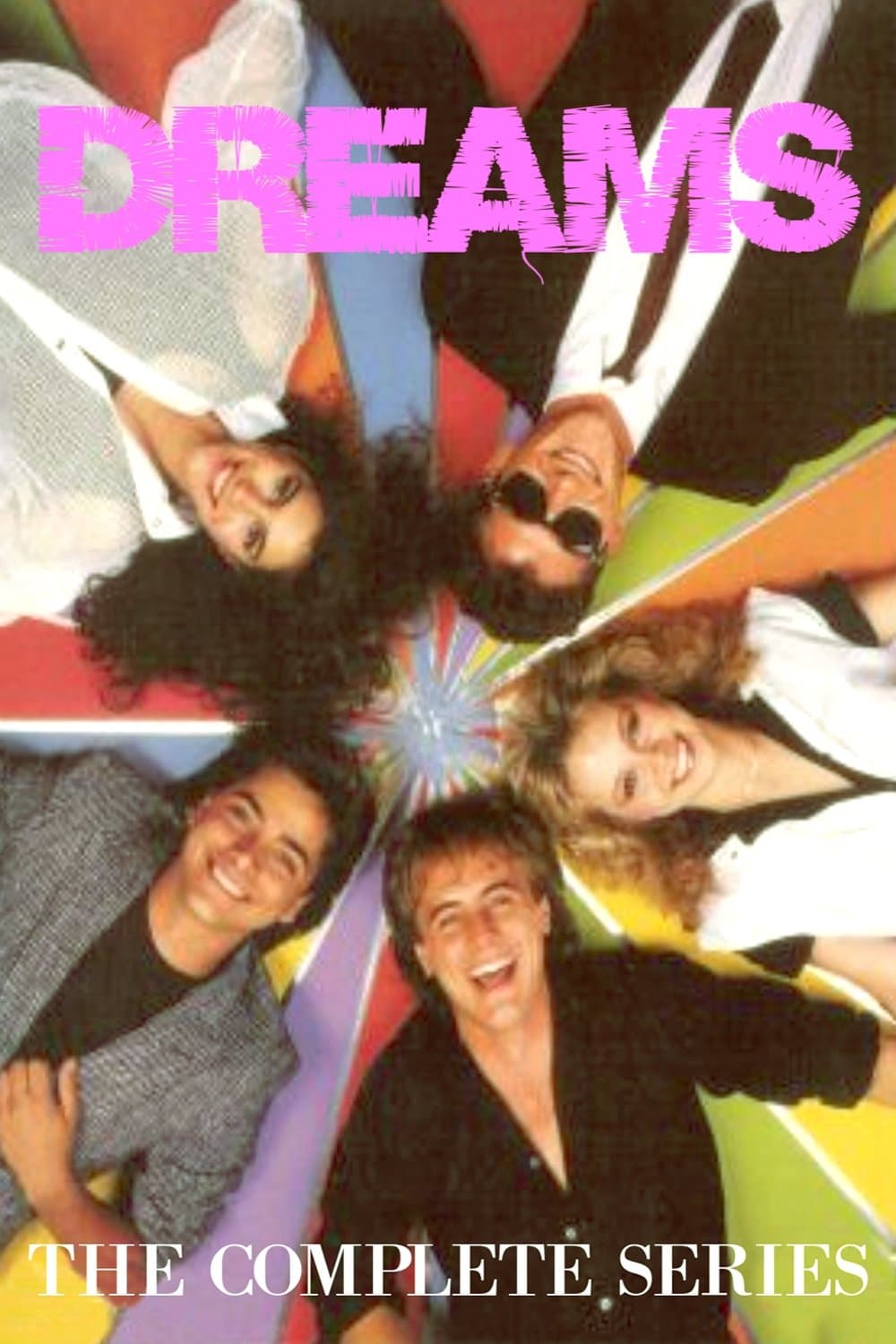
Dreams (1984) is the short-lived CBS musical drama about a young Philadelphia rock band signed to a record label, navigating record-label expectations, internal band dynamics, and the working-class urban setting that produced them. Produced by Lorimar Productions and starring John Stamos in his pre-Full House lead-television role alongside Jami Gertz, the integrated cast-as-performers series ran for a single season of 12 episodes between September 1984 and January 1985 before CBS cancellation.
What Is the Budget of Dreams (1984)?
Dreams (1984), the short-lived CBS musical drama about a young Philadelphia rock band signed to a record label, was produced on an estimated per-episode budget of approximately $700,000 to $900,000 in 1984 dollars across its single-season 12-episode run from September 1984 to January 1985. The cumulative production spend across the full season is estimated at approximately $8,400,000 to $10,800,000 in period dollars. Specific Lorimar Productions budgets are not publicly disclosed, but the figures align with the standard CBS hour-long musical-drama tariff for the mid-1980s.
Lorimar Productions, the major American independent television producer behind Dallas (1978), Knots Landing (1979), and The Waltons (1972), produced the series for CBS. The musical-drama format combined episodic teen-band storytelling with original songs performed by the cast, and the show represented one of CBS's early attempts to capitalise on the MTV-era music-television audience by integrating a rock-band serialised narrative with original musical performance.
Key Budget Allocation Categories
Dreams's per-episode spend broke down across the cost centres typical of a CBS hour-long musical drama of the mid-1980s, with several show-specific items reflecting its integrated musical-performance format:
- Above-the-Line Cast and Musicians: John Stamos (in his pre-Full House lead-television role), Jami Gertz, Cain Devore, and the rest of the ensemble had to function both as actors and as performing musicians, with the casting process built around dual acting-and-musical-ability criteria. The compensation premium for actors who could credibly play instruments and perform vocals on-screen was a defining line item.
- Original Music Composition and Recording: Each episode featured original songs performed by the band, requiring weekly original music composition, professional studio recording, and on-set playback. Original music represented one of the show's largest non-cast cost centres, well above standard hour-long drama music spend.
- Concert and Performance Sequences: Live-performance sequences in clubs, recording studios, and concert venues required dedicated production design, lighting, and multi-camera coverage. The musical-performance sequences typically required additional shoot days per episode above standard drama scheduling.
- Philadelphia Setting Production Design: The series was set in Philadelphia, with the working-class urban setting requiring location-evoking production design on the Lorimar Studios lot in Culver City, California. Standing sets including the band's rehearsal space, the local club where they regularly performed, and the band members' apartments anchored the show's recurring visual base.
- Writers Room and Story Development: A writers room delivered 12 episodes across the single-season run, with story development supporting the musical-narrative integration. The compressed season and uncertain renewal prospects kept writers room overhead modest within the genre norm.
- Lorimar Studios Production: Studio overhead at Lorimar Studios in Culver City, California absorbed standard hour-long drama fixed costs. The Lorimar Productions in-house pipeline reduced unit costs relative to outsourced production house operations.
- Music Rights Clearance: Licensing of any pre-existing music tracks used in the show, alongside original-song rights clearance with ASCAP and BMI for the cast-performed original compositions, represented an incremental weekly cost.
- CBS Network Delivery: Standard CBS hour-long drama delivery, including picture editing, sound, ADR, and music mixing at Lorimar's in-house post facility, completed the production budget. The musical-format mixing requirements added incremental sound-post complexity.
How Does Dreams's Budget Compare to Similar Series?
At an estimated $700,000 to $900,000 per episode, Dreams sat in the middle of CBS hour-long drama economics for the mid-1980s, with the musical-performance overhead adding incremental cost above a standard drama hour. The comparison set illustrates how it priced against contemporaneous network drama:
- Fame (1982): Estimated per-episode budget approximately $700,000 to $900,000. MGM Television's NBC musical drama about students at New York's High School of Performing Arts ran at a directly comparable tariff, with similar musical-performance overhead and an integrated cast-as-performers casting model. Fame ran for six seasons (1982 to 1987) against Dreams's single season.
- Hill Street Blues (1981): Estimated per-episode budget approximately $900,000 to $1,100,000. NBC and MTM Enterprises' Steven Bochco police drama ran at a slightly higher tariff than Dreams, with no musical-performance overhead but with a much larger ensemble cast and elaborate verite-style location-shoot production. Hill Street Blues established the prestige hour-long drama benchmark for the mid-1980s.
- Cagney & Lacey (1982): Estimated per-episode budget approximately $800,000 to $1,000,000. CBS and Orion Television's female-led New York police drama ran at a comparable tariff to Dreams, with no musical-performance overhead but a larger established cast premium.
- The A-Team (1983): Estimated per-episode budget approximately $900,000 to $1,200,000. Stephen J. Cannell Productions' NBC action-ensemble hour cost slightly more than Dreams per episode, with practical pyrotechnics and vehicle stunts substituting for Dreams's musical-performance overhead. The A-Team ran for five seasons against Dreams's one.
- Miami Vice (1984): Estimated per-episode budget approximately $1,300,000 to $1,500,000. NBC and Universal Television's Michael Mann-produced MTV-era cop drama, premiered the same month as Dreams in September 1984, cost roughly twice as much per episode and used licensed pop-music needle drops rather than cast-performed original songs to achieve a music-driven aesthetic. Miami Vice ran for five seasons.
- 21 Jump Street (1987): Estimated per-episode budget approximately $850,000 to $1,100,000. The Fox teen-targeted Cannell Productions drama, which launched three years after Dreams, ran at a similar tariff with the same compressed teen-audience targeting but with successful five-season longevity that Dreams never achieved.
Dreams Season Performance and Cancellation
Dreams premiered on CBS on 16 September 1984 in a competitive Sunday-night slot. The show drew modest opening ratings but failed to build audience across the autumn 1984 broadcast schedule, and CBS cancelled the series in January 1985 after the 12-episode run. The economic framework breaks down as follows:
- Per-Episode Budget: approximately $700,000 to $900,000 in 1984 dollars
- Total Series Investment: approximately $8,400,000 to $10,800,000 across 12 episodes
- Network: CBS in the United States; limited international distribution through Lorimar's sales arm
- Audience/Ratings: low ratings across the autumn 1984 run; specific season-average household figures not publicly maintained, but the show consistently finished outside the Nielsen top 50
- International Distribution: Lorimar handled limited international sales; the show did not achieve a significant overseas broadcast footprint
- Library/Syndication Value: one of Lorimar's short-lived catalogue titles with minimal subsequent syndication or streaming exploitation; the show remains effectively unavailable on contemporary streaming platforms
Dreams's rapid cancellation in January 1985 reflected several structural challenges. The integration of musical performance into episodic narrative proved harder than CBS and Lorimar had anticipated, with cast-as-performers casting compromising acting performance quality. The MTV-era musical-television audience that the show targeted was already being more effectively served by MTV itself and by the contemporaneous launch of Miami Vice, which used licensed pop-music needle drops to achieve the same MTV-era aesthetic without the production overhead of cast-performed original songs.
The 12-episode run did not generate sufficient inventory for off-network syndication packaging, and the show effectively disappeared from broadcast circulation after its January 1985 CBS conclusion. Lorimar's broader catalogue success across Dallas, Knots Landing, and The Waltons absorbed the modest financial loss from the Dreams cancellation.
Dreams Production History
Dreams was developed at Lorimar Productions in late 1983 and early 1984 as part of CBS's mid-1980s programming push to capture the MTV-era music-television audience. The creative pitch centred on a young Philadelphia rock band, the title group, navigating record-label expectations, internal band dynamics, and the working-class urban setting that produced them. The integration of original cast-performed musical performance into episodic narrative was the show's defining creative ambition.
Casting John Stamos as the lead band member represented a strategic bet on a then-young performer with both acting and musical credibility. Stamos, who had recently emerged from General Hospital (1982) and was a few years away from his Full House (1987) breakthrough, brought a youthful-leading-man profile alongside legitimate musical performance ability. Jami Gertz and Cain Devore rounded out the band ensemble, with the casting process built around dual acting-and-musical-ability criteria across the regular cast.
Principal photography took place at Lorimar Studios in Culver City, California, with standing sets including the band's rehearsal space, the local club where they regularly performed, and the band members' apartments anchoring the show's recurring visual base. The Philadelphia setting was evoked through production design rather than practical location shooting; Lorimar's in-house pipeline kept the show financially manageable within the standard CBS hour-long drama tariff.
Original music for each episode was composed, recorded, and prepared for on-set playback ahead of each week's production cycle, with the cast performing their parts to playback while filming. The original-song production overhead represented one of the show's largest non-cast cost centres, requiring dedicated music supervisor coordination and weekly studio recording sessions. Several of the original songs were positioned for potential cross-promotion as singles, although the show's commercial failure prevented any meaningful chart impact.
CBS cancelled Dreams in January 1985 after the 12-episode run, citing low ratings against the network's Sunday-night competitor blocks and the difficulty of building audience around a niche musical-drama format. Lorimar moved on to focus on its established hit catalogue (Dallas, Knots Landing) without pursuing further musical-drama development. The Dreams cast scattered to other projects, with John Stamos going on to his iconic Full House (1987) Uncle Jesse role and Jami Gertz pursuing a film career across Less than Zero (1987) and The Lost Boys (1987).
Awards and Recognition
Dreams received minimal awards recognition during its brief 1984 to 1985 broadcast run, reflecting both the show's rapid cancellation and the limited industry traction for a single-season musical-drama experiment. The series was not nominated for any major Primetime Emmy Awards in 1985, and Lorimar Productions did not pursue any significant awards campaigns for the show given its underperformance.
John Stamos's lead performance has been retrospectively cited by Stamos and by his fan community as a notable early entry in his career portfolio, although the show itself remains effectively unavailable on contemporary streaming platforms and has not been the subject of sustained critical reappraisal. The musical-drama integration experiment represented in Dreams has been cited within television-industry retrospectives as an example of the difficulty of integrating original musical performance into episodic dramatic narrative.
The contemporaneous Fame (1982) on NBC achieved the longevity and awards recognition that Dreams sought without realising, and Fame is typically cited within the musical-drama television history as the format's defining mid-1980s American example, with Dreams positioned as a short-lived peer experiment that did not find its audience.
Critical Reception
Dreams received mixed critical reception on its September 1984 CBS launch. The Los Angeles Times's 1984 launch review noted that the show "ambitiously attempts to integrate original cast-performed musical performance into hour-long narrative, with mixed results." Variety's 1984 pilot review praised John Stamos's "easy, naturalistic lead performance" but flagged the integration of musical performance with episodic narrative as "the show's defining structural challenge."
The Hollywood Reporter's contemporaneous coverage focused on the casting strategy, noting that "Lorimar has built the ensemble around dual acting-and-musical-ability criteria, which produces credible musical performance but inconsistent dramatic performance." The original songs were generally received as competent within the mid-1980s pop-rock idiom but without breakout commercial appeal.
Retrospective coverage of Dreams has been limited, reflecting the show's effective unavailability on contemporary streaming platforms and the absence of a sustained critical-reappraisal community. The 12-episode run remains a curiosity within John Stamos's broader career portfolio and within the broader musical-drama television history, but Dreams has not generated the kind of retrospective cult following that some other short-lived 1980s musical experiments have achieved. The show is best understood as a documented example of the difficulty of sustaining original-music integration in episodic dramatic narrative.
Frequently Asked Questions
How much did each episode of Dreams (1984) cost to produce?
Estimated per-episode budgets ranged from approximately $700,000 to $900,000 in 1984 dollars across the single-season 12-episode run. Specific Lorimar Productions budgets are not publicly disclosed, but the figures align with the standard CBS hour-long musical-drama tariff for the mid-1980s.
How many episodes of Dreams were made?
Dreams ran for a single season of 12 episodes on CBS, premiering on 16 September 1984 and concluding in January 1985 after CBS cancellation. The 12-episode run did not generate sufficient inventory for off-network syndication packaging, and the show effectively disappeared from broadcast circulation after its January 1985 CBS conclusion.
Did John Stamos star in Dreams?
Yes. John Stamos played the lead role in Dreams as a young Philadelphia rock band member, in his pre-Full House lead-television role. Stamos, who had recently emerged from General Hospital (1982) and was three years away from his Full House (1987) breakthrough, brought a youthful-leading-man profile alongside legitimate musical performance ability to the cast.
Who else starred in Dreams (1984)?
Alongside John Stamos, the cast included Jami Gertz, Cain Devore, Albert Macklin, Don Davis, and Valerie Stevenson. The casting process was built around dual acting-and-musical-ability criteria, with the cast functioning both as actors and as performing musicians for the show's integrated original-song musical-performance format.
Why was Dreams cancelled after one season?
CBS cancelled Dreams in January 1985 after the 12-episode run, citing low ratings against the network's Sunday-night competitor blocks and the difficulty of building audience around a niche musical-drama format. The integration of musical performance into episodic narrative proved harder than CBS and Lorimar had anticipated, and the MTV-era musical-television audience the show targeted was being more effectively served by MTV itself and by the contemporaneous launch of Miami Vice.
Who produced Dreams (1984)?
Lorimar Productions, the major American independent television producer behind Dallas (1978), Knots Landing (1979), and The Waltons (1972), produced Dreams for CBS. Susan Baerwald, Ronny Cox, Charles Rosin, and Robert Greenwald served as executive producers, with the project developed at Lorimar in late 1983 and early 1984 as part of CBS's mid-1980s music-television programming push.
What kind of music did Dreams feature?
Dreams featured original mid-1980s pop-rock songs composed for the series and performed by the cast playing band members. Each episode featured original songs performed by the band, requiring weekly original music composition, professional studio recording, and on-set playback. Several of the original songs were positioned for potential cross-promotion as singles, although the show's commercial failure prevented any meaningful chart impact.
Where was Dreams filmed?
Principal photography took place at Lorimar Studios in Culver City, California, with standing sets including the band's rehearsal space, the local club where they regularly performed, and the band members' apartments anchoring the show's recurring visual base. The Philadelphia setting (the band's in-story home city) was evoked through production design rather than practical location shooting in Philadelphia.
How does Dreams compare to Fame (1982)?
NBC's Fame (1982), produced by MGM Television, ran at a directly comparable per-episode tariff of approximately $700,000 to $900,000, with similar musical-performance overhead and an integrated cast-as-performers casting model. The crucial difference is that Fame ran for six seasons (1982 to 1987) and achieved sustained cultural traction, while Dreams was cancelled after a single season. Fame is typically cited within musical-drama television history as the format's defining mid-1980s American example.
Is Dreams (1984) available on streaming?
No. Dreams is effectively unavailable on contemporary streaming platforms, having received minimal subsequent syndication or streaming exploitation following its January 1985 CBS cancellation. The 12-episode run did not generate sufficient inventory for off-network syndication packaging, and Lorimar Productions (subsequently absorbed into Warner Bros. Discovery via the various mergers of the late 1980s and 1990s) has not pursued meaningful catalogue distribution of the show.
Filmmakers
Dreams

Official Trailer
Build budgets like this one in Saturation
Start from an industry-standard feature film template, import the schedule and rates you already have, and let the cost report keep itself current as you spend. Real-time collaboration, no spreadsheets.