Dragon Wars: D-War Budget
 Action
Updated
Synopsis
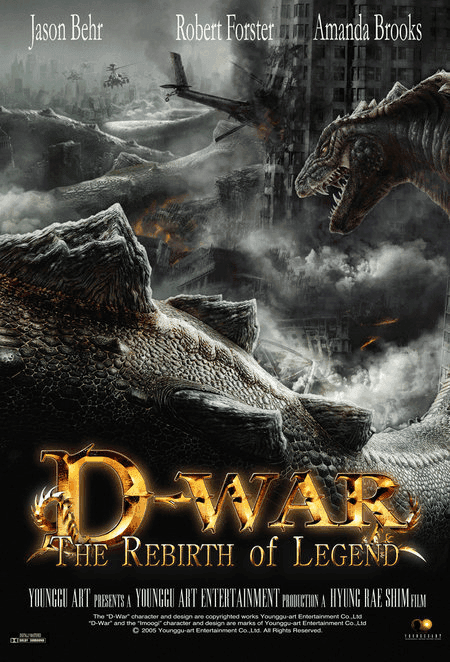
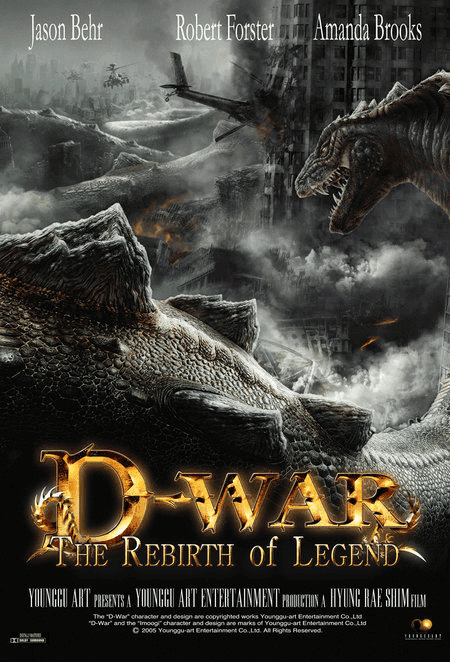
In modern-day Los Angeles, television reporter Ethan Kendrick discovers he and antiques dealer Sarah are the reincarnated lovers fated to host an ancient Korean legend: the war between rival serpent-dragons (Imoogi) struggling to ascend into celestial dragons by claiming the soul of a young woman every 500 years. As the malevolent Imoogi Buraki invades Los Angeles with an army of dragon-soldiers, Ethan must shepherd Sarah toward her destiny.
What Is the Budget of Dragon Wars: D-War (2007)?
Dragon Wars: D-War (2007), directed by Shim Hyung-rae and produced by his Seoul-based Younggu-Art Movies banner, was made on a reported budget of $32,000,000. The South Korean-American visual-effects-heavy creature feature was financed primarily through Younggu-Art and a coalition of South Korean private investors, with Showbox handling Korean distribution and Sony Pictures Entertainment acquiring United States and international rights for theatrical release.
At the time of its release, the budget represented the most expensive production in South Korean cinema history, more than double the prior Korean record. The production was famously personally championed by Shim Hyung-rae (a Korean comedian-turned-director) over more than a decade of development, with the picture's budget concentrated almost entirely in CG creature animation and large-scale visual effects rather than star compensation, period locations, or practical sets.
Key Budget Allocation Categories
Dragon Wars: D-War's $32,000,000 budget was distributed across several core production areas:
- Visual Effects: The single dominant cost category, with the South Korean studio Macrograph and Younggu-Art's in-house effects team delivering nearly 1,000 CG shots covering serpent-dragon creatures, dragon-soldier armies, Los Angeles building destruction sequences, ancient-Korea period battle scenes, and the climactic Imoogi-versus-celestial-dragon confrontation. Visual-effects spend reportedly consumed more than half the total budget.
- Cast Compensation: American actors Jason Behr (Roswell), Amanda Brooks, Robert Forster (Jackie Brown), Craig Robinson (then pre-The Office), and Chris Mulkey filled the principal roles at scaled rates appropriate to a mid-budget action production. Korean actors appeared in flashback sequences. The absence of A-list compensation kept the above-the-line costs deliberately low to fund the visual-effects centerpiece.
- Los Angeles Location Shoot: Principal photography took place primarily in Los Angeles, California, with the Los Angeles setting chosen to support the Sony Pictures distribution model and to position the film as an international (not regional Korean) production. The principal-photography schedule was relatively short, with the bulk of post-production effort dedicated to the visual-effects build.
- Score and Sound Design: Composer Steve Jablonsky (Transformers) scored the film at a scaled rate appropriate to the picture's mid-budget tier. Sound design covered the elaborate creature-vocalization, building-destruction, and ancient-warfare effects.
- Korean Production Office and Macrograph Studios: Macrograph in Seoul handled the bulk of creature animation, with continuous round-the-clock production through 2005 and 2006 to deliver the picture's elaborate effects work. The Korean production office covered the bulk of below-the-line spending under the producer-director's direct control.
- Cross-Continental Coordination: Two-country production required dedicated logistical, legal, and accounting infrastructure to coordinate the Korean financing and effects pipeline with the American shooting block and Sony Pictures release strategy.
How Does Dragon Wars: D-War's Budget Compare to Similar Films?
At $32,000,000, Dragon Wars: D-War sits in the mid-range of mid-2000s creature features and well above contemporary Korean-cinema norms:
- The Host (2006): Budget $11,000,000 | Worldwide $89,387,775. Bong Joon-ho's previous Korean creature feature cost about a third of Dragon Wars and grossed 1.2x worldwide, the contemporary Korean creature-feature benchmark Dragon Wars deliberately attempted to scale past.
- Cloverfield (2008): Budget $25,000,000 | Worldwide $172,394,180. JJ Abrams's contemporary American found-footage creature feature cost 22% less than Dragon Wars and grossed 2.3x worldwide.
- Eragon (2006): Budget $100,000,000 | Worldwide $250,456,103. Fox's contemporary American dragon feature cost more than 3x Dragon Wars and grossed 3.3x worldwide, illustrating the Hollywood-studio dragon-fantasy bracket Dragon Wars approached at a fraction of the cost.
- Reign of Fire (2002): Budget $60,000,000 | Worldwide $82,150,183. Rob Bowman's earlier American dragon feature cost nearly twice as much as Dragon Wars and grossed slightly more worldwide, a comparable mid-budget dragon picture.
- Lake Placid (1999): Budget $35,000,000 | Worldwide $56,870,414. Steve Miner's late-1990s American creature feature cost essentially the same as Dragon Wars and grossed about 76% as much worldwide, suggesting Dragon Wars outperformed several closely-comparable mid-budget creature pictures.
Dragon Wars: D-War Box Office Performance
Dragon Wars: D-War opened in South Korea on August 1, 2007 to massive opening-weekend numbers, with the picture becoming the highest-grossing South Korean film of 2007 at $54,143,196 in domestic Korean theatrical revenue alone (against an extraordinary cultural-event marketing campaign). The Sony Pictures Entertainment United States release on September 14, 2007 opened to $5,029,494 across 2,275 theaters, finishing fifth on a weekend won by Mr. Woodcock.
Against a $32,000,000 production budget, the film needed approximately $70,000,000 worldwide to break even when accounting for marketing and distribution costs. Here is the financial breakdown:
Box Office Breakdown
Dragon Wars: D-War

Dragon Wars: D-War returned approximately $1.12 to $1.32 in theatrical revenue for every $1 invested when measured against total estimated production and marketing spend, a clear win for Younggu-Art and Showbox in the Korean theatrical market that more than offset the relatively soft United States and other international territorial results. The Korean domestic share of $54,143,196 against an American share of $10,977,721 and other international territories of $9,987,134 reflected the picture's genuine cultural-event status at home and its limited overseas crossover.
The film remains one of the highest-grossing South Korean theatrical releases of the 2000s and is widely cited as the picture that demonstrated the viability of mid-budget Korean visual-effects productions targeting international markets. Subsequent Younggu-Art productions did not replicate the commercial success, and Shim Hyung-rae's announced sequel (D-War 2 or The Last Godfather) has not entered active production despite repeated announcements.
Dragon Wars: D-War Production History
Shim Hyung-rae, a popular South Korean comedian best known for his Young-gu childlike-character roles in 1980s and 1990s Korean comedy films, transitioned to producing and directing visual-effects-driven features through his Younggu-Art Movies company in the mid-1990s. He had previously directed Yonggary (1999), a Korean kaiju film whose moderate domestic success and limited international visibility laid the groundwork for the more ambitious Dragon Wars project. Development on D-War began in 2002, drawing on a Korean legend about the Imoogi (sea-serpent dragons) and their 500-year cycle of attempts to ascend into celestial dragons.
Shim wrote and directed the picture personally, with Macrograph in Seoul handling the bulk of visual-effects work under VFX supervisor Ham Sun-young. The decision to set the film in modern Los Angeles rather than South Korea was made to position the picture for international (not regional Korean) distribution, with Sony Pictures Entertainment acquiring United States and international rights ahead of production wrap.
Principal photography ran from early to late 2005 in Los Angeles, California, with the live-action shoot deliberately compressed to fund the visual-effects post-production block. The picture spent roughly two years in post-production through 2006 and into 2007, with Macrograph delivering nearly 1,000 CG shots covering the elaborate creature animation and Los Angeles destruction sequences. The August 2007 Korean release was preceded by an extraordinarily aggressive cultural-event marketing campaign that elevated the film to a defining moment for South Korean theatrical cinema.
Awards and Recognition
Dragon Wars: D-War won the Director's Choice Award at the Sitges International Fantastic Film Festival in 2007 and received nominations at multiple Korean industry ceremonies, including the Grand Bell Awards (the Korean Academy Awards equivalent) for technical categories. The picture won technical-achievement awards at the 2007 Korean Film Awards.
In the United States, the film received Golden Raspberry Award (Razzies) nominations for Worst Picture and Worst Director. Despite the Razzie nominations, the picture has been retroactively included on numerous best-Asian-creature-feature lists and is regularly cited in Korean-film retrospectives as a watershed for South Korean visual-effects production. The picture has no anniversary home-media reissues.
Critical Reception
Dragon Wars: D-War received broadly negative reviews from American and English-language critics on its initial release. The film holds a 28% approval rating on Rotten Tomatoes based on 53 critic reviews, with a critical consensus that called it ambitious in its visual effects but incoherent in its storytelling. On Metacritic, the film scored 30 out of 100, indicating "generally unfavorable reviews." Audiences surveyed by CinemaScore gave the film a C-, a notably weak result reflecting the disconnection between the Korean cultural-event marketing and the American theatrical audience.
Critics praised the elaborate Macrograph-produced creature animation and the climactic dragon battles but objected universally to the perfunctory English-language dialogue, the underdeveloped American leads, and the structural awkwardness of the Korean-legend exposition pasted onto a Los Angeles-set monster movie. Variety's Justin Chang wrote that the film "delivers genuinely impressive monster spectacle that comes at the cost of nearly every other narrative element," while The New York Times' Jeannette Catsoulis called it "a movie with a great deal of expensive incoherence."
Korean-press reception was more divided. Mainstream Korean entertainment press celebrated the picture's status as the most ambitious Korean visual-effects production to date, while more cinephile Korean outlets criticized the picture's reliance on American conventions and the perceived under-investment in coherent storytelling. The picture's commercial success in Korea and its modest profit on the worldwide release have nonetheless cemented its standing as a defining South Korean genre picture of the 2000s, frequently cited in subsequent Korean creature-feature production planning.
Frequently Asked Questions
How much did it cost to make Dragon Wars: D-War (2007)?
The reported production budget was $32,000,000. The South Korean-American film was financed primarily through Shim Hyung-rae's Younggu-Art Movies and a coalition of South Korean private investors, with Sony Pictures Entertainment acquiring United States and international rights. At release, it was the most expensive production in South Korean cinema history.
How much did Dragon Wars: D-War earn at the box office?
The film grossed $10,977,721 in the United States, $54,143,196 in South Korea, and approximately $9,987,134 in other international territories, for a worldwide total of $75,108,051. It became the highest-grossing South Korean film of 2007. The United States release opened to $5,029,494 across 2,275 theaters on September 14, 2007.
Was Dragon Wars: D-War profitable?
Yes. Against a $32,000,000 production budget and an estimated $25,000,000 to $35,000,000 in marketing spend, the $75.1M worldwide gross returned approximately $1.12 to $1.32 in revenue for every $1 invested. The Korean domestic share substantially outweighed the relatively soft American and other international territorial returns.
Who directed Dragon Wars: D-War?
Shim Hyung-rae directed the film. A popular South Korean comedian best known for 1980s and 1990s "Young-gu" comedy roles, Shim transitioned to visual-effects-driven directing through his Younggu-Art Movies company in the mid-1990s and had previously directed the Korean kaiju film Yonggary (1999).
Who stars in Dragon Wars: D-War?
Jason Behr (Roswell) stars as television reporter Ethan Kendrick, with Amanda Brooks as antiques dealer Sarah Daniels, Robert Forster (Jackie Brown) as Ethan's mentor, Craig Robinson (in his pre-The Office window) as Ethan's producer Bruce, Chris Mulkey, and Elizabeth Pena.
Where was Dragon Wars: D-War filmed?
Principal photography took place primarily in Los Angeles, California, in 2005. The Los Angeles setting was chosen to position the film for international (not regional Korean) distribution. The bulk of visual effects work was completed at Macrograph in Seoul, South Korea, across roughly two years of post-production through 2006 and into 2007.
Is Dragon Wars based on Korean mythology?
Yes. The film draws on Korean folklore about the Imoogi, sea-serpent dragons that struggle through a 500-year cycle of attempts to ascend into celestial dragons by claiming the soul of a chosen young woman. Shim Hyung-rae adapted the legend into a modern Los Angeles-set creature-feature framework with extensive flashbacks to ancient-Korea period battle sequences.
How does Dragon Wars compare to other Korean films?
At $32,000,000 it cost nearly 3x The Host (2006, $11M, grossed $89.4M), the contemporary Korean creature-feature benchmark. The Host was made by Bong Joon-ho. Dragon Wars' Korean domestic gross alone ($54.1M) significantly exceeded most contemporary Korean theatrical releases and made it the highest-grossing Korean film of 2007.
What did critics think of Dragon Wars: D-War?
The film received broadly negative reviews in English-language press, with a 28% approval rating on Rotten Tomatoes (53 critics) and a 30 out of 100 on Metacritic. Audiences gave it a C- CinemaScore. Critics praised the Macrograph creature animation but objected to the perfunctory dialogue and structural awkwardness of pasting Korean-legend exposition onto an American monster movie.
Was a Dragon Wars sequel ever made?
No. Shim Hyung-rae announced D-War 2 (sometimes referred to as The Last Godfather, though that title belongs to his subsequent comedy feature) repeatedly across the 2010s, but the sequel has not entered active production. Younggu-Art Movies has not replicated the commercial success of the original Dragon Wars on any subsequent feature.
Filmmakers
Dragon Wars: D-War

Build budgets like this one in Saturation
Start from an industry-standard feature film template, import the schedule and rates you already have, and let the cost report keep itself current as you spend. Real-time collaboration, no spreadsheets.