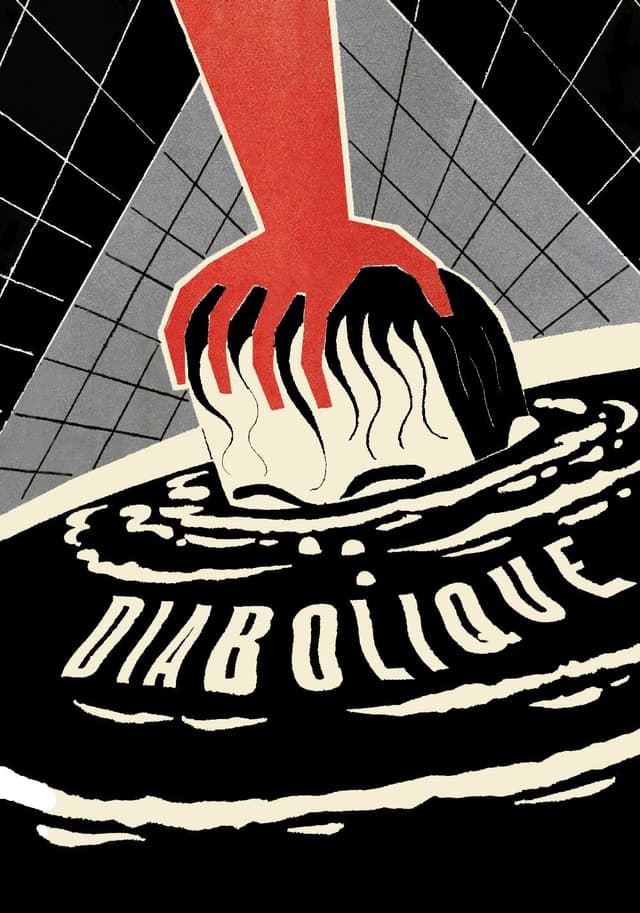
Diabolique
Synopsis
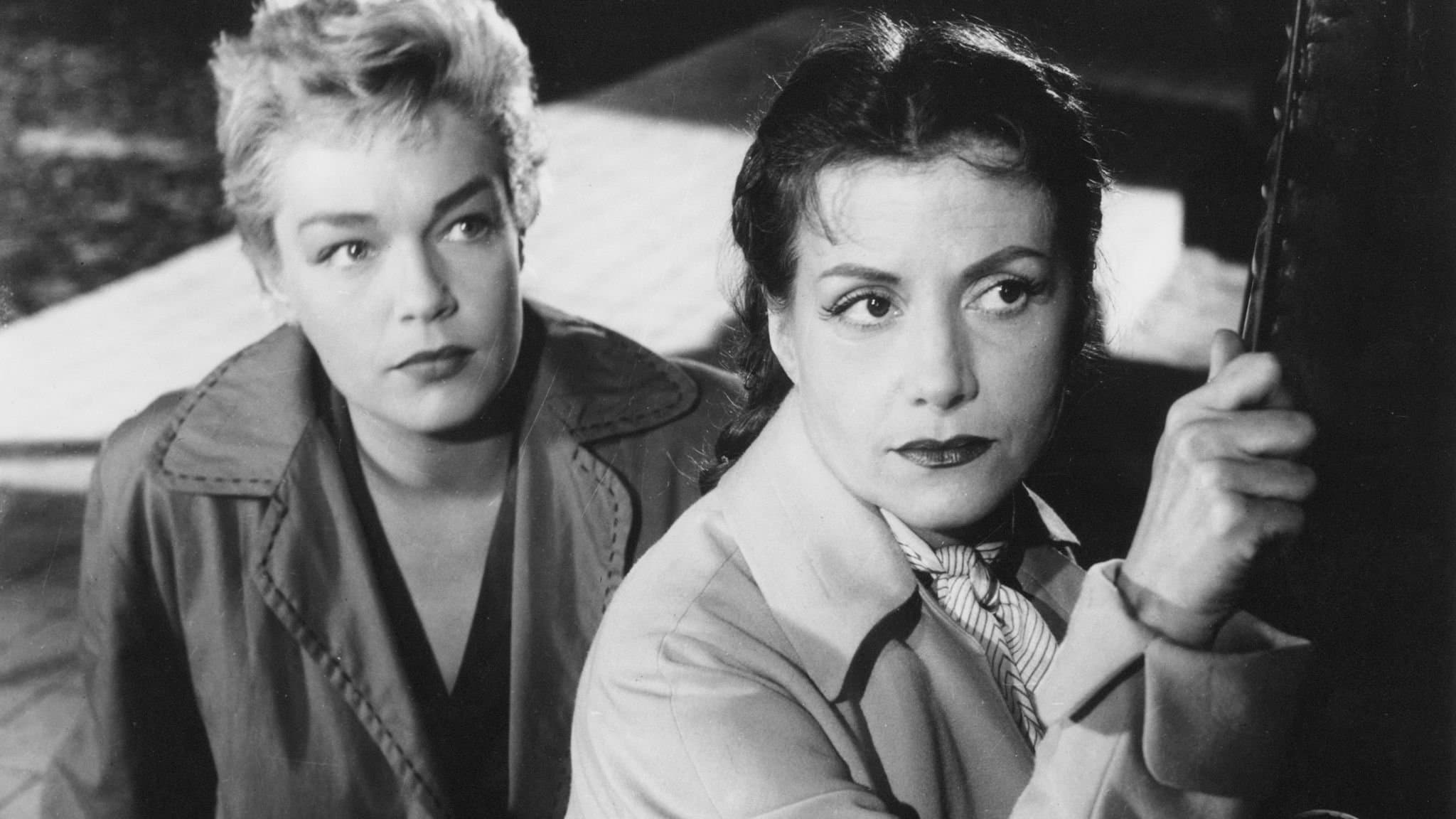
Christina Delassalle suffers greatly at the hands of her brutish husband Michel. She inherited the boys' boarding school they run but it's clearly Michel who is in charge. She and Nicole Horner, one of the teachers and Michel's former lover, decide to kill him. Christina, who has a serious condition, is terrified when, by chance, she meets a retired police inspector who decides to look into the case.
Production Budget Analysis
The production budget for Diabolique (1955) has not been publicly disclosed.
CAST: Véra Clouzot, Simone Signoret, Paul Meurisse, Charles Vanel, Jean Brochard, Pierre Larquey DIRECTOR: Henri-Georges Clouzot CINEMATOGRAPHY: Armand Thirard MUSIC: Georges Van Parys PRODUCTION: Véra Films, Filmsonor
Box Office Performance
Theatrical box office data is not publicly available for Diabolique (1955). This may indicate a limited release, direct-to-streaming, or a release predating modern box office tracking.
Profitability Assessment
Insufficient publicly available data to assess profitability.
INDUSTRY IMPACT
Les Diaboliques is regarded among film critics and historians as an influential classic of the horror genre. The Harvard Film Archive describes the film as "a work of audacious trickery that entirely reinvented the rules for mystery cinema." Writing for Senses of Cinema in 2011, Pedro Blas Gonzalez describes Les Diaboliques as "one of the greatest suspense films of all time." It has also been cited as one of the scariest films ever made.
Kim Newman wrote in Empire: "The horrific mystery has lost only a fraction of its power over the years, though literally dozens of films (see: Deathtrap, Hush... Hush, Sweet Charlotte, Games etc.) have borrowed part or all of its tricky storyline. This was one of the first movies to depend on a twist ending which forces you to reassess everything you thought you had been told earlier in the film." The British Film Institute included it in their list of the "100 Best Thrillers of All Time", calling it "a compelling, grisly thriller... capped by an unforgettable twist ending." The Guardian listed it at number 19 among the 25 best horror films of all time. The scene in which Michel emerges from the bathtub ranked number 49 on Bravo's 100 Scariest Movie Moments.
Critical discussion of the film has often been linked to the films of Alfred Hitchcock. According to film historian Susan Hayward, Hitchcock missed out on purchasing the rights to the Boileau and Narcejac novel by just a few hours, with Clouzot getting to the authors first.
PRODUCTION NOTES
▸ Casting
Véra was the first to be cast in the film in the role of Christina. Director Clouzot cast Simone Signoret opposite her in the role of Nicole; he previously directed Signoret's husband Yves Montand in The Wages of Fear, and the two couples became friends. Clouzot was also aware of his wife's Vera's limitations as an actress, and sought someone to lend her support in such a demanding role.
Signoret signed an eight-week contract but the shooting actually took 16 weeks. She ended up being paid for only eight weeks of work despite staying until the end of the filming because she neglected to read the small print. Signoret's co-star Paul Meurisse also recalls in his memoirs that the actress was further bemused by Clouzot's constant attempts to find clever ways of lighting Vera's face while muting the light on Signoret so she would not upstage his wife.
Clouzot had known Meurisse since 1939, when the latter was attempting to pursue a singing career. Clouzot then was trying to sell his song lyrics to Edith Piaf, Meurisse's lover at the time. By the late 1940s, Meurisse had become an established stage and screen actor, known for the roles of "icy and sophisticated villains," and he seemed a natural choice for the role of Michel.
The film featured two Clouzot regulars: Pierre Larquey as M. Drain and Noël Roquevert as M. Herboux. Michel Serrault made his screen debut as M. Raymond, one of the schoolteachers. Charles Vanel—who previously co-starred in Clouzot's The Wages of Fear—was cast as the seemingly inept Inspector Fichet.
Clouzot also auditioned 300 children and selected 35. Among them were Jean-Philippe Smet (the future Johnny Hallyday), Patrick Dewaere's brother Yves-Marie Maurin, and Georges Poujouly, who previously received acclaim in René Clément's Forbidden Games.
▸ Filming & Locations
The filming began on 18 August 1954 and finished on 30 November the same year. The building and its surroundings matched the director's vision perfectly since they projected the desired mood of decay and neglect, featuring an adjacent swimming pool that was dirty and full of slime. Clouzot spent five weeks shooting at this location.
The screenplay placed Nicole's apartment in Niort, but the actual house used for filming was in Montfort-l'Amaury, just opposite the building that previously appeared in Clouzot's Le Corbeau. The morgue scenes were shot inside an actual mortuary at the Institut Médico-légal in Paris. The rest was filmed at Saint-Maurice Studios southeast of Paris, which took an additional nine weeks. The interior sets were designed by Léon Barsacq. Cinematographer Armand Thirard used two camera crews to speed up the shooting that was falling behind schedule. Despite his efforts, the filming took twice longer than the projected 48 days. Thirard shot the majority of the film using predominately medium shots and close-ups to accentuate a sense of anxiety and claustrophobia.
The film's central murder sequence in which Meurisse's character is drowned in the bathtub was shot over a period of two days. To prevent the actor from becoming ill, the crew filled the bathtub with hot water for each take, and in between shots, Meurisse was redressed in dry clothes and given whisky toddies.
Originally the film was to be called Les Veuves (The Widows) but this was deemed unmarketable. Eleven weeks into filming it was changed to Les Démoniaques. Eventually it was renamed Les Diaboliques but this title was already used for a collection of short stories by the 19th-century writer Barbey d'Aurevilly. Clouzot was permitted to use this title but only on the condition that he give the author a proper mention.
▸ Marketing & Release
Though it was swiftly described by critics as a horror film upon release, Les Diaboliques was marketed as a psychological thriller. Promotional materials for the film in the United States expressly warned audiences not to reveal the film's ending to the public, while British advertising materials indicated that theatre patrons would not be admitted once the film had started.
The film's end credits themselves contain an early example of such an "anti-spoiler" message requesting audience members not to disclose the twist ending:
AWARDS & RECOGNITION
Summary: 5 wins total
Awards Won: ★ Louis Delluc Prize
Additional Recognition: ! scope="col" style="width:20em;"| Award/association ! scope="col" style="width:8em;"| Year ! scope="col" style="width:15em;"| Category ! scope="col"| Recipient(s) and nominee(s) ! scope="col"| Result ! scope="col" class="unsortable"|
! scope="row"| Edgar Allan Poe Awards
! scope="row" rowspan="2"| Louis Delluc Prize
! scope="row"| National Board of Review
CRITICAL RECEPTION
Critical reception for Les Diaboliques was highly favorable in both France and the United States. Bosley Crowther gave the film an enthusiastic review in The New York Times, calling it "one of the dandiest mystery dramas that has shown here" and "a pip of a murder thriller, ghost story and character play rolled into one". He added "the writing and the visual construction are superb, and the performance by top-notch French actors on the highest level of sureness and finesse." The Chicago Daily Tribune wrote, "If you like a good mystery and can stand it fairly morbid and uncompromising as to detail, this is one of the best offerings in a long time." The reviewer added, "You may suspect, as I did, one of the answers as the film nears its finale, but if you solve it all, you've missed your profession." Variety was more critical: “Although this has a few hallucinating bits of terror, the film is primarily a creaky-door type of melodrama. Its macabre aspects and lack of sympathy for the characters make this a hybrid which flounders between a blasting look at human infamy and an out-and-out contrived whodunit."
Dorothy Masters of the New York Daily News praised the lead performances of Signoret, Clouzot, and Meurisse, and gave the film a three and a half out of four star-rating, summarizing: "The arch fiends of hell couldn't have plotted better than Pierre Boileau and Thomas Narcejac... The horrors, psychological and physical, make this a shocker worthy of the devil himself." Hortense Morton of the San Francisco Examiner praised the film as "a super suspense yarn knitted together with a deft Gallic touch. Madam Dufarge [sic] couldn't do better, and a splendid, very splendid cast, sees that no dramatic stitches are dropped." The National Board of Review named it among the best foreign films of 1955, and called it "a genuine thriller—a shocking, satisfying chunk of Grand Guignol psychological suspense."
Reviews from British film critics were less favorable.


Budget Templates
Build your own production budget
Create professional budgets with industry-standard feature film templates. Real-time collaboration, no spreadsheets.

Start Budgeting Free