Vertigo Budget
 MysteryRomanceThriller2h 8m
Updated
Synopsis
A retired San Francisco detective suffering from acrophobia investigates the strange activities of an old friend's wife, all the while becoming dangerously obsessed with her.
What is the budget of Vertigo?
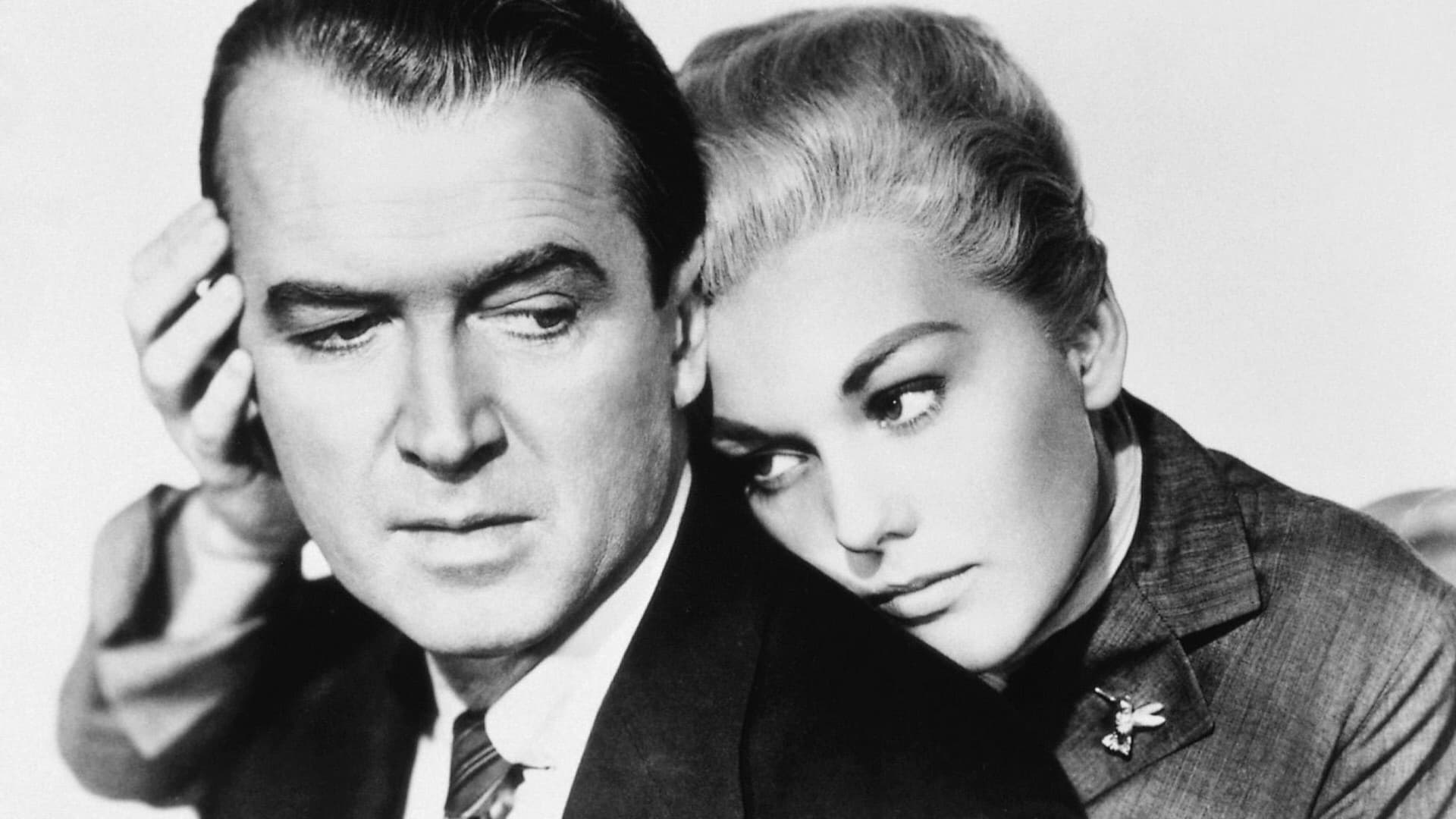
"Vertigo," a mystery released in 1958, was directed by Alfred Hitchcock and stars James Stewart, Kim Novak. The production budget was $2,479,000, placing it in the micro-budget range for mystery productions of the 1950s.
Key Budget Allocation Categories
While specific budget breakdowns are not publicly available, typical cost drivers for a mystery production like this include:
- Talent & Director Compensation: Thrillers depend on compelling lead performances to sustain tension, making cast compensation a primary budget concern. Directors with proven thriller credentials command premium fees.
- Cinematography & Location Photography: Thriller aesthetics demand specific visual languages , surveillance-style photography, claustrophobic framing, or expansive location work across multiple cities or countries.
- Editorial & Sound Post-Production: Precision editing , controlling information flow, building suspense through pacing, and orchestrating reveals , requires extended post-production schedules.
- Development: The screenplay of Vertigo is an adaptation of the 1954 French novel D'entre les morts (From Among the Dead) by Pierre Boileau and Thomas Narcejac.
What were the major cost factors in Vertigo?
Several factors contributed to the overall production costs of "Vertigo."
- Talent: Talent & Director Compensation is one of the primary cost drivers in mystery productions of this scale.
- Cinematography: Cinematography & Location Photography is one of the primary cost drivers in mystery productions of this scale.
- Editorial: Editorial & Sound Post-Production is one of the primary cost drivers in mystery productions of this scale.
How Does Vertigo's Budget Compare to Similar Films?
At $2,479,000, Vertigo sits in the micro-budget range. Here is how it compares to productions with a similar budget:
- Paper Moon (1973): Budget $2,500,000, Worldwide Gross $30,900,000
- An Elephant Sitting Still (2018): Budget $2,500,000
- Wings of Desire (1987): Budget $2,500,000, Worldwide Gross $3,548,590
- Before Sunrise (1995): Budget $2,500,000, Worldwide Gross $5,987,386
- Play Dirty (2025): Budget $2,500,000
The median budget for wide-release mystery films in the era ranges from $30 to 80M for mid-budget to $150M+ for tentpoles.
Vertigo Box Office Performance
"Vertigo" earned $7,705,225 domestically and $7,808,900 worldwide at the box office. Against a production budget of $2,479,000, the film performed strongly at the box office.
A film typically needs to earn approximately twice its production budget to cover marketing and distribution costs. For "Vertigo," that break-even threshold was roughly $4,958,000. With worldwide earnings of $7,808,900, the film cleared that threshold comfortably.
Box Office Breakdown
Vertigo

At 215%, "Vertigo" earned roughly $3.15 for every $1 invested in production.
Vertigo Production History
The screenplay of Vertigo is an adaptation of the 1954 French novel D'entre les morts (From Among the Dead) by Pierre Boileau and Thomas Narcejac. Hitchcock had attempted to buy the rights to the previous novel by the same authors, Celle qui n'était plus (She Who Was No More), but failed, and it was instead adapted by Henri-Georges Clouzot as Les Diaboliques. Although François Truffaut once suggested that D'entre les morts was specifically written for Hitchcock by Boileau and Narcejac, Narcejac subsequently denied that this was their intention.
Three screenwriters were involved in the writing of Vertigo. Hitchcock originally hired playwright Maxwell Anderson to write a screenplay, but rejected his work, which was titled Darkling, I Listen (a quotation from John Keats's 1819 poem "Ode to a Nightingale"). According to Charles Barr in his monograph dedicated to Vertigo, "Anderson was the oldest (at 68) [of the three writers involved], the most celebrated for his stage work, and the least committed to cinema, though he had a joint script credit for Hitchcock's preceding film The Wrong Man.
Vera Miles, who was under personal contract to Hitchcock and had appeared both on Alfred Hitchcock Presents and in The Wrong Man, was originally scheduled to play Madeleine, and modeled for an early version of the portrait of Carlotta. Following delays, including Hitchcock becoming ill with gallbladder problems, Miles became pregnant and had to withdraw from the role. The director declined to postpone shooting, and cast Kim Novak as Miles' replacement..
Awards and Recognition
Nominated for 2 Oscars. 9 wins & 8 nominations total
Critical Reception
Initial critical reception for Vertigo was mixed. Variety wrote that the film showed Hitchcock's "mastery", but felt the film was "too long and slow" for "what is basically only a psychological murder mystery". Similarly, Philip K. Scheuer of the Los Angeles Times admired the scenery, but found the plot took "too long to unfold" and felt it "bogs down in a maze of detail". Scholar Dan Auiler says that this review "sounded the tone that most popular critics would take with the film".
Frequently Asked Questions
How much did it cost to make Vertigo (1958)?
The production budget was $2,479,000, covering principal photography, cast and crew salaries, locations, sets, post-production, and music. Marketing and distribution (P&A) costs are estimated at an additional $1,239,500 - $1,983,200, bringing the total studio investment to approximately $3,718,500 - $4,462,200.
How much did Vertigo (1958) earn at the box office?
Vertigo grossed $7,705,225 domestic, $103,675 international, totaling $7,808,900 worldwide.
Was Vertigo (1958) profitable?
Yes. Against a production budget of $2,479,000 and estimated total costs of ~$6,197,500, the film earned $7,808,900 theatrically - a 215% ROI on production costs alone.
What were the biggest costs in producing Vertigo?
The primary cost drivers were above-the-line talent (James Stewart, Kim Novak, Barbara Bel Geddes); talent compensation, location cinematography, and tension-driven editorial.
How does Vertigo's budget compare to similar mystery films?
At $2,479,000, Vertigo is classified as a micro-budget production. The median budget for wide-release mystery films in the era ranges from $30 - 80M for mid-budget to $150M+ for tentpoles. Comparable budgets: Paper Moon (1973, $2,500,000); An Elephant Sitting Still (2018, $2,500,000); Wings of Desire (1987, $2,500,000).
Did Vertigo (1958) go over budget?
There are no widely reported accounts of significant budget overruns for this production. However, studios rarely disclose precise budget overrun figures publicly. The reported production budget reflects the final estimated cost.
What was the return on investment (ROI) for Vertigo?
The theatrical ROI was 215.0%, calculated as ($7,808,900 − $2,479,000) ÷ $2,479,000 × 100. This measures gross revenue against production budget only - it does not account for P&A or exhibitor shares.
What awards did Vertigo (1958) win?
Nominated for 2 Oscars. 9 wins & 8 nominations total.
Who directed Vertigo and who were the key crew members?
Directed by Alfred Hitchcock, written by Alec Coppel, Samuel A. Taylor, shot by Robert Burks, with music by Bernard Herrmann, edited by George Tomasini.
Where was Vertigo filmed?
Vertigo was filmed in United States of America. Vertigo was filmed from September to December 1957. Principal photography began on location in San Francisco in September 1957 under the working title From Among the Dead..
Filmmakers
Vertigo

Official Trailer
Build budgets like this one in Saturation
Start from an industry-standard feature film template, import the schedule and rates you already have, and let the cost report keep itself current as you spend. Real-time collaboration, no spreadsheets.