Desert Warrior Budget
 History2h 7m
Updated
Synopsis
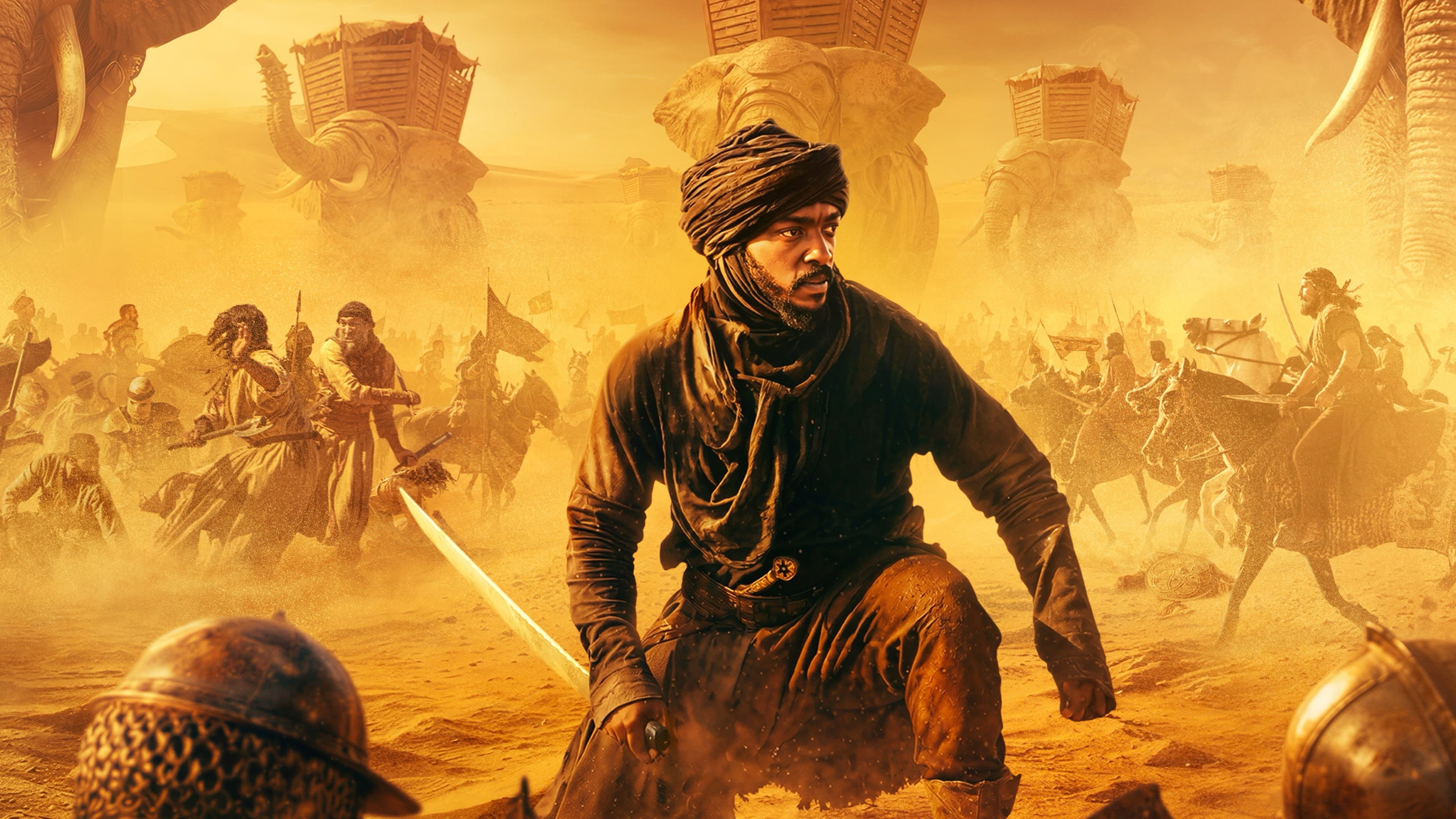
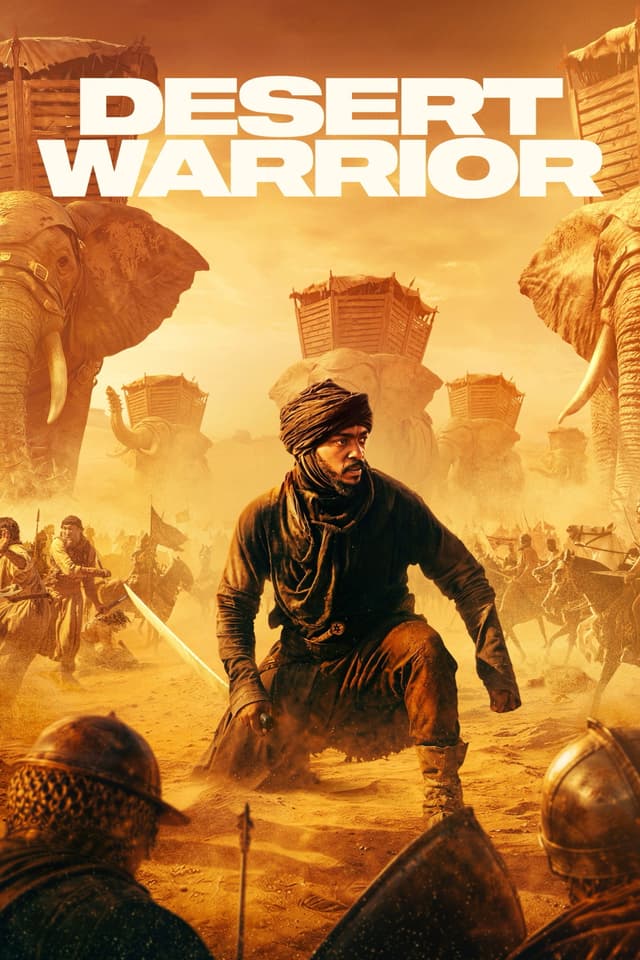
In 7th century Arabia, a time of feuding tribes vying for power, Princess Hind refuses to serve as concubine to the merciless Sassanid Emperor Kisra and flees into the unforgiving desert with her father, King Numan. Pursued by Kisra's mercenary Jalabzeen and his troops, the royal pair are forced to trust a mysterious bandit for their survival.
As the chase tightens, Hind rises to become a fierce warrior queen who unites the fractured Arabian tribes against the invading Sassanid army. Their stand culminates in the Battle of Ze Qar, a clash that reshapes the Arabian Peninsula and echoes through history.
What Is the Budget of Desert Warrior?
Desert Warrior carried a production budget of $150,000,000, a figure financed largely by MBC Studios, the production arm of the Saudi-controlled media group, alongside JB Pictures and AGC Studios. That outlay placed the historical epic firmly in blockbuster territory, on par with a major studio tentpole rather than the mid-budget prestige dramas it otherwise resembled.
The money paid for a sprawling 7th century war story shot on location in the Saudi desert, with large-scale battle sequences, period costuming, and a cast led by Anthony Mackie at the height of his Marvel-era recognition. The scale of the spend would later make the film a cautionary tale: when it reached theaters in April 2026, it recouped a fraction of one percent of that budget, turning the $150 million number into the headline of nearly every story written about it.
Key Budget Allocation Categories
A historical action epic shot in a remote desert location concentrates its spending in a handful of areas. The following categories absorbed the bulk of Desert Warrior's $150 million budget:
- Above-the-Line Talent: Securing Anthony Mackie as the lead, plus a supporting ensemble that included Ben Kingsley, Sharlto Copley, and Sami Bouajila, represented a major line item, with director Rupert Wyatt's fee layered on top.
- Location Production in Neom: Building and operating a production base in the remote Saudi desert meant transporting cast and a daily crew of roughly 450 to 500 people, along with housing, catering, security, and logistics across months of shooting.
- Battle Sequences and Extras: The climactic Battle of Ze Qar and the film's many large-scale skirmishes required hundreds of extras, horses, stunt coordination, practical effects, and extensive coverage that drives up both shooting days and post-production work.
- Period Production Design and Costuming: Recreating pre-Islamic Arabia demanded era-accurate sets, weapons, armor, and wardrobe, all designed and fabricated from scratch rather than rented from existing stock.
- Extended Post-Production: The film sat in post for an unusually long stretch, including a period when Wyatt briefly departed over creative differences before returning to finish the edit, with visual effects, color grading, and an original score by Dan Levy added on top.
How Does Desert Warrior's Budget Compare to Similar Films?
Desert Warrior's $150 million budget sat alongside some of the most ambitious historical epics of the past quarter century. The comparison that matters most, though, is not the spend but the return, where Desert Warrior stands almost alone:
- The Great Wall (2016): Budget $150,000,000 | Worldwide $331,957,105. The Great Wall shared the exact same budget and a similarly exotic historical setting, yet grossed over $330 million worldwide, a figure Desert Warrior missed by a factor of more than 400.
- Kingdom of Heaven (2005): Budget $130,000,000 | Worldwide $218,366,336. Ridley Scott's Crusades epic is the closest tonal cousin, and even as a domestic disappointment Kingdom of Heaven recovered most of its budget thanks to strong international and home-video performance.
- The 13th Warrior (1999): Budget $160,000,000 | Worldwide $61,698,899. Long cited as one of history's great epics-gone-wrong, The 13th Warrior still earned roughly 80 times what Desert Warrior managed.
- 47 Ronin (2013): Budget $175,000,000 | Worldwide $151,783,839. A comparably sized historical action bomb, 47 Ronin lost a fortune for Universal but still found a global audience in the tens of millions.
- Megalopolis (2024): Budget $120,000,000 | Worldwide $14,387,154. Megalopolis is the modern benchmark for a high-profile flop, yet it out-grossed Desert Warrior nearly 20 times over.
Across every comparison, the pattern holds: films that spent as much as Desert Warrior, and that were widely considered failures, still returned tens or hundreds of millions of dollars. Desert Warrior returned less than a million, which is what places it in a category of its own.
Desert Warrior Box Office Performance
Desert Warrior opened in the United States on April 24, 2026, distributed by Vertical across 1,010 theaters. It earned just $472,111 in its opening weekend, a per-theater average of roughly $467, ranking among the worst wide-release openings in modern box office history. International returns were negligible, including only about $37,786 from overseas markets despite the film's Saudi backing.
Box Office Breakdown
Desert Warrior

At a worldwide gross of $742,066 against an estimated $165 million investment, Desert Warrior returned roughly $0.004 for every $1 invested, effectively a total loss. Trade outlets quickly framed it as a contender for the largest theatrical loss in film history, with the gap between budget and gross drawing comparisons to legendary bombs like Cleopatra and Heaven's Gate.
The collapse was driven by a near-total absence of theatrical demand: domestic receipts of $704,280 made up almost the entire worldwide total, leaving the film with essentially no international momentum to offset the U.S. result. Any meaningful recovery for the production would now have to come from streaming licensing and broadcast deals rather than the box office.
Desert Warrior Production History
Desert Warrior was announced in November 2021 as a co-production between JB Pictures, AGC Studios, Studio Mechanical, and MBC Studios, the latter the Saudi-backed company positioning the film as a showcase for the kingdom's growing film industry. The story originated with screenwriter David Self, whose original script centered on a male bandit named Hanzala; director Rupert Wyatt and his writing partner Erica Beeney later reworked the screenplay to place Princess Hind at its center, with Gary Ross contributing uncredited rewrites.
Principal photography began in September 2021 in Neom, Saudi Arabia, the futuristic megaproject in the country's northwest, with a daily crew numbering between 450 and 500 people. Shooting ran into early 2022 and was followed by an unusually long post-production period. The film aimed to find buyers in early 2024 and target a festival launch ahead of a wide theatrical release, but its path to screens stretched on far longer than planned.
In October 2024, reports surfaced that Wyatt had briefly exited the project over creative differences before returning to complete the edit. Guillermo Garza served as cinematographer, Richard Mettler as editor, and Dan Levy composed the score. The film finally premiered at the Zurich Film Festival in September 2025 and screened at the Red Sea International Film Festival that December, before Vertical acquired U.S. distribution rights in February 2026 and set the ill-fated April release.
Awards and Recognition
Desert Warrior did not win or receive nominations at any major awards body, and its festival run was limited to two appearances. It held its world premiere at the Zurich Film Festival on September 28, 2025, screening in the festival's gala program, and later played at the Red Sea International Film Festival in Jeddah in December 2025, a fitting showcase given the film's Saudi financing.
Neither screening translated into critical momentum or awards traction. By the time the film reached commercial release the following spring, the conversation around it had shifted entirely to its box office collapse, and any awards-season ambitions the $150 million production may once have held had evaporated.
Critical Reception
Critical reception was poor. Desert Warrior holds a 24% approval rating on Rotten Tomatoes based on 21 reviews, with an average score of 4.7 out of 10, and a 41 out of 100 on Metacritic drawn from 6 critics, indicating generally unfavorable notices. Audience response was somewhat warmer, with a Rotten Tomatoes Popcornmeter score near 62%, though that figure rested on only about 100 verified ratings, and the film carried a 3.7 out of 10 user rating on IMDb.
Reviews split sharply on the film's ambitions. Damon Wise of Deadline praised the "extraordinary images" captured by Wyatt and cinematographer Guillermo Garza, but dismissed the film overall as "a stodgy, sprawling, feminist, pre-Islamic Gandhi." M.N. Miller of Geek Vibes Nation took the opposite view, urging readers to "ignore the infamous noise and immerse yourself in an enthralling sword-and-sand spectacle," arguing the film delivered "old-fashioned adventure you can't help but get swept up in." That divide, between a handsome, well-shot epic and a slow, unfocused one, defined most of the coverage.
Frequently Asked Questions
What is the budget of Desert Warrior?
Desert Warrior had a production budget of $150,000,000, financed primarily by Saudi Arabia's MBC Studios alongside JB Pictures and AGC Studios. The figure placed the 7th century historical epic in blockbuster territory, comparable to a major studio tentpole.
How much did Desert Warrior make at the box office?
Desert Warrior grossed just $742,066 worldwide, including $704,280 domestically and roughly $37,786 internationally. Against its $150 million budget, that result made it one of the largest box office failures in film history.
Why was Desert Warrior such a big box office flop?
Released by Vertical across 1,010 U.S. theaters in April 2026, the film opened to just $472,111, a per-theater average near $467. With minimal marketing, little public awareness, and no franchise pedigree to draw audiences, theatrical demand never materialized, leaving the $150 million production with a near-total loss.
Who stars in Desert Warrior?
Anthony Mackie leads the cast as a mysterious bandit, alongside Aiysha Hart as Princess Hind. The supporting ensemble includes Ben Kingsley as Emperor Kisra, Sharlto Copley, Sami Bouajila, and Ghassan Massoud.
Who directed Desert Warrior?
Desert Warrior was directed by Rupert Wyatt, known for Rise of the Planet of the Apes. He also co-wrote the screenplay with Erica Beeney, reworking an earlier script by David Self to center the story on Princess Hind.
Where and when was Desert Warrior filmed?
Principal photography took place in Neom, Saudi Arabia, beginning in September 2021 with a daily crew of roughly 450 to 500 people. The shoot was followed by an unusually long post-production period that stretched the project's timeline by several years.
When was Desert Warrior released?
Desert Warrior premiered at the Zurich Film Festival on September 28, 2025, and screened at the Red Sea International Film Festival in December 2025. Vertical released it theatrically in the United States on April 24, 2026.
Filmmakers
Desert Warrior

Official Trailer
Build budgets like this one in Saturation
Start from an industry-standard feature film template, import the schedule and rates you already have, and let the cost report keep itself current as you spend. Real-time collaboration, no spreadsheets.