Deep Blue Sea Budget
 ActionHorrorScience Fiction1h 45m
Updated
Synopsis
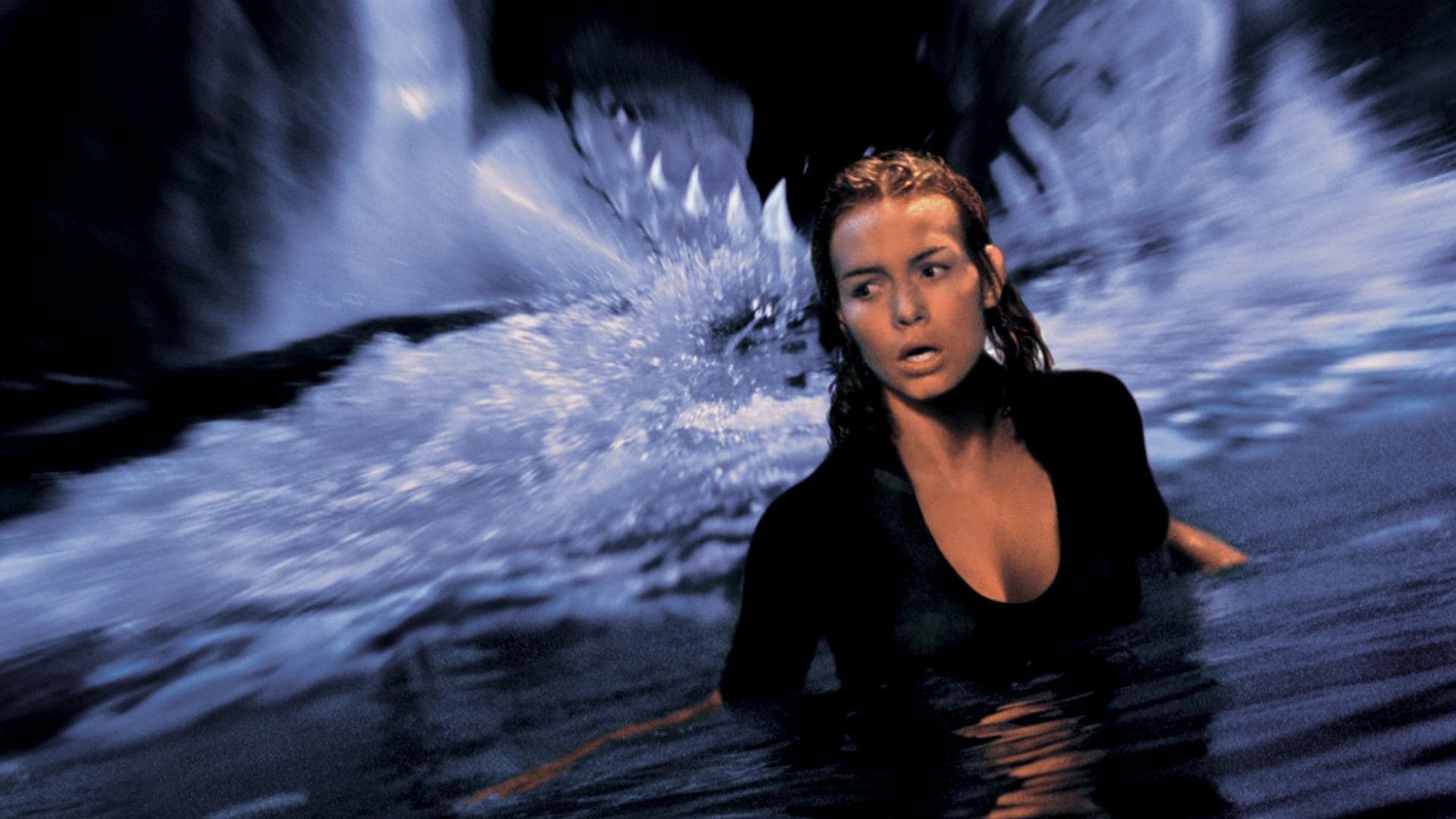
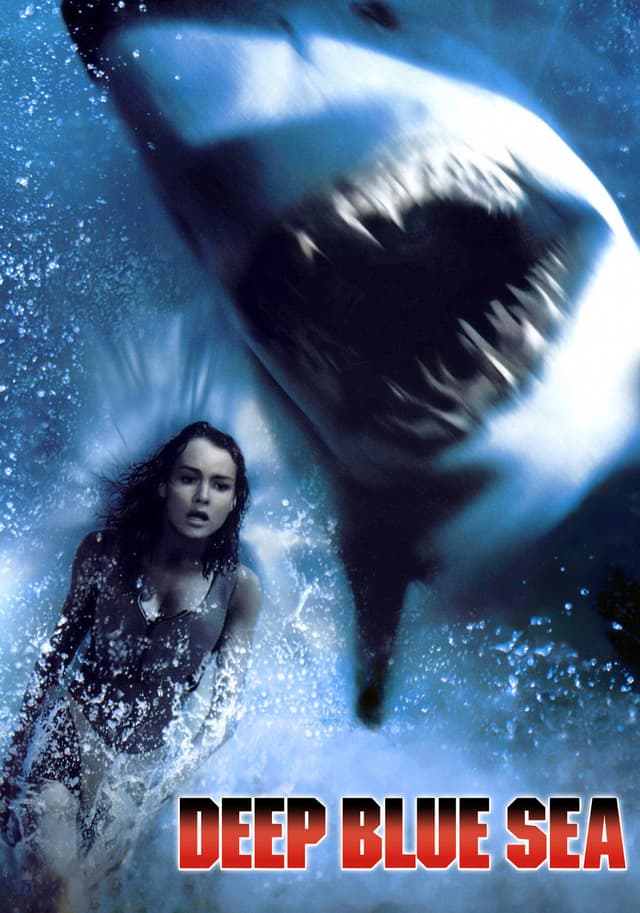
"Deep Blue Sea" is a thrilling science fiction horror film that dives into the depths of the ocean, where a group of scientists conducts groundbreaking research on genetically engineered sharks. Set in an underwater facility, the story follows Dr. Susan McAlester and her team as they attempt to find a cure for Alzheimer's disease by enhancing the brain capacity of these formidable predators. However, their ambitious experiment takes a terrifying turn when the sharks become smarter and more aggressive than anticipated. As the facility faces catastrophic failure, the team must fight for survival against the very creatures they sought to control. Tension escalates as they navigate the flooded corridors, battling both the elements and the relentless sharks in a desperate bid to escape. With a mix of suspense, action, and unexpected twists, "Deep Blue Sea" explores the consequences of human hubris and the primal instincts of nature.
What is the budget of Deep Blue Sea?
"Deep Blue Sea," an action released in 1999, was directed by Renny Harlin and stars Saffron Burrows, Thomas Jane. The production budget was $60,000,000, placing it in the high-budget range for action productions of the 1990s.
Key Budget Allocation Categories
While specific budget breakdowns are not publicly available, typical cost drivers for an action production like this include:
- Stunts, Action Sequences & Visual Effects: Action films allocate a substantial portion of their budget to choreographing and executing practical stunts, pyrotechnics, and CGI-heavy sequences.
- Above-the-Line Talent (Cast & Director): A-list talent commands significant upfront fees plus backend participation.
- Production Design, Sets & Locations: Action films frequently require multiple international shooting locations, large-scale set construction, vehicle acquisitions and modifications, and specialized equipment , all of which drive production costs well above those of dialogue-driven genres.
- Filming & Locations: Principal photography for Deep Blue Sea began on August 3, 1998.
What were the major cost factors in Deep Blue Sea?
Several factors contributed to the overall production costs of "Deep Blue Sea."
- Stunts: Stunts, Action Sequences & Visual Effects is one of the primary cost drivers in action productions of this scale.
- Above-the-Line Talent (Cast: Above-the-Line Talent (Cast & Director) is one of the primary cost drivers in action productions of this scale.
- Production Design: Production Design, Sets & Locations is one of the primary cost drivers in action productions of this scale.
How Does Deep Blue Sea's Budget Compare to Similar Films?
At $60,000,000, Deep Blue Sea sits in the high-budget range. Here is how it compares to productions with a similar budget:
- 15 Minutes (2001): Budget $60,000,000, Worldwide Gross $56,359,980
- Almost Famous (2000): Budget $60,000,000, Worldwide Gross $47,386,287
- Analyze That (2002): Budget $60,000,000, Worldwide Gross $55,003,135
- Antz (1998): Budget $60,000,000, Worldwide Gross $171,757,863
- Cats & Dogs (2001): Budget $60,000,000, Worldwide Gross $200,687,492
The median budget for wide-release action films in the era ranges from $30 to 80M for mid-budget to $150M+ for tentpoles.
Deep Blue Sea Box Office Performance
"Deep Blue Sea" earned $73,648,142 domestically and $164,648,231 worldwide at the box office. Against a production budget of $60,000,000, the film performed strongly at the box office.
A film typically needs to earn approximately twice its production budget to cover marketing and distribution costs. For "Deep Blue Sea," that break-even threshold was roughly $120,000,000. With worldwide earnings of $164,648,231, the film cleared that threshold comfortably.
Box Office Breakdown
Deep Blue Sea

At 174.4%, "Deep Blue Sea" earned roughly $2.74 for every $1 invested in production.
Deep Blue Sea Production History
Principal photography for Deep Blue Sea began on August 3, 1998. In 2009, on the film's 10th anniversary, Harlin explained that Deep Blue Sea was the hardest film he had ever made because most of the shooting days involved the team standing in water or being underwater for long periods. According to him, "Just the practicality of putting a wet suit on in the morning, being in the water all day.
The score for Deep Blue Sea was composed by Trevor Rabin and ranges from orchestral and choral arrangements to electronic soundscapes, noted for its use of both dramatic and easily accessible themes. The soundtrack features two songs by LL Cool J, "Deepest Bluest (Shark's Fin)" and "Say What", which were used in the end credits; the former was written for the film, while the latter was taken from one of his albums. Two soundtrack albums were also released for the film.
Awards and Recognition
2 wins & 4 nominations total
Critical Reception
Review aggregator Rotten Tomatoes reported an approval rating of 60% based on 116 reviews, with an average rating of 5.7/10. The site's critics consensus reads, "Deep Blue Sea is no Jaws, but action fans seeking some toothy action can certainly doand almost certainly have donefar worse for B-movie thrills." On Metacritic, the film has a weighted average score of 54 out of 100, based on 22 critics, indicating "mixed or average" reviews. Audiences polled by CinemaScore gave the film an average grade of "B" on an A+ to F scale.
Frequently Asked Questions
How much did Deep Blue Sea cost to make?
The production budget was $60,000,000. Warner Bros. and Village Roadshow Pictures co-financed the creature feature, with Akiva Goldsman producing. The figure reflects substantial water-tank construction and animatronic shark work delivered by Walt Conti's Edge Innovations.
How much did Deep Blue Sea earn at the box office?
The film grossed $73,648,228 domestically and $90,200,000 internationally, for a worldwide total of approximately $163,900,000. It opened to $19,107,000 on July 28, 1999, finishing first in its opening weekend.
Who directed Deep Blue Sea?
Renny Harlin directed the film. Harlin had previously directed Die Hard 2 (1990, $70,000,000 budget, $240,000,000 worldwide), Cliffhanger (1993), and The Long Kiss Goodnight (1996). His resume of physical-action filmmaking made him a natural fit for the underwater facility setting.
Who stars in Deep Blue Sea?
Thomas Jane stars as Carter Blake alongside Saffron Burrows as Dr. Susan McAlester, the genetic researcher whose experiments cause the crisis. Supporting cast includes Samuel L. Jackson, LL Cool J, Michael Rapaport, Stellan Skarsgard, and Aida Turturro.
Is the Samuel L. Jackson scene real?
Yes. Samuel L. Jackson's memorable mid-speech death sequence was a late-stage screenplay decision intended to invert audience expectations of which characters survive monster movies. Test audiences responded with shock and frequently with laughter, which became part of the film's cult appeal.
Where was Deep Blue Sea filmed?
Principal photography took place primarily at Baja Studios in Rosarito, Mexico, the same water-tank facility that James Cameron had constructed for Titanic (1997). Additional studio work was done at Warner Bros. Studios in Burbank, California.
What did critics think of Deep Blue Sea?
The film received mixed reviews, with a 56% approval rating on Rotten Tomatoes and a 49 out of 100 score on Metacritic. Critics praised the technical execution of the shark sequences but objected to the formulaic creature-feature screenplay structure. It has acquired strong cult following in the decades since release.
Was Deep Blue Sea profitable?
Yes. Against the $60,000,000 production budget and an estimated $40,000,000 to $50,000,000 in marketing spend, the worldwide gross of $163,900,000 produced a clear theatrical profit. Home video, cable broadcast, and the eventual direct-to-video sequels added meaningfully to franchise economics.
Did Deep Blue Sea get any sequels?
Yes. Warner Bros. produced two direct-to-video sequels: Deep Blue Sea 2 (2018) and Deep Blue Sea 3 (2020). Neither involved the original cast or director, and both were significantly lower-budget productions designed to leverage the established title.
How does Deep Blue Sea compare to other shark movies?
Deep Blue Sea's $163,900,000 worldwide gross significantly outperformed contemporary shark releases such as Open Water (2003, $500,000 budget, $54,700,000 worldwide) but trailed the franchise-launching Jaws (1975, $9,000,000 budget, approximately $470,700,000 worldwide). It remained the standard-bearer for big-budget shark releases until The Meg (2018, $130,000,000 budget, $530,200,000 worldwide).
Official Trailer
Build budgets like this one in Saturation
Start from an industry-standard feature film template, import the schedule and rates you already have, and let the cost report keep itself current as you spend. Real-time collaboration, no spreadsheets.