Dark Shadows Budget
Updated
Synopsis
In 1972, after two centuries trapped in a coffin by a jealous witch, the once-imperial Maine vampire Barnabas Collins claws his way out and returns to his crumbling family estate to find his descendants struggling and the same witch now running the local fishing industry. As Barnabas tries to restore the Collins family fortune, navigate the strange new world of the early seventies, and resist his murderous compulsions, the past closes in on the dysfunctional household he has tried to save.
What Is the Budget of Dark Shadows (2012)?
Dark Shadows (2012), directed by Tim Burton and distributed by Warner Bros. Pictures, was produced on a reported budget of $150,000,000. The film was co-financed by Warner Bros., Village Roadshow Pictures, Infinitum Nihil (Johnny Depp's production company), GK Films, The Zanuck Company, and Tim Burton Productions, with the costing reflecting the full Pinewood Studios stage build of Collinwood mansion, an extensive Pinewood-based production schedule across eight months, a substantial visual effects program, and the standard above-the-line costs associated with the Burton-Depp partnership at the height of its commercial period.
The investment thesis was straightforward. Tim Burton and Johnny Depp had reteamed for Alice in Wonderland (2010) and delivered a $1,025,000,000 worldwide gross, the largest individual outcome of either filmmaker's career to that point. Dark Shadows was positioned as the follow-up that would convert that commercial momentum into a darker gothic-comedy property with the same star vehicle and stage-and-effects production infrastructure. The math assumed the film would clear $400,000,000 worldwide to be considered a clear hit, a target it ultimately fell short of.
Key Budget Allocation Categories
Dark Shadows' $150,000,000 budget was distributed across several core production areas:
- Above-the-Line Talent: Johnny Depp commanded $20,000,000-plus quote plus first-dollar gross, Tim Burton received his standard director-producer fee with backend gross participation, and the supporting cast of Michelle Pfeiffer, Eva Green, Helena Bonham Carter, Chloë Grace Moretz, Jonny Lee Miller, Bella Heathcote, and Jackie Earle Haley filled out the ensemble at premium scale. Producer Richard D. Zanuck (in his final theatrical feature before his July 2012 death), Christi Dembrowski, David Kennedy, and Graham King rounded out the producing block.
- Collinwood Mansion Set Build: Production designer Rick Heinrichs built a full Collinwood mansion interior and exterior on the Pinewood Studios stages, including the central staircase, the library, the great hall, the kitchen, the bedrooms, and the various crypts and chambers of the lower house. The full house build was one of the most elaborate single production design assignments of the early 2010s and consumed a substantial share of the production budget.
- Visual Effects: Lead vendor Industrial Light & Magic handled the bulk of the visual effects program, with additional shots distributed across Method Studios and other houses. The vampire transformation sequences, the witch combat between Eva Green's Angelique and the various Collins family members, the climactic mansion destruction sequence, and the various supernatural set pieces required a multi-vendor pipeline running through Pinewood's post-production infrastructure.
- Cinematography: Bruno Delbonnel, the Oscar-nominated cinematographer of Amelie (2001), Across the Universe (2007), and Inside Llewyn Davis (2013), photographed the film in a hyper-saturated 1970s palette that contrasted sharply with the gothic Burton visual identity. The lighting plan for the Collinwood stages and the multiple stage-built exterior locations drove significant equipment and gaffer costs.
- Makeup and Prosthetics: Johnny Depp's Barnabas Collins vampire makeup, designed by Joel Harlow, required a three-hour application process every shooting day across the eight-month principal photography schedule. The full makeup design covered the pale complexion, the elongated fingers and nails, and the period-specific costume work for the 1760s framing sequences. Eva Green's Angelique makeup and prosthetic combat damage and Bella Heathcote's dual role required additional dedicated makeup department resources.
- Score and Music: Composer Danny Elfman delivered the orchestral score, his fifteenth feature collaboration with Tim Burton. The soundtrack also featured an extensive catalog of early-1970s needle drops including The Carpenters, Iggy Pop, T. Rex, Alice Cooper, and Curtis Mayfield, all of which carried substantial period music licensing costs against the production budget.
- Pinewood Studios Production Block: Principal photography ran for approximately eight months at Pinewood Studios outside London, the longest single-studio production block in either Burton's or Depp's career to that point. The British production block allowed access to the UK film tax credit and the established Pinewood crew base that supported the practical effects, makeup, and visual effects pipeline.
How Does Dark Shadows' Budget Compare to Similar Films?
At $150,000,000, Dark Shadows sat at the upper end of the Burton-Depp budget band but below the Alice in Wonderland (2010) ceiling. The comparison set illustrates how its commercial outcome compared with peers:
- Alice in Wonderland (2010): Budget $200,000,000 | Worldwide $1,025,500,000. The previous Burton-Depp collaboration cost $50,000,000 more and earned more than four times as much worldwide, the commercial high water mark Dark Shadows was implicitly positioned to extend.
- Sweeney Todd: The Demon Barber of Fleet Street (2007): Budget $50,000,000 | Worldwide $152,500,000. Burton and Depp's 2007 musical adaptation cost one third of Dark Shadows and earned $93,000,000 less worldwide, illustrating the upside that an unusual property delivers from a lower budget base.
- Charlie and the Chocolate Factory (2005): Budget $150,000,000 | Worldwide $474,900,000. Burton and Depp's 2005 family-aimed adaptation cost exactly the same as Dark Shadows and earned roughly twice as much worldwide, the median Burton-Depp commercial outcome.
- The Lone Ranger (2013): Budget $215,000,000 to $250,000,000 | Worldwide $260,500,000. Gore Verbinski and Depp's Western, released a year after Dark Shadows, cost $65,000,000 to $100,000,000 more and earned a comparable worldwide gross, a useful comparison for the diminishing-returns curve the Depp franchise period entered after Dark Shadows.
Dark Shadows Box Office Performance
Dark Shadows opened in the United States on May 11, 2012, and grossed $29,685,838 over its opening weekend, finishing second behind The Avengers in its second week. The film legged out modestly through late May and June against the heaviest summer blockbuster competition the early-2010s had produced, ultimately grossing $79,727,149 domestically and $165,800,000 internationally for a worldwide total of $245,527,149. The international leg-out was stronger than the domestic, reflecting the format's familiar Depp-driven international appetite.
Against a $150,000,000 production budget and an estimated $100,000,000 to $130,000,000 in worldwide prints and advertising spend, the financial breakdown was:
Box Office Breakdown
Dark Shadows

Dark Shadows returned approximately $0.88 to $0.98 in theatrical revenue for every $1 invested when measured against total production and marketing spend, a marginal theatrical disappointment that placed the film below the standard Burton-Depp commercial expectation. Domestic accounted for $79,727,149 against an international share of $165,800,000, a 32/68 split that reflected the international Depp draw but also exposed the property's weakness with American audiences. Burton confirmed in subsequent interviews that there were no plans for sequels despite the gothic soap-opera structure of the source material.
Dark Shadows Production History
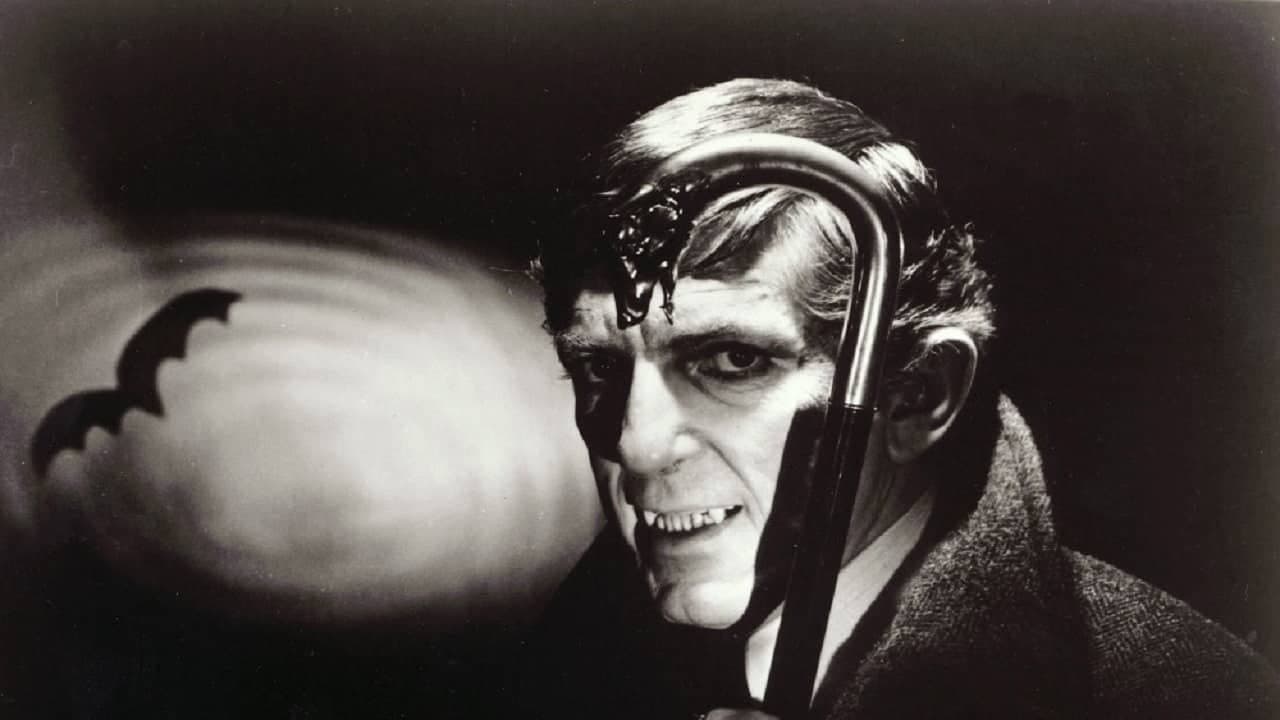
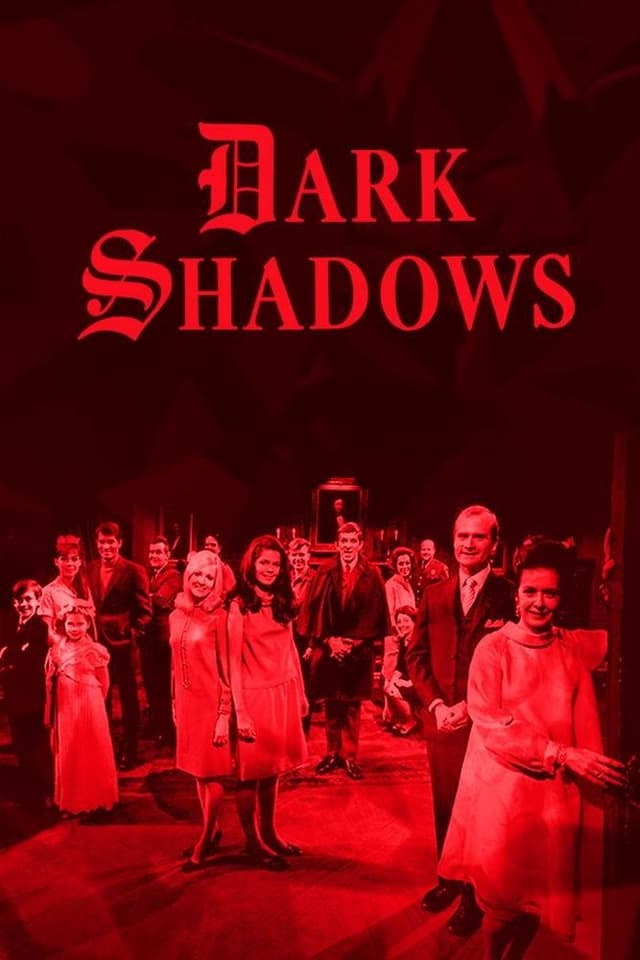
Johnny Depp had been an avid childhood fan of Dan Curtis' original Dark Shadows ABC daytime soap opera, which ran from 1966 to 1971, and had pursued the rights to a feature adaptation for several years through his Infinitum Nihil production company. Warner Bros. and Graham King's GK Films co-acquired the rights in 2007, with Seth Grahame-Smith hired to write the screenplay in 2010 on the strength of his work on Tim Burton-aligned material including Pride and Prejudice and Zombies. John August did an early draft pass before Grahame-Smith's shooting draft.
Principal photography ran from May 2011 through January 2012 at Pinewood Studios outside London, United Kingdom, with the production making use of the UK film tax credit in effect at the time. The Collinwood mansion full interior and exterior was built across multiple Pinewood stages, and additional location work covered nearby Salisbury for the surrounding Maine countryside material. The eight-month stage-based production block was the longest single-studio Tim Burton shoot of his career to that point.
Producer Richard D. Zanuck, the Oscar winner and longtime Burton collaborator behind The Sound of Music (1965), Jaws (1975), Driving Miss Daisy (1989), and the Burton-Depp partnership, died in July 2012, two months after Dark Shadows opened. The film was his final theatrical producing credit. Original Dark Shadows soap opera star Jonathan Frid made a cameo appearance in his final film role before his April 2012 death, and the film became one of Christopher Lee's final on-screen appearances at his 200th feature credit.
Awards and Recognition
Dark Shadows received modest awards recognition focused on its craft and visual elements. The film was nominated for the Saturn Award for Best Fantasy Film at the 39th Saturn Awards, with additional nominations for Best Production Design (Rick Heinrichs) and Best Costume Design (Colleen Atwood). Eva Green received critical praise and limited awards traction for her performance as the witch Angelique Bouchard, including an Empire Award nomination for Best Actress and a Saturn Award nomination for Best Supporting Actress.
The film did not receive Academy Award or Golden Globe nominations in major categories, an outcome that fell short of Warner Bros.' positioning of the project as a potential awards-season player. The film did receive Golden Raspberry Award (Razzie) nominations for the 33rd ceremony covering 2012, including a nomination for Worst Director (Tim Burton) and Worst Actor (Johnny Depp), reflecting the commercial disappointment and the bifurcation between critical and audience reception that defined the project's legacy.
Critical Reception
Dark Shadows received mixed-to-negative reviews. The film holds a 35% approval rating on Rotten Tomatoes, with the critical consensus calling it a film whose "visuals are top notch but Tim Burton never finds a consistent rhythm, mixing campy jokes and gothic spookiness," and scored 55 out of 100 on Metacritic, indicating mixed or average reviews. Audiences surveyed by CinemaScore gave the film a B-, a notable underperformance for a Burton-Depp summer release where A- or higher had been the standard floor.
Critics broadly praised the production design by Rick Heinrichs, the cinematography by Bruno Delbonnel, the score by Danny Elfman, and the supporting performances by Eva Green and Michelle Pfeiffer. The critical objections centered on the screenplay's structural inability to reconcile the gothic horror tradition of the original Dan Curtis soap opera with the broad comedy tone of the Burton-Depp treatment, on the underuse of the substantial supporting ensemble across the runtime, and on the formal pattern of fish-out-of-water 1970s gags that began to feel repetitive by the second half. Variety's Justin Chang wrote that the film "wants to be both campy and creepy and ends up being neither in any sustained way," and the New York Times' A.O. Scott called it "a missed opportunity that nonetheless delivers some of Tim Burton's loveliest individual frames." The dominant retrospective view places Dark Shadows in the middle tier of the Burton-Depp filmography, valued for its craft and design more than its narrative coherence.
Frequently Asked Questions
How much did Dark Shadows (2012) cost to make?
The reported production budget was $150,000,000. The film was co-financed by Warner Bros. Pictures, Village Roadshow Pictures, Infinitum Nihil (Johnny Depp's production company), GK Films, and The Zanuck Company, with the production based at Pinewood Studios outside London to access the UK film tax credit.
How much did Dark Shadows earn at the box office?
The film grossed $79,727,149 domestically and $165,800,000 internationally for a worldwide total of $245,527,149. It opened to $29,685,838 in the United States, finishing second to The Avengers, then in its second weekend. The 32/68 domestic-to-international split reflected the typical Depp international draw of the era.
Was Dark Shadows a flop?
It was a marginal theatrical disappointment. Against a $150,000,000 budget and an estimated $100,000,000 to $130,000,000 in worldwide prints and advertising spend, the film returned approximately $0.88 to $0.98 in theatrical revenue for every $1 invested. Warner Bros. confirmed in subsequent interviews that there were no plans for sequels despite the gothic soap-opera structure of the source material.
Who directed Dark Shadows (2012)?
Tim Burton directed the film, his eighth collaboration with Johnny Depp at that time. Burton was attached to the project from its earliest development stages and worked with screenwriter Seth Grahame-Smith on the shooting draft over 2010 to 2011.
What is Dark Shadows (2012) based on?
The film is based on Dan Curtis' Dark Shadows ABC daytime soap opera, which ran for 1,225 episodes from 1966 to 1971. Johnny Depp had been an avid childhood fan of the original series and pursued the feature rights for several years through his Infinitum Nihil production company before Warner Bros. and GK Films co-acquired the rights in 2007.
Who stars in Dark Shadows (2012)?
Johnny Depp plays Barnabas Collins, with Michelle Pfeiffer, Eva Green, Helena Bonham Carter, Chloë Grace Moretz, Jonny Lee Miller, Bella Heathcote, and Jackie Earle Haley in supporting roles. Original Dark Shadows soap opera star Jonathan Frid made a cameo appearance in his final film role, and Christopher Lee appeared in his 200th feature credit.
Where was Dark Shadows (2012) filmed?
Principal photography ran from May 2011 through January 2012 at Pinewood Studios outside London, with additional location work covering nearby Salisbury for the surrounding Maine countryside material. The eight-month stage-based production block was the longest single-studio Tim Burton shoot of his career to that point.
Did Dark Shadows win any awards?
The film received modest awards recognition focused on its craft and visual elements. It was nominated for the Saturn Award for Best Fantasy Film at the 39th Saturn Awards, with additional nominations for Best Production Design and Best Costume Design. Eva Green received critical praise and Empire Award and Saturn Award nominations for her performance as Angelique Bouchard. The film did not receive Academy Award or Golden Globe nominations.
What did critics think of Dark Shadows?
Reviews were mixed-to-negative. The film holds a 35% approval rating on Rotten Tomatoes and a 55 out of 100 score on Metacritic. Audiences gave it a B- CinemaScore. Critics broadly praised the production design, cinematography, and supporting performances by Eva Green and Michelle Pfeiffer, while objecting to the screenplay's inability to reconcile gothic horror with broad comedy.
How does Dark Shadows compare to other Burton-Depp films?
It sits in the middle tier of the Burton-Depp filmography. Alice in Wonderland (2010), the immediate predecessor, cost $200,000,000 and earned $1,025,500,000 worldwide. Charlie and the Chocolate Factory (2005) cost the same $150,000,000 and earned $474,900,000. Sweeney Todd (2007) cost $50,000,000 and earned $152,500,000. Dark Shadows' $245,527,149 worldwide gross placed it among the partnership's lower commercial outcomes.
Filmmakers
Dark Shadows

Official Trailer
Build budgets like this one in Saturation
Start from an industry-standard feature film template, import the schedule and rates you already have, and let the cost report keep itself current as you spend. Real-time collaboration, no spreadsheets.