The Lone Ranger Budget
 Western
Updated
Synopsis
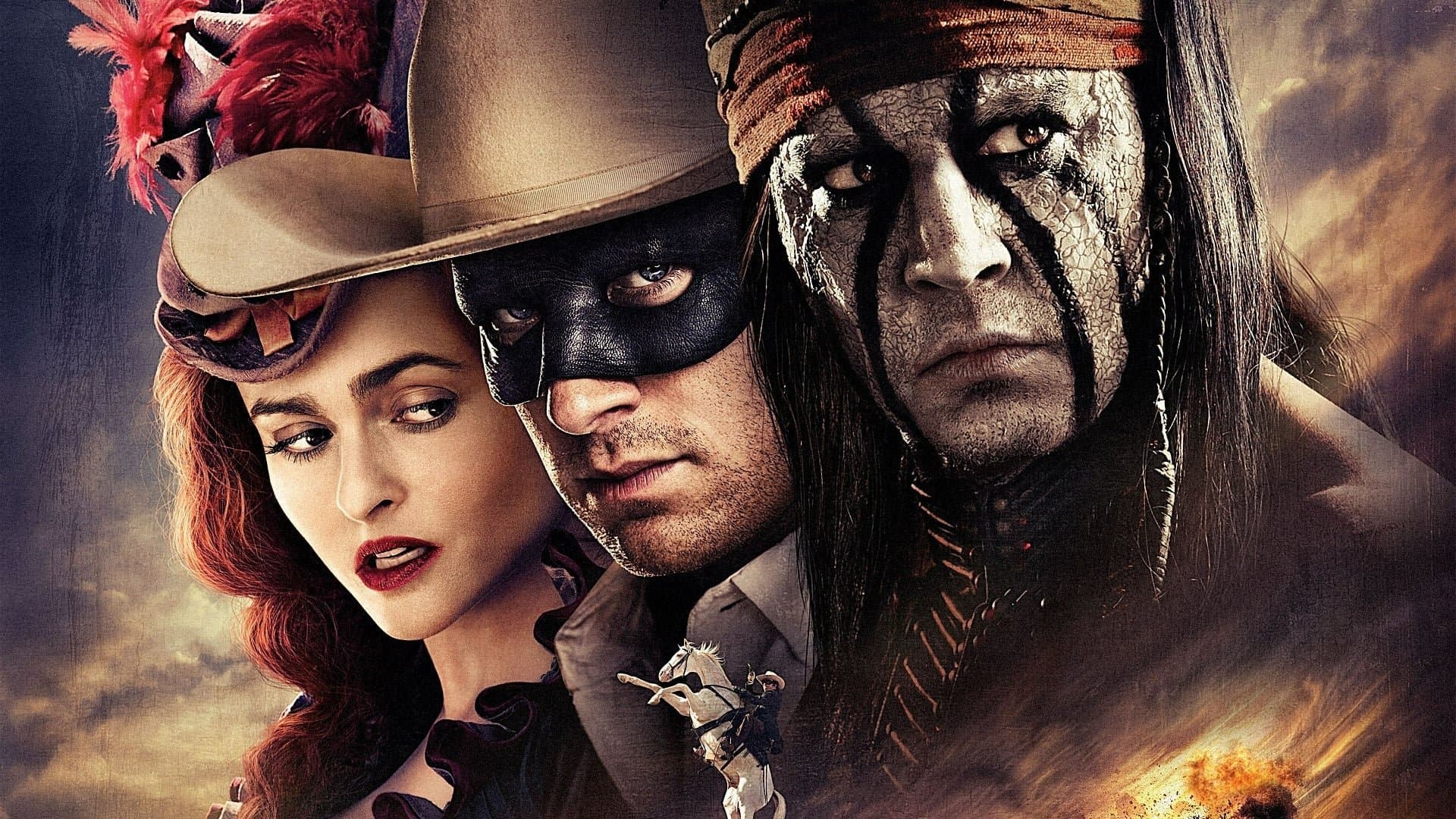
Native American warrior Tonto recounts the tales that transformed John Reid, a man of the law, into a legend of justice, as the two unlikely heroes must learn to work together and fight against greed and corruption.
What Is the Budget of The Lone Ranger?
The Lone Ranger (2013) was produced with a reported budget of $225,000,000, making it one of the most expensive films ever made at the time of its release. Directed by Gore Verbinski and produced by Jerry Bruckheimer for Walt Disney Pictures, the film attempted to replicate the blockbuster formula that had driven the Pirates of the Caribbean franchise to billions in worldwide grosses. The massive budget reflected the production's ambitious scope, which included large-scale practical stunts, period-accurate Western sets, and extensive location filming across the American Southwest.
The budget was a source of significant concern for Disney from the outset. In August 2011, Disney CEO Bob Iger and Studio Chairman Rich Ross temporarily halted production due to the escalating costs, which had reportedly ballooned to $250,000,000. To bring the budget down to an acceptable level, director Gore Verbinski, producer Jerry Bruckheimer, and stars Johnny Depp and Armie Hammer each agreed to defer 20% of their salaries. Even with these concessions, the final production cost remained at $225,000,000, a figure that would require enormous worldwide returns to reach profitability.
Key Budget Allocation Categories
With a $225,000,000 production budget, The Lone Ranger allocated resources across several major categories to deliver the sweeping Western adventure that Gore Verbinski envisioned.
- Above-the-Line Talent: Johnny Depp commanded a significant salary as the marquee star, even after the 20% deferral. Gore Verbinski and Jerry Bruckheimer, both coming off the lucrative Pirates franchise, also carried substantial fees. Combined above-the-line costs for talent, writing, directing, and producing represented one of the largest budget categories.
- Practical Stunts and Action Sequences: The film featured elaborate train chase sequences and large-scale practical effects inspired by Buster Keaton's silent-era stunts. The climactic dual-train sequence required the construction of actual train sets on miles of specially built track, representing one of the most expensive practical action sequences in modern filmmaking.
- Set Construction and Period Design: Recreating the 1860s-1870s American frontier required building entire Western town sets, mining camps, and railroad infrastructure from scratch. The period-accurate wardrobe, props, and set dressing for hundreds of extras added significant cost.
- Location Filming Across Six States: Principal photography spanned locations in Utah, Colorado, New Mexico, Arizona, Texas, and California. Monument Valley in Utah served as the primary backdrop, requiring extensive logistical coordination to transport cast, crew, and equipment to remote desert locations over the course of the lengthy shoot.
- Visual Effects: While the production prioritized practical stunts, substantial visual effects work was still required for set extensions, digital environments, and enhancing the train sequences. ILM handled the effects work, contributing to the overall cost.
- Music and Post-Production: Hans Zimmer composed the original score after replacing initially attached composer Jack White. The extended post-production period, including editing, sound design, and color grading for the 149-minute runtime, added to the final cost.
How Does The Lone Ranger's Budget Compare to Similar Films?
The Lone Ranger's $225,000,000 budget placed it among the most expensive films produced in 2013 and one of the costliest box office disappointments in Hollywood history. Here is how it compares to similar big-budget adventure films.
- Pirates of the Caribbean: At World's End (2007): Budget $300,000,000 | Worldwide $963,420,425. The third Pirates film, also directed by Verbinski and produced by Bruckheimer, carried an even larger budget but earned nearly a billion dollars worldwide. Disney hoped The Lone Ranger would replicate this formula with a Western setting.
- John Carter (2012): Budget $263,700,000 | Worldwide $284,139,100. Disney's other notorious big-budget bomb preceded The Lone Ranger by just one year, resulting in a reported $200,000,000 write-down. The back-to-back failures prompted a reassessment of Disney's approach to original blockbuster IP.
- Cowboys & Aliens (2011): Budget $163,000,000 | Worldwide $174,822,325. Another high-profile attempt to reinvent the Western genre with blockbuster star power (Daniel Craig, Harrison Ford) that underperformed commercially, suggesting audience resistance to expensive Western-themed tentpoles.
- Wild Wild West (1999): Budget $170,000,000 | Worldwide $222,104,681. Warner Bros.' attempt to blend Western action with blockbuster spectacle and a major star (Will Smith) similarly failed to connect with audiences, foreshadowing The Lone Ranger's struggles by over a decade.
The Lone Ranger Box Office Performance
The Lone Ranger opened in the United States on July 3, 2013, targeting the lucrative Independence Day holiday weekend. The film debuted to $29,210,000 over its first three days, well below industry projections and Disney's internal expectations. The soft opening placed the film behind Despicable Me 2, which dominated the holiday frame. Internationally, the film fared somewhat better, eventually accumulating $170,700,000 from overseas markets, but the combined worldwide total fell far short of the returns needed to offset the enormous investment.
Box Office Breakdown
The Lone Ranger (2013)

For every $1 spent on production alone, The Lone Ranger returned approximately $1.16 at the worldwide box office. However, studios typically receive only 50-55% of domestic grosses and 35-40% of international grosses after exhibitor splits, meaning Disney's actual revenue from the theatrical run was far less than the headline gross figure.
Disney ultimately recorded an estimated write-down of $160,000,000 to $190,000,000 on the film, making it one of the largest single-film losses in studio history at that time. The failure, coming just one year after the John Carter debacle, contributed to the departure of Disney Studio Chairman Rich Ross and prompted a broader strategic shift toward established franchise properties and away from original big-budget tentpoles.
The Lone Ranger Production History
The path to bringing The Lone Ranger to the screen was long and turbulent. The film rights passed through multiple studios over nearly two decades, beginning with Fox Family Films in 1997, then Columbia Pictures in 2002, and the Weinstein Company in 2007. Entertainment Rights eventually optioned the property and brought it to Disney, where producer Jerry Bruckheimer saw franchise potential in the classic radio and television Western.
Gore Verbinski was attached to direct, reuniting his Pirates of the Caribbean creative team with screenwriters Ted Elliott and Terry Rossio, who wrote the initial screenplay. Justin Haythe later contributed rewrites. Johnny Depp signed on to play Tonto, generating both excitement and controversy for the casting of a non-Native American actor as a Native American character. Depp cited his belief in distant Cherokee or Creek ancestry, and the film's portrayal of Tonto drew criticism from Native American advocacy groups throughout production and release.
Production was dramatically halted in August 2011 when Disney executives balked at the spiraling budget, which had climbed to an estimated $250,000,000. The shutdown lasted several weeks while Verbinski, Bruckheimer, Depp, and co-star Armie Hammer negotiated salary deferrals of 20% each to bring costs to an acceptable level. Principal photography finally began on March 8, 2012, and spanned locations across six states: Utah, Colorado, New Mexico, Arizona, Texas, and California.
The lengthy shoot was plagued by setbacks. Severe weather disrupted filming schedules, wildfires threatened locations, a chickenpox outbreak affected crew members, and, most tragically, a crew member died during production. Despite these challenges, filming was completed and the movie entered an extended post-production phase. Hans Zimmer was brought in to compose the score after Jack White, who had been initially attached, departed the project. The film premiered at Disney California Adventure on June 22, 2013, before its wide release on July 3.
Awards and Recognition
The Lone Ranger received two Academy Award nominations at the 86th Oscars: Best Visual Effects and Best Makeup and Hairstyling. The film did not win in either category. These nominations acknowledged the technical craft involved in the production despite its commercial and critical failure.
The film fared poorly at the satirical Golden Raspberry Awards, winning the Razzie for Worst Remake, Rip-off, or Sequel. It also received Razzie nominations for Worst Picture, Worst Director (Gore Verbinski), Worst Actor (Johnny Depp for Tonto), and Worst Screenplay. The contrast between the Oscar technical nominations and the Razzie recognition captured the film's fundamental disconnect: impressive spectacle wrapped around a story that failed to resonate with audiences and critics alike.
Critical Reception
The Lone Ranger received largely negative reviews from critics. On Rotten Tomatoes, the film holds a 31% approval rating based on 238 reviews. The critical consensus describes the film as suffering from a "bland script, bloated length, and blaring action overkill." On Metacritic, the film scored 37 out of 100 based on 44 critic reviews, indicating "generally unfavorable reviews." Audiences were somewhat more forgiving, giving the film a CinemaScore grade of B+.
Several critics noted that the film's 149-minute runtime contributed to a pacing problem, with the middle act dragging considerably between the more energetic opening and climactic train sequences. Some reviewers praised the finale's elaborate train chase as a genuinely thrilling setpiece worthy of the Buster Keaton homage Verbinski intended, but found the surrounding narrative too convoluted and tonally inconsistent to sustain engagement. The film's treatment of Native American characters and culture drew particular criticism, with many reviewers questioning the decision to cast Depp as Tonto and the film's shifting portrayal of Comanche characters between comic relief and tragic victims. The overwhelming consensus held that The Lone Ranger was an expensive, ambitious production that never justified its existence as a franchise starter.
Frequently Asked Questions
How much did it cost to make The Lone Ranger?
The production budget for The Lone Ranger was between $225,000,000 and $250,000,000, with an additional $150,000,000 spent on global marketing and distribution. Walt Disney Pictures, Jerry Bruckheimer Films, Blind Wink Productions, and Infinitum Nihil co-produced the film. Principal photography took place across multiple locations in Utah, Colorado, New Mexico, Arizona, Texas, and California.
How much did The Lone Ranger earn at the box office?
The Lone Ranger earned $260,502,115 worldwide, with $89,302,115 from North America and $171,200,000 from international markets. It opened over the five-day Independence Day holiday weekend to $48,900,000, far below Disney's projections for a tentpole summer release starring Johnny Depp.
Was The Lone Ranger profitable?
No, The Lone Ranger was one of the biggest box office bombs in Hollywood history. Against a production budget of $225,000,000 to $250,000,000 and $150,000,000 in marketing costs, the total investment exceeded $375,000,000. With worldwide earnings of only $260,500,000 and studios typically receiving 50% of domestic and 40% of international grosses, the theatrical return was roughly $113,000,000. Disney reported an estimated loss of $160,000,000 to $190,000,000 on the film.
What were the biggest costs in producing The Lone Ranger?
The largest expenses included extensive location filming across six states (Utah, Colorado, New Mexico, Arizona, Texas, and California) requiring massive logistical operations for period-accurate Old West sets and train sequences. The practical and CGI train sequences were particularly costly, including building functional train track and real locomotives. Johnny Depp's salary and profit participation deal was significant. Visual effects for action set pieces, elaborate period costumes, and set construction for frontier town environments also drove the budget upward. The production was briefly shut down in 2011 due to budget concerns before being revived with a slightly reduced scope.
How does The Lone Ranger's budget compare to similar films?
The Lone Ranger's $225,000,000 to $250,000,000 budget was comparable to other high-profile Gore Verbinski and Johnny Depp collaborations. Pirates of the Caribbean: At World's End (2007) cost $300,000,000 and earned $963,000,000, while Pirates of the Caribbean: On Stranger Tides (2011) cost $379,000,000 and grossed $1,045,000,000. The key difference was that those films had proven franchise demand, while The Lone Ranger was attempting to launch a new property at blockbuster scale. John Carter (2012), another Disney original IP launch, cost $263,700,000 and similarly flopped.
Did The Lone Ranger go over budget?
Yes. Disney initially shut down production in August 2011 when the budget ballooned to $250,000,000, citing cost concerns. After several months of negotiations, the production was revived with a nominally reduced budget of $215,000,000 to $225,000,000, achieved by cutting some sequences and consolidating locations. However, the final reported costs still reached $225,000,000 to $250,000,000, suggesting the cuts did not fully materialize. The ambitious practical train action sequences and multi-state shoot made cost control difficult throughout production.
What was the ROI of The Lone Ranger?
Using the midpoint production budget of $237,500,000, the return on investment from worldwide box office was approximately negative 9.7%. The formula is: ($260,502,115 minus $237,500,000) divided by $237,500,000 multiplied by 100, yielding roughly 9.7%. However, this does not account for the $150,000,000 marketing spend. When factoring in total costs of approximately $375,000,000 to $400,000,000 and standard theatrical revenue splits, Disney's loss was estimated at $160,000,000 to $190,000,000.
What awards did The Lone Ranger win?
The Lone Ranger received two Academy Award nominations: Best Visual Effects and Best Makeup and Hairstyling, though it did not win either category. It won a Visual Effects Society Award for its train sequences. On the negative side, the film received five Golden Raspberry Award nominations and won for Worst Remake, Rip-off or Sequel. Critics generally praised the visual effects and stunt work while criticizing the narrative structure and tonal inconsistency.
Who directed The Lone Ranger?
Gore Verbinski directed The Lone Ranger from a screenplay by Justin Haythe, Ted Elliott, and Terry Rossio. Verbinski was known for directing the first three Pirates of the Caribbean films (2003, 2006, 2007) with Johnny Depp, and the animated film Rango (2011). Producer Jerry Bruckheimer, who had also produced the Pirates franchise, reunited the team in hopes of launching another action-adventure series. The partnership between Verbinski, Depp, and Bruckheimer was central to Disney's confidence in the project.
Where was The Lone Ranger filmed?
The Lone Ranger was filmed across six U.S. states to capture the authentic landscapes of the American Southwest. Major filming locations included Monument Valley and other sites in Utah, Creede and the Rio Grande area in Colorado, Albuquerque and surrounding areas in New Mexico, Arizona desert locations, the Permian Basin region of Texas, and various locations in California. The production built elaborate practical sets including frontier towns and functional train tracks. The multi-state shoot spanned several months and required significant crew and equipment mobilization across remote locations.
Filmmakers
The Lone Ranger (2013)

Official Trailer
Build budgets like this one in Saturation
Start from an industry-standard feature film template, import the schedule and rates you already have, and let the cost report keep itself current as you spend. Real-time collaboration, no spreadsheets.