Cria! Budget
Updated
Synopsis
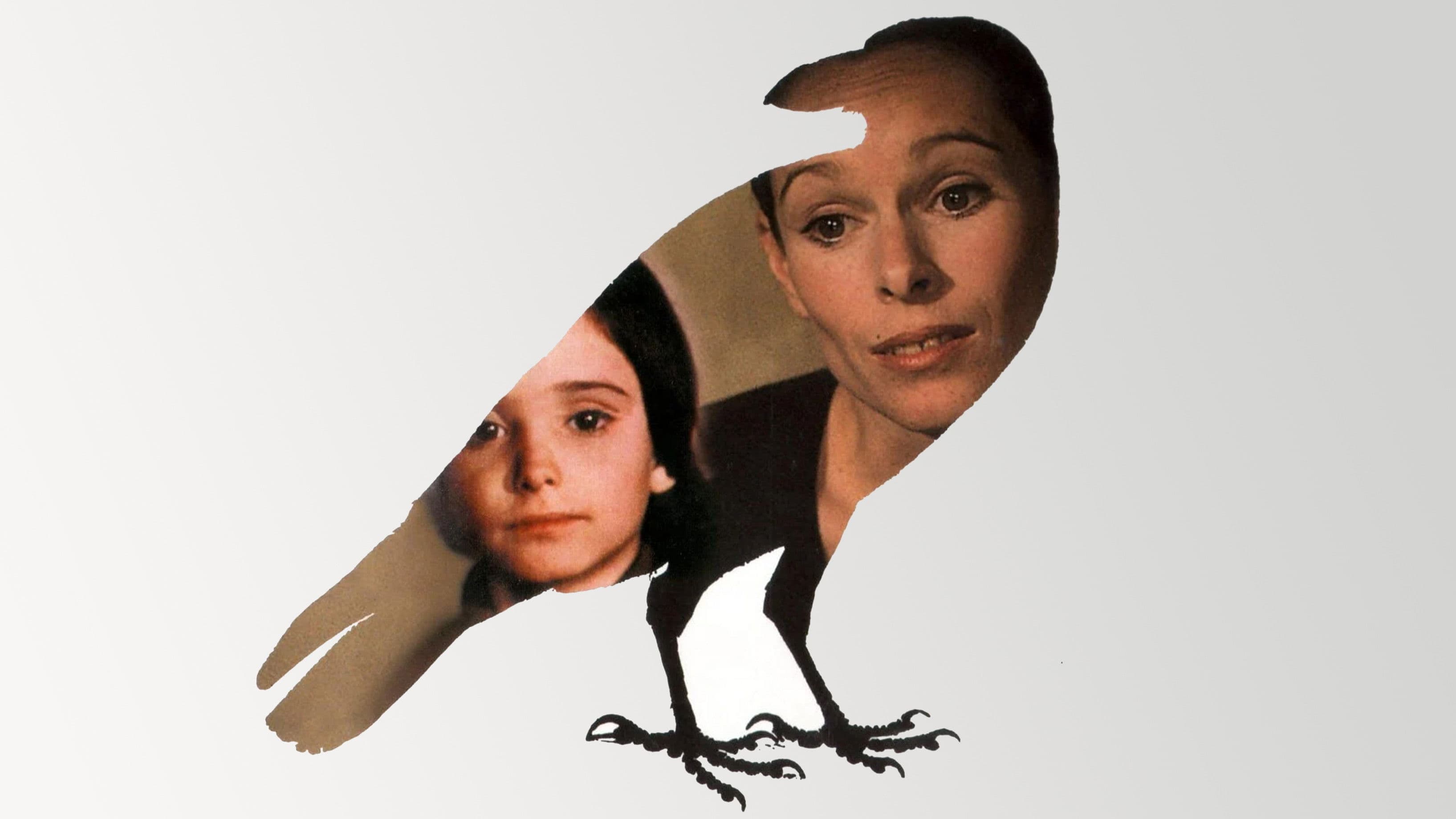
In the final years of Franco's Spain, eight-year-old Ana believes her late mother walks through their Madrid home at night and that a small bottle of powder hidden in the kitchen contains a poison capable of killing her tyrannical father. As Ana grieves and resists the world of the adults around her, the film slips between memory, imagination, and the slow-receding shadow of the dictatorship.
What Is the Budget of Cría! (1976)?
Cría cuervos . . . (released internationally as Cría!) is a 1976 Spanish drama directed by Carlos Saura and produced by Elías Querejeta. The exact production budget has never been publicly disclosed by Elías Querejeta P.C., the production company. The film was produced at a budget consistent with mid-1970s Spanish auteur cinema, a tier that industry historians place in the range of approximately 25,000,000 to 40,000,000 Spanish pesetas (roughly $400,000 to $600,000 at 1976 exchange rates).
Cría cuervos . . . was Saura's eighth feature collaboration with producer Elías Querejeta, the partnership that anchored the Spanish auteur movement of the late Franco era and the immediate post-Franco transition. The film was completed during the final months of Francisco Franco's dictatorship, which ended with Franco's death in November 1975, and released in early 1976 as Spanish censorship was beginning to loosen.
Key Budget Allocation Categories
The estimated budget for Cría cuervos . . . was allocated across the production areas typical for a mid-1970s Spanish auteur drama:
- Above-the-Line Talent — Director Carlos Saura, producer Elías Querejeta, and lead Ana Torrent (The Spirit of the Beehive). Geraldine Chaplin, then in a relationship with Saura, played the dual role of Ana's late mother and the adult Ana looking back. Mónica Randall, Florinda Chico, Héctor Alterio, and Germán Cobos filled out the cast. Saura also co-wrote the screenplay.
- Single-Location Shoot — Almost the entire film takes place in a large Madrid apartment, which the production used as the principal location across the shoot. The single-location structure substantially compressed location, lodging, and unit logistics costs.
- Production Design — Production designer Rafael Palmero dressed the Madrid apartment to reflect the bourgeoisie family of an army officer in late-Franco Spain, with period-accurate furniture, religious iconography, and family photographs that carry significant thematic weight.
- Cinematography — DP Teodoro Escamilla shot the film on 35mm in muted natural-light interiors, applying the high-contrast, shallow-depth style associated with the Querejeta-Saura collaboration. Camera and lighting equipment was kept minimal.
- Music Licensing — The film famously uses the 1974 song "Porque te vas" by Spanish artist Jeanette as both diegetic and non-diegetic music, with the song becoming inseparable from the film's identity. Saura also composed sparse incidental piano music. Music licensing for the Jeanette song was a meaningful incremental budget line.
- Post-Production — Editing was handled by Pablo G. del Amo on the standard Spanish post-production pipeline of the period. Sound mix, color, and finishing were done at Madrid post houses.
How Does Cría!'s Budget Compare to Similar Films?
Against contemporary mid-1970s Spanish and European auteur films, the production sits in the standard tier for the era's art-house cinema:
- The Spirit of the Beehive (1973): Budget approximately 15,000,000 pesetas | Spanish theatrical release. Víctor Erice's Querejeta-produced film that introduced Ana Torrent operated at a lower budget tier than Cría! but in the same auteur ecosystem.
- Black Sunday (1977): Budget $7,000,000 | Worldwide $15,000,000. The contemporaneous American studio thriller operated at roughly 12x the Cría! budget, illustrating the gulf between Hollywood and Spanish auteur cinema in the mid-1970s.
- Pascual Duarte (1976): Budget approximately 30,000,000 pesetas | Spanish theatrical release. Ricardo Franco's same-year Spanish drama operated at a comparable budget tier and similarly grappled with the country's political transition.
- Padre Padrone (1977): Budget approximately 200,000,000 lira | Worldwide release. The Taviani brothers' contemporaneous Italian Palme d'Or winner operated at a comparable European art-house budget tier.
- That Obscure Object of Desire (1977): Budget approximately $1,500,000 | Worldwide release. Luis Buñuel's final film, also a Spanish-French co-production, operated at a higher budget tier and offers the closest peer for international art-cinema spending in the period.
Cría! Box Office Performance
Cría cuervos . . . became director Carlos Saura and producer Elías Querejeta's most commercially successful film up to that point, going on to become the sixth largest-grossing Spanish film of 1976. Spanish theatrical figures for the era are not consistently digitized, but the film ran with sustained box office across Madrid and Barcelona first-run engagements and expanded into regional Spanish exhibition.
The film also performed strongly in international markets, including the United States, where it ran in major art-house theatrical engagements. Here is the financial profile based on publicly available historical data:
Box Office Breakdown
Cria!

Beyond the initial theatrical run, Cría cuervos . . . has accrued ongoing revenue through retrospective theatrical reissues, home video, the Criterion Collection release on Blu-ray and DVD, and academic licensing. The Criterion edition has been one of the most widely sold Spanish-cinema titles in the Criterion library, signaling sustained library value almost 50 years after release.
Jeanette's "Porque te vas," which was a moderate hit upon original 1974 release in Spain, became an international hit following its prominent use in the film, with the song re-charting across Spain, Germany, and Latin America in 1976. The film and song now exist as commercially intertwined cultural objects.
Cría! Production History
Carlos Saura developed Cría cuervos . . . in 1975 as the Franco dictatorship entered its final months. The screenplay, which Saura wrote, drew on his own childhood memories of growing up in 1940s Spain under the early Franco regime, with the film's emotional register set by the experience of being a child in a household where political authority and patriarchal authority were intertwined.
Producer Elías Querejeta, who had built the most important Spanish auteur production banner of the late-Franco era, financed and produced the film through Elías Querejeta P.C. The Querejeta partnership had already produced Saura's The Hunt (1966), Peppermint Frappé (1967), Honeycomb (1969), and Anna and the Wolves (1973), and would continue through the late 1970s.
Casting Ana Torrent in the central role of Ana extended the partnership Querejeta had launched with the eight-year-old actress in Víctor Erice's The Spirit of the Beehive (1973). Torrent's naturalistic performance, achieved through close on-set collaboration with Saura, anchors the film. Geraldine Chaplin played the dual role of Ana's deceased mother and the adult Ana looking back. Mónica Randall, Florinda Chico, Héctor Alterio, and Germán Cobos completed the supporting ensemble.
Principal photography took place in 1975 in Madrid, primarily in a single bourgeois apartment used as the family home. Filming was contained to a brief production schedule, with Teodoro Escamilla shooting in muted natural light and Saura directing Torrent through long takes that allowed the young actress to find the emotional rhythm of each scene.
The film opened in Spain in early 1976 and premiered internationally at the Cannes Film Festival in May 1976, where it won the Grand Prix (the festival's second-highest award). It was selected as the Spanish entry for the Best Foreign Language Film at the 49th Academy Awards but was not accepted as a final nominee.
Awards and Recognition
Cría cuervos . . . won the Grand Prix at the 1976 Cannes Film Festival, the second-highest honor at the festival behind the Palme d'Or (which went to Martin Scorsese's Taxi Driver). The film also received nominations for Best Foreign Language Film by the U.S. National Board of Review and was Spain's submission to the 49th Academy Awards in the Best Foreign Language Film category, although it was not accepted as a final nominee.
The film won multiple Spanish industry awards in 1976 and 1977, including the Sant Jordi Award (Spain) for Best Spanish Film. Ana Torrent's performance has been recognized retrospectively across multiple decades as one of the great child performances in cinema, and the film holds a place on multiple all-time best-Spanish-cinema lists, including those compiled by Cahiers du Cinéma and the Spanish film magazine Fotogramas.
The Criterion Collection released a restored edition of Cría cuervos . . . in 2007, cementing the film's status as a canonical entry in late-twentieth-century European art cinema and contributing to its sustained academic and home-video presence.
Critical Reception
Cría cuervos . . . received broad critical acclaim on release. The film holds a 100% approval rating on Rotten Tomatoes based on retrospective reviews, with an average critic rating of 8.3 out of 10. Contemporary 1976 reviews in Variety, the New York Times, and the major European film press were overwhelmingly positive.
Vincent Canby in the New York Times praised the film as "a beautiful and haunting work" and called Ana Torrent's performance "as moving as anything I have seen on the screen." Pauline Kael in The New Yorker was more divided, finding the film politically ambiguous in ways she questioned but acknowledging its formal command. French critic Serge Daney in Cahiers du Cinéma framed the film as a definitive statement on the inheritance of the Franco regime by Spain's post-dictatorship generation.
The film's critical standing has grown rather than diminished across the decades. The 2007 Criterion Collection release prompted a wave of retrospective coverage that placed Cría cuervos . . . alongside Saura's most enduring works (The Hunt, Carmen, Tango) and within the international canon of films about childhood, memory, and political inheritance. Critical writing on the film consistently highlights the layered use of Jeanette's "Porque te vas," which has become inseparable from the film's identity in subsequent popular culture references including Birdman (2014).
Frequently Asked Questions
How much did Cría cuervos . . . (1976) cost to make?
The exact production budget was never publicly disclosed by producer Elías Querejeta P.C. Industry historians place the figure in the range of approximately 25,000,000 to 40,000,000 Spanish pesetas (roughly $400,000 to $600,000 at 1976 exchange rates), consistent with mid-1970s Spanish auteur cinema.
Who directed Cría! (1976)?
Carlos Saura directed the film and wrote the screenplay. It was Saura's eighth feature collaboration with producer Elías Querejeta, the partnership that anchored the Spanish auteur movement of the late Franco era and the post-Franco transition.
Did Cría cuervos . . . win at Cannes?
Yes. The film won the Grand Prix at the 1976 Cannes Film Festival, the second-highest honor at the festival. The Palme d'Or that year went to Martin Scorsese's Taxi Driver. Cría! also received nominations from the U.S. National Board of Review for Best Foreign Language Film.
Who stars in Cría! (1976)?
Ana Torrent stars as eight-year-old Ana, with Geraldine Chaplin in a dual role as the deceased mother and the adult Ana looking back. Mónica Randall, Florinda Chico, Héctor Alterio, and Germán Cobos fill out the supporting cast. Torrent had previously starred in Víctor Erice's The Spirit of the Beehive (1973).
What is the song in Cría cuervos . . .?
The film famously features "Porque te vas" by Spanish artist Jeanette. Released in 1974, the song was a moderate hit on original release. Its prominent use in Cría cuervos . . . catapulted it to international success in 1976, with the song re-charting across Spain, Germany, and Latin America after the film's release.
When was Cría! (1976) released?
The film opened in Spain in early 1976 and premiered internationally at the Cannes Film Festival in May 1976. It was Spain's submission to the 49th Academy Awards in the Best Foreign Language Film category, although it was not accepted as a final nominee.
How much did Cría! earn at the box office?
The film became Saura and Querejeta's most commercially successful collaboration to that point, ranking as the sixth largest-grossing Spanish film of 1976. Granular box office figures from the era are not consistently digitized, but the film ran with sustained engagement across Spanish and international art-house theatrical markets.
What is Cría! about?
In the final years of Franco's Spain, eight-year-old Ana believes her late mother walks through their Madrid home at night and that a small bottle of powder hidden in the kitchen contains a poison capable of killing her tyrannical father. As Ana grieves and resists the world of the adults around her, the film slips between memory, imagination, and the receding shadow of the dictatorship.
Is Cría! on the Criterion Collection?
Yes. The Criterion Collection released a restored edition of Cría cuervos . . . in 2007. The Criterion edition has been one of the most widely sold Spanish-cinema titles in the company's library, signaling sustained library value almost 50 years after the original release.
Why is Cría! considered a classic?
Cría cuervos . . . is consistently cited within Spanish-cinema histories as one of the most important films about the final months and immediate aftermath of the Franco dictatorship. Ana Torrent's lead performance is regarded as one of the great child performances in cinema, and the film holds a permanent place on all-time best-Spanish-cinema lists compiled by Cahiers du Cinéma and the Spanish magazine Fotogramas.
Filmmakers
Cria!

Official Trailer
Build budgets like this one in Saturation
Start from an industry-standard feature film template, import the schedule and rates you already have, and let the cost report keep itself current as you spend. Real-time collaboration, no spreadsheets.