Scarface Budget
 ActionCrimeDrama2h 50m
Updated
Synopsis
In a ruthless rise to Miami drug lord, a Cuban-born gangster descends into addiction, obsession and brutality, with grisly consequences.
What is the budget of Scarface?
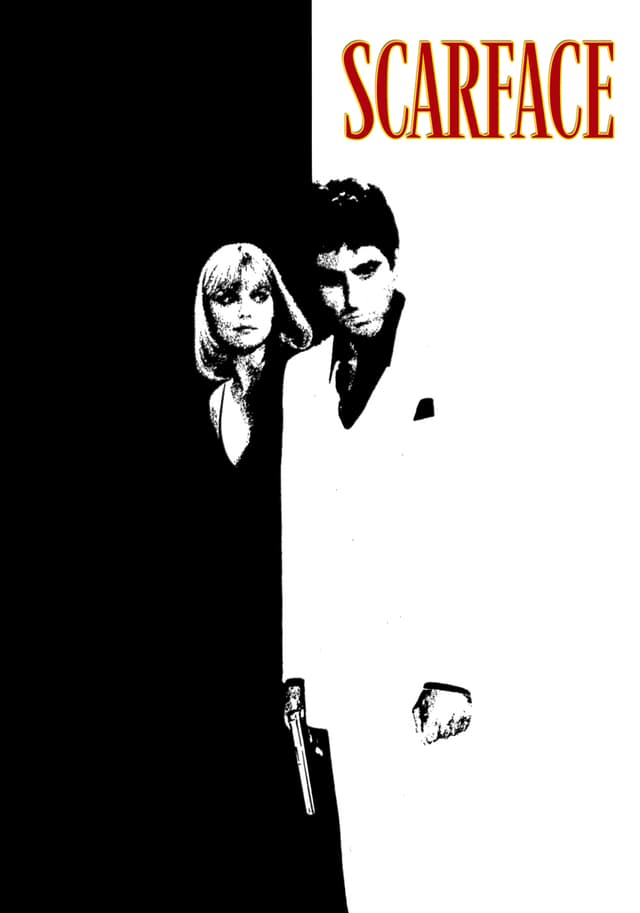
"Scarface," an action released in 1983, was directed by Brian De Palma and stars Al Pacino, Steven Bauer. The production budget was $25,000,000, placing it in the mid-budget range for action productions of the 1980s.
Key Budget Allocation Categories
While specific budget breakdowns are not publicly available, typical cost drivers for an action production like this include:
- Stunts, Action Sequences & Visual Effects: Action films allocate a substantial portion of their budget to choreographing and executing practical stunts, pyrotechnics, and CGI-heavy sequences.
- Above-the-Line Talent (Cast & Director): A-list talent commands significant upfront fees plus backend participation.
- Production Design, Sets & Locations: Action films frequently require multiple international shooting locations, large-scale set construction, vehicle acquisitions and modifications, and specialized equipment , all of which drive production costs well above those of dialogue-driven genres.
- Casting: Pacino worked with experts in knife combat, trainers and boxer Roberto Durán to attain the body type that he wanted for the role.
What were the major cost factors in Scarface?
Several factors contributed to the overall production costs of "Scarface."
- Stunts: Stunts, Action Sequences & Visual Effects is one of the primary cost drivers in action productions of this scale.
- Above-the-Line Talent (Cast: Above-the-Line Talent (Cast & Director) is one of the primary cost drivers in action productions of this scale.
- Production Design: Production Design, Sets & Locations is one of the primary cost drivers in action productions of this scale.
How Does Scarface's Budget Compare to Similar Films?
At $25,000,000, Scarface sits in the mid-budget range. Here is how it compares to productions with a similar budget:
- 1408 (2007): Budget $25,000,000, Worldwide Gross $133,000,000
- A Journal for Jordan (2021): Budget $25,000,000, Worldwide Gross $6,700,000
- Abandon (2002): Budget $25,000,000, Worldwide Gross $10,719,357
- All My Life (2020): Budget $25,000,000, Worldwide Gross $2,000,000
- August Rush (2007): Budget $25,000,000, Worldwide Gross $66,122,026
The median budget for wide-release action films in the era ranges from $30 to 80M for mid-budget to $150M+ for tentpoles.
Scarface Box Office Performance
"Scarface" earned $45,408,703 domestically and $66,023,329 worldwide at the box office. Against a production budget of $25,000,000, the film performed strongly at the box office.
A film typically needs to earn approximately twice its production budget to cover marketing and distribution costs. For "Scarface," that break-even threshold was roughly $50,000,000. With worldwide earnings of $66,023,329, the film cleared that threshold comfortably.
Box Office Breakdown
Scarface

At 164.1%, "Scarface" earned roughly $2.64 for every $1 invested in production.
Scarface Production History
Pacino worked with experts in knife combat, trainers and boxer Roberto Durán to attain the body type that he wanted for the role. Durán also helped inspire the character, who had "a certain lion in him", according to Pacino. Sophie Zawistoska, Meryl Streep's immigrant character in Sophie's Choice (1982) also influenced Pacino's portrayal of Tony Montana.
The picture was shot over 24 weeks from November 22, 1982, to May 6, 1983. Although the film is set in Miami, the Miami Tourist Board declined requests to film there, fearing that the film's themes of drugs and gangsters would deter tourism. Instead, much of the film was shot in Los Angeles.
Instead of using popular music from the period in which the film is set, the music in Scarface was produced by Academy Award-winning Italian record producer Giorgio Moroder. Reflecting Moroder's style, the soundtrack consists mostly of synthesized new wave and electronic music. De Palma has stated that he has repeatedly denied Universal's requests to re-release the film with "a rap score" because he thinks that Moroder's score is perfect.
Awards and Recognition
8 nominations total
Critical Reception
Critics were generally negative about Scarface when it was originally released. New York magazine called it an empty, bullying, overblown B-movie.
Frequently Asked Questions
How much did Scarface (1983) cost to make?
Scarface was produced on a budget of approximately $25,000,000 for Universal Pictures, financed by producer Martin Bregman. The figure was substantial for an R-rated drama in 1983 and covered location shooting in Miami, an elaborate climactic mansion set built on a soundstage, and the lengthy 24-week principal photography schedule that director Brian De Palma demanded.
How much did Scarface earn at the box office?
The film grossed $44,683,000 domestically and approximately $21,000,000 internationally, for a worldwide total around $65,000,000 in its initial theatrical run. The result was viewed as a modest commercial success at the time, but the film's legacy lies in subsequent home-video, cable, and merchandising revenue, which has earned hundreds of millions of dollars across four decades.
Who directed Scarface?
Brian De Palma directed the film, working from a screenplay by Oliver Stone. De Palma was coming off Blow Out (1981) and would follow Scarface with Body Double (1984). Stone's screenplay was written while he was overcoming his own cocaine addiction, a biographical detail he discussed publicly in later decades.
Who starred in Scarface?
Al Pacino played Tony Montana, the Cuban refugee who builds a Miami cocaine empire. Michelle Pfeiffer played his wife Elvira, in her breakout role. The supporting cast included Steven Bauer as Manny Ribera, Mary Elizabeth Mastrantonio as Tony's sister Gina, Robert Loggia as Frank Lopez, and F. Murray Abraham as Omar Suarez.
Where was Scarface filmed?
Principal photography took place in Miami, Florida and Los Angeles, with significant interior work completed on Universal soundstages. The production was initially based in Miami but had to relocate much of its work to Los Angeles after the Cuban-American community in Miami protested the film's depiction of Marielito refugees as criminals. The climactic mansion set was a soundstage build at Universal Studios.
How did Scarface's X rating get reduced?
The film initially received an X rating from the MPAA for violence and language, including more than 200 instances of profanity. Brian De Palma made cosmetic changes to three brief shots but otherwise refused to substantially recut the film. Universal arranged for an MPAA review panel that included sociologists and law-enforcement consultants, who argued that the violence served a serious thematic purpose. The MPAA reversed the rating to R without further cuts.
What did critics think of Scarface at release?
Initial reviews were polarized. Roger Ebert gave the film three and a half stars but many mainstream critics including Janet Maslin of The New York Times found the violence and language excessive. The film's critical reputation grew steadily over subsequent decades, and it now holds an 81% approval rating on Rotten Tomatoes. The American Film Institute included it on multiple anniversary lists.
Did Scarface win any awards?
The film received three Golden Globe nominations, including Best Actor for Al Pacino and Best Supporting Actor for Steven Bauer. It was largely shut out of the 1984 Academy Awards. Modern recognition has been substantial, with the AFI ranking Tony Montana as one of the great American screen villains and inclusion in the National Film Registry being widely advocated.
How does Scarface compare to the 1932 original?
The 1983 remake reimagines Howard Hawks' 1932 Scarface (about Prohibition-era bootlegging) as a story of 1980s Cuban cocaine traffickers. Both films are loosely based on Armitage Trail's 1930 novel. The original starred Paul Muni and was credited as transforming the gangster genre. The 1983 version is now widely considered the more culturally influential of the two, despite its weaker initial critical reception.
What has Scarface earned in afterlife revenue?
Universal has released the film on numerous home-video and streaming formats and has built a substantial merchandising business around the Tony Montana character, including apparel, posters, video games, and recordings. The 2006 video game Scarface: The World Is Yours grossed an estimated $50,000,000. Industry estimates place total afterlife revenue from the franchise above $500,000,000, far exceeding the original theatrical gross.
Official Trailer
Build budgets like this one in Saturation
Start from an industry-standard feature film template, import the schedule and rates you already have, and let the cost report keep itself current as you spend. Real-time collaboration, no spreadsheets.