Charlie's Angels Budget
 Action
Updated
Synopsis
Three female private investigators (Farrah Fawcett-Majors, Kate Jackson, Jaclyn Smith) work for the unseen Charles Townsend (voiced by John Forsythe), receiving their case assignments by speakerphone from the reclusive millionaire who hired them. Along with their handler John Bosley (David Doyle), the Angels investigate murders, kidnappings, and elaborate scams across Los Angeles and beyond. The Aaron Spelling-produced ABC series ran five seasons from 1976 to 1981 and became one of the defining cultural phenomena of late-1970s American television.
What Is the Budget of Charlie's Angels (1976)?
Charlie's Angels (1976), the Aaron Spelling and Leonard Goldberg television series produced for ABC, ran for five seasons from September 22, 1976 to June 24, 1981, totaling 110 episodes plus the 90-minute pilot television movie. The series was produced on per-episode budgets that started in the range of $400,000 to $500,000 during the first season and escalated through the run as cast salaries and production scale grew, reaching approximately $800,000 to $900,000 per episode by Season 5. (Note: this entry covers the original 1976 ABC television series, distinct from the 2000 Sony theatrical film and its 2003 and 2019 sequels.)
The series was Aaron Spelling and Leonard Goldberg's ABC successor to The Rookies (1972-1976) and Starsky & Hutch (1975-1979), and it became the highest-rated drama on American television in its first season. Original lead Farrah Fawcett-Majors (credited as Farrah Fawcett from Season 4 onward) earned a salary that started at approximately $5,000 per episode and climbed into the six-figure range before her contentious Season 2 departure. Subsequent leads Cheryl Ladd, Shelley Hack, and Tanya Roberts joined and exited the cast across the five-season run.
Key Budget Allocation Categories
Charlie's Angels' per-episode budget was distributed across these production areas:
- Above-the-Line Talent: The three rotating leads (Farrah Fawcett, Kate Jackson, Jaclyn Smith, Cheryl Ladd, Shelley Hack, Tanya Roberts) commanded the largest cast line items, with salaries escalating across the run. John Forsythe voiced the unseen Charlie Townsend across all 110 episodes from a remote recording booth, working on a per-episode rate. David Doyle co-starred as Bosley in 109 episodes.
- Backlot and Los Angeles Location Shooting: The series shot primarily on Spelling-Goldberg Productions soundstages at the 20th Century Fox lot and on practical Los Angeles locations standing in for Hawaii, Las Vegas, San Francisco, and various international destinations. The travel-themed episodes typically used standing sets and dressed-Los Angeles exteriors rather than actual location shoots.
- Stunt Work and Action Sequences: The detective-procedural format relied heavily on chases, fights, and undercover-disguise set pieces, requiring dedicated stunt coordinators, stunt doubles for all three leads, picture cars, and practical effects.
- Wardrobe and Hair: The Angels' wardrobe became a defining production element, with weekly costume changes that drew significant publicity for the series. Farrah Fawcett's feathered hair became a 1976-1977 cultural phenomenon, and the hairstyling department received outsized attention and resources.
- Score and Music: Henry Mancini composed the iconic main theme, with Allyn Ferguson handling weekly score duties for most of the run. Music licensing for needle drops added to the per-episode music line item.
- Guest-Star Casting: The procedural villain-of-the-week format required substantial weekly guest-cast budgets. Notable guest stars across the run included Bo Hopkins, Tommy Lee Jones, Robert Loggia, and Dennis Cole.
How Does Charlie's Angels' Budget Compare to Similar Series?
At an estimated $400,000 to $900,000 per episode across its 1976-1981 run, Charlie's Angels sat in the upper-middle range of network drama production costs for the period:
- Starsky & Hutch (1975-1979): Per-episode budget approximately $300,000 to $500,000. The Spelling-Goldberg buddy-cop drama that immediately preceded Angels at ABC.
- The Six Million Dollar Man (1974-1978): Per-episode budget approximately $400,000 to $600,000. The Universal/ABC science-fiction action drama starring Lee Majors, husband of Farrah Fawcett-Majors during the first three seasons of Angels.
- Dynasty (1981-1989): Per-episode budget approximately $1,000,000 to $1,500,000. Spelling's post-Angels primetime soap escalated production costs significantly above the late-Angels per-episode range.
- Hart to Hart (1979-1984): Per-episode budget approximately $700,000 to $900,000. The Spelling-Goldberg detective drama that effectively replaced Angels in their slate.
- Magnum, P.I. (1980-1988): Per-episode budget approximately $900,000 to $1,200,000. The Hawaii-shot Universal/CBS detective drama benchmarked location-heavy episodic production costs against Angels' studio-based model.
Charlie's Angels Series Performance
Charlie's Angels premiered on September 22, 1976 to massive ratings, finishing the 1976-1977 television season as the fifth-highest-rated program on American television (Nielsen rating 26.0, audience share 41%). The 90-minute pilot television movie that preceded the series drew a 47% audience share. The series held in the Nielsen top 10 for its first two seasons before declining through the cast turnover of Seasons 3 through 5.
The cumulative five-season production budget across 110 episodes plus pilot totaled approximately $70,000,000 to $90,000,000 in then-current dollars. Network license fee revenue plus syndication, international sales, and merchandising (including dolls, posters, board games, and the iconic Farrah Fawcett swimsuit poster) made the series highly profitable for Spelling-Goldberg Productions across its initial run and subsequent decades of rerun licensing. Here is the estimated cumulative breakdown:
- Per-Episode Budget (Season 1): $400,000 to $500,000
- Per-Episode Budget (Season 5): $800,000 to $900,000
- Total Episodes: 110 plus 90-minute pilot
- Estimated Cumulative Production Cost: $70,000,000 to $90,000,000 (1976-1981 dollars)
- ABC License Fee Revenue: profitable; exact figures not publicly disclosed
- Syndication and Merchandising: highly profitable across subsequent decades
The series became one of the most lucrative properties in Aaron Spelling's career. Merchandise revenue from dolls, lunch boxes, posters, and the licensing of Farrah Fawcett's 1976 swimsuit poster (which sold over 12 million copies) generated substantial ancillary returns. The series has remained in syndication continuously since its original run ended in 1981, with subsequent home-video, cable, and streaming-platform licensing extending its commercial life.
The franchise generated multiple subsequent properties: the Drew Barrymore-produced Charlie's Angels theatrical films (2000 and 2003), a short-lived 2011 ABC reboot television series, and the 2019 Elizabeth Banks theatrical film. None of these subsequent properties matched the original 1976 series' cultural and commercial impact.
Charlie's Angels Production History
The series originated as a 1976 90-minute television movie of the week, written by Ben Roberts and Ivan Goff and produced by Aaron Spelling and Leonard Goldberg for ABC. ABC initially passed on a series order but reversed course after the pilot drew a 47% audience share. The pilot was retitled "Charlie's Angels" after testing under multiple working titles including "The Alley Cats" and "Harry's Angels."
Casting Farrah Fawcett-Majors as Jill Munroe, Kate Jackson as Sabrina Duncan, and Jaclyn Smith as Kelly Garrett gave the series its initial trio. Fawcett-Majors departed at the end of Season 1 in a contractual dispute that became one of the most publicized in 1970s television, returning only for a series of guest appearances in Seasons 3 and 4. Cheryl Ladd joined as Kris Munroe (Jill's sister) for Season 2. Kate Jackson departed at the end of Season 3, replaced by Shelley Hack for Season 4. Hack was replaced by Tanya Roberts for the abbreviated Season 5.
Production ran on Spelling-Goldberg soundstages at the 20th Century Fox lot in Century City, Los Angeles, with practical exteriors shot across the Los Angeles basin. The series rarely shot on actual location outside California, with travel-themed episodes typically using standing sets, redressed-Los Angeles exteriors, and stock footage to suggest Hawaii, Las Vegas, San Francisco, and international destinations.
ABC cancelled the series after Season 5, with the final episode airing June 24, 1981. The cancellation followed a steady three-season ratings decline through the cast-turnover period and intensifying competition from CBS' Magnum, P.I. and NBC's Hill Street Blues. Spelling-Goldberg pivoted immediately to Dynasty (1981) and Hart to Hart (1979-1984), both of which became flagship 1980s ABC properties.
Awards and Recognition
Charlie's Angels received four Emmy nominations across its five-season run, including Outstanding Lead Actress in a Drama Series nominations for Kate Jackson in 1977 and 1978. The series did not win an Emmy. Farrah Fawcett-Majors received a Golden Globe nomination for Best Actress in a Drama TV Series in 1977. The series itself received a Golden Globe nomination for Best Drama TV Series in 1977.
The cultural impact of the series significantly exceeded its industry-awards recognition. Farrah Fawcett's 1976 swimsuit poster became one of the best-selling posters in history, with over 12 million copies sold. The series has been credited with launching the "jiggle television" subgenre that dominated late-1970s American programming and with reframing female-led action drama for primetime network television.
Critical Reception
Charlie's Angels received mixed reviews from contemporaneous television critics. The series was widely panned by feminist critics and commentators for its presentation of the leads as glamorous undercover operatives whose investigations frequently required revealing wardrobe and physical attractiveness as plot devices, an editorial framing that drew sustained criticism throughout the run. Time magazine famously described the series in 1977 as "massage parlor entertainment," a phrase that captured a strain of contemporary critical reaction.
The Hollywood Reporter and Variety reviews of the pilot and early episodes praised the production values and the chemistry of the original trio but expressed reservations about the procedural formula. Subsequent reassessment of the series, particularly through retrospective coverage from the 1990s and 2000s, has more frequently emphasized its role in establishing female-led action drama on American network television and the genuine on-screen rapport of the original Fawcett-Jackson-Smith trio.
Cast members themselves have offered candid reassessments. Kate Jackson has been publicly critical of the production's wardrobe choices and the series' creative direction during her three-season tenure. Farrah Fawcett's post-Angels career (particularly her Emmy-nominated performance in The Burning Bed in 1984) was widely framed as a successful reframing of her image away from the Angels phenomenon. The series remains a defining property of 1970s American network television and a touchstone for subsequent female-led action franchises.
Frequently Asked Questions
How much did it cost to make Charlie's Angels (1976)?
The original ABC television series ran from 1976 to 1981 on per-episode budgets that started at approximately $400,000 to $500,000 in Season 1 and escalated to approximately $800,000 to $900,000 per episode by Season 5. The cumulative five-season production cost across 110 episodes plus the 90-minute pilot totaled an estimated $70,000,000 to $90,000,000 in then-current dollars.
How long did Charlie's Angels run?
Charlie's Angels ran for five seasons on ABC, from September 22, 1976 to June 24, 1981, totaling 110 episodes plus a 90-minute pilot television movie. The series was produced by Spelling-Goldberg Productions and aired in primetime on ABC.
Who created Charlie's Angels?
Ben Roberts and Ivan Goff created the series, writing the 1976 pilot. Aaron Spelling and Leonard Goldberg produced it through their Spelling-Goldberg Productions company for ABC. Henry Mancini composed the iconic main theme.
Who starred in the original Charlie's Angels?
The original cast included Farrah Fawcett-Majors as Jill Munroe, Kate Jackson as Sabrina Duncan, and Jaclyn Smith as Kelly Garrett. David Doyle played Bosley across 109 episodes, and John Forsythe voiced the unseen Charlie Townsend for the entire five-season run. Cheryl Ladd, Shelley Hack, and Tanya Roberts joined the rotating lead trio across subsequent seasons.
Why did Farrah Fawcett leave Charlie's Angels?
Farrah Fawcett-Majors departed at the end of Season 1 in a contractual dispute that became one of the most publicized in 1970s television. She returned only for a series of guest appearances in Seasons 3 and 4 under settlement terms. Cheryl Ladd joined as Kris Munroe, Jill Munroe's sister, for Season 2 onward.
Where was Charlie's Angels filmed?
Production ran on Spelling-Goldberg soundstages at the 20th Century Fox lot in Century City, Los Angeles, with practical exteriors shot across the Los Angeles basin. The series rarely shot on actual location outside California, with travel-themed episodes typically using standing sets, redressed Los Angeles exteriors, and stock footage to suggest Hawaii, Las Vegas, San Francisco, and other destinations.
Was Charlie's Angels successful?
Yes. The series premiered to a 47% audience share for the pilot and finished its first season as the fifth-highest-rated program on American television. It held in the Nielsen top 10 for its first two seasons. The series and its associated merchandise (most notably Farrah Fawcett's 1976 swimsuit poster, which sold over 12 million copies) generated substantial ancillary revenue. The series has been in continuous syndication since 1981.
Did Charlie's Angels win any Emmys?
No. The series received four Emmy nominations across its five-season run, including Outstanding Lead Actress in a Drama Series nominations for Kate Jackson in 1977 and 1978, but did not win an Emmy. Farrah Fawcett-Majors received a Golden Globe nomination for Best Actress in a Drama TV Series in 1977. The series received a Golden Globe nomination for Best Drama TV Series in 1977.
How does the original Charlie's Angels relate to the films?
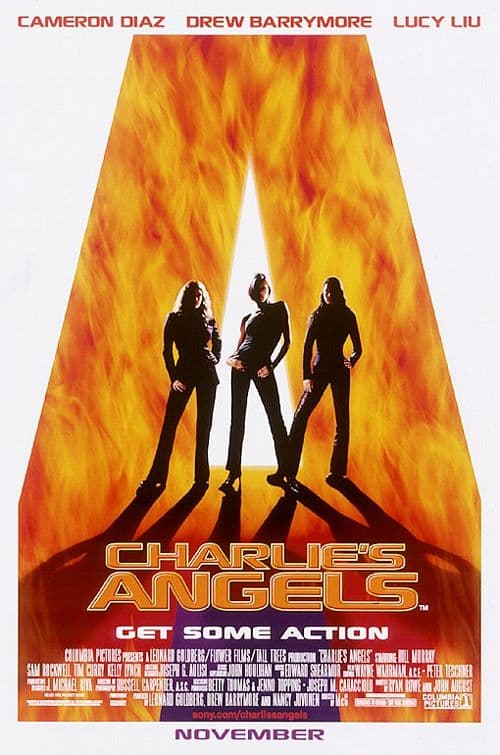
The original 1976 ABC series spawned multiple later properties: Drew Barrymore's Sony theatrical films Charlie's Angels (2000) and Charlie's Angels: Full Throttle (2003), a short-lived 2011 ABC reboot television series, and the 2019 Elizabeth Banks theatrical film. None of these subsequent properties matched the original series' cultural and commercial impact.
Who voiced Charlie in Charlie's Angels?
John Forsythe voiced the unseen Charles Townsend across all 110 episodes plus the pilot, recording his lines from a remote audio booth rather than appearing on screen. The convention of presenting Charlie only through speakerphone audio became a defining structural device of the series. Forsythe later starred as Blake Carrington on Dynasty (1981-1989), another Aaron Spelling production.
Filmmakers
Charlie's Angels

Official Trailer
Build budgets like this one in Saturation
Start from an industry-standard feature film template, import the schedule and rates you already have, and let the cost report keep itself current as you spend. Real-time collaboration, no spreadsheets.