The Iron Giant Budget
 AnimationScience FictionFamilyDrama1h 26m
Updated
Synopsis
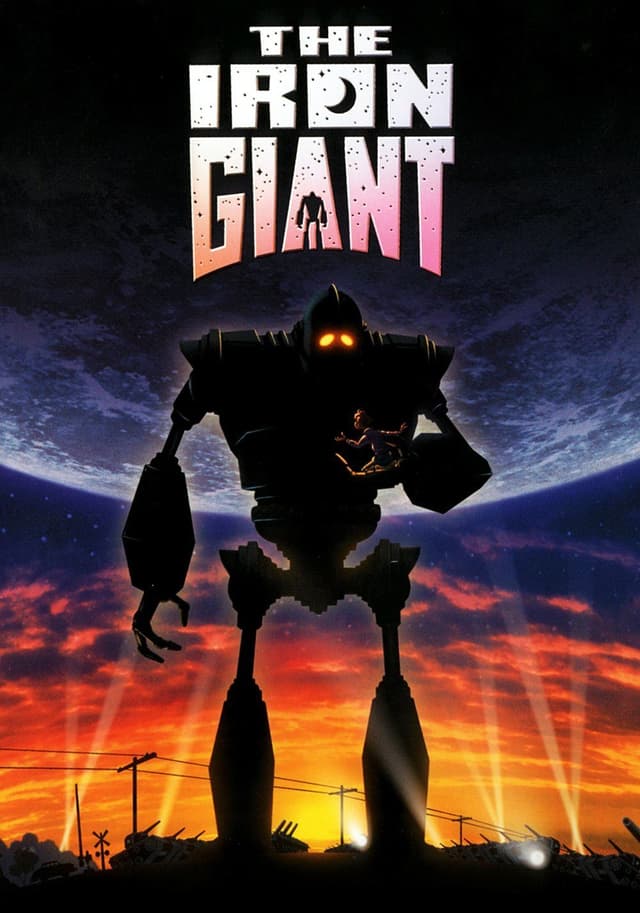
In the small town of Rockwell, Maine in October 1957, a giant metal machine befriends a nine-year-old boy and ultimately finds its humanity by unselfishly saving people from their own fears and prejudices.
What is the budget of The Iron Giant?
"The Iron Giant," a animation released in 1999, was directed by Brad Bird and stars Jennifer Aniston, Harry Connick Jr.. The production budget was $50,000,000, placing it in the mid-budget range for animation productions of the 1990s.
Key Budget Allocation Categories
While specific budget breakdowns are not publicly available, typical cost drivers for a animation production like this include:
- Animation Production Pipeline: The bulk of an animated film's budget funds the multi-year production pipeline: storyboarding, character modeling, rigging, animation, lighting, rendering, and compositing.
- Voice Talent: Celebrity voice casting has become standard for studio animation, with A-list actors earning $5 to 15 million for voice roles.
- Music, Songs & Sound Design: Original songs and orchestral scores are central to animated storytelling. Sound design for animated worlds must be created entirely from scratch.
- Writing: Tim McCanlies was hired to write the script, though Bird was somewhat displeased with having another writer on board, as he wanted to write the screenplay himself.
What were the major cost factors in The Iron Giant?
Several factors contributed to the overall production costs of "The Iron Giant."
- Animation Production Pipeline: Animation Production Pipeline is one of the primary cost drivers in animation productions of this scale.
- Voice Talent: Voice Talent is one of the primary cost drivers in animation productions of this scale.
- Music: Music, Songs & Sound Design is one of the primary cost drivers in animation productions of this scale.
How Does The Iron Giant's Budget Compare to Similar Films?
At $50,000,000, The Iron Giant sits in the mid-budget range. Here is how it compares to productions with a similar budget:
- Angela's Ashes (1999): Budget $50,000,000, Worldwide Gross $13,042,112
- Dredd (2012): Budget $50,000,000, Worldwide Gross $41,037,742
- Lord of War (2005): Budget $50,000,000, Worldwide Gross $72,600,000
- Shall We Dance? (2004): Budget $50,000,000, Worldwide Gross $170,128,460
- Casino (1995): Budget $50,000,000, Worldwide Gross $116,112,375
The median budget for wide-release animation films in the era ranges from $30 to 80M for mid-budget to $150M+ for tentpoles.
The Iron Giant Box Office Performance
"The Iron Giant" earned $23,315,035 domestically and $23,300,000 worldwide at the box office. Against a production budget of $50,000,000, the film faced challenges in theatrical release. Home video, streaming, and ancillary revenue may have contributed to its overall performance.
A film typically needs to earn approximately twice its production budget to cover marketing and distribution costs. For "The Iron Giant," that break-even threshold was roughly $100,000,000. With worldwide earnings of $23,300,000, the film did not reach break-even in theatrical release.
Box Office Breakdown
The Iron Giant

At -53.4%, "The Iron Giant" did not recoup its production budget through theatrical release alone.
The Iron Giant Production History
Tim McCanlies was hired to write the script, though Bird was somewhat displeased with having another writer on board, as he wanted to write the screenplay himself. The question of the Giant's backstory was purposefully ignored as to keep the story focused on his relationship with Hogarth. Storyboard artist Teddy Newton played an important role in shaping the film's story.
The score for the film was composed and conducted by Michael Kamen, making it the only film directed by Bird not to be scored by his future collaborator, Michael Giacchino, as of December 2024. Bird's original temp score, "a collection of Bernard Herrmann cues from '50s and '60s sci-fi films," initially scared Kamen. The score for The Iron Giant was recorded in a rather unconventional manner, compared to most films: recorded over one week at the Rudolfinum in Prague, the music was recorded without conventional uses of syncing the music, in a method Kamen described in a 1999 interview as "[being able to] play the music as if it were a piece of classical repertoire." Kamen's score for The Iron Giant won the Annie Award for Music in an Animated Feature Production on November 6, 1999..
Awards and Recognition
Won 1 BAFTA Award20 wins & 18 nominations total
- Genesis Award
Critical Reception
The Iron Giant received critical acclaim. On the review aggregator Rotten Tomatoes, it has a 96% approval rating based on 144 reviews, with an average rating of 8.20/10. The website's critical consensus reads: "The endearing Iron Giant tackles ambitious topics and complex human relationships with a steady hand and beautifully animated direction from Brad Bird." Metacritic, which uses a weighted average, assigns the film a score of 85 out of 100 based on 29 critics.
Frequently Asked Questions
How much did it cost to make The Iron Giant (1999)?
The production budget was $50,000,000, covering principal photography, visual effects, cast and crew salaries, locations, sets, post-production, and music. Marketing and distribution (P&A) costs are estimated at an additional $25,000,000 - $40,000,000, bringing the total studio investment to approximately $75,000,000 - $90,000,000.
How much did The Iron Giant (1999) earn at the box office?
The Iron Giant grossed $23,315,035 domestic, $-15,035 international, totaling $23,300,000 worldwide.
Was The Iron Giant (1999) profitable?
The film did not break even theatrically, earning $23,300,000 against an estimated $125,000,000 needed. Ancillary revenue may have improved the picture.
What were the biggest costs in producing The Iron Giant?
The primary cost drivers were above-the-line talent (Jennifer Aniston, Harry Connick Jr., Vin Diesel); multi-year animation production, celebrity voice talent, and original musical compositions.
How does The Iron Giant's budget compare to similar animation films?
At $50,000,000, The Iron Giant is classified as a mid-budget production. The median budget for wide-release animation films in the era ranges from $30 - 80M for mid-budget to $150M+ for tentpoles. Comparable budgets: Angela's Ashes (1999, $50,000,000); Dredd (2012, $50,000,000); Lord of War (2005, $50,000,000).
Did The Iron Giant (1999) go over budget?
There are no widely reported accounts of significant budget overruns for this production. However, studios rarely disclose precise budget overrun figures publicly. The reported production budget reflects the final estimated cost.
What was the return on investment (ROI) for The Iron Giant?
The theatrical ROI was -53.4%, calculated as ($23,300,000 − $50,000,000) ÷ $50,000,000 × 100. This measures gross revenue against production budget only - it does not account for P&A or exhibitor shares.
What awards did The Iron Giant (1999) win?
Won 1 BAFTA Award20 wins & 18 nominations total.
Who directed The Iron Giant and who were the key crew members?
Directed by Brad Bird, written by Tim McCanlies, Brad Bird, shot by Steven Wilzbach, with music by Michael Kamen, edited by Darren T. Holmes.
Where was The Iron Giant filmed?
The Iron Giant was filmed in United States of America.
Filmmakers
The Iron Giant

Official Trailer
Build budgets like this one in Saturation
Start from an industry-standard feature film template, import the schedule and rates you already have, and let the cost report keep itself current as you spend. Real-time collaboration, no spreadsheets.