Candyman Budget
 DramaHorrorThriller1h 40m
Updated
Synopsis
University of Illinois at Chicago graduate student Helen Lyle, researching urban legends for her thesis, becomes fascinated by the story of Candyman, a hook-handed killer said to appear when his name is called five times into a mirror. Her investigation leads her to the Cabrini-Green housing projects, where local residents tell her the legend is real. As Helen pushes deeper into the myth, she finds herself drawn into a violent and tragic history she cannot escape.
What Is the Budget of Candyman (1992)?
Candyman (1992), written and directed by Bernard Rose and distributed by TriStar Pictures, was produced on a reported budget of $9,000,000. Adapted from Clive Barker's short story "The Forbidden" (published in his Books of Blood, Volume 5), the film transposed Barker's working-class Liverpool council estate setting to the Cabrini-Green housing projects on Chicago's Near North Side, recasting the story as an investigation into urban folklore, racial fear, and the legacy of post-Reconstruction violence. PolyGram Filmed Entertainment financed the production through its Propaganda Films subsidiary, with Barker himself producing alongside Steve Golin and Sigurjon Sighvatsson.
The $9,000,000 figure was modest for a studio horror release of the era, sitting well below the typical $15,000,000 to $20,000,000 budgets carried by sequels in established slasher franchises and a fraction of the prestige horror spend on contemporaries such as Bram Stoker's Dracula. The compact budget was a deliberate strategy: Propaganda Films had built a reputation on commercials and music videos and was using genre features to break into theatrical, while TriStar saw an opportunity to test an upmarket horror property anchored by a literary source and a single iconic villain rather than a franchise-ready ensemble. The math assumed the film needed roughly $20,000,000 to $25,000,000 worldwide to clear marketing and distribution costs, a target Candyman comfortably surpassed.
Key Budget Allocation Categories
Candyman's reported $9,000,000 budget was distributed across several core production areas:
- Above-the-Line Talent: Bernard Rose, coming off the British romance Chicago Joe and the Showgirl and the Jung-inflected fantasy Paperhouse, commanded a director-writer rate appropriate to a mid-budget genre feature. Lead Virginia Madsen, cast after Sandra Bullock turned down the part, took the role at a reduced rate in part because she connected with the literary source material. Tony Todd, then known primarily for character roles in Platoon and the 1990 Night of the Living Dead remake, was cast as the title antagonist for a comparatively modest fee, with the role intended to establish him as a leading horror presence.
- Chicago Location Shoot: The production filmed extensively on location at Cabrini-Green, then one of the most notorious public housing complexes in the United States, alongside University of Illinois at Chicago campus interiors and Lincoln Park exteriors. Rose negotiated directly with Cabrini-Green residents and the Chicago Housing Authority to shoot inside occupied buildings, with gang truces brokered to allow safe access. The location work added cost relative to a soundstage shoot but anchored the film's documentary realism.
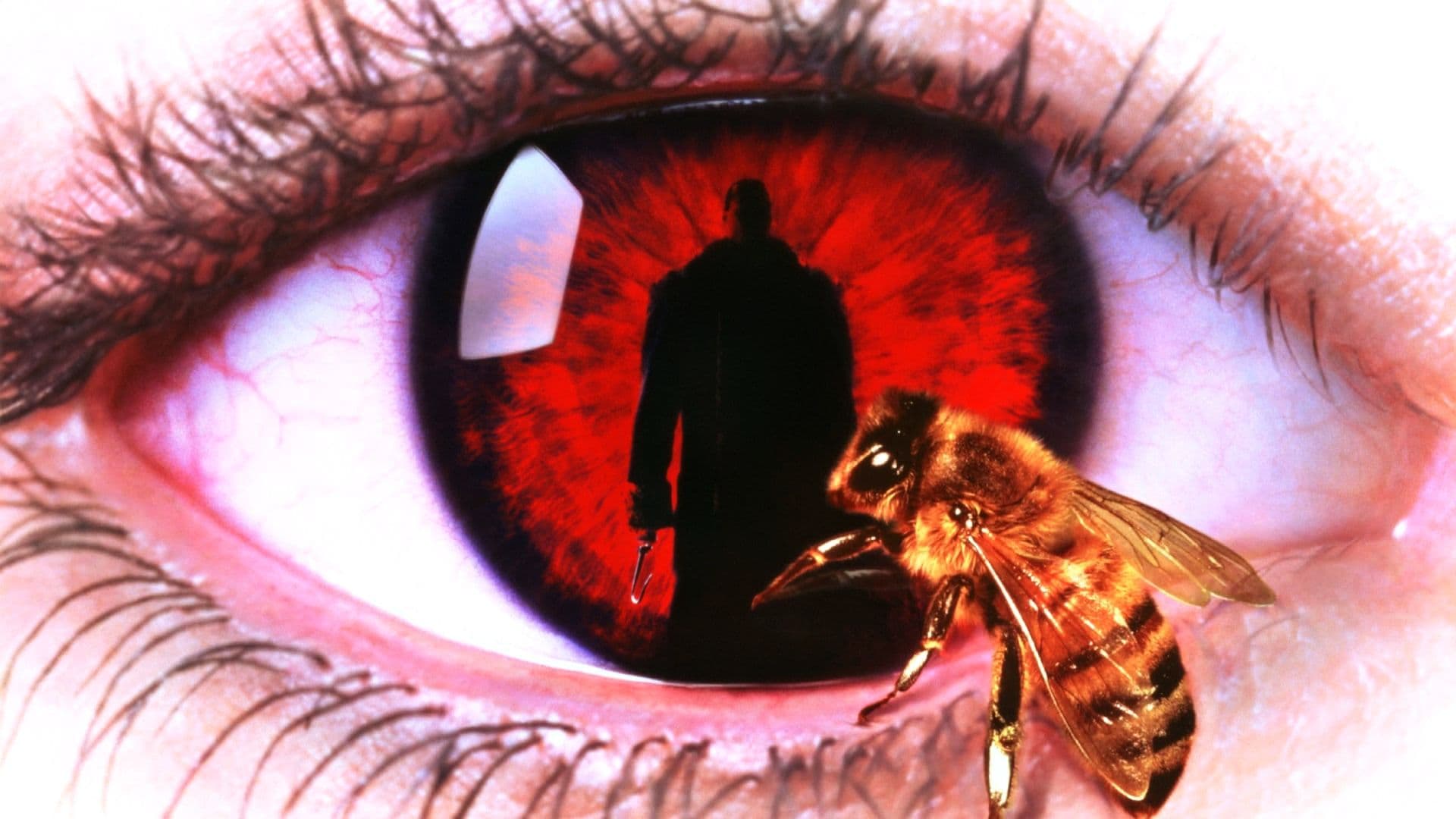
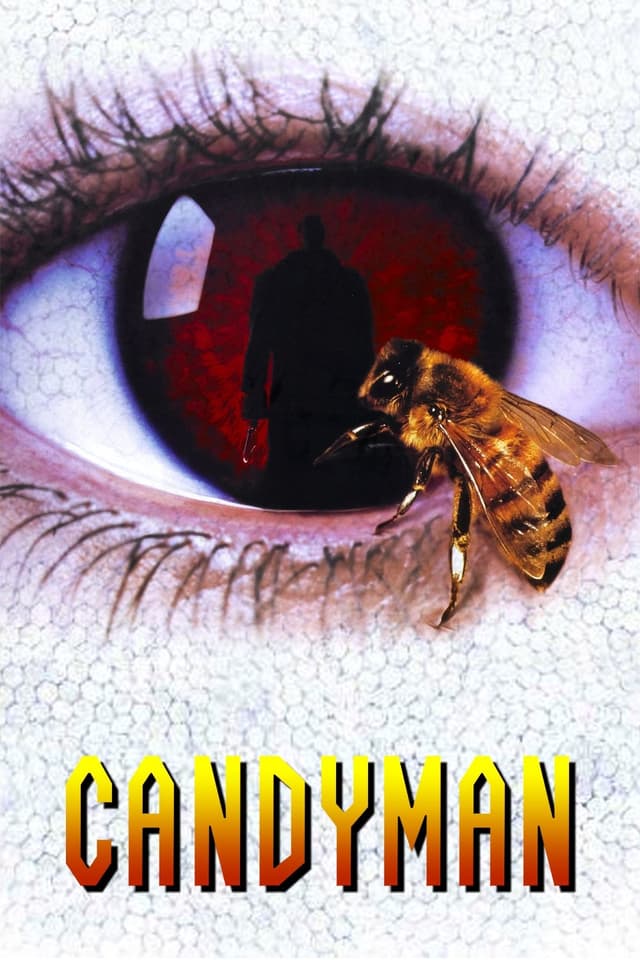
- Bee Wrangling and Practical Effects: The film's signature imagery required tens of thousands of live bees, including the famous shot of Tony Todd with bees pouring from his mouth. Bee wrangler Norman Gary, an entomologist hired from the University of California at Davis, oversaw the use of newly hatched bees (their stingers not yet fully developed) and a custom dental dam to protect Todd's mouth during filming. Animal wrangling, custom rigs, and on-set safety crew added a line item rarely seen on a horror budget of this size.
- Production Design: Production designer Jane Ann Stewart built the haunted Cabrini-Green apartment interior, including the iconic painted mural of Candyman's face behind the medicine cabinet, on a Chicago stage to allow camera flexibility while maintaining visual continuity with the location exteriors. The painted murals, bloodstained walls, and church-like void of Candyman's lair were practical builds rather than digital composites.
- Philip Glass Score: The film's budget accommodated a fully composed original score by Philip Glass, performed by organ, choir, and synthesizer. Glass, then at the height of his post-Koyaanisqatsi and Mishima reputation, accepted the assignment on the understanding that the film was a more elevated horror work. The score was recorded with full ensemble and remains one of the most celebrated music elements in the horror canon.
- Visual Effects: Practical effects, including a full-body mechanical bee suit, mirror gags, and the climactic bonfire sequence, were supervised by Bob Keen, who had previously worked with Clive Barker on Hellraiser and Nightbreed. The film used no digital effects, in keeping with the era and the deliberately tactile aesthetic.
- Post-Production: Editor Dan Rae cut the film over an extended post period in London, working closely with Rose on the rhythm of the dream-logic sequences. Sound design, organ-recording sessions for the Glass score, and final mix were completed in 1992 ahead of the October theatrical release.
How Does Candyman's Budget Compare to Similar Films?
At $9,000,000, Candyman sits among the leanest studio horror releases of the early 1990s. The comparison set illustrates how its commercial and cultural outcome diverged from peers with similar or higher budgets:
- Hellraiser (1987): Budget $1,000,000 | Worldwide $14,564,027. Clive Barker's directorial debut cost roughly one ninth of Candyman and earned a similar multiple of its budget, establishing the commercial template for elevated literary horror that Candyman followed five years later with significantly higher production values.
- Bram Stoker's Dracula (1992): Budget $40,000,000 | Worldwide $215,862,692. Francis Ford Coppola's prestige horror release the same month as Candyman cost more than four times as much and grossed nearly nine times its worldwide haul, illustrating the very different scales at which gothic horror operated in 1992.
- Wes Craven's New Nightmare (1994): Budget $14,000,000 | Worldwide $19,793,915. New Line's meta-revival of the Nightmare on Elm Street series cost half again as much as Candyman and finished with a smaller worldwide gross, despite the established franchise brand. Candyman's standalone literary origin proved more durable than the seventh Freddy Krueger feature.
- The Silence of the Lambs (1991): Budget $19,000,000 | Worldwide $272,742,922. Jonathan Demme's Best Picture winner cost just over twice Candyman's budget and showed that adult, literary horror-thrillers could break out commercially when adapted with craft, a template TriStar believed Candyman could ride.
- Misery (1990): Budget $20,000,000 | Worldwide $61,276,872. Rob Reiner's Stephen King adaptation, another contained psychological horror picture released two years earlier, set the floor for what literary horror could earn with a single antagonist and a constrained location.
- Candyman (2021): Budget $25,000,000 | Worldwide $77,361,925. Nia DaCosta's Jordan Peele-produced spiritual sequel cost nearly three times the original and earned more than 1.5x its predecessor's worldwide gross, validating the property's long-term franchise potential.
Candyman Box Office Performance
Candyman opened on October 16, 1992, debuting at number one at the United States box office with $5,403,929 over its opening weekend from 1,000 screens. That figure beat out the second-weekend hold of Last of the Mohicans and signaled unexpected commercial strength for a literary horror release competing against Bram Stoker's Dracula a month later in the same season. The film legged out through Halloween and into November, finishing its domestic run at $25,792,310.
Against a reported production budget of $9,000,000, the film needed approximately $20,000,000 to $25,000,000 in worldwide gross to reach profitability when accounting for marketing and distribution costs. Here is the financial breakdown:
Box Office Breakdown
Candyman

Candyman returned approximately $1.07 to $1.23 in theatrical revenue for every $1 invested when measured against total estimated production and marketing spend, a modest theatrical profit that was significantly extended by VHS, cable, and home video revenue across the 1993 and 1994 window. The film became a Halloween perennial on premium cable, eventually generating multiples of its theatrical gross in ancillary income.
The commercial success greenlit a franchise. PolyGram and TriStar moved quickly to develop Candyman: Farewell to the Flesh, released in 1995 with Tony Todd reprising the role under Bill Condon's direction, followed by the direct-to-video Candyman: Day of the Dead in 1999. Nearly three decades later, Universal and MGM revived the property with the Jordan Peele-produced 2021 reboot, which grossed $77,361,925 worldwide against a $25,000,000 budget.
Candyman Production History
Clive Barker pitched the adaptation of his short story "The Forbidden" to Propaganda Films co-founder Steve Golin in 1989, attaching Bernard Rose, a friend from the British film scene, to write and direct. Rose's screenplay made the single most consequential creative decision of the production: relocating the story from a Liverpool council estate to Chicago's Cabrini-Green and rewriting the title antagonist as the ghost of a Black artist murdered in 1890 for fathering a child with a white woman. The change transformed Barker's class-anxiety horror story into an American myth about racial violence, gentrification, and the way urban folklore encodes historical trauma.
Principal photography began in March 1992 across Chicago, Illinois. The production shot exteriors and selected interiors at the Cabrini-Green Homes on the Near North Side, working with the Chicago Housing Authority and negotiating directly with building residents and rival gang factions to secure safe access. Producer Alan Poul recalled that the production paid residents above standard location rates and contributed to community programs as part of the access arrangement. The University of Illinois at Chicago campus stood in for the academic exteriors, and additional Chicago locations included the Eastland Disaster memorial, the Lincoln Park area, and a Gold Coast condominium standing in for Helen and Trevor Lyle's apartment.
Casting Virginia Madsen as graduate student Helen Lyle came after Sandra Bullock passed on the role to film Demolition Man. Madsen, who had been working steadily since Class (1983) and Dune (1984), accepted at a reduced rate and underwent on-set hypnosis sessions with the production hypnotist to access the disoriented, dream-like state required for the character's descent. Tony Todd, cast as Daniel Robitaille / Candyman, was paid a $1,000 bonus for each bee sting he absorbed during the bee-wrangling sequences, ultimately earning approximately $23,000 in stinger bonuses according to multiple interviews. Bee wrangler Norman Gary fitted Todd with a custom dental dam to keep bees from entering his throat during the close-up mouth shots.
Philip Glass scored the film under the impression he was working on a higher-end art-horror picture, and was reportedly disappointed when he saw the finished film positioned as a mainstream genre release. The score was recorded with full pipe organ, choir, and synthesizer in London and remains one of the few horror scores from the era to receive consistent classical concert programming. The original ending, which depicted a more ambiguous fate for Helen, was reworked in post-production after test screenings, and a more violent finale involving the Cabrini-Green bonfire was assembled from existing coverage.
Bernard Rose also served as cinematographer on the film, an unusual director-DP combination that gave the documentary-influenced shooting style its consistency. The film wrapped principal photography in late spring 1992 and was edited in London for a fall release, with TriStar marketing the picture aggressively in the urban contemporary press and on MTV ahead of its October 16, 1992 debut.
Awards and Recognition
Candyman received targeted genre and festival recognition that has expanded significantly over time. At the 1993 Fangoria Chainsaw Awards, the film won Best Wide-Release Film and Best Actor for Tony Todd, with additional nominations for Best Make-Up and Best Director. The Academy of Science Fiction, Fantasy and Horror Films nominated the film for three Saturn Awards in 1993: Best Horror Film, Best Actress for Virginia Madsen, and Best Writing for Bernard Rose. Madsen also took home the Best Actress award at the 1993 International Fantasy Film Award at Fantasporto.
Philip Glass's score has been the most enduringly recognized element. The main title theme has been performed in standalone Glass orchestral programs and was selected for the American Film Institute's ongoing programming of significant horror scores. In 2018, the British Film Institute included Candyman in its programming of the most influential American horror films of the 1990s, and the Library of Congress has received multiple academic submissions advocating for the film's addition to the National Film Registry on the basis of its cultural and historical significance.
Tony Todd's performance has been the subject of retrospective recognition across the 2010s and 2020s. The Black Reel Awards Foundation honored him in 2021 for his contribution to Black horror cinema, citing the original Candyman as the role that defined his career. Todd's death in November 2024 prompted further tributes naming Candyman as one of the defining horror performances of the post-1980s era.
Critical Reception
Candyman received broadly positive reviews on release and has been substantially reappraised upward in the decades since. The film holds an 80% approval rating on Rotten Tomatoes based on 64 critic reviews, with a critical consensus that praises Bernard Rose's atmospheric direction, Philip Glass's score, and Tony Todd's magnetic performance as the title antagonist. On Metacritic, the film scores 67 out of 100, indicating generally favorable reviews. Audiences surveyed by CinemaScore at the time of release gave the film a B, a respectable mark for an unflinching horror release from a first-time American director.
Roger Ebert, reviewing for the Chicago Sun-Times, gave the film three and a half stars out of four and wrote that "Candyman is a horror movie that does what horror movies are supposed to do, which is to invent a frightening situation and pursue it relentlessly." Ebert singled out the Cabrini-Green location work and Glass's score, calling the film "above-average horror, well-acted and intelligent." Janet Maslin in The New York Times described it as "a horror film with genuine creepiness and the kind of social observation that gives the genre an extra dimension." Variety's Todd McCarthy noted the film's "highly visceral impact" and Tony Todd's "imposing presence."
Subsequent academic and critical reassessment has positioned Candyman as a landmark in the conversation about race, urban space, and horror iconography. Robin R. Means Coleman's book Horror Noire devotes significant analysis to the film's treatment of Cabrini-Green and the Daniel Robitaille backstory. Jordan Peele and Nia DaCosta have cited the original as the direct inspiration for the 2021 reboot, and the Criterion Channel has programmed it in multiple themed series since 2019. The film's reputation has grown from a respected genre release into one of the most widely studied American horror films of the 1990s.
Frequently Asked Questions
How much did it cost to make Candyman (1992)?
The reported production budget was $9,000,000. The film was financed by PolyGram Filmed Entertainment through its Propaganda Films subsidiary and distributed theatrically by TriStar Pictures. The budget was modest for a studio horror release of the era, sitting well below the typical $15,000,000 to $20,000,000 budgets of contemporary slasher franchise sequels.
How much did Candyman (1992) earn at the box office?
The film grossed $25,792,310 domestically in the United States. International figures were not separately reported in major tracking databases, with the domestic total widely cited as the worldwide gross. It opened at number one on October 16, 1992 with $5,403,929 from 1,000 screens.
Was Candyman a box office success?
Yes. Against a $9,000,000 production budget and an estimated $12,000,000 to $15,000,000 in marketing spend, the film returned a modest theatrical profit and went on to generate significant ancillary revenue through VHS, cable, and home video. The commercial success greenlit Candyman: Farewell to the Flesh (1995), Candyman: Day of the Dead (1999), and the 2021 reboot.
Who directed Candyman (1992)?
Bernard Rose directed the film and also served as cinematographer and screenwriter. He adapted the screenplay from Clive Barker's short story "The Forbidden," published in Books of Blood, Volume 5. Rose came to the project off the British romance Chicago Joe and the Showgirl (1990) and the Jung-inflected fantasy Paperhouse (1988).
Where was Candyman filmed?
Principal photography took place in Chicago, Illinois in March and April 1992. The production shot extensively on location at the Cabrini-Green Homes on the Near North Side, working with the Chicago Housing Authority and negotiating directly with residents and gang factions for safe access. The University of Illinois at Chicago campus stood in for academic exteriors, with additional locations in Lincoln Park and the Gold Coast.
Who plays Candyman in the 1992 film?
Tony Todd plays Daniel Robitaille, the ghost of a 19th-century Black artist murdered for fathering a child with a white woman, who returns as the hook-handed antagonist known as Candyman. Todd was reportedly paid a $1,000 bonus for each bee sting he absorbed during filming of the bee-wrangling sequences, earning approximately $23,000 in stinger bonuses.
Who composed the Candyman score?
Philip Glass composed the original score, performed by pipe organ, choir, and synthesizer. Glass accepted the assignment on the understanding that the film was a more elevated art-horror picture, and was reportedly disappointed when he saw it positioned as a mainstream genre release. The score has since become one of the most celebrated and frequently programmed horror scores in classical concert settings.
How does Candyman (1992) compare to Hellraiser?
Both films were adapted from Clive Barker source material, but Candyman cost nine times as much as Hellraiser (1987), which was made for $1,000,000. Hellraiser grossed $14,564,027 worldwide while Candyman grossed $25,792,310, with Candyman delivering significantly higher production values, a Chicago location shoot, and a Philip Glass score that Hellraiser's lower-budget construction could not accommodate.
What did critics think of Candyman (1992)?
The film received broadly positive reviews and has been substantially reappraised upward over time. It holds an 80% approval rating on Rotten Tomatoes based on 64 critics, a 67 out of 100 score on Metacritic, and audiences gave it a B CinemaScore. Roger Ebert awarded three and a half out of four stars, and Janet Maslin in The New York Times praised it as "a horror film with genuine creepiness."
Did Candyman win any awards?
Candyman won Best Wide-Release Film and Best Actor for Tony Todd at the 1993 Fangoria Chainsaw Awards. It received three Saturn Award nominations, including Best Horror Film, Best Actress for Virginia Madsen, and Best Writing. Virginia Madsen won Best Actress at the 1993 Fantasporto International Fantasy Film Award. Tony Todd received retrospective recognition from the Black Reel Awards Foundation in 2021.
Filmmakers
Candyman

Official Trailer
Build budgets like this one in Saturation
Start from an industry-standard feature film template, import the schedule and rates you already have, and let the cost report keep itself current as you spend. Real-time collaboration, no spreadsheets.