Bee Movie Budget
 FamilyAnimationAdventureComedy1h 31m
Updated
Synopsis
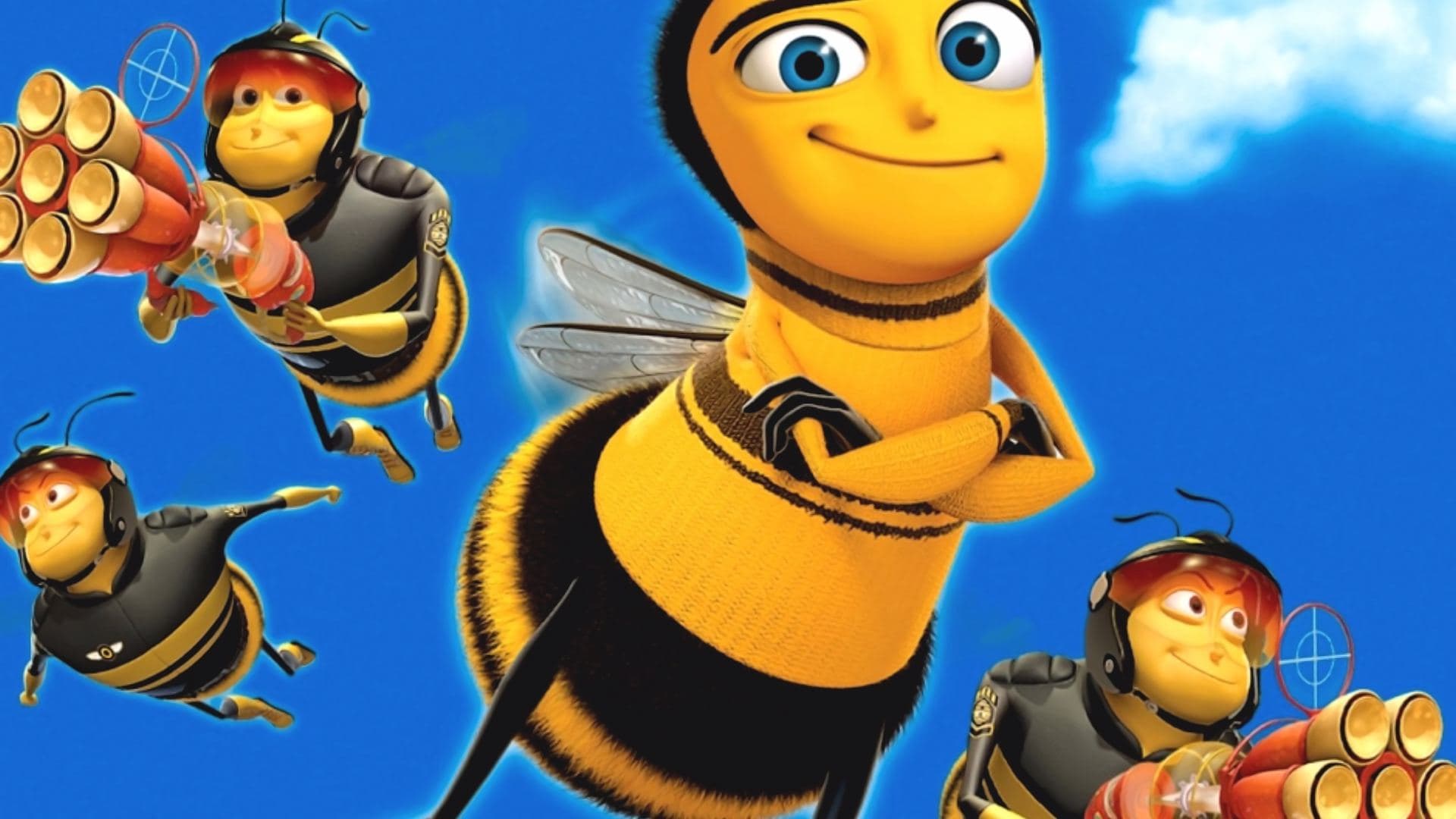
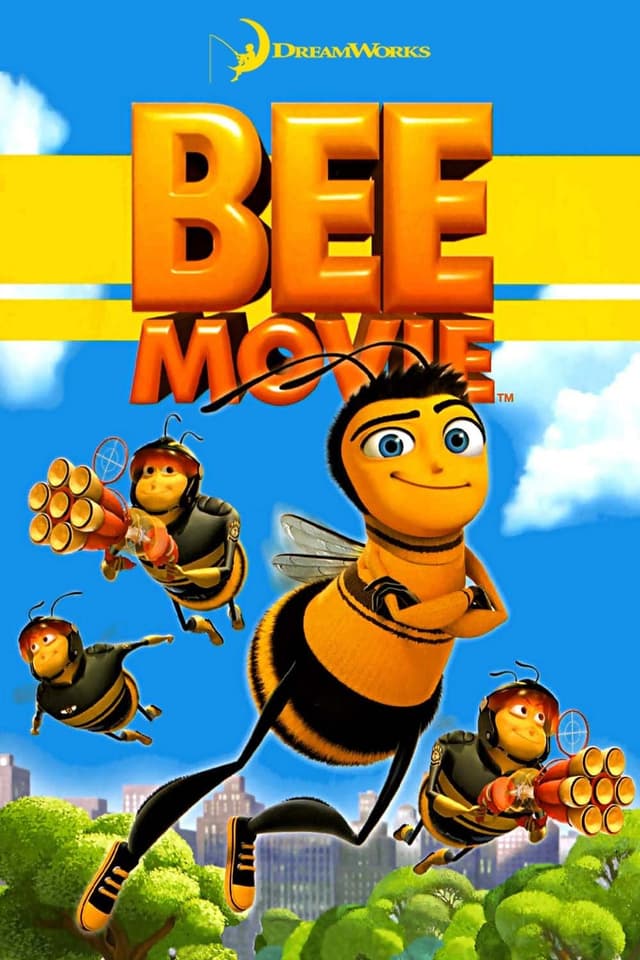
Barry B. Benson, a college graduate bee disillusioned at the prospect of a single career inside the hive, ventures into the human world and befriends a Manhattan florist named Vanessa. After discovering that humans harvest and sell honey, Barry sues the human race in federal court, with consequences for both species that he could not have foreseen.
What Is the Budget of Bee Movie (2007)?
Bee Movie (2007), directed by Simon J. Smith and Steve Hickner and distributed by Paramount Pictures, was produced by DreamWorks Animation on a reported budget of $150,000,000. The film originated as a Jerry Seinfeld passion project, conceived during a 2003 conversation with Steven Spielberg at a dinner party where Seinfeld pitched the pun-driven title and Spielberg, then a partner at DreamWorks, encouraged him to develop it as an animated feature. Seinfeld served as co-writer, lead voice actor, and producer, making the film one of the most heavily promoted star vehicles in the studio's history.
The $150,000,000 investment placed Bee Movie at the high end of DreamWorks Animation's 2007 slate, on par with Shrek the Third's reported $160,000,000 and well above earlier studio efforts such as Shark Tale ($75,000,000) and Madagascar ($75,000,000). The figure reflected the rising cost of CG animation pipelines, four years of development, the lavish marketing push built around Seinfeld's first major project since his sitcom ended in 1998, and an extensive ensemble voice cast that included Renée Zellweger, Matthew Broderick, John Goodman, Chris Rock, Patrick Warburton, and Kathy Bates.
Key Budget Allocation Categories
Bee Movie's reported $150,000,000 budget was distributed across several core production areas:
- Above-the-Line Talent: Jerry Seinfeld received a substantial producing fee, a writing credit, and back-end participation on top of his voice acting compensation, reflecting his status as the creative driver and public face of the project. The voice ensemble featured Renée Zellweger, Matthew Broderick, John Goodman, Chris Rock, Kathy Bates, Patrick Warburton, Megan Mullally, Rip Torn, Larry King, Sting, and Ray Liotta, each commanding rates appropriate to their A-list or established TV-comedy profile.
- Animation Pipeline: DreamWorks Animation animated the film at its Glendale, California studio using its proprietary pipeline, with character rigging, lighting, and rendering all handled in-house. The bee characters required custom rigs for their compound eyes, translucent wings, and four-leg locomotion, and crowd scenes inside the hive demanded large-scale instanced animation that pushed the studio's technical capacity.
- Development and Story: The film spent roughly four years in development, with Seinfeld co-writing the screenplay alongside Spike Feresten, Barry Marder, and Andy Robin, all veterans of the Seinfeld writers' room. Multiple story passes, table reads, and animatic iterations accumulated significant development costs before principal animation began.
- Visual Effects and Environments: The film alternates between hive interiors, suburban New York exteriors, a Central Park flower meadow, and a third-act flight sequence involving a plane interior, all requiring detailed environment builds. Honey simulation, wing flap dynamics, and pollen particle effects were handled by the in-house effects team.
- Score and Music: Composer Rupert Gregson-Williams delivered an orchestral score, and the soundtrack included needle drops by The Beatles ("Here Comes the Sun"), Sheryl Crow ("Sweet Beginnings"), and a closing song co-written and performed by Bebe Neuwirth. Licensing costs for the Beatles catalog alone consume a notable share of any soundtrack budget.
- Marketing Saturation: While the marketing budget is separate from production, Paramount and DreamWorks spent an estimated $50,000,000 to $70,000,000 in North America alone, including a custom-produced Saturday Night Live promotional short, a Larry King Live appearance, a "Real Bee" mockumentary press tour in which Seinfeld appeared in bee costume in cities around the world, and a tie-in with the NBC sitcom 30 Rock. The campaign was reportedly the most aggressive of the studio's history at the time.
- Theatrical 3D and Print Distribution: Bee Movie released wide on more than 3,900 screens in North America, requiring a large print and shipping outlay for the era, several months before the industry began converting more heavily to digital cinema. International dubbing into more than thirty languages added further post-production cost.
How Does Bee Movie's Budget Compare to Similar Films?
At a reported $150,000,000, Bee Movie sat near the upper end of CG-animated tentpoles released in 2007 and 2008. The comparison set illustrates how its commercial outcome and creative reputation diverged from its budgetary peers:
- Shrek the Third (2007): Budget $160,000,000 | Worldwide $813,367,380. The other DreamWorks Animation release of 2007 cost only $10,000,000 more and earned nearly three times Bee Movie's worldwide gross, demonstrating both the franchise premium attached to Shrek and the ceiling on a star-led original concept.
- Ratatouille (2007): Budget $150,000,000 | Worldwide $623,722,818. Pixar's same-year, same-budget release about an unusual animal protagonist out-earned Bee Movie by more than 2x worldwide while also winning the Best Animated Feature Oscar, the comparison point that most clearly defines Bee Movie's artistic and commercial gap.
- Shark Tale (2004): Budget $75,000,000 | Worldwide $374,583,879. DreamWorks Animation's earlier celebrity-voice-driven aquatic comedy cost half as much and out-grossed Bee Movie by $80,000,000 worldwide, suggesting the studio's 2004 formula scaled better than its 2007 reprise.
- Madagascar (2005): Budget $75,000,000 | Worldwide $542,063,846. A non-celebrity-led DreamWorks Animation original about animals that cost half of Bee Movie nearly doubled its worldwide gross, becoming a four-film franchise while Bee Movie generated no sequels.
- Kung Fu Panda (2008): Budget $130,000,000 | Worldwide $631,744,560. The studio's next major original concept, released six months after Bee Movie, cost less, earned more than twice as much worldwide, and spawned a franchise that has continued for nearly two decades.
- Megamind (2010): Budget $130,000,000 | Worldwide $321,887,663. A later DreamWorks Animation star-led original (Will Ferrell, Tina Fey, Brad Pitt) grossed only marginally more than Bee Movie on a $20,000,000 smaller budget, reinforcing that celebrity voice casting alone could not consistently produce the studio's strongest commercial performers.
Bee Movie Box Office Performance
Bee Movie opened on November 2, 2007 across 3,928 North American theaters, finishing second on its opening weekend with $38,021,044, behind Ridley Scott's American Gangster ($43,565,115). The opening was solid for a non-sequel family release but significantly trailed the $121,629,270 opening that Shrek the Third had delivered for DreamWorks Animation six months earlier. The film displayed family-audience legs through Thanksgiving but never moved to the top of the chart.
Against a reported production budget of $150,000,000, the film needed approximately $300,000,000 in worldwide gross to reach profitability when accounting for marketing and distribution costs. Here is the financial breakdown:
Box Office Breakdown
Bee Movie

Bee Movie returned approximately $1.22 in theatrical revenue for every $1 invested when measured against total estimated production and marketing spend, a slim positive result that placed it in the modestly profitable category once home video, television sales, and merchandising were folded in. The domestic share of the gross was $126,631,277 against an international share of $166,971,396, a 43/57 split that was unusual for the studio, with foreign markets out-earning North America.
The result was a disappointment relative to expectations set by Shrek the Third earlier in the year, and Jeffrey Katzenberg publicly acknowledged that Bee Movie underperformed the studio's internal targets. No theatrical sequel was developed, although a short film, Bee Movie Game tie-in, and television specials followed. The picture's true commercial second act arrived later, when meme culture transformed the screenplay into one of the most circulated comedic texts of the 2010s internet.
Bee Movie Production History
Bee Movie originated in 2003 when Jerry Seinfeld, attending a dinner at Steven Spielberg's home, casually pitched a pun-driven film title to Spielberg, then a principal at DreamWorks. Spielberg encouraged Seinfeld to actually make it, and Seinfeld signed on as co-writer, lead voice, and producer. It was Seinfeld's first major creative project since the sitcom Seinfeld ended in 1998, and DreamWorks Animation built the marketing campaign around his decade-long absence from the entertainment industry.
The screenplay was co-written by Seinfeld with Spike Feresten, Barry Marder, and Andy Robin, three writers who had collaborated with Seinfeld on his sitcom and stand-up specials. Co-directors Simon J. Smith and Steve Hickner anchored the animation team, with Hickner having previously directed The Prince of Egypt for DreamWorks and Smith having served as an animator on Shrek and Shark Tale. Development ran roughly four years from initial pitch to release, an unusually long arc for a DreamWorks Animation feature of the period.
All animation, lighting, rendering, and post-production work was completed in-house at DreamWorks Animation's Glendale, California campus using the studio's proprietary pipeline. Voice recording sessions took place primarily in Los Angeles and New York, with Seinfeld personally directing many of the ensemble sessions and bringing in his Seinfeld sitcom collaborators to refine timing and joke architecture. The film was the studio's first feature to use a new in-house lighting system that supported the soft, translucent look required for the bee characters and their wing transparency.
The marketing campaign was unusual in scale and approach. Seinfeld appeared in a yellow-and-black striped bee costume in promotional events in Cannes (where he was carried into the festival on wires), New York, and other cities, and starred in a series of "Bee Movie Juniors" short interstitials that aired on NBC. He hosted a Saturday Night Live episode promoting the film, and the press tour leaned into Seinfeld's mid-career reentry as much as the picture itself, a strategy that some critics later argued overshadowed the film's actual content.
Awards and Recognition
Bee Movie received one Golden Globe nomination for Best Motion Picture, Animated, where it lost to Pixar's Ratatouille. The film was nominated at the Annie Awards in several technical categories, including Music in an Animated Feature Production for Rupert Gregson-Williams, but did not win any of its Annie nominations.
The film received no Academy Award nominations. The 2008 Best Animated Feature Oscar was won by Ratatouille, with Persepolis and Surf's Up rounding out the category, and Bee Movie was not shortlisted. It was also overlooked by the BAFTAs and the Critics' Choice Awards in their animated categories.
Bee Movie's most durable form of recognition has arrived outside the formal awards circuit. The film's opening monologue, "According to all known laws of aviation, there is no way a bee should be able to fly," became one of the most quoted opening lines in 21st century animated film, and the entire screenplay has been adapted into Tumblr posts, YouTube videos sped up or slowed down to extreme degrees, Discord copypastas, and TikTok edits, generating a sustained second life for the property that few of its 2007 contemporaries can match.
Critical Reception
Bee Movie received mixed reviews. The film holds a 49% approval rating on Rotten Tomatoes based on 174 critic reviews, with a critical consensus that called it amiable and watchable but lacking the wit and emotional depth of the year's strongest animated releases. On Metacritic, the film scored 54 out of 100, indicating mixed or average reviews. Audiences surveyed by CinemaScore gave the film a B+, a respectable family-audience grade but lower than the A or A- received by most DreamWorks Animation tentpoles of the period.
Critics broadly praised the voice ensemble, the visual design of the hive interiors, and several specific gag sequences (notably a courtroom set piece in the third act where a bee attempts to sue the human race for honey theft), but objected to the uneven pacing, the climactic ecological disaster premise that some reviewers called both confusing and tonally dissonant, and the romantic subplot between Seinfeld's Barry B. Benson and Renée Zellweger's human florist Vanessa, which many critics found strange. Roger Ebert gave the film three stars out of four and praised its visual energy, while The New York Times' Manohla Dargis wrote that Bee Movie "is so deeply enamored of its own punning premise that it forgets to actually be funny for stretches at a time."
Reception evolved dramatically over the following decade. Beginning around 2014, the screenplay became a touchstone of meme culture, with users on Tumblr, Reddit, and YouTube circulating the full script as ironic copypasta and sharing edits of the film sped up or slowed by extreme factors. The "according to all known laws of aviation" opening monologue, the courtroom climax, and the Vanessa/Barry interspecies relationship all became cultural shorthand. Whether the meme afterlife reflects affection or amused condescension remains a matter of debate, but Bee Movie's post-release cultural footprint substantially exceeds the relatively muted reception it received in November 2007.
Frequently Asked Questions
How much did it cost to make Bee Movie (2007)?
The reported production budget was $150,000,000, placing Bee Movie at the high end of DreamWorks Animation's 2007 slate, in line with Shrek the Third's $160,000,000 budget and Pixar's Ratatouille at $150,000,000. The figure covered roughly four years of development, an extensive A-list voice cast led by Jerry Seinfeld, and a CG animation pipeline run at DreamWorks Animation's Glendale, California campus.
How much did Bee Movie earn at the box office?
The film grossed $126,631,277 domestically and $166,971,396 internationally for a worldwide total of $293,602,673. It opened on November 2, 2007 to $38,021,044 across 3,928 North American theaters, finishing second on its opening weekend behind Ridley Scott's American Gangster.
Was Bee Movie profitable?
Yes, modestly. Against a $150,000,000 production budget and an estimated $80,000,000 to $100,000,000 in marketing spend, Bee Movie returned roughly $1.22 in worldwide theatrical gross for every $1 invested. Once home video, television sales, and merchandising were included it cleared a small profit, but the film fell well short of DreamWorks Animation's internal expectations set by Shrek the Third earlier in 2007.
Who directed Bee Movie?
Bee Movie was co-directed by Simon J. Smith and Steve Hickner. Hickner had previously directed The Prince of Egypt (1998) for DreamWorks, and Smith had worked as an animator on Shrek and Shark Tale before stepping up to direct. Jerry Seinfeld served as a producer, co-writer, and lead voice actor, and is widely considered the project's primary creative driver.
How did Bee Movie originate?
The project began at a 2003 dinner at Steven Spielberg's house, where Jerry Seinfeld pitched the pun-driven title as a joke. Spielberg, then a partner at DreamWorks, encouraged Seinfeld to actually develop it as an animated feature. It became Seinfeld's first major creative project after his sitcom Seinfeld ended in 1998, and DreamWorks Animation built the marketing campaign around his return.
How does Bee Movie compare to Ratatouille?
Both films released in 2007 with reported $150,000,000 budgets, but Ratatouille grossed $623,722,818 worldwide compared with Bee Movie's $293,602,673, more than doubling its haul. Ratatouille also won the Academy Award for Best Animated Feature, while Bee Movie received only a Golden Globe nomination. The two films are often paired as the defining 2007 animal-protagonist comparison and a case study in CG-animation craft.
Why is the Bee Movie script a meme?
Beginning around 2014, internet users on Tumblr, Reddit, and YouTube began circulating the film's entire screenplay as ironic copypasta and sharing edits of the film sped up or slowed by extreme factors (most famously, "Bee Movie but every time they say bee it gets faster"). The opening monologue, "According to all known laws of aviation, there is no way a bee should be able to fly," became one of the most quoted lines in 21st century animation, and the Vanessa and Barry interspecies relationship became a recurring punchline in meme culture.
Who voiced the characters in Bee Movie?
Jerry Seinfeld voiced lead character Barry B. Benson, with Renée Zellweger as the human florist Vanessa, Matthew Broderick as Barry's best friend Adam Flayman, John Goodman as the prosecuting attorney, Chris Rock as a mosquito named Mooseblood, Kathy Bates as Barry's mother, Patrick Warburton as Vanessa's human boyfriend Ken, and a deep supporting bench including Megan Mullally, Rip Torn, Larry King, Sting, and Ray Liotta.
Where was Bee Movie animated?
All animation, lighting, rendering, and post-production work was completed in-house at DreamWorks Animation's Glendale, California campus using the studio's proprietary CG pipeline. Voice recording sessions took place in Los Angeles and New York. The film was the studio's first feature to use a new in-house lighting system designed to support the soft, translucent look of the bee characters and their wing transparency.
What did critics think of Bee Movie?
Bee Movie received mixed reviews, with a 49% approval rating on Rotten Tomatoes (based on 174 critics) and a 54 out of 100 score on Metacritic. Audiences gave it a B+ CinemaScore. Critics praised the voice ensemble and several gag sequences but criticized the uneven pacing, the eco-disaster premise, and the unusual Barry/Vanessa romantic subplot. Roger Ebert gave it three stars out of four; The New York Times said it was "so deeply enamored of its own punning premise that it forgets to actually be funny."
Filmmakers
Bee Movie

Official Trailer
Production budgeting
Build budgets like this one
The same engine behind these numbers: draft with the agent, import from anywhere, and report as you spend.
Budget Engine 2.0
Your budget, your cost report and every export run on one engine.
PhasesRebuilt
Every column knows its type.
Universal imports
Movie Magic, Excel and any table you can export. Seconds, not hours.



Reports
Drag blocks onto the page and split a row in two.
Prompt to budget
Describe it. Get the budget.
Powerful filtering
Filter on dates, vendors or tags.
Build your own production budget
Create professional budgets with industry-standard feature film templates. Real-time collaboration, no spreadsheets.