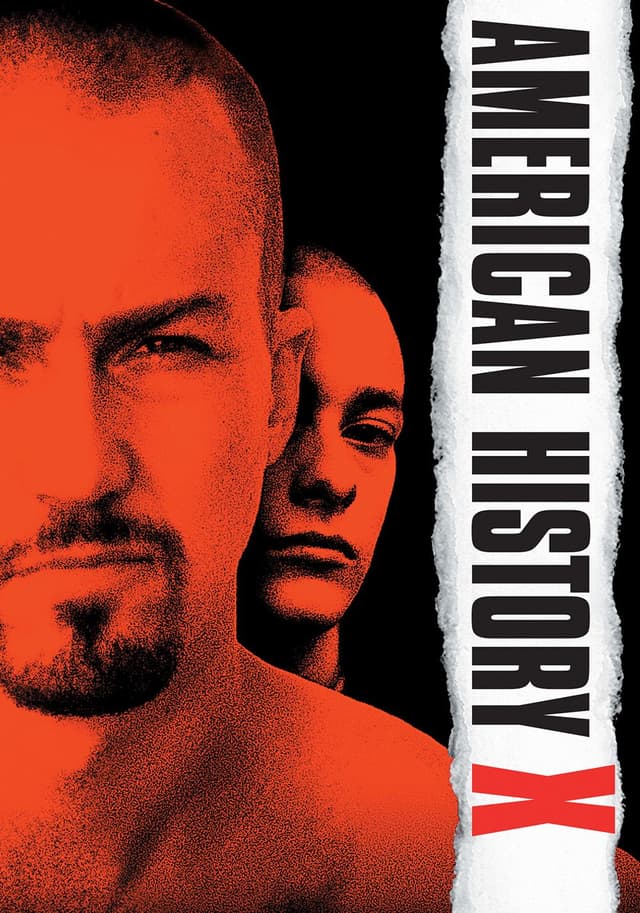
American History X Budget
 Drama1h 59m
Updated
Synopsis
Derek Vineyard is paroled after serving 3 years in prison for brutally killing two black men who tried to break into/steal his truck. Through his brother's, Danny Vineyard, narration, we learn that before going to prison, Derek was a skinhead and the leader of a violent white supremacist gang that committed acts of racial crime throughout L.A. and his actions greatly influenced Danny. Reformed and fresh out of prison, Derek severs contact with the gang and becomes determined to keep Danny from going down the same violent path as he did.
What is the budget of American History X?
"American History X," a drama released in 1998, was directed by Tony Kaye and stars Edward Norton, Edward Furlong. The production budget was $20,000,000, placing it in the mid-budget range for drama productions of the 1990s.
Key Budget Allocation Categories
While specific budget breakdowns are not publicly available, typical cost drivers for a drama production like this include:
- Above-the-Line Talent: Drama films live or die on the strength of their performances.
- Location Filming & Period Production Design: Authentic locations , whether contemporary or historical , require scouting, permits, travel, lodging, and often significant dressing to match the story's time period.
- Post-Production, Color Grading & Score: The editorial process for dramas is typically longer than genre films, with careful attention to pacing and tone.
- Development: alt=Michael De Luca, former president of productions at New Line Cinema|Screenwriter David McKenna wrote the screenplay for American History X and sold the rights to New Line Cinema when he was 26.
What were the major cost factors in American History X?
Several factors contributed to the overall production costs of "American History X."
- Above-the-Line Talent: Above-the-Line Talent is one of the primary cost drivers in drama productions of this scale.
- Location Filming: Location Filming & Period Production Design is one of the primary cost drivers in drama productions of this scale.
- Post-Production: Post-Production, Color Grading & Score is one of the primary cost drivers in drama productions of this scale.
How Does American History X's Budget Compare to Similar Films?
At $20,000,000, American History X sits in the mid-budget range. Here is how it compares to productions with a similar budget:
- 12 Years a Slave (2013): Budget $20,000,000, Worldwide Gross $187,000,000
- 21 Grams (2003): Budget $20,000,000, Worldwide Gross $60,427,839
- 3 Ninjas Kick Back (1994): Budget $20,000,000, Worldwide Gross $11,798,854
- A Guy Thing (2003): Budget $20,000,000, Worldwide Gross $17,400,000
- A Most Violent Year (2014): Budget $20,000,000, Worldwide Gross $12,007,070
The median budget for wide-release drama films in the era ranges from $30 to 80M for mid-budget to $150M+ for tentpoles.
American History X Box Office Performance
"American History X" earned $6,719,864 domestically and $23,900,000 worldwide at the box office. Against a production budget of $20,000,000, the film showed modest profitability in theatrical release.
A film typically needs to earn approximately twice its production budget to cover marketing and distribution costs. For "American History X," that break-even threshold was roughly $40,000,000. With worldwide earnings of $23,900,000, the film fell short of that threshold but recouped its production costs in theatrical release.
Box Office Breakdown
American History X

At 19.5%, "American History X" returned its production investment but margin was tight after marketing and distribution costs.
American History X Production History
alt=Michael De Luca, former president of productions at New Line Cinema|Screenwriter David McKenna wrote the screenplay for American History X and sold the rights to New Line Cinema when he was 26. The inspiration for the story came from the punk-rock scene of McKenna's childhood, where he often witnessed violent behavior. "I saw a lot of bigotry growing up, and it made me think about writing something about the world of hate-mongers.
Joaquin Phoenix was offered the role of Derek Vinyard, but he was not interested. After holding casting calls, Kaye was unable to find a suitable actor for the lead role, but casting director Valerie McCaffrey suggested Edward Norton. Kaye initially objected, feeling that Norton lacked the "weight or presence", but he eventually conceded.
Principal photography took place in Los Angeles and Venice Beach, lasting for several months and finishing in May 1997. Kaye served as cinematographer and camera operator, and would often silently walk around the set, scouting for camera angles or visuals. During filming, Kaye established a casual environment for the cast and crew.
Awards and Recognition
Nominated for 1 Oscar. 4 wins & 15 nominations total
- Satellite Award for Best Actor , Motion Picture: Edward Norton
Critical Reception
On Rotten Tomatoes, American History X has an approval rating of 84% based on 89 reviews, with an average rating of 7.3/10. The website's critical consensus reads, "American History X doesn't contend with its subject matter as fully as it could, but Edward Norton's performance gives this hard-hitting drama crucial weight." On Metacritic, the film has a weighted score of 62 out of 100 based on 32 critic reviews, indicating "generally favorable" reviews. Audiences surveyed by CinemaScore gave the film a grade "A" on scale of A to F.
Frequently Asked Questions
How much did it cost to make American History X (1998)?
The production budget was $20,000,000, covering principal photography, cast and crew salaries, locations, sets, post-production, and music. Marketing and distribution (P&A) costs are estimated at an additional $10,000,000 - $16,000,000, bringing the total studio investment to approximately $30,000,000 - $36,000,000.
How much did American History X (1998) earn at the box office?
American History X grossed $6,719,864 domestic, $17,180,136 international, totaling $23,900,000 worldwide.
Was American History X (1998) profitable?
The film did not break even theatrically, earning $23,900,000 against an estimated $50,000,000 needed. Ancillary revenue may have improved the picture.
What were the biggest costs in producing American History X?
The primary cost drivers were above-the-line talent (Edward Norton, Edward Furlong, Beverly D'Angelo); talent compensation, authentic period production design, and meticulous post-production.
How does American History X's budget compare to similar drama films?
At $20,000,000, American History X is classified as a low-budget production. The median budget for wide-release drama films in the era ranges from $30 - 80M for mid-budget to $150M+ for tentpoles. Comparable budgets: 12 Years a Slave (2013, $20,000,000); 21 Grams (2003, $20,000,000); 3 Ninjas Kick Back (1994, $20,000,000).
Did American History X (1998) go over budget?
There are no widely reported accounts of significant budget overruns for this production. However, studios rarely disclose precise budget overrun figures publicly. The reported production budget reflects the final estimated cost.
What was the return on investment (ROI) for American History X?
The theatrical ROI was 19.5%, calculated as ($23,900,000 − $20,000,000) ÷ $20,000,000 × 100. This measures gross revenue against production budget only - it does not account for P&A or exhibitor shares.
What awards did American History X (1998) win?
Nominated for 1 Oscar. 4 wins & 15 nominations total.
Who directed American History X and who were the key crew members?
Directed by Tony Kaye, written by David McKenna, shot by Tony Kaye, with music by Anne Dudley, edited by Gerald B. Greenberg, Alan Heim.
Where was American History X filmed?
American History X was filmed in United States of America. Principal photography took place in Los Angeles and Venice Beach, lasting for several months and finishing in May 1997. Kaye served as cinematographer and camera operator, and would often silently walk around the set, scouting for camera angles or visuals.
Filmmakers
American History X

Official Trailer
Build budgets like this one in Saturation
Start from an industry-standard feature film template, import the schedule and rates you already have, and let the cost report keep itself current as you spend. Real-time collaboration, no spreadsheets.