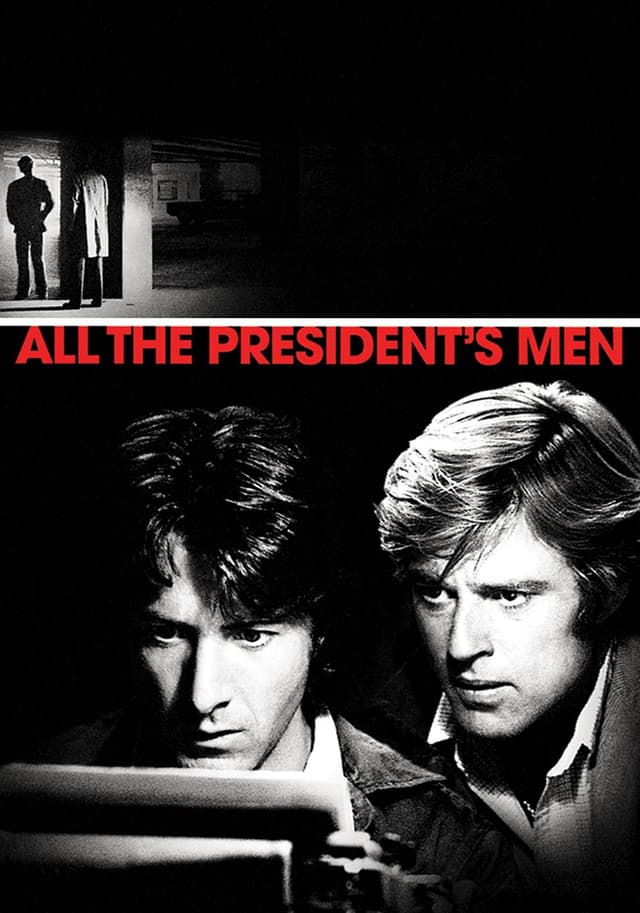
All the President's Men Budget
 DramaMysteryThriller2h 18m
Updated
Synopsis
In the run-up to the 1972 elections, Washington Post reporter Bob Woodward covers what seems to be a minor break-in at the Democratic Party National headquarters. He is surprised to find top lawyers already on the defense case, and the discovery of names and addresses of White House fund organizers on the accused further arouses his suspicions. The editor of the Post is prepared to run with the story and assigns Woodward and Carl Bernstein to it. They find the trail leading higher and higher in the White House.
What Is the Budget of All the President's Men?
All the President's Men was produced on a budget of approximately $8,500,000, a figure that represented a considerable investment for a film with no action sequences, no special effects, and a story that consists almost entirely of two reporters making phone calls and working at their desks. In 1976 dollars, that sum is roughly equivalent to $50 million today, and it reflects two realities: the combined star power of Robert Redford and Dustin Hoffman, and the production's uncompromising commitment to authenticity.
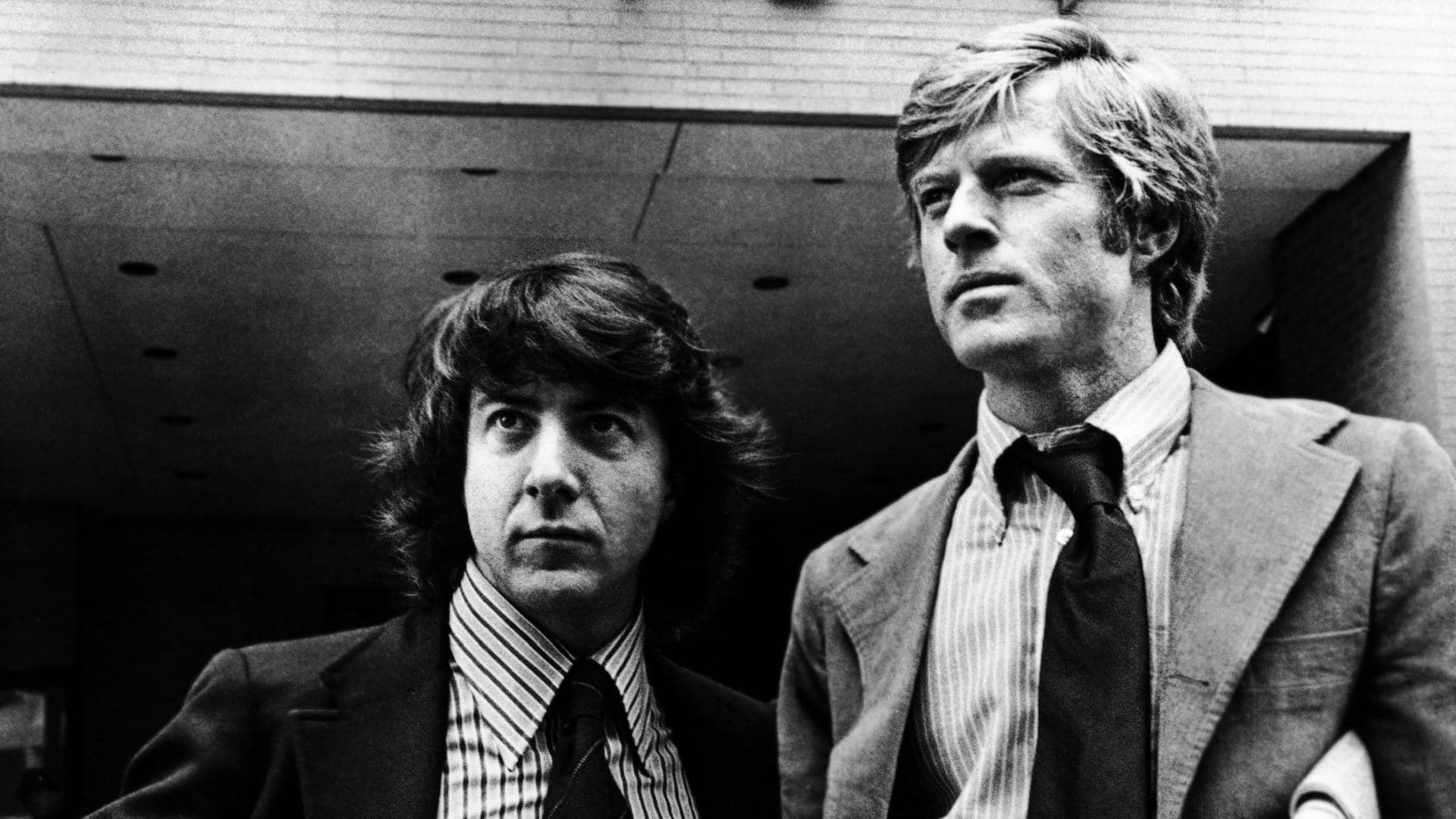
Robert Redford not only starred as Bob Woodward but served as executive producer through his company Wildwood Enterprises, taking an active role in every creative decision from script to casting to the film's meticulous visual approach. Redford had spent two years developing the project before the cameras rolled, acquiring the book rights from Woodward and Bernstein before the book was even published, and the depth of that investment shows in the final film's density of detail.
Warner Bros. distributed the film under a co-production arrangement with Wildwood Enterprises. The production's $8.5 million budget was largely consumed by above-the-line talent costs and the extraordinary lengths taken to make the newsroom feel real, from the lighting grid designed by Gordon Willis to the actual waste paper shipped from Washington to Burbank to fill the recreated newsroom's trash bins.
Key Budget Allocation Categories
- Robert Redford and Dustin Hoffman Above-the-Line: Redford received approximately $2 million as both star and executive producer; Hoffman received approximately $1.5 million as Bernstein. Together they accounted for well over 40% of the total production budget. Both actors carried major box office weight coming into the film: Redford had just completed The Sting (1973) and The Great Gatsby (1974), while Hoffman had received Oscar nominations for Midnight Cowboy (1969) and Lenny (1974). Their combined presence made the project commercially viable and allowed Warner Bros. to greenlight a film with no conventional dramatic hook.
- Gordon Willis's Cinematography Infrastructure: Willis, who had established his dark, underlit visual style on The Godfather (1972) and The Godfather Part II (1974), brought a demanding approach to lighting what was essentially an office drama. His signature pools of light required extensive grip and electrical infrastructure to execute in both the real Washington Post newsroom and the Burbank recreation. Willis developed the film's central visual metaphor with director Alan J. Pakula: an overhead wide shot looking straight down at reporters at their desks, like figures in a maze, which required rigging at significant height above the newsroom floor.
- Washington D.C. Location Access: The production secured permission to film in the actual Washington Post newsroom before the paper relocated to a new building, a first in Hollywood history. Redford's personal relationships with Post publisher Katharine Graham and executive editor Ben Bradlee, whom he had cultivated during two years of development, facilitated access no outside producer could have obtained through conventional means. The production also filmed in the Library of Congress reading room, where the overhead shot of Woodward combing through index card files became one of the most visually striking sequences in the film.
- Burbank Newsroom Recreation: Production designer George Jenkins rebuilt the entire Washington Post newsroom at Burbank Studios in California to match every verifiable detail of the real space. The recreation was used for close-up and medium shots where the actors spent the majority of their screen time. To maintain complete authenticity, the production arranged for actual waste paper from the real Washington Post to be shipped to California and distributed in the recreated newsroom's trash bins. Jenkins would later win the Academy Award for Best Art Direction for this work.
- William Goldman's Screenplay: Goldman's Oscar-winning adaptation was the product of multiple drafts over two years. Goldman spent extensive time at the Washington Post and conducted lengthy interviews with both Woodward and Bernstein. His fee reflected his standing as one of Hollywood's premier screenwriters, coming off Butch Cassidy and the Sundance Kid (1969) and The Sting (1973). The final script navigated a significant creative dispute: Bernstein, dissatisfied with Goldman's draft, brought in Nora Ephron (then his partner) to revise it. Goldman's version ultimately prevailed, and he took sole screenplay credit.
How Does All the President's Men's Budget Compare to Similar Films?
All the President's Men stands as the definitive benchmark for the political procedural genre, a film made at the right moment with the right resources to define how journalism, government, and institutional truth-telling would be dramatized on screen for the next half-century. Its $8.5 million budget was substantial for a dialogue-driven drama in 1976, and its commercial success validated the genre for future studios.
- The Post (2017): Budget $50 million | Worldwide $180 million. Steven Spielberg's companion film about the Washington Post and the Pentagon Papers, made 41 years later at nearly six times the inflation-adjusted budget. The Post draws directly from All the President's Men's playbook: newsroom urgency, institutional courage, and a performance-driven ensemble. Meryl Streep as Katharine Graham echoes the moral gravity of Jason Robards's Bradlee.
- Spotlight (2015): Budget $20 million | Worldwide $98 million. The Best Picture winner about the Boston Globe's investigation into clergy abuse is the most direct heir to All the President's Men's procedural DNA. Its visual restraint, its focus on the unglamorous mechanics of investigative reporting, and its ensemble of reporters as institutional actors rather than individual heroes all trace back to Pakula and Willis's 1976 template.
- Network (1976): Budget $4 million | Worldwide $23 million. Released the same year, also a major critical success, also centered on the American media in moral crisis. Sidney Lumet's satire approached the subject from a different angle and at half the budget, relying on writing and performance rather than documentary authenticity. Both films now function as a matched pair in the canon of 1970s political cinema.
- Three Days of the Condor (1975): Budget $15 million | Worldwide $41 million. The Sydney Pollack and Robert Redford political thriller made the year before All the President's Men established the commercial appetite for paranoid Washington dramas. Condor was more conventionally plotted as a chase film, but its atmosphere of institutional betrayal created the audience expectation that All the President's Men then fulfilled with real events.
All the President's Men Box Office Performance
All the President's Men opened on April 9, 1976, distributed by Warner Bros. It earned $70,600,000 at the domestic box office, making it one of the top-grossing films of 1976 and a remarkable commercial result for a film with no action sequences, no villain in the conventional sense, and a story whose outcome every audience member already knew. International receipts brought the worldwide total to approximately $100 million.
With a production budget of $8.5 million and estimated prints and advertising costs of $6 million for a wide 1976 release, the total studio investment was approximately $14.5 million. Theater chains retained roughly half of gross ticket sales, meaning Warner Bros. and Wildwood saw approximately $50 million from the worldwide gross. The film returned its entire production budget multiple times over in domestic theatrical revenue alone, establishing the political procedural as a commercially viable genre for major studios.
Box Office Breakdown
All the President's Men

For every dollar invested in production, All the President's Men earned approximately $8.30 at the domestic box office. Even accounting for the studio's 50% split with theaters and the P&A investment, the film was a substantial financial success. Its performance demonstrated that American audiences in the post-Watergate moment were prepared to engage with serious, detail-driven political subjects when those subjects were anchored by major stars and made with the seriousness they deserved.
All the President's Men Production History
Robert Redford first read Bob Woodward and Carl Bernstein's Washington Post reporting on the Watergate break-in in 1973, well before the story had reached its conclusion with President Nixon's resignation. Redford recognized immediately that the story was not primarily about the politicians but about the reporters and editors who refused to let it die. He began pursuing the book rights before Woodward and Bernstein had finished writing it, securing them through his production company Wildwood Enterprises before competing studios could organize bids. Katharine Graham and Ben Bradlee, who had backed their reporters at significant institutional risk, gave Redford their cooperation and access.
Alan J. Pakula was hired as director based on his recent work on two of the decade's defining paranoid thrillers, Klute (1971) and The Parallax View (1974). Both films shared with All the President's Men a preoccupation with institutional systems that conceal rather than reveal truth, and Pakula brought to the project a sensibility perfectly matched to material about information, access, and the mechanics of verification. Pakula and Redford agreed early that the film should resist dramatization in the conventional sense: no invented composite characters, no fabricated confrontations, no score cues to signal when the audience should feel tense. The tension would come from procedure itself.
William Goldman, whose script for Butch Cassidy and the Sundance Kid had made him one of Hollywood's most sought-after screenwriters, was approached about the adaptation and initially declined, considering a procedural about newspaper reporting impossible to dramatize with conventional dramatic structure. Redford persuaded him. Goldman spent months at the Washington Post, conducting extensive interviews with Woodward and Bernstein, before delivering his draft. Bernstein, dissatisfied with Goldman's approach and the degree to which it centered Woodward at his expense, brought in Nora Ephron to revise it. After significant creative friction, Goldman's draft prevailed and he received sole screenplay credit.
Principal photography took place across Washington D.C. and Burbank Studios in California. The production filmed in the actual Washington Post newsroom before the paper's scheduled move to a new building, working around the paper's daily publication deadlines. Gordon Willis designed the production's visual approach around two complementary ideas: the overhead shot looking directly down at reporters at their desks, which Pakula and Willis used to reduce the human figures to elements in a system, and the use of extreme depth of field in close scenes to keep background activity legible. When the company moved to Burbank for interior close-up work, production designer George Jenkins had already spent months recreating the Washington Post newsroom in precise detail, including arranging for actual waste paper from the real newsroom to be shipped to California and placed in the recreated wastebaskets.
Awards and Recognition
All the President's Men received eight Academy Award nominations at the 49th Academy Awards ceremony in 1977 and won four. Jason Robards won Best Supporting Actor for his portrayal of executive editor Ben Bradlee, delivering a performance of watchful authority that the real Bradlee, whom Robards met with once during preparation, reportedly found uncanny. William Goldman won Best Adapted Screenplay. George Jenkins and George Gaines won Best Art Direction-Set Decoration for the newsroom recreation. The film also won Best Sound.
The four nominations that did not result in wins included Best Picture, Best Director for Alan J. Pakula, Best Film Editing for Robert L. Wolfe, and Best Supporting Actress for Jane Alexander, who played the bookkeeper whose testimony helped confirm the money trail connecting the Watergate burglars to the Committee to Re-Elect the President. The Best Picture loss to Rocky is one of the more debated outcomes in Oscar history.
The film also won the Writers Guild of America Award for Best Adapted Screenplay and the Directors Guild of America Award for Outstanding Directorial Achievement, the latter going to Pakula. It was selected for preservation in the United States National Film Registry by the Library of Congress in 2010 as being 'culturally, historically, or aesthetically significant.' The American Film Institute ranked it number 77 on its 2007 list of the 100 greatest American films.
Critical Reception
All the President's Men opened to overwhelmingly positive reviews. Roger Ebert awarded it four stars and called it one of the best films of the decade, praising its refusal to inflate the material with conventional dramatic embellishment. Pauline Kael, who disagreed with Ebert about most things, praised Gordon Willis's cinematography and Pakula's directorial restraint. Vincent Canby in the New York Times called it 'a crackling good detective story' while noting its ambitions went well beyond genre entertainment.
The film's critical reputation has only grown in the decades since its release. It appears on most authoritative lists of the best films of the 1970s and is regularly cited alongside Chinatown (1974), Dog Day Afternoon (1975), and Network (1976) as defining the decade's distinctive brand of disillusioned political cinema. Time magazine included it in its All-Time 100 Movies list. The Sight and Sound poll has recognized it as a landmark of American cinema in multiple editions.
Its influence on the procedural genre is immeasurable. Spotlight (2015), The Post (2017), She Said (2022), and dozens of prestige television series about journalism, law enforcement, and institutional accountability trace their visual grammar, their narrative pacing, and their ethical seriousness directly to All the President's Men. The film demonstrated that audiences could sustain engagement with the patient accumulation of facts if the stakes were real, the performances were committed, and the filmmaking refused to condescend to the material or the viewer.
Frequently Asked Questions
How much did it cost to make All the President's Men (1976)?
The production budget was $8,500,000, covering principal photography, cast and crew salaries, locations, sets, post-production, and music. Marketing and distribution (P&A) costs are estimated at an additional $4,250,000 - $6,800,000, bringing the total studio investment to approximately $12,750,000 - $15,300,000.
How much did All the President's Men (1976) earn at the box office?
All the President's Men grossed $70,600,000 domestic, totaling $70,600,000 worldwide.
Was All the President's Men (1976) profitable?
Yes. Against a production budget of $8,500,000 and estimated total costs of ~$21,250,000, the film earned $70,600,000 theatrically - a 731% ROI on production costs alone.
What were the biggest costs in producing All the President's Men?
The primary cost drivers were above-the-line talent (Robert Redford, Dustin Hoffman, Jack Warden); talent compensation, authentic period production design, and meticulous post-production.
How does All the President's Men's budget compare to similar drama films?
At $8,500,000, All the President's Men is classified as a micro-budget production. The median budget for wide-release drama films in the era ranges from $30 - 80M for mid-budget to $150M+ for tentpoles. Comparable budgets: Train to Busan (2016, $8,500,000); Nightcrawler (2014, $8,500,000); The Strangers: Chapter 3 (2026, $8,500,000).
Did All the President's Men (1976) go over budget?
There are no widely reported accounts of significant budget overruns for this production. However, studios rarely disclose precise budget overrun figures publicly. The reported production budget reflects the final estimated cost.
What was the return on investment (ROI) for All the President's Men?
The theatrical ROI was 730.6%, calculated as ($70,600,000 − $8,500,000) ÷ $8,500,000 × 100. This measures gross revenue against production budget only - it does not account for P&A or exhibitor shares.
What awards did All the President's Men (1976) win?
Won 4 Oscars. 17 wins & 23 nominations total.
Who directed All the President's Men and who were the key crew members?
Directed by Alan J. Pakula, written by William Goldman, shot by Gordon Willis, with music by David Shire, edited by Robert L. Wolfe.
Where was All the President's Men filmed?
All the President's Men was filmed in United States of America.
Filmmakers
All the President's Men

Build budgets like this one in Saturation
Start from an industry-standard feature film template, import the schedule and rates you already have, and let the cost report keep itself current as you spend. Real-time collaboration, no spreadsheets.