Cool Hand Luke Budget
 DramaCrime2h 7m
Updated
Synopsis
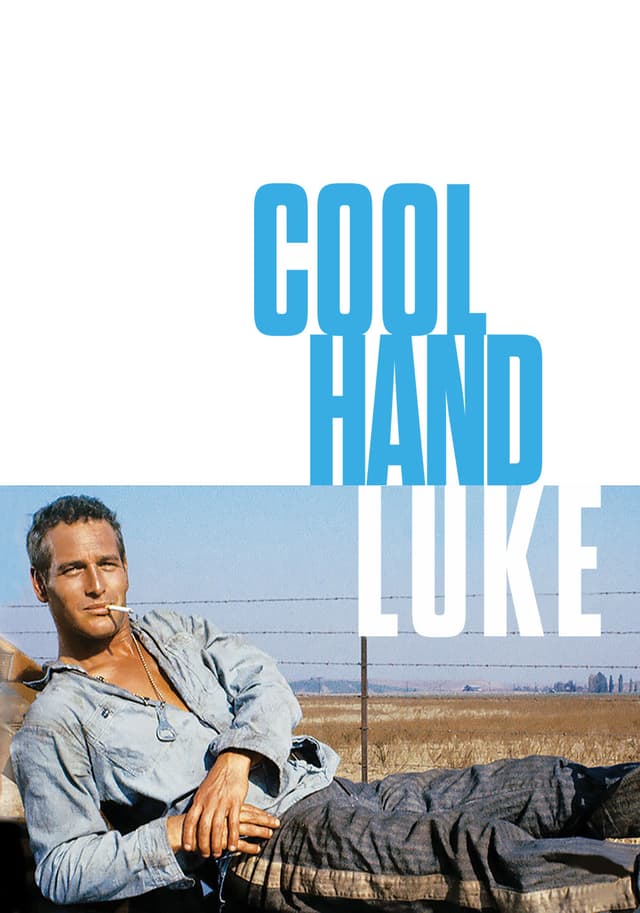
Luke Jackson is a cool, gutsy prisoner in a Southern chain gang, who, while refusing to buckle under to authority, keeps escaping and being recaptured. The prisoners admire Luke because, as Dragline explains it, "You're an original, that's what you are!" Nevertheless, the camp staff actively works to crush Luke until he finally breaks.
What is the budget of Cool Hand Luke?
"Cool Hand Luke," a drama released in 1967, was directed by Stuart Rosenberg and stars Paul Newman, George Kennedy. The production budget was $3,200,000, placing it in the micro-budget range for drama productions of the 1960s.
Key Budget Allocation Categories
While specific budget breakdowns are not publicly available, typical cost drivers for a drama production like this include:
- Above-the-Line Talent: Drama films live or die on the strength of their performances.
- Location Filming & Period Production Design: Authentic locations , whether contemporary or historical , require scouting, permits, travel, lodging, and often significant dressing to match the story's time period.
- Post-Production, Color Grading & Score: The editorial process for dramas is typically longer than genre films, with careful attention to pacing and tone.
- Casting: Paul Newman's character, Luke, is a decorated war veteran who is sentenced to serve two years in a Florida rural prison.
What were the major cost factors in Cool Hand Luke?
Several factors contributed to the overall production costs of "Cool Hand Luke."
- Above-the-Line Talent: Above-the-Line Talent is one of the primary cost drivers in drama productions of this scale.
- Location Filming: Location Filming & Period Production Design is one of the primary cost drivers in drama productions of this scale.
- Post-Production: Post-Production, Color Grading & Score is one of the primary cost drivers in drama productions of this scale.
How Does Cool Hand Luke's Budget Compare to Similar Films?
At $3,200,000, Cool Hand Luke sits in the micro-budget range. Here is how it compares to productions with a similar budget:
- The Man Who Shot Liberty Valance (1962): Budget $3,200,000, Worldwide Gross $8,000,000
- Sorry to Bother You (2018): Budget $3,200,000, Worldwide Gross $18,200,000
- It's a Wonderful Life (1946): Budget $3,180,000, Worldwide Gross $9,644,124
- City of God (2002): Budget $3,300,000, Worldwide Gross $30,641,770
- Whiplash (2014): Budget $3,300,000, Worldwide Gross $50,307,484
The median budget for wide-release drama films in the era ranges from $30 to 80M for mid-budget to $150M+ for tentpoles.
Cool Hand Luke Box Office Performance
"Cool Hand Luke" earned $16,217,773 worldwide at the box office. Against a production budget of $3,200,000, the film performed strongly at the box office.
A film typically needs to earn approximately twice its production budget to cover marketing and distribution costs. For "Cool Hand Luke," that break-even threshold was roughly $6,400,000. With worldwide earnings of $16,217,773, the film cleared that threshold comfortably.
Box Office Breakdown
Cool Hand Luke

At 406.8%, "Cool Hand Luke" earned roughly $5.07 for every $1 invested in production.
Cool Hand Luke Production History
Paul Newman's character, Luke, is a decorated war veteran who is sentenced to serve two years in a Florida rural prison. He constantly defies the prison authorities, becoming a leader among the prisoners, as well as escaping multiple times. While the script was being developed, the leading role was initially considered for Jack Lemmon or Telly Savalas.
Filming began on October 3, 1966, on the San Joaquin River Delta. The set, imitating a southern prison farm, was built in Stockton, California. The filmmakers sent a crew to Tavares Road Prison in Tavares, Florida, where Pearce had served his time, to take photographs and measurements.
The Academy Award-nominated original score was by Lalo Schifrin, who wrote tunes with a background in popular music and jazz. Some tracks include guitars, banjos and harmonicas, others include trumpets, violins, flutes and piano. An edited version of the musical cue from the Tar Sequence (where the inmates are energetically paving the road) has been used for years as the theme music for local television stations' news programs around the world, mostly those owned and operated by ABC in the United States.
Awards and Recognition
Won 1 Oscar. 5 wins & 11 nominations total
- Academy Award for Best Supporting Actor: George Kennedy (40th Academy Awards)
Frequently Asked Questions
How much did it cost to make Cool Hand Luke (1967)?
The production budget was $3,200,000, covering principal photography, cast and crew salaries, locations, sets, post-production, and music. Marketing and distribution (P&A) costs are estimated at an additional $1,600,000 - $2,560,000, bringing the total studio investment to approximately $4,800,000 - $5,760,000.
How much did Cool Hand Luke (1967) earn at the box office?
Cool Hand Luke grossed $16,217,773 domestic, totaling $16,217,773 worldwide.
Was Cool Hand Luke (1967) profitable?
Yes. Against a production budget of $3,200,000 and estimated total costs of ~$8,000,000, the film earned $16,217,773 theatrically - a 407% ROI on production costs alone.
What were the biggest costs in producing Cool Hand Luke?
The primary cost drivers were above-the-line talent (Paul Newman, George Kennedy, Luke Askew); talent compensation, authentic period production design, and meticulous post-production.
How does Cool Hand Luke's budget compare to similar drama films?
At $3,200,000, Cool Hand Luke is classified as a micro-budget production. The median budget for wide-release drama films in the era ranges from $30 - 80M for mid-budget to $150M+ for tentpoles. Comparable budgets: The Man Who Shot Liberty Valance (1962, $3,200,000); Sorry to Bother You (2018, $3,200,000); It's a Wonderful Life (1946, $3,180,000).
Did Cool Hand Luke (1967) go over budget?
There are no widely reported accounts of significant budget overruns for this production. However, studios rarely disclose precise budget overrun figures publicly. The reported production budget reflects the final estimated cost.
What was the return on investment (ROI) for Cool Hand Luke?
The theatrical ROI was 406.8%, calculated as ($16,217,773 − $3,200,000) ÷ $3,200,000 × 100. This measures gross revenue against production budget only - it does not account for P&A or exhibitor shares.
What awards did Cool Hand Luke (1967) win?
Won 1 Oscar. 5 wins & 11 nominations total.
Who directed Cool Hand Luke and who were the key crew members?
Directed by Stuart Rosenberg, written by Frank Pierson, Donn Pearce, Hal Dresner, shot by Conrad Hall, with music by Lalo Schifrin, edited by Sam O'Steen.
Where was Cool Hand Luke filmed?
Cool Hand Luke was filmed in United States of America. Filming began on October 3, 1966, on the San Joaquin River Delta. The set, imitating a southern prison farm, was built in Stockton, California.
Filmmakers
Cool Hand Luke

Official Trailer
Build budgets like this one in Saturation
Start from an industry-standard feature film template, import the schedule and rates you already have, and let the cost report keep itself current as you spend. Real-time collaboration, no spreadsheets.