Air Budget
Updated
Synopsis
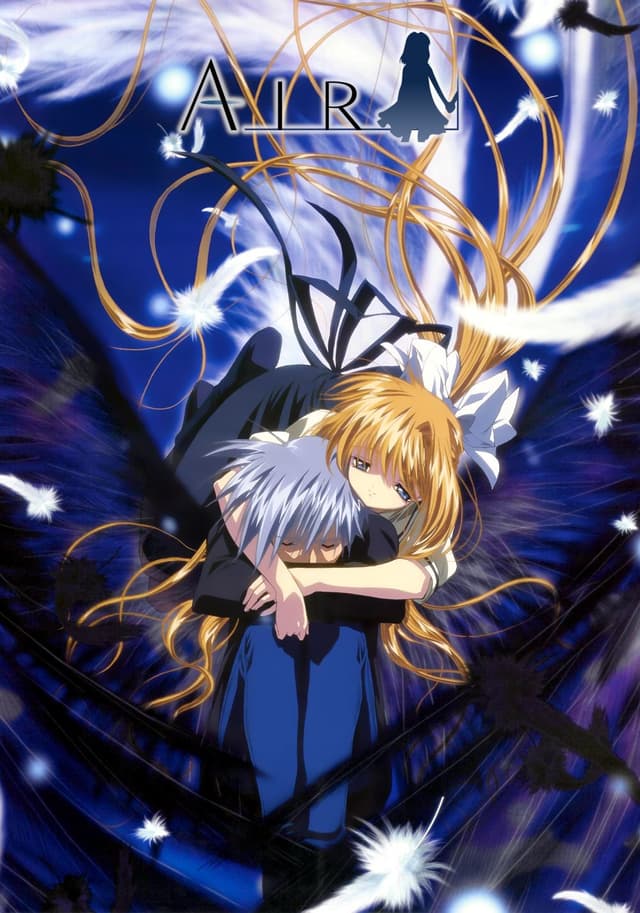
Yukito Kunisaki, an itinerant puppeteer searching for the legendary Winged Maiden who was bound to the sky centuries ago, arrives in a quiet seaside town and meets a cheerful but mysterious girl named Misuzu Kamio. As Yukito's search and Misuzu's fate converge, an ancient curse closes in around both of them.
What Is the Budget of Air: The Motion Picture (2005)?
Air: The Motion Picture (2005), directed by Osamu Dezaki and animated by Toei Animation, is a Japanese feature anime film adapting Key's 2000 visual novel Air. The exact production budget for the film has not been publicly disclosed. Japanese feature anime production at this scale and prestige tier typically operated in the ¥150,000,000 to ¥400,000,000 range (roughly $1,400,000 to $3,700,000 at 2005 exchange rates), with the upper end reserved for theatrical features anchored by an established director.
Financing came through Toei Animation as the principal production studio and animator, with the Air Production Committee structure used to assemble the film. Japanese anime production committees typically pool capital from a publisher, a studio, a broadcaster, a music label, and one or two distribution partners, allocating equity proportionate to each member's downstream rights window. The Air committee likely included Toei Animation, Key (the visual novel publisher), and downstream distribution partners including Toei Company for theatrical and a broadcaster for television license.
Key Budget Allocation Categories
The estimated low-millions budget was distributed across the following areas characteristic of Japanese feature anime production:
- Animation Production: Toei Animation handled in-house animation work, with character design by Toshie Kawamura and animation direction by an experienced team of Toei key animators. The film's extended seaside, sky, and historical sequences required substantial frame counts and a meaningful pencil-test-and-cleanup phase.
- Director and Storyboard Fees: Osamu Dezaki, one of the most influential Japanese animation directors of the 1970s through 2000s (Ashita no Joe, Black Jack, The Rose of Versailles), commanded a director and storyboard fee consistent with his late-career prestige. The Air feature was one of his final theatrical works before his death in 2011.
- Voice Cast Recording: The voice cast included Tomokazu Seki as Yukito Kunisaki, Hikaru Minami as Misuzu Kamio, and an ensemble of supporting Japanese voice talent. Studio recording, performance direction, and ADR for theatrical release added a meaningful below-the-line line.
- Music and Score: The film featured contributions from the Key in-house music label Key Sounds Label, with score work supplementing diegetic music from the original visual novel. Music licensing and recording with Japanese session musicians sat as a meaningful budget line.
- Theatrical Print and Distribution: The film was released theatrically in Japan on February 5, 2005, with Toei Company handling theatrical distribution. Print and platform costs added a meaningful slice of the overall production-and-release spend.
- Source Material Licensing: Key's underlying visual novel rights were licensed into the production committee at a publishing royalty rate. Visual novel-to-anime adaptation rights at this period typically structured downside protection for the original IP holder through a multi-window distribution agreement.
How Does Air's Budget Compare to Similar Productions?
At an estimated low-millions budget, Air: The Motion Picture sat at the upper-middle tier of Japanese feature anime production. The comparison set:
- Kanon (2002 OVA, Toei Animation): Budget undisclosed. The prior Toei Animation Key adaptation was a 13-episode OVA series rather than a feature, and operated at a comparable per-minute cost.
- Clannad (2007 film, Toei Animation): Budget undisclosed. The Toei feature adaptation of Key's subsequent visual novel Clannad was released two years after Air at a comparable production scale.
- Spirited Away (2001, Studio Ghibli): Budget approximately $19,000,000 | Worldwide $395,000,000. Hayao Miyazaki's Studio Ghibli feature operated at a budget tier roughly 6x to 10x higher than Air, representing the upper bound of Japanese feature anime production at the time.
- Tokyo Godfathers (2003, Madhouse): Budget approximately $4,000,000 | Worldwide $400,000. Satoshi Kon's Madhouse feature from the previous year operated at a comparable scale and visibility tier.
- Howl's Moving Castle (2004, Studio Ghibli): Budget approximately $24,000,000 | Worldwide $237,000,000. Released the year before Air, Howl's Moving Castle illustrates the Ghibli theatrical scale that contemporary non-Ghibli theatrical anime were measured against.
Air: The Motion Picture Box Office Performance
Air: The Motion Picture opened theatrically in Japan on February 5, 2005. Specific opening-weekend and final theatrical gross figures have not been compiled at scale in international box office databases; Japanese theatrical reporting from 2005 has retained limited circulation in Western entertainment trade publications. The film operated within the Japanese theatrical specialty circuit, targeting an existing visual-novel and anime fanbase rather than a wide general audience.
The film's primary commercial life was through home-entertainment release on DVD and subsequently Blu-ray in Japan, with rights sales to North American anime distributors (initially handled by ADV Films and subsequently relicensed) and additional Asian and European territory licensing through Toei Animation's international distribution arm. Below is the financial picture as best as can be reconstructed:
- Production Budget: estimated ¥150,000,000 to ¥400,000,000 (roughly $1,400,000 to $3,700,000 at 2005 rates)
- Primary Funding Source: Toei Animation; Air Production Committee
- Japanese Theatrical Performance: specialty-circuit theatrical release on February 5, 2005; specific gross not publicly compiled
- Home-Entertainment Distribution: DVD and Blu-ray release in Japan; subsequent international anime distributor licensing
- North American Distribution: ADV Films initial license, subsequently relicensed
- Recoupment Status: recovered through Japanese home-entertainment and international anime licensing
Like most Japanese feature anime of this period, Air: The Motion Picture was structured for recoupment across a multi-window distribution chain rather than purely through theatrical gross. The film recovered its production cost through Japanese home-entertainment sales (a substantial market in 2005 prior to streaming displacement), broadcaster licensing, North American anime distributor advances, and continuing licensing within the Asian and European specialty anime markets.
Air: The Motion Picture Production History
Development began at Toei Animation in 2003 following the success of the studio's 13-episode OVA adaptation of Kanon (also a Key visual novel), which had established Toei's relationship with the Key publishing label. The decision to adapt Air as a theatrical feature rather than a television series reflected both the visual novel's shorter runtime and the production committee's judgment that a feature-length focused adaptation of the Misuzu Kamio arc could reach a Japanese specialty theatrical audience that television could not.
Osamu Dezaki was attached as director in 2003 or early 2004. Dezaki was a foundational figure in Japanese animation, with direction credits running from Ashita no Joe (1970) through Black Jack and The Rose of Versailles, and he brought a distinctive visual register with painted background compositions, freeze-frame "postcard memory" cuts, and harmonized character design that distinguished his late-career features. Character design was handled by Toshie Kawamura, working from Itaru Hinoue's original Key visual novel designs.
Production took place at Toei Animation's Japanese studios across 2004, with key animation produced in-house by experienced Toei staff. The screenplay by Makoto Nakamura compressed the longer visual novel narrative into a feature-length structure centered on the female lead Misuzu Kamio's story arc, with the parallel Kanna and Uraha historical sequences threaded through the contemporary timeline. The film premiered theatrically in Japan on February 5, 2005, with theatrical distribution handled by Toei Company.
Awards and Recognition
Air: The Motion Picture received targeted recognition within the Japanese anime and theatrical award circuit. The film was nominated at the 2005 Tokyo International Anime Fair Animation of the Year category, although it did not win the top prize. It received subsequent positioning within Japanese anime fan-awards categories on Animage and Newtype magazine year-end polls.
The film did not receive Academy of Motion Picture Arts and Sciences, BAFTA, or Annie Award recognition, consistent with the awards ceiling that affected Japanese specialty anime theatrical work prior to the post-Demon Slayer commercial expansion of the late 2010s. Its awards legacy has continued through specialty anime industry retrospectives and within ongoing critical assessment of Osamu Dezaki's late-period directorial work.
Critical Reception
Air: The Motion Picture received mixed-to-positive reviews. The film holds a 6.7 user rating on IMDb and a 67% average rating on Letterboxd, indicating broadly favorable but divided reception. Aggregate critic scores have not been compiled at scale on Western review aggregators (Rotten Tomatoes and Metacritic do not maintain dedicated pages for the film), reflecting the specialty distribution channel through which Air entered Western markets.
Anime News Network and similar specialty publications praised Osamu Dezaki's visual direction, particularly the painted-background compositions and freeze-frame "postcard memory" cuts, while noting that the feature-length compression of the visual novel's longer arc occasionally lost the emotional architecture of Misuzu's story. Reviewers who came to the film from the Key visual-novel fan community frequently noted that the feature compression sacrificed Kanna and Uraha's historical arc in favor of a tighter contemporary-timeline focus on Misuzu.
The film's reputation has been preserved within two distinct critical conversations: the broader retrospective on Osamu Dezaki's career (where Air is positioned as one of his final theatrical works) and the ongoing critical assessment of Key's visual-novel-to-anime adaptation lineage (where Air sits between the 2002 Toei Kanon OVA and the 2007 Toei Clannad feature in the studio's sequential Key adaptation portfolio). Both conversations continue to circulate in specialty anime criticism and academic-and-fan publications addressing Japanese animation from the 2000s.
Frequently Asked Questions
What is Air: The Motion Picture (2005)?
Air: The Motion Picture is a 2005 Japanese feature anime film directed by Osamu Dezaki and animated by Toei Animation. It adapts the Misuzu Kamio story arc from Key's 2000 visual novel Air, compressing the longer game narrative into a feature-length theatrical structure.
How much did it cost to make Air: The Motion Picture?
The production budget has not been publicly disclosed. Japanese feature anime production at this scale and prestige tier typically operated in the ¥150,000,000 to ¥400,000,000 range (roughly $1,400,000 to $3,700,000 at 2005 exchange rates).
Who directed Air: The Motion Picture?
Osamu Dezaki directed the film. Dezaki was one of the most influential Japanese animation directors of the 1970s through 2000s, with credits including Ashita no Joe, Black Jack, and The Rose of Versailles. He died in 2011.
What is Air based on?
The film is based on Air, a 2000 Japanese visual novel published by Key. The visual novel has also been adapted into a 13-episode television series in 2005 (animated by Kyoto Animation) and a side-story OVA. The Toei Animation feature directed by Osamu Dezaki is distinct from the Kyoto Animation television series.
When was Air: The Motion Picture released?
The film premiered theatrically in Japan on February 5, 2005, with theatrical distribution handled by Toei Company. Home-entertainment release on DVD and subsequently Blu-ray followed in Japan, with international anime distributor licensing extending the film's commercial life through ADV Films initially and subsequent relicensing.
Who animated Air: The Motion Picture?
Toei Animation animated the film. Toei is one of the largest and longest-established Japanese animation studios, with credits spanning Dragon Ball, One Piece, Sailor Moon, and the Key visual novel adaptation lineage that includes the 2002 OVA Kanon and the 2007 feature Clannad alongside Air.
How does Air: The Motion Picture compare to the Air television series?
The 2005 Toei feature directed by Osamu Dezaki and the 2005 Kyoto Animation 13-episode television series are separate adaptations of the same Key visual novel released in the same year. The Kyoto Animation series is generally considered the more comprehensive adaptation, covering all three story arcs (Misuzu, Kanna and Uraha, and Dream) across its episodic runtime, while the Dezaki feature compresses the source to a Misuzu-focused theatrical narrative.
Is Air: The Motion Picture available in English?
Yes. The film was initially licensed for North American distribution by ADV Films and has subsequently been relicensed through additional anime distributors. English-subtitled and English-dubbed releases have circulated through home-entertainment and specialty streaming channels.
Did Air: The Motion Picture win any awards?
The film was nominated at the 2005 Tokyo International Anime Fair Animation of the Year category but did not win the top prize. It received subsequent positioning within Japanese anime fan-awards categories on Animage and Newtype magazine year-end polls. It did not receive Academy Award, BAFTA, or Annie Award recognition.
What did critics think of Air: The Motion Picture?
The film received mixed-to-positive reviews. It holds a 6.7 user rating on IMDb and a 67% average rating on Letterboxd. Anime News Network and similar specialty publications praised Osamu Dezaki's visual direction, particularly the painted-background compositions and freeze-frame "postcard memory" cuts, while noting that the feature compression occasionally lost the emotional architecture of the longer visual novel.
Filmmakers
Air

Official Trailer
Build budgets like this one in Saturation
Start from an industry-standard feature film template, import the schedule and rates you already have, and let the cost report keep itself current as you spend. Real-time collaboration, no spreadsheets.