A Special Day Budget
Updated
Synopsis
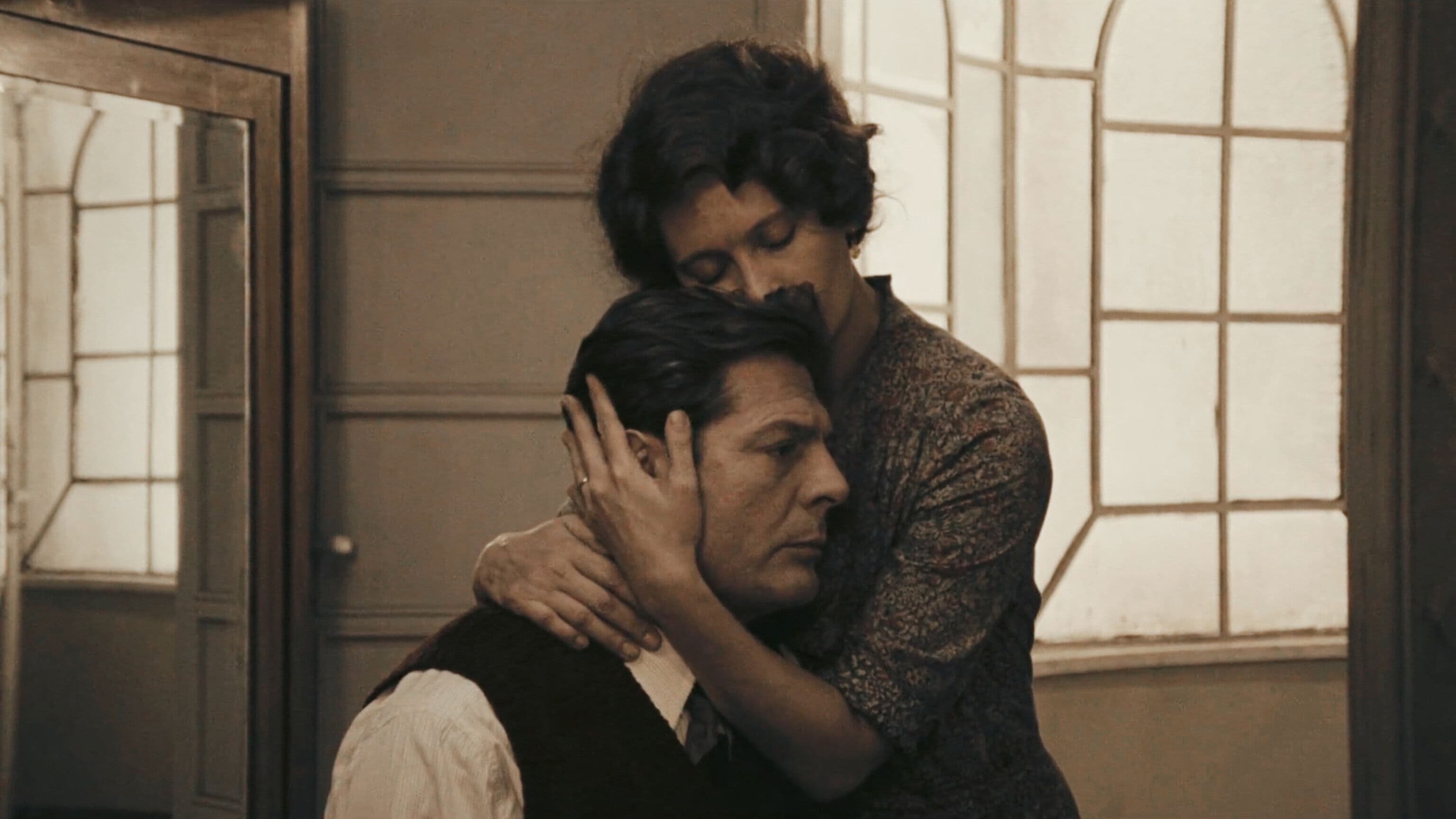
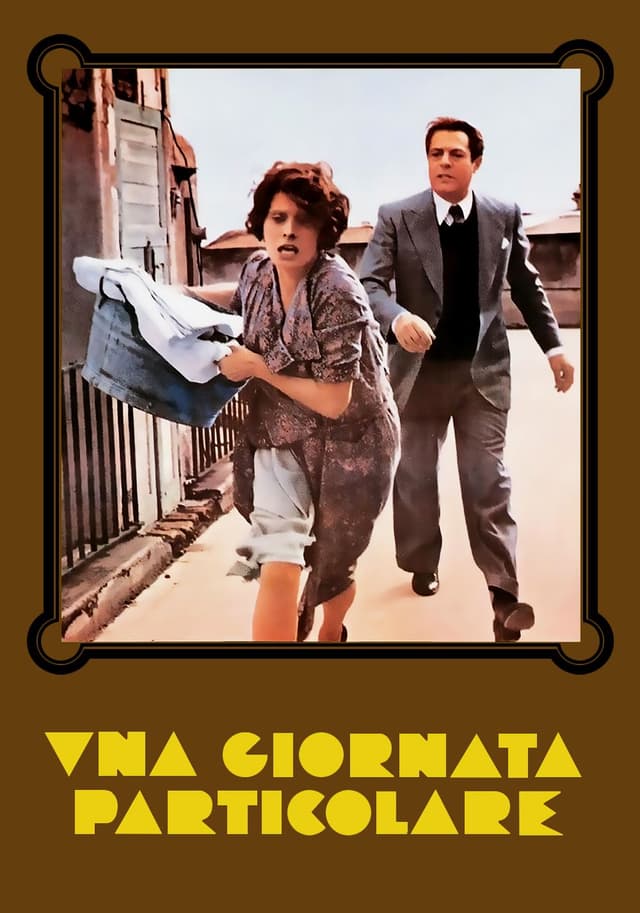
On May 6, 1938, the day of Adolf Hitler's official visit to Rome to meet Benito Mussolini, the entire Tiburtino tenement block empties for the welcome rally, leaving only two residents behind: weary housewife Antonietta and Gabriele, a radio announcer about to be deported to Sardinia for being homosexual and politically suspect. Across a single day of unexpected conversation and connection, the two strangers reveal the lives the Fascist state has constrained them to. Ettore Scola's intimate two-hander stars Sophia Loren and Marcello Mastroianni in performances widely cited among each actor's finest.
What Is the Budget of A Special Day (1977)?
A Special Day (Una Giornata Particolare, 1977), directed by Ettore Scola and produced by Compagnia Cinematografica Champion, Canafox Films, and Gaumont, was made on a contained Italian production budget that has not been publicly disclosed. Industry estimates place the budget in the $1,500,000 to $3,000,000 USD range based on comparable mid-1970s Italian arthouse productions of the period, though no official figure has been released by the producing partners. The picture was Sophia Loren's collaboration with longtime co-star Marcello Mastroianni on their twelfth feature together, and one of the most artistically ambitious works of both actors' late careers.
The investment reflected a deliberately spare Italian arthouse approach: a single Tiburtino apartment-block setting (the Palazzo Federici), a contained two-hander structure with Loren and Mastroianni as the sole significant on-screen presences, and a contemplative pacing that prioritized character intimacy over period spectacle. Producer Carlo Ponti backed the picture as a prestige showcase for his wife Sophia Loren in an against-type role as a careworn housewife, deliberately stripped of the glamour that had defined her earlier filmography.
Key Budget Allocation Categories
A Special Day's contained Italian production budget was distributed across several major areas:
- Above-the-Line Talent Sophia Loren and Marcello Mastroianni anchored the picture on prestige-tier Italian arthouse rates, well below the commercial fees both had commanded in their international careers. Director Ettore Scola worked at his post-We All Loved Each Other So Much (1974) directorial scale. Producer Carlo Ponti, Loren's husband, backed the production directly.
- Palazzo Federici Single-Location Shoot Principal photography took place primarily at the Palazzo Federici, a real Mussolini-era apartment block in the Tiburtino quarter of Rome, with the production negotiating long-term access to the building's interiors and courtyard. The single-location strategy materially contained the picture's production cost.
- Period Production Design Production designer Luciano Ricceri rendered the 1938 Tiburtino apartment interiors with documentary specificity, with period furniture, household items, and Fascist-era radio sets sourced through Rome's prop houses. The picture's deliberately desaturated palette reduced color-stock processing costs.
- Cinematography Cinematographer Pasqualino De Santis (Academy Award winner for Romeo and Juliet, 1968) delivered a desaturated near-monochromatic widescreen approach using a custom color-bleaching process. The picture's distinctive visual identity was achieved through technical innovation rather than expensive equipment.
- Costume Costume designer Enrico Sabbatini dressed Loren in deliberately frumpy housewife wardrobe with three principal costume changes across the single-day timeline, and Mastroianni in a single suit. The contained costume requirements reduced wardrobe department spend substantially.
- Score and Sound Composer Armando Trovajoli delivered a sparse piano-driven score that punctuated rather than underlined the picture's quiet two-hander structure. Period Fascist-era radio broadcasts, sourced from archival recordings, served as additional ambient sound throughout the picture.
- Post-Production Post-production through Italian laboratories on Eastman color stock with deliberate desaturation processing prepared the picture for its festival showcase and Italian theatrical release.
How Does A Special Day's Budget Compare to Similar Films?
At an estimated $1,500,000 to $3,000,000 USD, A Special Day sits in the mid-budget range for late-1970s Italian arthouse productions. The comparison set illustrates how its scale tracked against peer productions:
- 1900 (1976): Budget approximately $9,000,000 | Worldwide approximately $50,000,000. Bernardo Bertolucci's epic Italian production from the year before A Special Day cost three to six times as much and earned a substantial worldwide gross, providing the contemporaneous high-end Italian production template.
- We All Loved Each Other So Much (1974): Budget undisclosed (estimated $1,500,000) | Italian domestic theatrical. Ettore Scola's previous picture established his arthouse production template that A Special Day refined and expanded.
- Padre Padrone (1977): Budget approximately $700,000 | limited international theatrical. The Taviani brothers' Cannes Palme d'Or winner from the same year cost roughly a third of A Special Day and earned a smaller but distinguished international arthouse release.
- Cinema Paradiso (1988): Budget approximately $5,000,000 | Worldwide approximately $12,000,000. Giuseppe Tornatore's Italian arthouse hit released a decade later cost two to three times A Special Day and provided the late-1980s arthouse-crossover template that A Special Day had anticipated.
- Three Brothers (1981): Budget undisclosed (estimated $2,000,000) | limited international theatrical. Francesco Rosi's Italian arthouse production from a few years later operated in the same budget envelope as A Special Day and earned similar festival recognition.
A Special Day Box Office Performance
A Special Day premiered out of competition at the 1977 Cannes Film Festival in May and opened in Italian theatrical release in late summer 1977 through distributor Gaumont Italia. The Italian domestic theatrical run was modestly successful for an arthouse two-hander, with the picture's strong critical reception and Cannes prestige driving sustained adult-audience attendance. International release followed through 1977 and 1978, with the United States release handled by Cinema 5 Distributing on October 1, 1977.
The picture's full historical theatrical gross is not consistently reported across territories. Estimates and partial figures from the financial breakdown:
Box Office Breakdown
A Special Day

The picture's commercial performance is best understood in 1970s Italian arthouse terms rather than contemporary commercial metrics. The Italian domestic theatrical run earned strong adult-audience attendance, the international arthouse release through Cinema 5 in the United States earned distinguished critical reception, and the picture's two Academy Award nominations and Foreign Language Film Golden Globe substantially extended its commercial life through revival screenings and home video.
Carlo Ponti's prestige investment in the picture as a vehicle for Sophia Loren's against-type artistic ambitions was widely judged successful in artistic and reputational terms, with the picture cited by both Loren and Mastroianni as among their proudest collaborations. The picture has been repeatedly restored and reissued through Criterion Collection, the Italian Cineteca Nazionale, and various international restoration partnerships through the 2000s and 2010s.
A Special Day Production History
Ettore Scola developed A Special Day in collaboration with screenwriters Ruggero Maccari and Maurizio Costanzo, building the screenplay around the single day of Adolf Hitler's official visit to Rome on May 6, 1938, to meet with Benito Mussolini. The historical event, the Pact of Steel laying the foundation for the formal Italo-German alliance, provided the external context for the picture's intimate two-hander structure, with the entire Tiburtino tenement block emptying for the welcome rally and leaving only two residents behind.
Producer Carlo Ponti, Sophia Loren's husband, backed the picture explicitly as a vehicle for his wife in an against-type role. Loren had built her international career on glamorous lead roles, and the Antonietta character, a frumpy housewife of six children, deliberately stripped that glamour to test the actress's dramatic range. Marcello Mastroianni, on his twelfth feature with Loren, came on as Gabriele, the homosexual radio announcer about to be deported to Sardinia.
Principal photography took place primarily at the Palazzo Federici, a real Mussolini-era apartment block in the Tiburtino quarter of Rome, with long-term access negotiated for the building's interiors and courtyard. Cinematographer Pasqualino De Santis developed a custom color-bleaching process to deliver the picture's distinctive desaturated near-monochromatic palette. The single-location production strategy materially contained the picture's overall production cost while allowing extended rehearsal time with Loren and Mastroianni.
Composer Armando Trovajoli delivered the sparse piano-driven score, deliberately underplaying the picture's emotional moments to allow Loren and Mastroianni's performances to carry the dramatic weight. Period Fascist-era radio broadcasts, sourced from archival recordings, served as ambient sound throughout the picture, with the actual Italo-German welcome rally broadcast playing continuously across the picture's timeline. Post-production was completed in early 1977 for the May 1977 Cannes Film Festival premiere.
Awards and Recognition
A Special Day received substantial international awards recognition. At the 50th Academy Awards (1978), the picture received nominations for Best Actor in a Leading Role for Marcello Mastroianni (the only male performer nominated that year not from an English-language picture) and Best Foreign Language Film representing Italy. At the 35th Golden Globe Awards, the picture won Best Foreign Language Film and received nominations for Best Actor in a Drama (Mastroianni) and Best Actress in a Drama (Loren).
At Cannes, the picture screened out of competition in May 1977 to substantial international press and industry recognition. The Italian Nastri d'Argento (Silver Ribbons) recognized the picture across multiple craft categories. Sophia Loren received a David di Donatello nomination for Best Actress for her against-type performance. The picture is widely cited in retrospective critical surveys of Italian cinema, including Sight and Sound's decennial polls, as one of the major works of late-1970s Italian filmmaking and one of the strongest performances of both Loren's and Mastroianni's careers.
Critical Reception
A Special Day received nearly universal critical acclaim. The film holds a 92% approval rating on Rotten Tomatoes based on 37 critic reviews, with the critical consensus calling it 'a quietly devastating two-hander whose intimate scope contains a sweeping historical inquiry.' On Metacritic, the film does not have an aggregated score from the original 1977 release period, but contemporary critical retrospective coverage has consistently placed the picture in the upper tier of 1970s Italian filmmaking.
Vincent Canby of the New York Times called the picture 'a small miracle of acting, writing, and direction,' singling out Loren's against-type performance as 'the finest of her career.' Pauline Kael in The New Yorker praised the picture's 'remarkable restraint,' writing that 'Scola has done what most filmmakers cannot: he has trusted his actors entirely.' Roger Ebert later cited the picture in his Great Movies series, calling it 'one of the saddest, gentlest, most truthful films ever made about loneliness.'
Comparative critical analyses across Loren's and Mastroianni's careers consistently cite A Special Day as one of each actor's finest performances. The picture's critical reputation has continued to grow across the decades since release, with retrospective coverage placing it alongside Mamma Roma (1962), Mafioso (1962), and Investigation of a Citizen Above Suspicion (1970) as one of the major dramatic-realist achievements of post-war Italian cinema. The Criterion Collection restoration and reissue further extended the picture's contemporary critical standing.
Frequently Asked Questions
How much did A Special Day (1977) cost to make?
The official production budget has not been publicly disclosed. Industry estimates place the budget in the $1,500,000 to $3,000,000 USD range based on comparable mid-1970s Italian arthouse productions. Producer Carlo Ponti backed the picture as a prestige showcase for his wife Sophia Loren in an against-type role.
How much did A Special Day earn at the box office?
A consolidated international theatrical gross is not consistently reported. The picture had a successful Italian domestic theatrical run through Gaumont Italia in 1977, and an international arthouse release through Cinema 5 Distributing in the United States starting October 1, 1977. The picture's two Academy Award nominations and Foreign Language Film Golden Globe substantially extended its commercial life through revival screenings and home video.
Who directed A Special Day?
Ettore Scola directed the picture, building the screenplay around the single day of Adolf Hitler's official visit to Rome on May 6, 1938. Scola co-wrote the screenplay with Ruggero Maccari and Maurizio Costanzo.
Where was A Special Day filmed?
Principal photography took place primarily at the Palazzo Federici, a real Mussolini-era apartment block in the Tiburtino quarter of Rome, with long-term access negotiated for the building's interiors and courtyard. The single-location strategy materially contained the picture's production cost.
Who stars in A Special Day?
Sophia Loren stars as housewife Antonietta and Marcello Mastroianni stars as radio announcer Gabriele. The picture was the twelfth feature collaboration between Loren and Mastroianni, and is widely cited as one of the finest performances of each actor's career.
What awards did A Special Day win?
The picture won the Golden Globe for Best Foreign Language Film, received Academy Award nominations for Best Actor (Marcello Mastroianni) and Best Foreign Language Film, and received multiple Italian Nastri d'Argento and David di Donatello recognitions. It screened out of competition at the 1977 Cannes Film Festival.
What is A Special Day about?
The picture takes place on May 6, 1938, the day of Adolf Hitler's official visit to Rome to meet Benito Mussolini. As the entire Tiburtino tenement block empties for the welcome rally, only two residents remain behind: weary housewife Antonietta and Gabriele, a radio announcer about to be deported to Sardinia for being homosexual and politically suspect.
Why is A Special Day considered Loren's best performance?
The role of Antonietta deliberately stripped Sophia Loren of the glamour that had defined her earlier filmography, casting her as a frumpy housewife of six children. Vincent Canby of the New York Times called it 'the finest of her career,' and the role is consistently cited in retrospective critical surveys as one of the major dramatic-realist performances of 1970s Italian cinema.
How was the picture's distinctive look achieved?
Cinematographer Pasqualino De Santis (Academy Award winner for Romeo and Juliet, 1968) developed a custom color-bleaching process to deliver the picture's distinctive desaturated near-monochromatic widescreen palette. The processing was a technical innovation rather than an expensive equipment investment, reflecting the picture's overall contained-budget production approach.
What did critics think of A Special Day?
A Special Day received nearly universal critical acclaim. It holds a 92% approval rating on Rotten Tomatoes from 37 critic reviews. Vincent Canby of the New York Times called it 'a small miracle of acting, writing, and direction.' Pauline Kael in The New Yorker praised its 'remarkable restraint.' Roger Ebert later cited it in his Great Movies series.
Filmmakers
A Special Day

Official Trailer
Build budgets like this one in Saturation
Start from an industry-standard feature film template, import the schedule and rates you already have, and let the cost report keep itself current as you spend. Real-time collaboration, no spreadsheets.