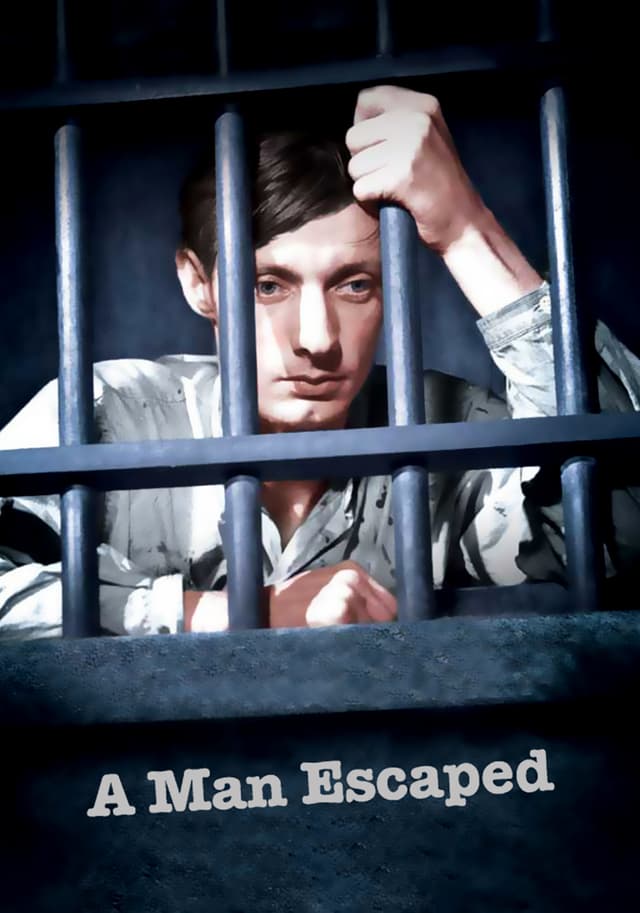
A Man Escaped Budget
Updated
Synopsis
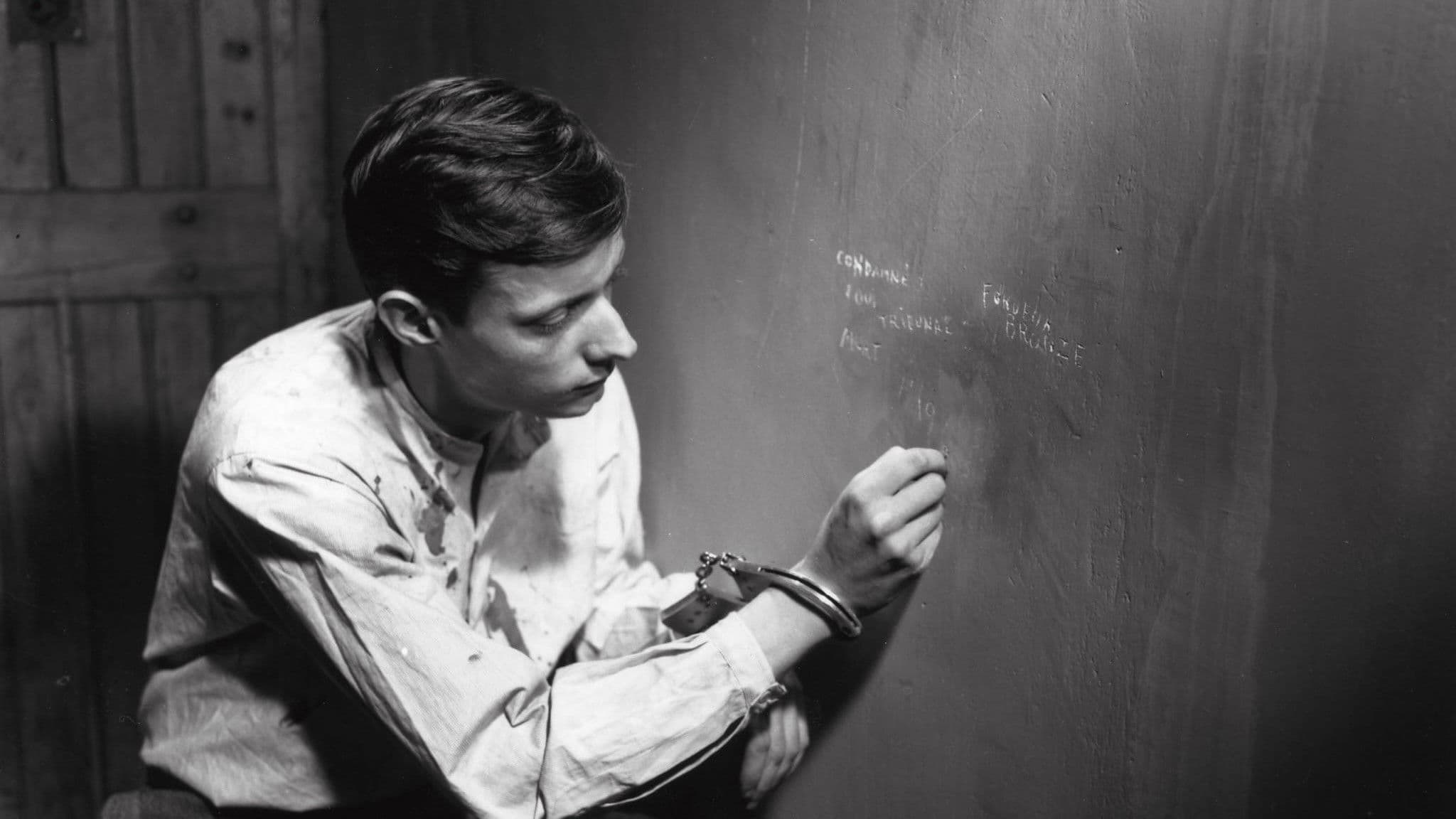
In Nazi-occupied Lyon in 1943, French Resistance lieutenant André Fontaine is sentenced to death by the Gestapo and held at the Montluc prison. Refusing to wait for execution, Fontaine begins methodically planning his escape, sharpening a spoon into a chisel, splicing rope from his bedsheets, and learning the rhythms of his guards. Robert Bresson's austere wartime drama, drawn from the published memoir of real Resistance fighter André Devigny, observes the patient mechanics of survival under sentence of death.
What Is the Budget of A Man Escaped (1956)?
A Man Escaped (1956), directed by Robert Bresson, was produced on an estimated budget of approximately $200,000 in 1956 dollars (roughly $2,300,000 adjusted to 2026). The figure has not been officially confirmed by Gaumont, the underlying production financier, but is consistent with French cinema scholarship from Jacques Aumont, Tony Pipolo, and other Bresson biographers, and with documented Gaumont production-cost ranges for French dramatic feature productions of the mid-1950s.
The film was financed and distributed by the Société Nouvelle des Établissements Gaumont, the established French production and distribution conglomerate, alongside Nouvelles Éditions de Films. The deliberately austere production budget reflected Bresson's established creative preferences and the deliberately stripped-down dramatic register that the screenplay required. Gaumont's production-financing support reflected the company's ongoing commitment to French prestige dramatic feature production during the post-World War II reconstruction period.
Key Budget Allocation Categories
The estimated $200,000 (1956 dollars) budget covered a deliberately austere production:
- Above-the-Line Talent: Robert Bresson directed and wrote the screenplay at his established post-war French auteur quote. The deliberately non-professional cast, central to Bresson's established creative methodology, kept above-the-line costs negligible. Lead François Leterrier, a philosophy student with no previous acting experience whom Bresson cast as Fontaine, received a modest production stipend. The supporting cast was similarly drawn from non-professional performers, with the deliberately specific Bressonian "model" approach to performance keeping the entire above-the-line cost extraordinarily low.
- Lyon Location Shoot: Principal photography took place across summer 1956 primarily in Lyon at the actual Montluc prison where the real André Devigny was held in 1943. Bresson negotiated direct access to the Montluc facility, which was still in operation as a French civilian and military prison at the time. The actual-location authentic aesthetic represented one of the most distinctive elements of the production and was central to Bresson's established documentary-influenced creative approach.
- Production Design: Production designer Pierre Charbonnier handled the deliberately austere wartime aesthetic, with the actual Montluc prison locations supplemented by a small number of constructed cells and corridors on the Gaumont soundstage in Paris. The deliberately austere production design was central to Bresson's deliberately stripped-down dramatic register, with the production design line item representing a moderate share of the overall budget.
- Cinematography: Cinematographer Léonce-Henri Burel, who had previously shot The Diary of a Country Priest (1951) for Bresson, handled the photography on 35mm black-and-white film. Burel's established Bressonian visual register, deliberately stripped-down and observation-forward, was central to the film's distinctive aesthetic. The black-and-white film stock and the deliberately limited camera movement reduced cinematography costs compared to typical 1956 French dramatic feature productions.
- Sound Design: The film's deliberately specific sound design, central to Bresson's established aesthetic, required substantial attention to the ambient prison sounds, the spoon-against-door scraping sequences, and the various footfall, voice, and mechanical sound elements that build the film's tactile prison experience. Sound recording by Pierre-André Bertrand was deliberately precise and represented a meaningful share of the overall production budget.
- Mozart Music License: The film's deliberately distinctive use of selections from Mozart's Mass in C minor, K. 427 across the prologue, epilogue, and several key transitional moments required music licensing through the established Mozart public-domain framework. The deliberately distinctive use of pre-existing classical music rather than a commissioned original score was central to Bresson's established creative approach.
How Does A Man Escaped's Budget Compare to Similar Films?
At approximately $200,000 (1956 dollars), A Man Escaped sits in the lower-mid tier for mid-1950s French dramatic feature productions. The comparison set illustrates:
- The Diary of a Country Priest (1951): Budget approximately $150,000 in 1951 dollars (roughly $1,800,000 adjusted to 2026) | Worldwide modest. Robert Bresson's previous feature cost roughly 75 percent of A Man Escaped and operated on a comparable deliberately austere production scale.
- The 400 Blows (1959): Budget approximately $75,000 in 1959 dollars (roughly $800,000 adjusted to 2026) | Worldwide modest. François Truffaut's contemporaneous French New Wave breakout feature cost roughly 38 percent of A Man Escaped on a comparable deliberately austere production scale.
- Hiroshima Mon Amour (1959): Budget approximately $250,000 in 1959 dollars (roughly $2,700,000 adjusted to 2026) | Worldwide modest. Alain Resnais' contemporaneous French New Wave breakout feature cost roughly 25 percent more than A Man Escaped and represents the comparable prestige-tier comparison.
- Bicycle Thieves (1948): Budget approximately $130,000 in 1948 dollars (roughly $1,700,000 adjusted to 2026) | Worldwide modest. Vittorio De Sica's post-war Italian neorealist breakout feature cost roughly 65 percent of A Man Escaped and operates on a comparable deliberately austere neorealist production scale.
- Rome, Open City (1945): Budget approximately $20,000 in 1945 dollars (roughly $340,000 adjusted to 2026) | Worldwide modest. Roberto Rossellini's post-war Italian neorealist breakout feature cost roughly 10 percent of A Man Escaped on a comparable wartime-resistance subject and represents the foundational neorealist budget comparison.
A Man Escaped Box Office Performance
A Man Escaped premiered at the Cannes Film Festival in May 1957 in the main competition, where Robert Bresson won the Best Director award. The film opened theatrically in France through Gaumont on November 28, 1956 ahead of the Cannes premiere, generating approximately 470,000 admissions in domestic French theatrical engagement. International theatrical rollout through 1957 and 1958 generated additional revenue across Italy, West Germany, the United Kingdom, and the United States.
Box Office Breakdown
A Man Escaped

The film's strong Cannes Best Director win in May 1957 drove substantial international theatrical attention and contributed to the film's eventual recoupment of the production investment through the international theatrical rollout. The deliberately austere production scale ensured that even modest theatrical returns provided meaningful recoupment, with the film generating ongoing revenue through Bresson's sustained art-house theatrical and retrospective programming through the 1960s, 1970s, and beyond.
The film has been continuously available through subsequent decades on French and international art-house circuits, on French and international television including the various national film cinematheque programming initiatives, on Criterion Collection home video distribution since 1999, and on the Criterion Channel streaming service since the platform's 2019 launch. The sustained licensing path has provided ongoing revenue across the seven decades since the film's original 1956 release.
A Man Escaped Production History
Robert Bresson developed the A Man Escaped screenplay across 1954 and 1955 as a deliberate adaptation of André Devigny's 1956 published memoir Un condamné à mort s'est échappé. Devigny was a French Resistance lieutenant who had been sentenced to death by the Gestapo at Lyon's Montluc prison in 1943 and escaped the night before his scheduled execution by methodically dismantling his cell door, splicing rope from his bedsheets, and climbing over the prison wall. Bresson personally consulted with Devigny throughout the screenplay development process, with Devigny serving as a technical advisor on the production.
The project formally attached production financing through the Société Nouvelle des Établissements Gaumont and Nouvelles Éditions de Films in early 1956. Casting locked across spring 1956 with François Leterrier, a philosophy student with no previous acting experience, attached as Fontaine. The deliberately non-professional cast, central to Bresson's established creative methodology, included Charles Le Clainche, Maurice Beerblock, Roland Monod, and Jacques Ertaud in the principal supporting roles.
Principal photography took place across summer 1956 primarily in Lyon at the actual Montluc prison where the real André Devigny was held in 1943. Bresson negotiated direct access to the Montluc facility, which was still in operation as a French civilian and military prison at the time. The deliberately specific Bressonian production methodology emphasized repeated takes to achieve the deliberately specific non-performance register that the screenplay required, with Bresson reportedly directing some sequences through dozens of takes to achieve the desired emotional flatness.
Post-production was completed at the Gaumont post-production facility in Paris across fall 1956. The deliberately specific use of selections from Mozart's Mass in C minor, K. 427 was established early in the post cycle, with Bresson selecting the specific Mozart passages to anchor the film's deliberately spiritual register. The film opened theatrically in France through Gaumont on November 28, 1956 ahead of its eventual May 1957 Cannes Film Festival main competition premiere, where Bresson won the Best Director award.
Awards and Recognition
A Man Escaped received substantial international awards recognition during the 1957 cycle. The film won the Best Director award for Robert Bresson at the 10th Cannes Film Festival in May 1957, the most prestigious global film festival prize. The Cannes Best Director win represented one of the most prominent international awards results of Bresson's career and contributed substantially to his sustained international auteur reputation through the subsequent decades.
Beyond Cannes, the film received recognition through French and international film criticism awards. The film won the Prix Méliès from the French Film Critics Syndicate for Best French Film of 1956, the most prominent French national film criticism award. The film was selected by Jean-Luc Godard, Eric Rohmer, Jacques Rivette, and other Cahiers du Cinéma critics on their best-of-1956 lists, with extensive long-form criticism in the magazine across multiple issues. The film has subsequently appeared on numerous "greatest films of all time" lists, including the 2012 Sight & Sound critics' poll and the 2022 Sight & Sound critics' poll where it placed in the top 100.
Critical Reception
A Man Escaped received among the strongest critical reviews of any 1956 international release. The film holds a 100% approval rating on Rotten Tomatoes based on 25 critic reviews, with the critical consensus describing it as "a rigorous, austere wartime drama that distills the patient mechanics of escape into one of the great achievements of post-war French cinema." Metacritic does not have a substantial score for the film given its 1956 release predating the Metacritic framework. The film has retained its critical reputation across the seven decades since release, with subsequent retrospective coverage consistently citing the film among the defining masterpieces of Robert Bresson's career.
Critics broadly praised Robert Bresson's deliberately austere directorial approach, François Leterrier's deliberately specific non-performance lead register, and the deliberately specific Mozart musical accompaniment. André Bazin in Cahiers du Cinéma published the most influential contemporary critical essay on the film, framing it as a defining example of Bresson's established "cinematographic" methodology distinct from theatrical cinema. Eric Rohmer wrote that the film "delivers one of the most rigorous and emotionally resonant wartime dramas of the post-war French cinema, with Bresson's deliberately austere approach achieving a profound spiritual register." Jean-Luc Godard called the film "the most important film of post-war French cinema."
Subsequent retrospective criticism through the 1960s, 1970s, 1980s, and beyond has consolidated the film's reputation as one of Bresson's defining masterpieces and as one of the foundational works of post-war French cinema. Pauline Kael, Andrew Sarris, Susan Sontag, and other major American critics have all written extensively on the film across the subsequent decades. The 2012 Sight & Sound critics' poll placed the film in the top 100 greatest films of all time, with subsequent retrospective coverage consistently citing the film as a defining example of cinematic minimalism, spiritual realism, and the broader Bressonian "cinematographic" aesthetic.
Frequently Asked Questions
How much did it cost to make A Man Escaped (1956)?
The production budget was approximately $200,000 in 1956 dollars (roughly $2,300,000 adjusted to 2026), consistent with French cinema scholarship from Jacques Aumont, Tony Pipolo, and other Bresson biographers, and with documented Gaumont production-cost ranges for French dramatic feature productions of the mid-1950s. The deliberately austere production budget reflected Robert Bresson's established creative preferences.
Is A Man Escaped based on a true story?
Yes. The film is adapted from André Devigny's 1956 published memoir Un condamné à mort s'est échappé. Devigny was a French Resistance lieutenant who had been sentenced to death by the Gestapo at Lyon's Montluc prison in 1943 and escaped the night before his scheduled execution by methodically dismantling his cell door, splicing rope from his bedsheets, and climbing over the prison wall. Bresson personally consulted with Devigny throughout the screenplay development process, with Devigny serving as a technical advisor on the production.
Where was A Man Escaped filmed?
Principal photography took place across summer 1956 primarily in Lyon at the actual Montluc prison where the real André Devigny was held in 1943. Bresson negotiated direct access to the Montluc facility, which was still in operation as a French civilian and military prison at the time. Additional sequences were shot on constructed cells and corridors at the Gaumont soundstage in Paris.
Who directed A Man Escaped?
Robert Bresson directed and wrote the screenplay. Bresson was an established French cinema auteur whose previous features included The Diary of a Country Priest (1951), Les Dames du Bois de Boulogne (1945), and Les Anges du péché (1943). A Man Escaped represented Bresson's fourth feature and is widely cited as one of his defining masterpieces, alongside Pickpocket (1959), Au hasard Balthazar (1966), and Mouchette (1967).
Why does A Man Escaped use Mozart music?
Robert Bresson deliberately selected passages from Mozart's Mass in C minor, K. 427 to anchor the film's deliberately spiritual register. The Mozart selections appear across the prologue, epilogue, and several key transitional moments. The deliberately distinctive use of pre-existing classical music rather than a commissioned original score was central to Bresson's established creative approach, drawing on the established Catholic spiritual register of the Mozart Mass to deepen the film's wartime moral framework.
Did A Man Escaped win any awards?
Yes. The film won the Best Director award for Robert Bresson at the 10th Cannes Film Festival in May 1957, the most prestigious global film festival prize. The film also won the Prix Méliès from the French Film Critics Syndicate for Best French Film of 1956. The film has subsequently appeared on numerous "greatest films of all time" lists, including the 2012 Sight & Sound critics' poll and the 2022 Sight & Sound critics' poll where it placed in the top 100.
Who plays Fontaine in A Man Escaped?
François Leterrier plays André Fontaine, the French Resistance lieutenant sentenced to death at Lyon's Montluc prison. Leterrier was a philosophy student with no previous acting experience whom Bresson cast based on his deliberately specific "model" approach to non-professional performance. Leterrier subsequently transitioned to film directing in his own right, directing several French features from the 1960s onward.
What is A Man Escaped about?
In Nazi-occupied Lyon in 1943, French Resistance lieutenant André Fontaine is sentenced to death by the Gestapo and held at the Montluc prison. Refusing to wait for execution, Fontaine begins methodically planning his escape, sharpening a spoon into a chisel, splicing rope from his bedsheets, and learning the rhythms of his guards. Bresson's austere wartime drama observes the patient mechanics of survival under sentence of death.
What did critics think of A Man Escaped?
The film received among the strongest reviews of any 1956 international release, with a 100% approval rating on Rotten Tomatoes (25 reviews). André Bazin in Cahiers du Cinéma published the most influential contemporary critical essay on the film, framing it as a defining example of Bresson's established "cinematographic" methodology distinct from theatrical cinema. Eric Rohmer, Jean-Luc Godard, and other major Cahiers du Cinéma critics all praised the film extensively.
Where can I watch A Man Escaped?
A Man Escaped is available on the Criterion Channel streaming service, where it has been included since the platform's 2019 launch. The Criterion Collection released the film on Blu-ray and DVD in 1999, with a subsequent 4K restoration released in 2013. The film is also available to rent or purchase digitally through Apple, Amazon, and Kanopy in select territories, and is periodically programmed by national film cinematheques and art-house theatrical venues worldwide.
Filmmakers
A Man Escaped

Official Trailer
Build budgets like this one in Saturation
Start from an industry-standard feature film template, import the schedule and rates you already have, and let the cost report keep itself current as you spend. Real-time collaboration, no spreadsheets.