A Knight’s Tale Budget
 AdventureDramaRomanceAction2h 13m
Updated
Synopsis
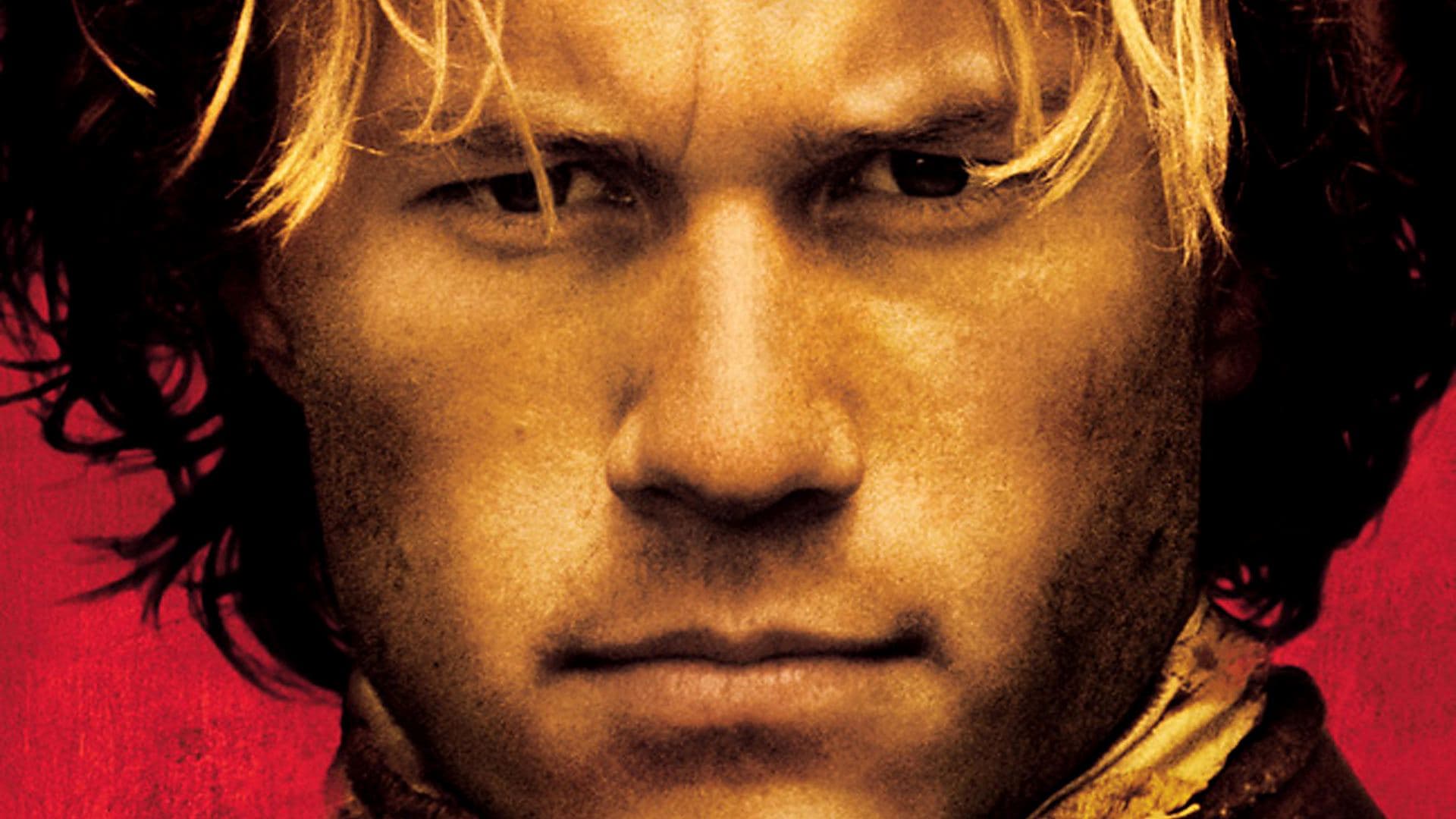
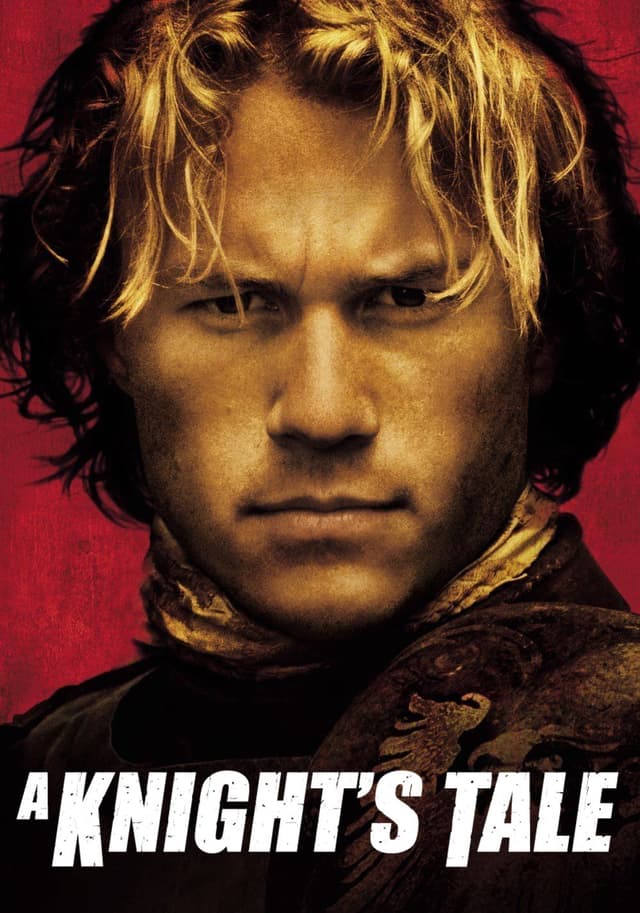
After his master dies, peasant squire William Thatcher impersonates a knight and competes on the jousting circuit across 14th-century Europe with a band of misfits, a forged patent of nobility, and writer Geoffrey Chaucer in tow. With a Queen-and-Bowie classic-rock soundtrack pushing every tournament, William rises from anonymous lancer to fan favorite while romancing the noblewoman Jocelyn and clashing with the brutal Count Adhemar.
What Is the Budget of A Knight's Tale (2001)?
A Knight's Tale (2001), written and directed by Brian Helgeland and released by Columbia Pictures, was produced on a budget of $65,000,000. Columbia, a Sony Pictures subsidiary, financed the production alongside Escape Artists, the Black & Blu Entertainment shingle, and Finestkind, with international rights pre-sold to help underwrite the substantial period production. The film was Helgeland's second feature as director after Payback (1999) and represented Columbia's biggest swing on a non-franchise medieval picture since First Knight in 1995.
The investment supported a deliberately anachronistic vision: 14th-century jousting tournaments scored with Queen, David Bowie, War, and Thin Lizzy needle drops, full-scale tournament arenas built from scratch in the Czech Republic, hundreds of costumed extras, and a young lead (Heath Ledger) in his first major studio leading role after The Patriot. Columbia's expectation was a worldwide gross north of $130,000,000 to clear the marketing and distribution carrying costs, a target the film cleared narrowly thanks to strong international and home video performance.
Key Budget Allocation Categories
A Knight's Tale's $65,000,000 budget was distributed across several major production areas:
- Above-the-Line Talent Heath Ledger, fresh off The Patriot (2000) and 10 Things I Hate About You (1999), led the cast on a pre-Brokeback Mountain leading-man rate. Brian Helgeland commanded a writer-director fee on the back of his Academy Award for L.A. Confidential. Supporting roles for Mark Addy, Paul Bettany (in his American breakthrough as Geoffrey Chaucer), Rufus Sewell as Count Adhemar, Alan Tudyk, Laura Fraser, and Shannyn Sossamon filled out a deliberately international ensemble.
- Czech Republic Location Shoot Principal photography took place at Barrandov Studios in Prague and on location across the Czech Republic, including jousting fields constructed near the studio. The Czech production base offered favorable below-the-line rates, experienced period-film crews, and proximity to authentic medieval architecture for exteriors.
- Jousting and Stunt Choreography The film required full-contact jousting sequences with armored stunt performers, trained horses, and break-away lances engineered to splinter on camera. Equestrian stunt coordinator Steve Dent and his team rehearsed the principal cast on horseback for weeks before cameras rolled.
- Costume and Armor Costume designer Caroline Harris oversaw the construction of hundreds of pieces of period armor, heraldic surcoats, and Jocelyn's deliberately anachronistic high-fashion gowns, several of which referenced contemporary couture silhouettes on purpose. Armor builds for the lead cast were custom-fit and lightweight enough for stunt work.
- Music Licensing The classic-rock soundtrack carried significant publishing and master-recording licensing costs. Queen's We Will Rock You, David Bowie's Golden Years, Thin Lizzy's The Boys Are Back in Town, and War's Low Rider were all expensive needle drops, with the Queen track positioned as the opening number and the marketing hook.
- Visual Effects and Crowd Augmentation Tournament-crowd shots were augmented with digital extras to fill arenas beyond the practical 1,000-extra count. Visual effects house Asylum handled the bulk of the crowd extension and minor environmental enhancement work.
- Score Composer Carter Burwell delivered an orchestral score that played against rather than under the needle drops, with traditional period instrumentation layered into the tournament cues.
How Does A Knight's Tale's Budget Compare to Similar Films?
At $65,000,000, A Knight's Tale sits in the mid-budget range for early-2000s medieval and historical action films. The comparison set illustrates how its commercial outcome compared with peer productions:
- First Knight (1995): Budget $55,000,000 | Worldwide $127,500,000. Columbia's previous medieval romance with Sean Connery and Richard Gere cost slightly less and earned slightly more, providing the studio template that justified A Knight's Tale six years later.
- The 13th Warrior (1999): Budget $160,000,000 | Worldwide $61,700,000. The John McTiernan Viking epic cost more than twice as much and lost over $100,000,000 worldwide, illustrating the high risk in the period-action genre that Helgeland's film successfully navigated.
- Gladiator (2000): Budget $103,000,000 | Worldwide $460,583,960. Ridley Scott's Roman epic spent roughly 60% more and earned nearly four times the worldwide gross, setting the bar for prestige historical action that A Knight's Tale deliberately undercut with its pop-rock approach.
- Timeline (2003): Budget $80,000,000 | Worldwide $43,935,763. Richard Donner's medieval time-travel adaptation cost more and earned far less, demonstrating that even with a similar setting, audience interest required a distinct creative angle.
- Kingdom of Heaven (2005): Budget $130,000,000 | Worldwide $218,084,531. Ridley Scott's Crusades epic spent twice the budget for less than double the worldwide gross, with a markedly less profitable ratio than Helgeland's film.
A Knight's Tale Box Office Performance
A Knight's Tale opened on May 11, 2001 with a domestic weekend of $16,510,624, finishing third behind The Mummy Returns and Angel Eyes. The opening was solid for a non-franchise period film and the picture demonstrated strong legs through the early-summer corridor, eventually outpacing its opening weekend nearly four times over in domestic gross.
Against a $65,000,000 production budget, the film needed approximately $145,000,000 worldwide to reach profitability after marketing. Here is the financial breakdown:
Box Office Breakdown
A Knight’s Tale

A Knight's Tale returned roughly $1.02 in theatrical revenue for every $1 invested when measured against estimated production and marketing spend, putting it in the narrow-loss-to-narrow-profit corridor before ancillary revenue. The domestic gross of $56,569,702 led the international take of $60,917,862, a fairly balanced 48/52 split that demonstrated the film traveled well despite the very American classic-rock soundtrack.
Home video was where the film fully earned out. DVD sales in 2001 and 2002 were robust, the soundtrack album sold strongly off the back of the Queen marketing campaign, and Sony continued to mine the title through repeated catalog reissues and television syndication. Columbia ultimately classified the picture as a profitable mid-budget catalog asset rather than a theatrical underperformer.
A Knight's Tale Production History
Brian Helgeland developed A Knight's Tale at Columbia Pictures throughout the late 1990s, drawing structural inspiration from Geoffrey Chaucer's The Canterbury Tales (specifically the Knight's Tale) but writing an original anachronistic story that fused 14th-century jousting with rock-concert energy. Helgeland's pitch, that medieval crowds at jousting tournaments were the closest historical analog to a modern stadium-rock audience, was the conceptual foundation for the soundtrack approach that would define the film's identity.
Principal photography began in late 2000 at Barrandov Studios in Prague, Czech Republic, utilizing the country's deep crew base for period productions and competitive below-the-line rates. The jousting field was constructed full-scale on the Barrandov backlot, with hundreds of costumed extras filling the stands for tournament sequences. Shooting wrapped in early 2001 ahead of post-production at Columbia's Los Angeles facilities.
Heath Ledger was cast as William Thatcher on the strength of his work in 10 Things I Hate About You and The Patriot. Helgeland later said the picture worked because Ledger believed in the anachronistic premise completely and played the part with sincere romance rather than camp. Paul Bettany's Geoffrey Chaucer became a breakout supporting performance and helped launch his American career, with the introduction monologues for each tournament becoming one of the film's signature elements.
Columbia positioned the film for a Mother's Day weekend opening on May 11, 2001, with a marketing campaign anchored by the Queen needle drop in the trailers and an MTV-friendly soundtrack push. The film tracked softer than the studio hoped pre-release but held strongly week-to-week thanks to positive audience word of mouth.
Awards and Recognition
A Knight's Tale was nominated for Best Achievement in Music Written for a Soundtrack at the BMI Film & TV Awards. Carter Burwell's score and the licensed music supervision were widely cited as the year's most distinctive soundtrack approach, though the film did not receive Academy Award attention. The film won the Best Costume Design category at the Costume Designers Guild Awards in 2002 for Caroline Harris's deliberately anachronistic period work.
Heath Ledger's lead performance was nominated at the MTV Movie Awards and at the Saturn Awards for Best Performance by a Younger Actor, recognition that helped position him for subsequent leading-man roles. The picture was overshadowed at the major year-end ceremonies by larger-scale period and fantasy releases including The Lord of the Rings: The Fellowship of the Ring and Moulin Rouge, but earned a durable critical reputation as a sui generis genre exercise.
Critical Reception
A Knight's Tale received generally positive reviews. The film holds a 58% approval rating on Rotten Tomatoes based on 158 critic reviews, with a critical consensus that praised its energetic anachronistic spirit while noting the conventional sports-movie underdog beats. On Metacritic, the film scored 54 out of 100, indicating mixed or average reviews. Audiences surveyed by CinemaScore gave the film a solid A-, a clear signal of audience enthusiasm that translated into the film's notable theatrical legs.
Roger Ebert gave the film three out of four stars, writing that it was "goofy and exuberant" and that the rock soundtrack "works, surprisingly, because it captures the same emotion the original audiences would have felt." The New York Times' A.O. Scott was more reserved, calling the film "likable but slight," while Entertainment Weekly's Owen Gleiberman praised Heath Ledger's screen presence and Paul Bettany's scene-stealing Chaucer.
The film's reputation has grown in the two decades since release, with retrospective coverage frequently positioning it as a cult favorite and as an early showcase for Ledger's range. The 2008 death of Heath Ledger gave the film unexpected emotional weight, and a planned sequel that had been in early development with Helgeland was never produced. The picture remains a touchstone for the anachronistic-soundtrack approach later echoed in films like A Million Ways to Die in the West and Marie Antoinette.
Frequently Asked Questions
How much did A Knight's Tale (2001) cost to make?
The reported production budget was $65,000,000. Columbia Pictures financed the production through its Sony Pictures parent alongside Escape Artists, Black & Blu Entertainment, and Finestkind, with principal photography based at Barrandov Studios in Prague to keep below-the-line costs in check.
How much did A Knight's Tale earn at the box office?
The film grossed $56,569,702 domestically and $60,917,862 internationally, for a worldwide total of $117,487,564. It opened to $16,510,624 in the United States, finishing third on its May 11, 2001 opening weekend behind The Mummy Returns and Angel Eyes.
Was A Knight's Tale a box office success?
It was a modest theatrical performer that became a clear winner on home video. Against a $65,000,000 budget and roughly $50,000,000 in marketing, the worldwide gross of $117,487,564 put the film near theatrical break-even, with DVD sales, soundtrack revenue, and television syndication subsequently classifying it as a profitable catalog asset for Columbia.
Who directed A Knight's Tale?
Brian Helgeland wrote and directed the film. It was his second feature as director after Payback (1999). Helgeland had previously won the Academy Award for Best Adapted Screenplay for L.A. Confidential (1997).
Where was A Knight's Tale filmed?
Principal photography took place at Barrandov Studios in Prague, Czech Republic, with the full-scale jousting field constructed on the studio backlot. The Czech production base offered favorable below-the-line rates, experienced period-film crews, and proximity to authentic medieval architecture for exterior work.
Who plays William Thatcher in A Knight's Tale?
Heath Ledger plays William Thatcher, a peasant squire who impersonates a knight on the jousting circuit. Ledger took the role after starring turns in 10 Things I Hate About You (1999) and The Patriot (2000), and the film established him as a viable leading man for a studio period picture.
What songs are in the A Knight's Tale soundtrack?
The classic-rock soundtrack includes Queen's We Will Rock You and Tribute to a King, David Bowie's Golden Years, Thin Lizzy's The Boys Are Back in Town, War's Low Rider, Bachman-Turner Overdrive's Takin' Care of Business, and Eric Clapton's Wonderful Tonight. Carter Burwell's orchestral score plays alongside the licensed tracks.
Is A Knight's Tale based on Chaucer?
The film draws structural inspiration from Geoffrey Chaucer's The Canterbury Tales, specifically The Knight's Tale, and prominently features Chaucer himself (played by Paul Bettany) as a supporting character. The plot itself is an original anachronistic story by writer-director Brian Helgeland rather than a direct adaptation.
What did critics think of A Knight's Tale?
The film received generally positive reviews. It holds a 58% approval rating on Rotten Tomatoes from 158 critics and a 54 out of 100 score on Metacritic. Audiences gave it an A- CinemaScore. Roger Ebert gave it three out of four stars, praising the anachronistic energy and the cast.
Did A Knight's Tale get a sequel?
No. Brian Helgeland developed early ideas for a sequel and Sony continued discussions through the mid-2000s, but the project was never greenlit. Heath Ledger's death in 2008 effectively ended any possibility of a direct continuation, though the film has remained a frequently revisited cult favorite.
Filmmakers
A Knight’s Tale

Build budgets like this one in Saturation
Start from an industry-standard feature film template, import the schedule and rates you already have, and let the cost report keep itself current as you spend. Real-time collaboration, no spreadsheets.