The Rocky Horror Picture Show Budget
 ComedyScience FictionFantasyHorror1h 39m
Updated
Synopsis
After getting a flat tire in the middle of nowhere, newly engaged couple Brad and Janet encounter the eerie mansion of the flamboyant, seductive Dr Frank-N-Furter and a variety of eccentric characters. Through elaborate dance and rock music, the mad scientist unveils his latest creation: a perfect, muscular man.
What Is the Budget of The Rocky Horror Picture Show?
The Rocky Horror Picture Show (1975) was produced on a budget of approximately $1.4 million. For a musical film adaptation in the mid-1970s, this was a modest sum, reflecting the project's origins as a scrappy stage show transplanted to celluloid rather than a major studio tentpole. 20th Century Fox greenlit the production with limited expectations, treating it as a low-risk experiment rather than a flagship release.
Producer Lou Adler, who had championed the original London and Los Angeles stage productions, brought the property to Fox with director Jim Sharman and writer-performer Richard O'Brien attached. The tight budget forced creative problem-solving at every stage, from casting relative unknowns alongside Tim Curry (reprising his stage role as Dr. Frank-N-Furter) to shooting entirely in England where costs were lower. What the production lacked in resources, it compensated for with inventive set design and the sheer energy of its cast.
Key Budget Allocation Categories
- Cast and Performance: Tim Curry reprised his iconic stage role, with Susan Sarandon, Barry Bostwick, and Meat Loaf rounding out the ensemble. Most were early-career performers, keeping talent costs well below what a star-driven musical would have demanded.
- Production Design and Sets: Brian Thomson's production design transformed Bray Studios and the Victorian-era Oakley Court mansion in Berkshire into the film's gothic playground. The castle interiors, laboratory, and ballroom sequences relied on theatrical stagecraft and bold color choices rather than expensive construction.
- Music and Choreography: Richard O'Brien wrote the songs and co-wrote the screenplay, while Richard Hartley served as musical director. Choreography by David Toguri blended rock concert energy with classic Hollywood musical staging, all rehearsed and shot on tight schedules.
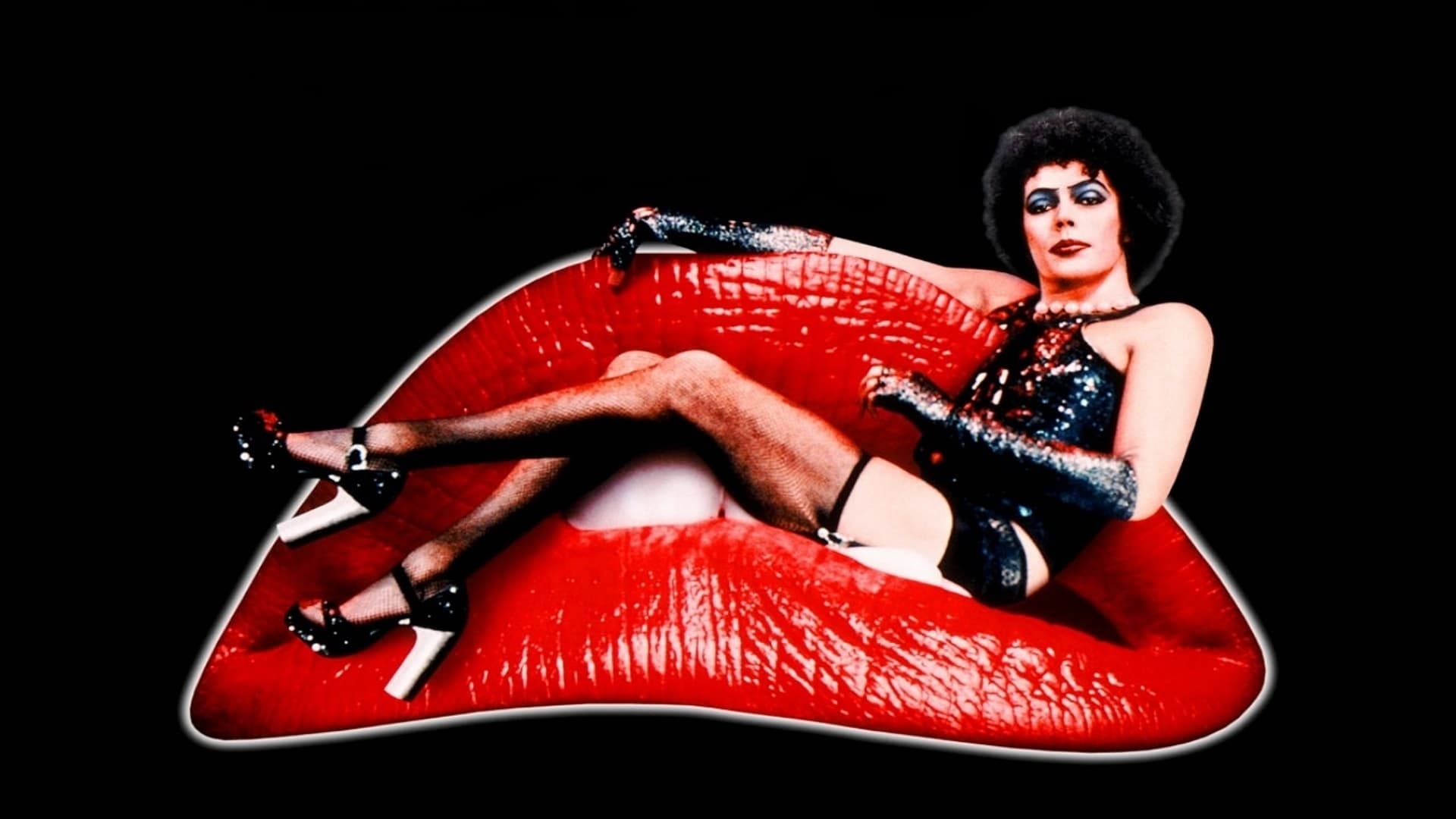
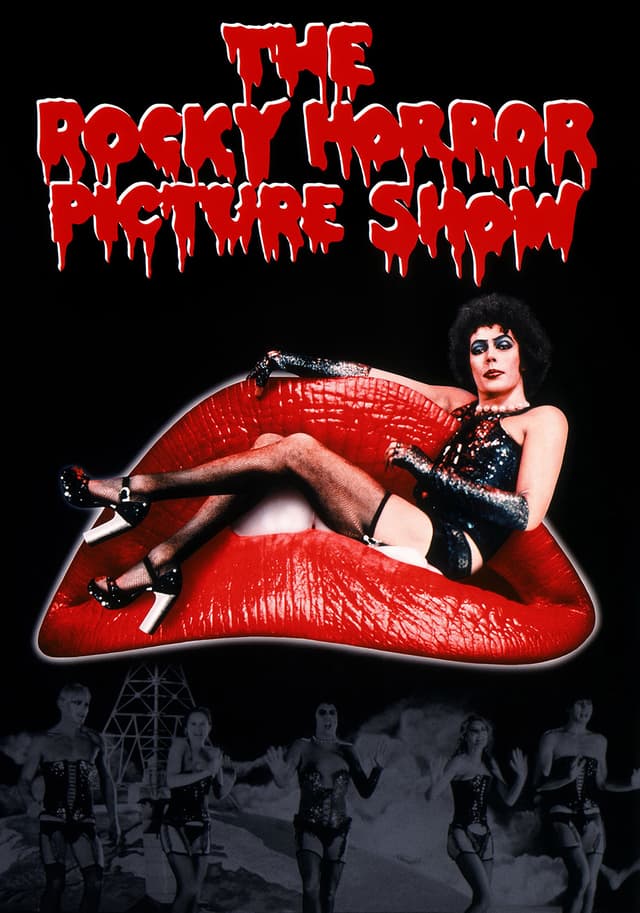
- Costumes and Makeup: Sue Blane's costume designs, including Frank-N-Furter's corset and pearls, became some of the most recognizable in film history. Pierre La Roche handled makeup, creating the glam-rock aesthetic that defined the film's visual identity on a fraction of a typical studio budget.
- Location and Studio Work: Shooting at Bray Studios (the former home of Hammer Horror productions) and Oakley Court in England kept overhead manageable. The English countryside locations doubled convincingly for the fictional Denton, USA, and the Gothic architecture provided production value that no set could have replicated at this budget level.
- Post-Production: Editing, sound mixing, and optical effects were completed efficiently. The film's visual effects were minimal by design, leaning on practical makeup and theatrical lighting rather than costly optical work.
How Does The Rocky Horror Picture Show's Budget Compare to Similar Films?
Placed alongside other 1970s genre films and musicals, The Rocky Horror Picture Show's $1.4 million budget occupies an unusually modest tier, yet its cultural and financial legacy dwarfs nearly all of them.
- Phantom of the Paradise (1974): Budget $1.5 million | Worldwide $2.1 million. Brian De Palma's rock-horror musical arrived a year earlier with a comparable budget but failed to find a lasting audience, making Rocky Horror's long-tail success all the more remarkable.
- Tommy (1975): Budget $3.4 million | Worldwide $34 million. Ken Russell's adaptation of The Who's rock opera had more than double the budget and a major studio push, yet Rocky Horror ultimately eclipsed it in cumulative earnings through decades of midnight screenings.
- A Star Is Born (1976): Budget $6 million | Worldwide $80 million. The Streisand-Kristofferson musical drama cost over four times as much and was a conventional box office hit, but it never generated the repeat-viewing phenomenon that drives Rocky Horror's revenue to this day.
- Eraserhead (1977): Budget $100,000 | Worldwide $7 million. David Lynch's surrealist debut shared Rocky Horror's midnight-movie circuit and proved that cult audiences could sustain a film for years, though on a far smaller scale.
- Grease (1978): Budget $6 million | Worldwide $396 million. The defining musical hit of the late 1970s earned far more in its initial run, but Rocky Horror's cumulative theatrical gross over 50-plus years narrows the gap considerably when adjusting for continuous re-release revenue.
The Rocky Horror Picture Show Box Office Performance
The Rocky Horror Picture Show's theatrical run is unlike anything else in cinema history. Its initial wide release in August 1975 was a commercial disappointment, with audiences and critics largely indifferent to its campy blend of horror, science fiction, and glam rock. Fox nearly pulled the film from distribution entirely.
The transformation began in April 1976 when the Waverly Theatre in New York City started screening it as a midnight movie. Audiences began dressing in costume, shouting callback lines at the screen, throwing toast during the dinner scene, and spraying water guns during the rain sequence. This participatory ritual spread to theaters across the United States and eventually worldwide, turning every screening into a live event. The film has never left theatrical distribution since, making it the longest-running theatrical release in film history.
The cumulative worldwide gross is estimated at $171.2 million, accumulated over more than fifty years of continuous midnight and special-event screenings. Against a $1.4 million production budget, the return on investment is staggering. The break-even point (roughly two times the production budget plus prints and advertising) was surpassed within the first few years of the midnight phenomenon, and every screening since has been pure profit for the studio.
Box Office Breakdown
The Rocky Horror Picture Show

The Rocky Horror Picture Show Production History
The Rocky Horror Picture Show began as "The Rocky Horror Show," a stage musical written by Richard O'Brien during the early 1970s. O'Brien, an unemployed actor and aspiring writer living in London, composed the songs and script as a love letter to the B-movies, science fiction serials, and glam rock that defined his cultural obsessions. Director Jim Sharman staged the premiere at the Royal Court Theatre Upstairs in June 1973, with Tim Curry originating the role of Dr. Frank-N-Furter.
The stage show was an immediate sensation in London's fringe theater scene, transferring to the King's Road Theatre for a long run and spawning a Los Angeles production at the Roxy Theatre in 1974. Producer Lou Adler, who backed the LA staging, recognized the property's film potential and brought it to 20th Century Fox. The studio approved a modest budget, and Sharman was retained to direct with O'Brien co-writing the screenplay alongside actor Jim Sharman.
Principal photography took place over eight weeks in late 1974 at Bray Studios in Berkshire, England, with Oakley Court, a Victorian Gothic mansion on the Thames, serving as the exterior and several interiors of the Frankenstein Place castle. The English winter conditions were genuinely miserable for the cast. Susan Sarandon, who played Janet Weiss, developed pneumonia during the pool scene, which was filmed in freezing water. Barry Bostwick (Brad Majors) and the rest of the cast endured similar conditions in the unheated mansion.
Tim Curry's performance as Frank-N-Furter was the production's anchor. His ability to shift between menace, seduction, and vulnerability gave the film a center of gravity that its wild tonal shifts demanded. Meat Loaf, cast as Eddie, performed his musical number on a motorcycle that was wheeled onto the set, bringing genuine rock-and-roll physicality to what was essentially a one-scene role. Richard O'Brien played Riff Raff, the hunchbacked handyman, while also serving as the creative conscience of the production.
Post-production was straightforward, with the film delivered to Fox on schedule and on budget. The studio released it conventionally in August 1975 to tepid reviews and thin box office returns. It was the midnight screening phenomenon, beginning at the Waverly Theatre in Greenwich Village in 1976, that rescued the film from obscurity and launched it into cultural permanence.
Awards and Recognition
The Rocky Horror Picture Show's awards legacy reflects its unusual trajectory from commercial failure to cultural landmark. The film received no major award nominations upon its initial release, which is unsurprising given its critical reception and modest box office performance in 1975.
The recognition came decades later, as institutions caught up with the film's enduring significance. In 2005, the Library of Congress selected The Rocky Horror Picture Show for preservation in the National Film Registry, citing its cultural, historical, and aesthetic importance. This placed it alongside films like Casablanca and Citizen Kane as a work deemed essential to the American cinematic record.
The original London stage production won the Evening Standard Theatre Award for Best Musical in 1973. The film's soundtrack has been recognized as one of the defining rock musical recordings of the 1970s, with "Time Warp" and "Sweet Transvestite" becoming staples of popular culture. Saturn Award nominations acknowledged its contributions to the science fiction and horror genres. The film's true award, however, is its unbroken theatrical run of over fifty years, a record no other film has approached.
Critical Reception
Critical response to The Rocky Horror Picture Show has evolved dramatically over its half-century lifespan. Upon release, reviews were mixed to negative. Critics found the humor uneven, the plot intentionally nonsensical, and the tone difficult to categorize. The film holds a 79% approval rating on Rotten Tomatoes, though that aggregate obscures the wide gap between contemporary dismissals and later reassessments.
Roger Ebert gave the film a lukewarm review in 1975, acknowledging its energy but questioning whether the campy tone would translate beyond the stage. Other critics were harsher, treating it as a minor curiosity. The midnight screening phenomenon, however, forced a reconsideration. As audiences invented the participatory rituals that transformed passive viewing into communal performance, critics began to recognize the film as something genuinely new: a movie whose meaning was completed by its audience rather than contained within its frames.
Modern critical consensus treats The Rocky Horror Picture Show as a landmark of queer cinema, audience participation culture, and the midnight movie movement. Tim Curry's performance as Frank-N-Furter is widely regarded as one of the most iconic in genre film history, a portrayal that challenged gender norms and sexual conventions years before mainstream culture was ready to engage with those themes. The film's influence extends well beyond cinema into theater, fashion, music, and the broader culture of fan communities and participatory entertainment.
Frequently Asked Questions
How much did it cost to make The Rocky Horror Picture Show (1975)?
The production budget was $1,400,000, covering principal photography, cast and crew salaries, locations, sets, post-production, and music. Marketing and distribution (P&A) costs are estimated at an additional $700,000 - $1,120,000, bringing the total studio investment to approximately $2,100,000 - $2,520,000.
How much did The Rocky Horror Picture Show (1975) earn at the box office?
The Rocky Horror Picture Show grossed $115,670,886 domestic, $55,510,514 international, totaling $171,181,400 worldwide.
Was The Rocky Horror Picture Show (1975) profitable?
Yes. Against a production budget of $1,400,000 and estimated total costs of ~$3,500,000, the film earned $171,181,400 theatrically - a 12127% ROI on production costs alone.
What were the biggest costs in producing The Rocky Horror Picture Show?
The primary cost drivers were above-the-line talent (Tim Curry, Susan Sarandon, Barry Bostwick); star comedian salaries, location filming, and aggressive marketing campaigns; international production across United Kingdom, United States of America.
How does The Rocky Horror Picture Show's budget compare to similar comedy films?
At $1,400,000, The Rocky Horror Picture Show is classified as a micro-budget production. The median budget for wide-release comedy films in the era ranges from $30 - 80M for mid-budget to $150M+ for tentpoles. Comparable budgets: Embrace of the Serpent (2015, $1,400,000); Dial M for Murder (1954, $1,400,000); Shelby Oaks (2025, $1,400,000).
Did The Rocky Horror Picture Show (1975) go over budget?
There are no widely reported accounts of significant budget overruns for this production. However, studios rarely disclose precise budget overrun figures publicly. The reported production budget reflects the final estimated cost.
What was the return on investment (ROI) for The Rocky Horror Picture Show?
The theatrical ROI was 12127.2%, calculated as ($171,181,400 − $1,400,000) ÷ $1,400,000 × 100. This measures gross revenue against production budget only - it does not account for P&A or exhibitor shares.
What awards did The Rocky Horror Picture Show (1975) win?
4 wins & 4 nominations total.
Who directed The Rocky Horror Picture Show and who were the key crew members?
Directed by Jim Sharman, written by Richard O'Brien, Jim Sharman, shot by Peter Suschitzky, with music by Richard Hartley, edited by Graeme Clifford.
Where was The Rocky Horror Picture Show filmed?
The Rocky Horror Picture Show was filmed in United Kingdom, United States of America. right| Set in the fictional town of Denton, the film was shot at Bray Studios and Oakley Court, a country house near Maidenhead, Berkshire, England, and at Elstree Studios for post-production, from 21 October to 19 December 1974. Oakley Court, built in 1857 in the Victorian Gothic style, is known for a number of Hammer films.
Filmmakers
The Rocky Horror Picture Show

Official Trailer
Build budgets like this one in Saturation
Start from an industry-standard feature film template, import the schedule and rates you already have, and let the cost report keep itself current as you spend. Real-time collaboration, no spreadsheets.