21 Jump Street Budget
Updated
Synopsis
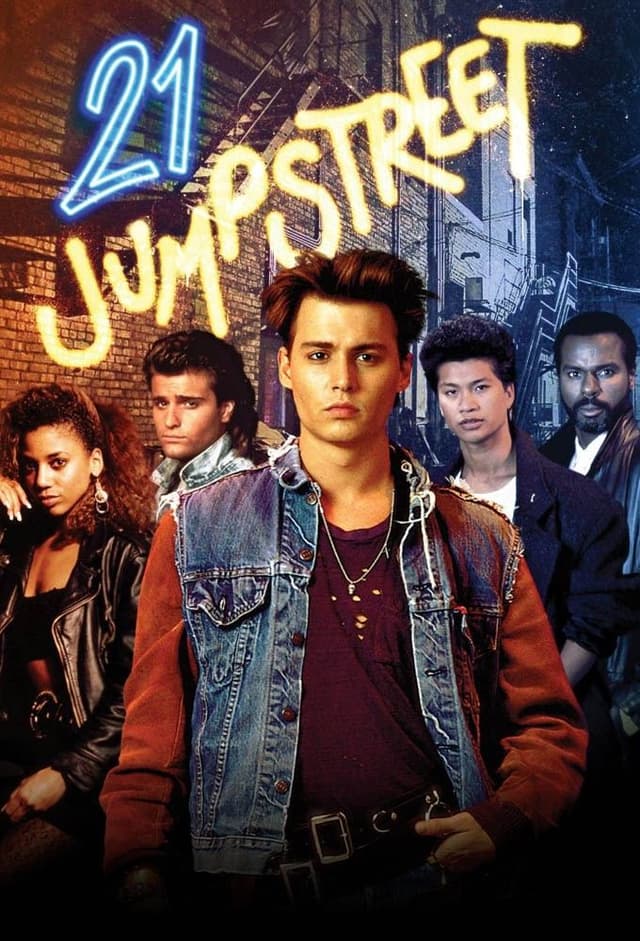
Four young-looking police officers go undercover as students at high schools and colleges across the city, working out of an abandoned chapel at 21 Jump Street to crack cases ranging from drug dealing and gang violence to hate crimes and child abuse. The Fox drama series launched Johnny Depp's career, helped establish Vancouver as a hub for American episodic television production, and ran for 103 episodes across five seasons from 1987 to 1991.
What Is the Budget of 21 Jump Street (1987)?
21 Jump Street (1987), the Fox Broadcasting Company police procedural created by Patrick Hasburgh and Stephen J. Cannell, was produced on an estimated per-episode budget in the range of $850,000 to $1,100,000 across its five-season run from April 12, 1987 to April 27, 1991. Specific per-episode figures were never publicly disclosed by Stephen J. Cannell Productions, which retained the show's intellectual property and self-financed production through a deficit arrangement with Fox. Over 103 total episodes, the cumulative production spend is estimated at approximately $95,000,000 to $110,000,000 in 1987 to 1991 dollars, with budgets escalating in later seasons as Johnny Depp's salary climbed and stunt-heavy episodes increased in frequency.
The decision to shoot in Vancouver, British Columbia rather than Los Angeles was a deliberate cost-control move, cited explicitly in industry coverage at the time as the primary mechanism by which Cannell kept the show financially viable on Fox's comparatively thin license fee. The Canadian dollar exchange rate, lower local crew rates, and the absence of US guild scale for below-the-line workers reduced per-episode production cost by an estimated 20% to 30% compared to a Los Angeles shoot, the savings that made the series possible as a fledgling network drama.
Key Budget Allocation Categories
21 Jump Street's episodic budget was divided across the recurring cost centers typical of a late-1980s hour-long network drama, with several Cannell-specific line items reflecting the show's Vancouver-based production model:
- Above-the-Line Cast: Johnny Depp's salary reportedly climbed to $45,000 per episode by season four, the highest single line item in the talent budget. Holly Robinson Peete, Peter DeLuise, Dustin Nguyen, Steven Williams, and (from season two) Richard Grieco filled out a regular cast whose collective compensation rose materially across the run as the show's ratings stabilized.
- Vancouver Production Base: Stephen J. Cannell Productions anchored the show at North Shore Studios in North Vancouver, the seven-soundstage facility Cannell built specifically to enable Canadian-based production for his series slate. Studio overhead, soundstage rental, and standing sets including the chapel-set squad room (the titular "21 Jump Street" location) absorbed a substantial portion of weekly fixed costs.
- Writers Room and Story Costs: A rotating writers room delivered 22 to 26 episodes per season at the height of the run, with Hasburgh, Cannell, and a roster of staff and freelance writers including Glen Morgan, James Wong, and Larry Hertzog producing the issue-of-the-week scripts on topics ranging from teen suicide to AIDS to hate crimes. Script fees, room overhead, and Writers Guild residuals were a steady weekly cost.
- Stunts and Action: While not a stunt-heavy show by the standards of contemporaneous Cannell action series such as The A-Team or Hunter, Jump Street regularly staged chase sequences, undercover sting takedowns, and occasional gunfights. A dedicated stunt coordinator and second unit handled the action workload, with practical effects and squib work commissioned on demand.
- Location Shooting in Vancouver: Although stages absorbed most interiors, location days throughout the Vancouver metropolitan area covered the high school exteriors, alleyway and street photography, and the rotating drug houses, biker bars, and suburban homes that anchored each undercover assignment. Permits, location fees, and Teamster transport added to weekly cost.
- Original Music and Songs: Holly Robinson Peete performed the show's iconic Liam Sternberg-composed theme song "Jump", which became a chart entry. Composer Peter Bernstein scored episodes, and the music budget covered original underscore, source-music licensing for the era-appropriate pop and rock tracks integral to teen-set storytelling, and Robinson Peete's performance fees on the title song.
- Issue-of-the-Week Research and Subject Matter Consultants: The show's self-conscious commitment to social-issue storytelling led to engagement of subject matter consultants on episodes addressing real-world topics such as gang violence, hate crimes, child sexual abuse, and substance use. Public service announcement segments produced at the end of certain episodes added incremental post and talent costs.
- Post-Production and Delivery: Standard film-to-tape post pipeline at Cannell's Los Angeles facility covered picture editing, sound design, ADR, and Fox network delivery. Cannell's vertically integrated post operation reduced unit costs relative to outsourced post houses.
How Does 21 Jump Street's Budget Compare to Similar Series?
At an estimated $850,000 to $1,100,000 per episode, 21 Jump Street sat in the middle of the late-1980s hour-long network drama market, well below glossy CBS and ABC dramas but consistent with other Cannell shows and Fox's fledgling-network economics. The comparison set illustrates how Jump Street balanced production value against budgetary discipline:
- Beverly Hills, 90210 (1990): Estimated budget $1,300,000 to $1,500,000 per episode. Aaron Spelling's teen ensemble drama on Fox spent materially more than Jump Street per hour by leveraging Los Angeles production and a glossier production design. Its longer-term cultural impact and syndication value ultimately dwarfed Jump Street's, but per-episode profitability was tighter.
- My So-Called Life (1994): Estimated budget $1,300,000 per episode. ABC and ABC Productions' single-season teen drama cost roughly 20% more than late-period Jump Street despite covering similar issue-of-the-week social terrain, in part because the show shot in Pittsburgh and Los Angeles rather than Vancouver and emphasized a more cinematic visual style.
- Booker (1989): Estimated budget $900,000 per episode. The Richard Grieco-led Jump Street spinoff, also produced by Stephen J. Cannell Productions in Vancouver, hit price parity with the parent show by reusing the production infrastructure at North Shore Studios. Its single-season cancellation in 1990 illustrated the difficulty of replicating Jump Street's magic with a derivative format.
- The A-Team (1983): Estimated budget $900,000 to $1,200,000 per episode. Cannell's NBC ensemble action hit cost in the same range as Jump Street but spent the money on practical pyrotechnics, vehicle stunts, and a more elaborate guest-cast structure. The A-Team ran 98 episodes against Jump Street's 103 and remains the more financially successful Cannell title in syndication.
- Wiseguy (1987): Estimated budget $1,000,000 to $1,300,000 per episode. Cannell's contemporaneous CBS undercover drama starring Ken Wahl cost slightly more than Jump Street, reflecting longer-form arc storytelling, location-heavy production, and a higher-priced lead. Its 75 episodes earned more critical acclaim but never broke through commercially the way Jump Street did.
- 21 Jump Street (2012): Budget $42,000,000 | Worldwide $201,585,328. Phil Lord and Christopher Miller's feature-film reboot, starring Jonah Hill and Channing Tatum, spent roughly 40 episodes' worth of the original series' budget on a single theatrical comedy and out-grossed the entire original five-season run's estimated production spend at the box office.
21 Jump Street Season Performance and Ratings
21 Jump Street premiered on April 12, 1987 with the pilot episode "Jump Street Chapel", part of Fox Broadcasting's spring 1987 launch alongside Married... with Children. In August 1987, the series became the first Fox program to win its timeslot against a Big Three network competitor, validating Cannell's Vancouver production model and Fox's programming bet on teen-targeted drama. Here is the financial framework for the five-season run:
- Production Budget: approximately $850,000 to $1,100,000 per episode
- Estimated Prints & Advertising (P&A): not applicable for episodic broadcast television
- Total Estimated Investment: approximately $95,000,000 to $110,000,000 across 103 episodes
- Worldwide Gross: license fees plus syndication revenue, totals not publicly disclosed
- Net Return: estimated profit-positive in syndication and home video by the mid-1990s
- ROI: positive long-term, anchored by domestic and international syndication value of the Cannell-owned library
Because Stephen J. Cannell Productions retained the show's intellectual property and shouldered deficit financing, the long-tail revenue stream from Columbia Pictures Television domestic syndication, international license sales, and (eventually) home video and streaming rights drove Jump Street's ultimate profitability rather than the initial Fox license fee. The 103-episode total cleared the standard 100-episode threshold that historically unlocked first-run off-network syndication value, the financial design Cannell built into every show he greenlit.
Ratings declined through seasons four and five as Johnny Depp's departure, Richard Grieco's spinoff to Booker, and a schedule reshuffle eroded the teen audience. Fox cancelled the show after season four when ratings fell below contractual thresholds; the fifth season was produced for first-run syndication in 1990 to 1991 to push the episode count past the 100-episode mark and secure the syndication revenue tail that ultimately defined the show's financial legacy.
21 Jump Street Production History
Development of 21 Jump Street began at Stephen J. Cannell Productions in 1986, with Patrick Hasburgh shaping the premise around a youth-division police unit conceit: officers young enough to pass as high school students working undercover to crack drug, gun, and assault cases on school campuses. The "21 Jump Street" address itself, an abandoned chapel that served as the unit's squad room, became one of late-1980s television's most recognizable physical spaces. Cannell and Hasburgh served as showrunners through the early seasons, with Hasburgh receiving primary credit for the issue-of-the-week tonal template that defined the show. The rotating writers room included future Millennium and X-Files architects Glen Morgan and James Wong.
Principal photography for all 103 episodes took place in Vancouver, British Columbia, anchored at Cannell's purpose-built North Shore Studios facility on the city's North Shore. The decision to base the show in Vancouver, rather than Los Angeles, was driven by the favorable Canadian dollar exchange rate, lower below-the-line labor costs, and Cannell's desire to vertically integrate production within his own studio infrastructure. The choice helped establish Vancouver as a viable hub for American episodic television, a legacy that compounded through The X-Files in the early 1990s and now anchors a multi-billion-dollar British Columbia production economy supported by provincial film tax credits.
Casting Johnny Depp as Officer Tom Hanson, an unknown actor at the time, transformed both the show and Depp's career trajectory. Holly Robinson Peete played Officer Judy Hoffs across all five seasons, with Peter DeLuise as Officer Doug Penhall, Dustin Nguyen as Sergeant H.T. Ioki, and Steven Williams as Captain Adam Fuller. Richard Grieco joined in season two as Detective Dennis Booker and was spun off into the short-lived Booker (1989), produced by the same Cannell unit at the same Vancouver studio.
Depp's tenure on the show was famously fraught. He found his teen idol status irritating and publicly distanced himself from the program in interviews, while privately remaining under contract at $45,000 per episode through season four. Fox released Depp from his contract after the fourth season in 1990, and Dustin Nguyen departed at the same time. The fifth season, produced for first-run syndication after Fox cancelled the show, finished the 103-episode run with Robinson Peete, DeLuise, Grieco (in a limited recurring capacity), and Williams anchoring the cast through the spring 1991 finale.
The show's commitment to social-issue storytelling extended to a recurring practice of producing public service announcement tags at the end of episodes addressing topics such as teen suicide, hate crimes, AIDS, and substance use. PSAs frequently featured the cast in character or as themselves and were credited within the industry for elevating Jump Street above the standard cop procedural format. The model influenced later issue-driven teen dramas including Beverly Hills, 90210 and My So-Called Life.
Awards and Recognition
21 Jump Street received limited major awards recognition during its original run despite its commercial success and cultural impact. The series was nominated for the Young Artist Award for Best Family Television Series multiple times in the late 1980s, reflecting its teen-focused storytelling and on-screen ensemble of young performers. Johnny Depp received Young Artist Award nominations for his lead performance as Officer Tom Hanson during the show's peak seasons.
The show was never nominated for a Primetime Emmy Award in any category, a reflection both of the era's television academy preferences for prestige network drama and of Fox's standing as a newcomer network with limited industry traction in its early years. Holly Robinson Peete's performance of the theme song "Jump" charted on Billboard and received broader pop-culture recognition than any single episode of the series.
In retrospective lists, 21 Jump Street has been cited by TV Guide, Entertainment Weekly, and Rolling Stone as a defining late-1980s teen drama and as the breakthrough series for Johnny Depp. The 2012 feature film reboot and its 2014 sequel 22 Jump Street brought renewed attention to the original series, and Holly Robinson Peete, Peter DeLuise, Dustin Nguyen, and Johnny Depp himself appeared in cameo roles in the films.
Critical Reception
21 Jump Street received mixed-to-positive reviews during its original 1987 to 1991 broadcast run and has been substantially reappraised in the decades since. On Rotten Tomatoes, the first season holds a 38% Tomatometer score from contemporary critic re-reviews, with the consensus reflecting a sense that the show's issue-of-the-week earnestness has aged unevenly even as Johnny Depp's star turn and the Vancouver-shot atmosphere retain their pull. Audience scores on the same platform skew significantly higher, indicating that the show retains strong nostalgic affection among viewers who watched during its original Fox run.
Contemporaneous reviews from the late 1980s generally praised the show's willingness to engage with serious social subject matter, including drug use, teen suicide, racism, and AIDS, while criticizing the procedural framework and occasional after-school-special tone. The Hollywood Reporter's original 1987 review called the series "an unusually serious-minded cop drama for the Fox network" and singled out Depp's naturalistic performance. Variety noted in 1988 that the show had "successfully positioned itself as the conscience of Fox's adolescent demographic" while flagging the inconsistency of its writers room.
Modern reassessment has been more divided. Critics writing for The A.V. Club, Vulture, and The Ringer have framed Jump Street as a transitional artifact between 1980s social-issue television and the more sophisticated 1990s teen drama, crediting it with launching Vancouver production and Johnny Depp's film career while questioning whether the procedural craft of any individual episode rewards rewatching. The show's availability on Peacock has supported a modest streaming-era reappraisal, particularly among viewers exploring late-1980s Cannell television as a coherent body of work.
Frequently Asked Questions
How much did each episode of 21 Jump Street (1987) cost to produce?
Estimated per-episode budgets ranged from approximately $850,000 to $1,100,000 across the five-season run from 1987 to 1991, with costs rising in later seasons as Johnny Depp's salary climbed to a reported $45,000 per episode and stunt and action workload increased. Specific figures were never publicly disclosed by Stephen J. Cannell Productions.
What was the total production cost of 21 Jump Street across all five seasons?
Across 103 episodes spanning five seasons from April 1987 to April 1991, the cumulative production spend is estimated at approximately $95,000,000 to $110,000,000 in period dollars. The figure includes above-the-line cast and writer compensation, North Shore Studios stage and overhead costs, Vancouver location production, post-production at Cannell's Los Angeles facility, and music and song licensing.
Where was 21 Jump Street filmed?
All 103 episodes were filmed in Vancouver, British Columbia, anchored at Stephen J. Cannell's purpose-built North Shore Studios facility on the city's North Shore. The Vancouver production base reduced per-episode costs by an estimated 20% to 30% compared to a Los Angeles shoot, the savings that made the show financially viable on Fox's comparatively thin license fee.
How much did Johnny Depp earn per episode of 21 Jump Street?
Johnny Depp was paid a reported $45,000 per episode by season four of 21 Jump Street, the highest single line item in the show's talent budget. Fox released Depp from his contract after the fourth season in 1990 after he publicly distanced himself from his teen idol status. He went on to a film career launched directly by the visibility the show provided.
Why did Johnny Depp leave 21 Jump Street?
Johnny Depp was released from his 21 Jump Street contract after the fourth season in 1990. Depp had publicly criticized the show and his teen idol status in interviews throughout his tenure, and Fox ultimately let him out of the deal alongside Dustin Nguyen's departure. The fifth and final season was produced for first-run syndication in 1990 to 1991 without Depp or Nguyen.
How does 21 Jump Street compare to the 2012 movie reboot?
The 2012 21 Jump Street feature film, directed by Phil Lord and Christopher Miller and starring Jonah Hill and Channing Tatum, was produced on a $42,000,000 budget and grossed $201,585,328 worldwide. The single film cost roughly 40 episodes' worth of the original series' per-episode budget and out-grossed the cumulative estimated production spend of all 103 episodes at the box office. Holly Robinson Peete, Peter DeLuise, Dustin Nguyen, and Johnny Depp himself appeared in cameo roles in the 2012 reboot.
Who created 21 Jump Street?
Patrick Hasburgh and Stephen J. Cannell created 21 Jump Street for Fox Broadcasting Company, with Cannell's Stephen J. Cannell Productions producing the series and retaining all intellectual property rights. Hasburgh served as primary showrunner through the early seasons, shaping the issue-of-the-week tonal template that defined the show.
Did 21 Jump Street win any Emmy Awards?
No. 21 Jump Street was never nominated for a Primetime Emmy Award in any category during its 1987 to 1991 broadcast run. The show received Young Artist Award nominations for Best Family Television Series and for Johnny Depp's lead performance, but the broader television academy did not recognize the series during its original run, reflecting both the academy's preference for prestige network drama and Fox's limited industry standing in its first years as a network.
Why did Fox cancel 21 Jump Street?
Fox cancelled 21 Jump Street after the fourth season in 1990 when ratings fell below contractual thresholds, following Johnny Depp's and Dustin Nguyen's departures and a schedule shift away from the original Sunday night slot. Stephen J. Cannell Productions produced a fifth season for first-run syndication in 1990 to 1991 to push the episode count past the 100-episode threshold needed to unlock domestic syndication revenue.
How long did 21 Jump Street run and how many episodes were produced?
21 Jump Street ran for five seasons spanning 103 total episodes, premiering on April 12, 1987 on Fox and concluding in first-run syndication on April 27, 1991. Individual season episode counts ranged from 13 to 26 episodes, with the final fifth season produced for syndication after Fox cancelled the show following season four.
Filmmakers
21 Jump Street

Official Trailer
Build budgets like this one in Saturation
Start from an industry-standard feature film template, import the schedule and rates you already have, and let the cost report keep itself current as you spend. Real-time collaboration, no spreadsheets.