
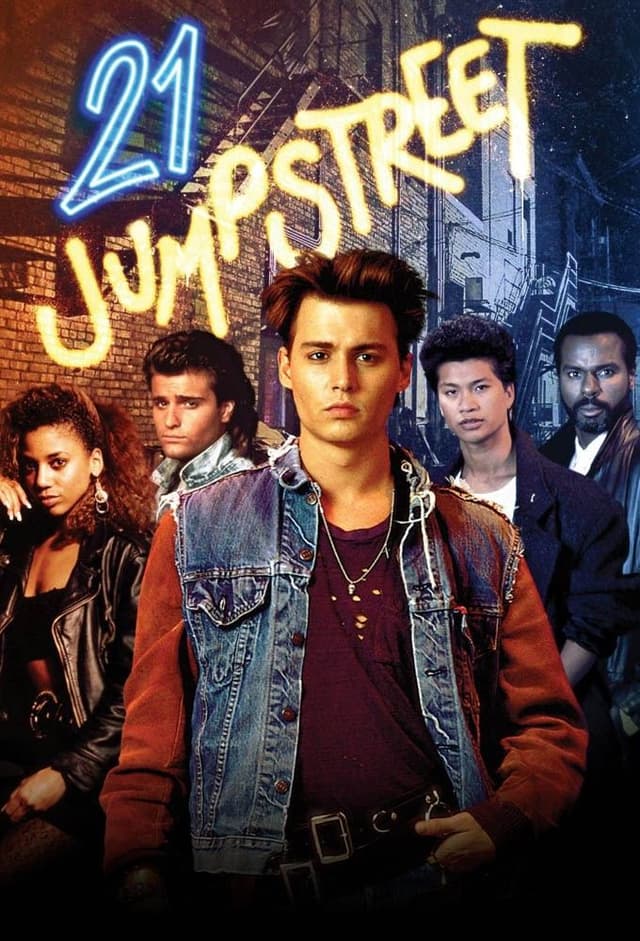
21 Jump Street Budget
Updated
Synopsis
Two underachieving cops, Schmidt and Jenko, are sent back to a local high school to blend in and bring down a synthetic drug ring. As they go deep undercover, they realize that the social rules of high school have changed dramatically since they last attended.
What Is the Budget of 21 Jump Street (2012)?
21 Jump Street (2012), directed by Phil Lord and Christopher Miller and distributed by Sony Pictures Releasing through Columbia Pictures and Metro-Goldwyn-Mayer, was produced on a reported budget of $42,000,000. The R-rated action comedy reimagined the 1987 Fox television series of the same name as a self-aware buddy-cop satire, anchored by Jonah Hill (who co-wrote the story and produced) and Channing Tatum playing against type as a former high school dimwit reassigned to undercover work.
Production was financed by Columbia, MGM, and Neal H. Moritz's Original Film, with additional equity from Relativity Media. The $42,000,000 figure was modest by 2012 studio standards for a wide-release tentpole, especially given two name leads, an experienced live-action directorial debut by the Lord and Miller team, and a large stunt-and-explosion component built around a freeway chase and a prom shootout.
Key Budget Allocation Categories
The $42,000,000 budget was distributed across the following areas:
- Above-the-Line Talent: Channing Tatum and Jonah Hill anchored the cast, with Hill also serving as a co-producer and story co-writer. Supporting roles for Ice Cube, Brie Larson, Dave Franco, and Rob Riggle, plus a brief cameo by original series star Johnny Depp, made up the core ensemble.
- Director Fees: Phil Lord and Christopher Miller made their live-action debut after Cloudy with a Chance of Meatballs (2009). They commanded a feature-director fee plus a producing credit through their company, with a backend that paid out generously once the film cleared $100,000,000.
- Louisiana Production: Principal photography ran from January to April 2011 in New Orleans, Louisiana, utilizing the state's Motion Picture Investor Tax Credit (then a 30% transferable credit on qualified spend plus an additional 5% for Louisiana resident labor). The credit materially reduced net production cost.
- Stunts and Vehicles: A freeway car chase set piece, a tanker truck explosion, and the prom shootout finale required practical stunt drivers, vehicle rentals and crashes, pyrotechnics, and a multi-week shoot block with a dedicated second unit.
- Visual Effects: Modest by tentpole standards, the visual effects work covered explosion enhancements, drug-trip sequences with abstract distortion overlays, and clean-up plates for the chase sequence.
- Music and Soundtrack: Mark Mothersbaugh composed an original score, supplemented by a licensed-pop soundtrack including period-appropriate needle drops and house party cues. Music licensing represented a meaningful line item for a film built on musical comedy beats.
- Marketing-Adjacent Costs: Reshoots in late 2011 added the Johnny Depp cameo and several signature gags after early test screenings landed strongly. Reshoot costs are accounted within production budget.
How Does 21 Jump Street's Budget Compare to Similar Films?
At $42,000,000, 21 Jump Street sat well below the standard tentpole budget while delivering tentpole-scale theatrical results. The comparison set:
- 22 Jump Street (2014): Budget $58,000,000 | Worldwide $331,333,876. The sequel from the same directors and stars cost 38% more and earned 64% more worldwide, validating the franchise economics that 21 Jump Street had unlocked.
- The Other Guys (2010): Budget $100,000,000 | Worldwide $170,422,503. Adam McKay's buddy-cop comedy with Will Ferrell and Mark Wahlberg cost more than twice as much and earned less worldwide.
- Bad Teacher (2011): Budget $20,000,000 | Worldwide $216,196,000. Sony's R-rated comedy from the year before showed the studio's appetite for low-budget hard-R bets, returning more than ten times its production cost.
- Project X (2012): Budget $12,000,000 | Worldwide $102,652,256. Released the same season, this found-footage party comedy proved how thin the floor could go on R-rated commercial comedy when the concept landed.
- Pineapple Express (2008): Budget $27,000,000 | Worldwide $101,628,392. The Seth Rogen and James Franco buddy-stoner action comedy was the most direct genre template, earning 3.8x its budget against 21 Jump Street's 4.8x.
21 Jump Street Box Office Performance
21 Jump Street opened on March 16, 2012, in 3,121 theaters, earning $36,302,612 in its three-day opening weekend and a $13,000 per-theater average that won the weekend. The film's opening more than doubled the most optimistic pre-release Sony tracking, which had pegged the picture in the high teens. Strong word of mouth and an A- CinemaScore drove an exceptional 4.5x multiple over the run, a figure rarely seen for R-rated openers.
Against a reported $42,000,000 production budget, here is the financial breakdown:
Box Office Breakdown
21 Jump Street

21 Jump Street returned approximately $2.19 in theatrical gross for every $1 invested when measured against total estimated production and marketing spend, placing it among the most efficient studio comedies of 2012. The domestic-to-international split was unusual for the genre, with 69% from North America and 31% from foreign markets, a pattern consistent with R-rated American comedy.
The film's commercial success greenlit 22 Jump Street within months of release, and the franchise generated discussions of a Men in Black crossover, a female-led spinoff, and a TV revival, none of which advanced past development. The original's combination of low budget, A-list comedic leads, and franchise foundation made it one of the most quietly important studio comedies of the 2010s.
21 Jump Street Production History
Development of a 21 Jump Street film began at Sony in the late 2000s under producer Neal H. Moritz of Original Film, who acquired the rights from Fox. The project bounced through several iterations before Jonah Hill pitched a reboot to studio chair Amy Pascal in 2008 with a deliberately self-aware angle, positioning the film as a satire of nostalgia-driven reboot culture rather than a straight adaptation. Michael Bacall (Scott Pilgrim vs. the World) was hired to write the screenplay from Hill's story, with Hill receiving co-story credit.
Phil Lord and Christopher Miller signed on in mid-2010 after Sony executives screened Cloudy with a Chance of Meatballs. The directors were initially skeptical of the property but accepted on the condition that the film would lean fully into self-referential meta-comedy. Channing Tatum was cast in late 2010 against the conventional wisdom that he was unsuited to comedy, a casting choice that became the film's breakout creative bet and reshaped his career trajectory toward Magic Mike and the Jump Street sequels.
Principal photography ran from January to April 2011 in New Orleans, Louisiana, utilizing the state's production tax credit to anchor a Sony soundstage shoot and exterior locations standing in for an unnamed metropolitan area. Reshoots and the Johnny Depp cameo were filmed in October and November 2011 ahead of the March 2012 release.
Awards and Recognition
21 Jump Street received no major industry awards but performed strongly in critics-association and comedy-specific recognition. The film was nominated for Choice Movie of the Summer at the 2012 Teen Choice Awards and won the People's Choice Award for Favorite Comedic Movie in 2013. Channing Tatum and Jonah Hill received nominations from the Critics' Choice Movie Awards for Best Acting Duo.
The film also earned a place on multiple year-end top-ten lists from Entertainment Weekly, Time, and Rolling Stone, an unusually strong critical showing for a hard-R studio comedy. The Writers Guild of America did not nominate it, and the film was shut out of the Golden Globes and Oscars, consistent with the genre ceiling that affects nearly all wide-release comedy.
Critical Reception
21 Jump Street received strong reviews. The film holds an 84% approval rating on Rotten Tomatoes based on 235 critic reviews, with a critical consensus calling it a sharp, surprisingly funny self-aware reboot. On Metacritic, the film scored 69 out of 100, indicating generally favorable reviews. Audiences surveyed by CinemaScore gave the film an A-, a strong performance for an R-rated property.
Roger Ebert wrote that the film "blasts through the formula by being aware of the formula," awarding three of four stars and singling out Channing Tatum's comedic timing. A. O. Scott of The New York Times praised the chemistry between the leads and the directors' refusal to take the source material too seriously. Variety's Justin Chang noted that the film "manages the rare trick of making a TV-to-film reboot feel like an act of affection rather than cynicism."
The unanimous positive reception elevated Tatum from beefcake leading-man category into bona fide comic actor, accelerated Lord and Miller's rise toward The Lego Movie and the Spider-Verse animated features, and established the meta-reboot template that later films including the Jumanji sequels and the Bad Boys revival would follow.
Frequently Asked Questions
How much did it cost to make 21 Jump Street (2012)?
The reported production budget was $42,000,000. Columbia Pictures, Metro-Goldwyn-Mayer, Relativity Media, and Neal H. Moritz's Original Film co-financed the production, with Sony Pictures Releasing handling worldwide distribution.
How much did 21 Jump Street earn at the box office?
The film grossed $138,447,667 domestically and $63,137,661 internationally for a worldwide total of $201,585,328. It opened to $36,302,612, winning the weekend over Disney's John Carter.
Was 21 Jump Street profitable?
Yes. Against a $42,000,000 budget and an estimated $40,000,000 to $50,000,000 in marketing spend, the film returned approximately $2.19 for every $1 invested, generating roughly $109,585,328 in net profit when measured against total estimated investment.
Who directed 21 Jump Street?
Phil Lord and Christopher Miller directed the film, making their live-action feature debut. They had previously co-directed Cloudy with a Chance of Meatballs (2009) and went on to direct 22 Jump Street (2014), The Lego Movie (2014), and produce the Spider-Verse animated features.
Where was 21 Jump Street filmed?
Principal photography ran from January to April 2011 in New Orleans, Louisiana, utilizing the state's Motion Picture Investor Tax Credit. Reshoots, including the Johnny Depp cameo, were filmed in October and November 2011.
Is 21 Jump Street based on a TV show?
Yes. The film is a satirical reboot of the 1987 to 1991 Fox television series 21 Jump Street, which starred Johnny Depp and Holly Robinson as undercover cops infiltrating high schools. Depp appears in a brief cameo in the 2012 film.
Did 21 Jump Street get a sequel?
Yes. 22 Jump Street was released on June 13, 2014, with the same directors and lead cast. It was made on a $58,000,000 budget and grossed $331,333,876 worldwide, earning more than the original.
What did critics think of 21 Jump Street?
The film received strong reviews, with an 84% approval rating on Rotten Tomatoes based on 235 critics and a Metacritic score of 69 out of 100. Audiences gave it an A- CinemaScore.
How does 21 Jump Street compare to 22 Jump Street?
21 Jump Street had a $42,000,000 budget and grossed $201,585,328 worldwide, while 22 Jump Street cost $58,000,000 and grossed $331,333,876 worldwide. The sequel earned roughly 64% more at the box office despite being made for 38% more, indicating the franchise scaled efficiently.
Did 21 Jump Street win any awards?
The film won the People's Choice Award for Favorite Comedic Movie in 2013 and received Critics' Choice Movie Award nominations for Best Acting Duo for Channing Tatum and Jonah Hill, but it was shut out of the major industry ceremonies including the Golden Globes and the Oscars.
Filmmakers
21 Jump Street

Official Trailer
Build budgets like this one in Saturation
Start from an industry-standard feature film template, import the schedule and rates you already have, and let the cost report keep itself current as you spend. Real-time collaboration, no spreadsheets.