Star Wars The Last Jedi Budget
 AdventureActionScience Fiction2h 32m
업데이트
Synopsis
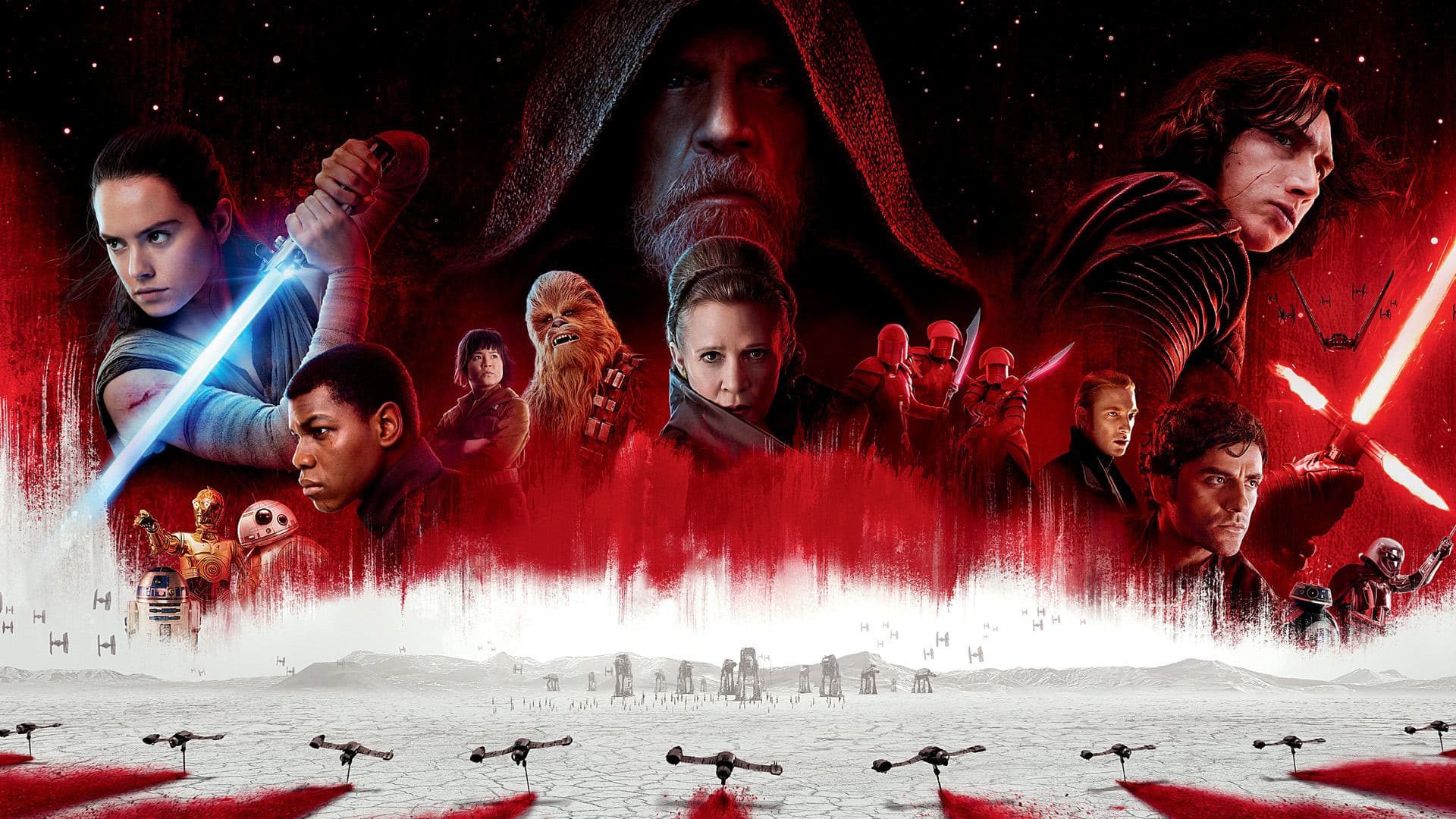
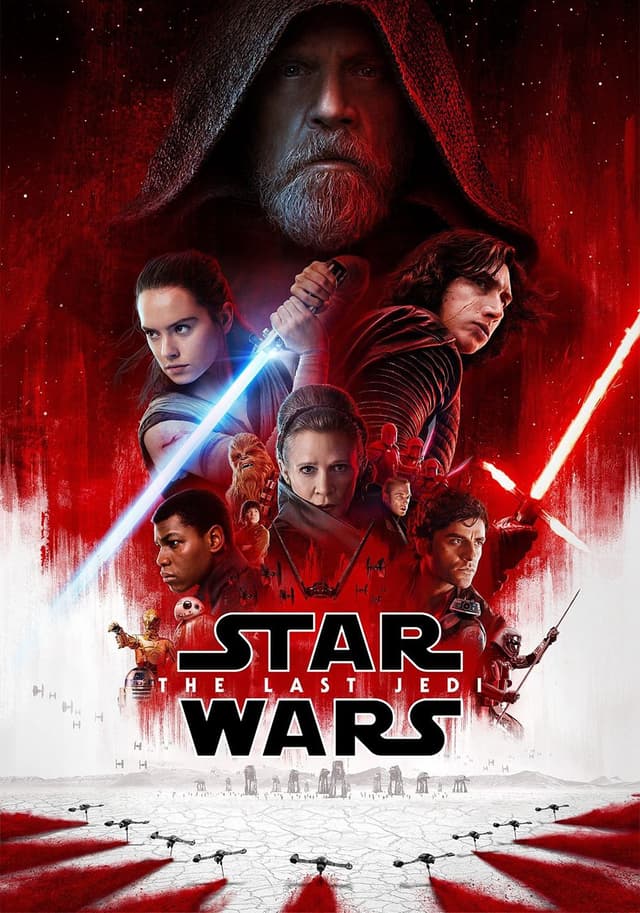
Rey develops her newly discovered abilities with the guidance of Luke Skywalker, who is unsettled by the strength of her powers. Meanwhile, the Resistance prepares to do battle with the First Order.
What Is the Budget of Star Wars: The Last Jedi?
Star Wars: The Last Jedi (2017), written and directed by Rian Johnson and released by Walt Disney Studios, was produced on a reported gross budget of approximately $200 million (with net production costs of roughly $200 million after tax incentives and rebates). The eighth episode in the Skywalker saga and the second film in the sequel trilogy, The Last Jedi continued the story begun in J.J. Abrams' The Force Awakens while taking the franchise in unexpected narrative directions that would prove deeply divisive among the fanbase.
Disney's investment reflected the enormous commercial expectations for the Star Wars brand following The Force Awakens' $2.07 billion worldwide gross. The budget supported extensive location work across multiple countries, 125 sets built across 14 sound stages at Pinewood Studios in England, and a visual effects pipeline involving Industrial Light & Magic and multiple supporting VFX houses. Johnson, previously known for mid-budget genre films like Looper and Brick, was given creative latitude unusual for a franchise of this scale, a decision that would shape both the film's critical acclaim and its audience controversy.
Key Budget Allocation Categories
The approximately $200 million production budget was distributed across several major areas:
- Production Design and Set Construction: The film required 125 sets constructed across 14 sound stages at Pinewood Studios in England, one of the largest set builds in British film history. These included the interior of Supreme Leader Snoke's throne room (a striking crimson environment), the Resistance cruiser bridge, multiple Ahch-To island interiors, and the mineral planet Crait's crystalline salt flats. Production designer Rick Heinrichs created environments that blended practical construction with digital extensions.
- International Location Photography: Filming took place at Pinewood Studios and on location in Dubrovnik, Croatia (standing in for the casino city of Canto Bight), the Salar de Uyuni salt flats in Bolivia (reference for Crait), and multiple locations in Ireland including Skellig Michael, Malin Head, and Ceann Sibeal (for the Ahch-To sequences). The Irish locations, used for Luke Skywalker's island hermitage, required helicopter access to the remote UNESCO World Heritage site of Skellig Michael, with shooting windows constrained by weather and wildlife protection regulations.
- Visual Effects: Industrial Light & Magic led the VFX work, creating digital environments, creature animation (including the Porgs, crystal foxes, and Snoke's Praetorian Guards in the throne room battle), space battle sequences, and the climactic Battle of Crait. The Holdo Maneuver sequence, in which a Resistance cruiser jumps to hyperspace through a First Order fleet, required a technically innovative silent-moment effect that became one of the most discussed visual moments in modern blockbuster cinema.
- Above-the-Line Talent: The ensemble cast included Mark Hamill, Carrie Fisher (in her final film role before her death in December 2016), Adam Driver, Daisy Ridley, John Boyega, Oscar Isaac, Andy Serkis, Laura Dern, and Benicio del Toro. Hamill's expanded role as Luke Skywalker, central to the film's narrative, represented a significant compensation increase from his brief cameo in The Force Awakens. Johnson's writer-director fee, while modest relative to franchise veterans, reflected Disney's bet on a filmmaker whose creative vision could refresh the franchise.
- Music, Sound, and Post-Production: John Williams composed the score, his eighth Star Wars film and one of his final large-scale orchestral commitments before scaling back his workload. The sound design team at Skywalker Sound created new audio signatures for vehicles, weapons, and creatures while maintaining continuity with the franchise's established sonic palette. Post-production included extensive color grading, 3D conversion, and preparation for IMAX presentation.
How Does Star Wars: The Last Jedi's Budget Compare to Similar Films?
At $200 million, The Last Jedi's budget was substantial but not unprecedented for a franchise of its scale. Comparing it with other major blockbusters of the era:
- Star Wars: The Force Awakens (2015): Budget $306,000,000 | Worldwide $2,071,310,218. The sequel trilogy's opening chapter cost significantly more, reflecting the franchise relaunch's higher risk profile, extensive practical effects investment, and J.J. Abrams' fee structure. The Last Jedi's lower budget suggests Disney achieved production efficiencies by reusing assets and leveraging existing infrastructure from The Force Awakens.
- Star Wars: The Rise of Skywalker (2019): Budget $275,000,000 | Worldwide $1,074,144,248. The trilogy's conclusion cost more than The Last Jedi, partly due to reshoots, the challenge of rewriting the trilogy's ending, and incorporating unused Carrie Fisher footage. Its lower worldwide gross ($258 million less than The Last Jedi) reflected the audience division that The Last Jedi initiated.
- Rogue One: A Star Wars Story (2016): Budget $200,000,000 | Worldwide $1,058,682,142. The first standalone Star Wars film matched The Last Jedi's budget and grossed $274 million less, establishing a baseline for non-saga Star Wars films. Rogue One's extensive reshoots added to its costs.
- Justice League (2017): Budget $300,000,000 | Worldwide $657,924,295. Warner Bros.' DC ensemble, released the same month as The Last Jedi, cost $100 million more and earned less than half as much worldwide. The comparison illustrates Star Wars' superior brand equity during this period.
- Thor: Ragnarok (2017): Budget $180,000,000 | Worldwide $853,977,126. Taika Waititi's MCU entry cost slightly less and earned significantly less, though its critical reception (93% on Rotten Tomatoes) and audience response were more uniformly positive.
Star Wars: The Last Jedi Box Office Performance
Star Wars: The Last Jedi opened on December 15, 2017, earning $450.8 million worldwide in its opening weekend, the eighth-largest global opening of all time. The film became the highest-grossing release of 2017 and the ninth-highest-grossing film of all time at that point.
Box Office Breakdown
Star Wars The Last Jedi

At approximately +566%, Star Wars: The Last Jedi returned roughly $6.66 for every $1 of production budget invested during its theatrical run.
The domestic/international split tells an interesting story about the Star Wars brand's geographic dynamics. The domestic gross of $620.2 million accounted for 46.5% of the worldwide total, a significantly higher domestic share than most blockbusters of comparable scale. Star Wars has always been a disproportionately domestic franchise, and The Last Jedi's international gross of $712.5 million, while substantial, trailed the domestic figure. Estimated net profit after accounting for distribution fees and marketing costs was approximately $417.5 million.
Star Wars: The Last Jedi Production History
Lucasfilm announced Rian Johnson as writer and director of Episode VIII in June 2014, while The Force Awakens was still in production. Johnson spent nearly a year developing the screenplay, working closely with Lucasfilm president Kathleen Kennedy while receiving full creative control over the story's direction. This autonomy, unusual for a franchise property of this magnitude, allowed Johnson to make bold narrative choices including Luke Skywalker's characterization as a disillusioned hermit, the revelation that Rey's parents were "nobodies," and the death of Supreme Leader Snoke midway through the trilogy.
Pre-production filming began in September 2015 on Skellig Michael, the dramatic rocky island off Ireland's southwest coast that served as Ahch-To, Luke Skywalker's self-imposed exile. The production's use of this UNESCO World Heritage site required careful coordination with the Irish Office of Public Works and compliance with environmental restrictions protecting the island's nesting puffin colonies (which inspired the creation of the Porgs as an in-universe explanation for the birds visible in wide shots).
Principal photography ran from February 10 through July 22, 2016, primarily at Pinewood Studios in England with location work in Ireland (Malin Head and Ceann Sibeal in County Kerry, in addition to Skellig Michael), Dubrovnik, Croatia, and Bolivia's Salar de Uyuni salt flats. The 125 sets built across Pinewood's 14 sound stages represented one of the largest physical production footprints in British filmmaking history. The production utilized both practical creature effects from Neal Scanlan's creature shop and extensive digital work from ILM.
Post-production was shaped by the death of Carrie Fisher on December 27, 2016, just months after filming wrapped. Fisher had completed all of her scenes, and Lucasfilm confirmed that no digital recreation of her performance would be used. Johnson made minor editorial adjustments to the film in response to Fisher's passing, though the film's story remained substantively unchanged. The film premiered at the Shrine Auditorium in Los Angeles on December 9, 2017, six days before its wide release.
Awards and Recognition
Star Wars: The Last Jedi received four Academy Award nominations: Best Original Score (John Williams), Best Sound Editing, Best Sound Mixing, and Best Visual Effects. While it did not win in any category, the nominations reflected the film's technical achievements, particularly Williams' score (which expanded themes introduced in The Force Awakens) and ILM's VFX work on sequences like the Holdo Maneuver and the Battle of Crait.
The film won multiple Empire Awards, including Best Film, Best Director (Johnson), Best Actress (Daisy Ridley), Best Visual Effects, and Best Costume Design. Mark Hamill won the Saturn Award for Best Actor for his performance as Luke Skywalker, and Rian Johnson received Saturn recognition for Best Screenplay and Best Editing. The BAFTA nominations included Best Sound and Best Special Visual Effects.
Despite the awards recognition, The Last Jedi's cultural legacy is defined more by its polarizing audience reception than its critical accolades. The film generated intense debate within the Star Wars fandom about the direction of the franchise, with detractors organizing review-bombing campaigns that drove down audience scores on aggregation sites. Rotten Tomatoes later confirmed in 2019 that the film had been "seriously targeted" by coordinated negative reviews, an acknowledgment that highlighted the growing disconnect between professional criticism and online audience sentiment for franchise properties.
Critical Reception
Star Wars: The Last Jedi received strong critical reviews, earning a 91% approval rating on Rotten Tomatoes based on 483 reviews (with an average score of 8.1 out of 10) and an 84 out of 100 on Metacritic from 56 critics, indicating "universal acclaim." Audiences surveyed at screenings gave the film an A grade on CinemaScore and 89% positive on PostTrak.
The Rotten Tomatoes consensus praised the film for honoring "the saga's rich legacy while adding surprising twists and delivering all the emotion-rich action fans could hope for." Critics widely lauded Johnson's willingness to challenge expectations: Luke Skywalker's arc as a disillusioned teacher who has lost faith in the Jedi Order was hailed by many reviewers as a mature, emotionally complex portrayal that gave Mark Hamill his most demanding Star Wars performance. Adam Driver's Kylo Ren was cited as the trilogy's most compelling character, with the throne room scene between Ren and Rey drawing comparisons to the Luke/Vader dynamic of the original trilogy.
The film proved deeply divisive among audiences, however, creating a schism within the Star Wars fanbase that has not fully healed. Detractors objected to Johnson's treatment of Luke Skywalker, the perceived undercutting of mysteries established in The Force Awakens (Rey's parentage, Snoke's backstory), and the Canto Bight subplot involving Finn and Rose Tico, which many fans viewed as tonally inconsistent with the rest of the film. Kelly Marie Tran, who played Rose, faced severe online harassment that led her to delete her social media accounts, a cultural moment that drew widespread industry condemnation.
The gap between the 91% critics' score and the significantly lower audience scores on Rotten Tomatoes became emblematic of a broader cultural tension around franchise filmmaking in the late 2010s, raising questions about whether professional criticism and fan expectation had diverged irreconcilably for legacy properties. The Last Jedi remains one of the most discussed and debated blockbusters of its decade, a film whose artistic ambitions and commercial performance are almost secondary to its cultural impact on how studios, filmmakers, and audiences negotiate ownership of beloved fictional universes.
자주 묻는 질문
How much did it cost to make Star Wars The Last Jedi?
Star Wars: The Last Jedi had an estimated production budget of $300,000,000, making it one of the most expensive films ever produced at the time of its release. This figure covers principal photography, cast salaries, visual effects, production design, and post-production. Marketing and distribution costs from Lucasfilm and Walt Disney Studios are estimated to have added another $150,000,000 to $200,000,000 on top of the production budget.
How much did Star Wars The Last Jedi earn at the box office?
Star Wars: The Last Jedi earned $620,181,382 domestically and $1,332,698,830 worldwide. The film opened to $220,009,584 in its North American opening weekend, the second-highest opening weekend of all time at that point. International markets contributed $712,517,448 to the worldwide total.
Was Star Wars The Last Jedi profitable?
Yes, Star Wars: The Last Jedi was highly profitable. Against a production budget of $300,000,000 and estimated total investment (including marketing) of roughly $500,000,000, the film earned $1,332,698,830 worldwide. Using the standard industry rule that a film needs to earn roughly 2 to 2.5 times its production budget to break even after theatrical distribution costs, The Last Jedi cleared that threshold comfortably and generated substantial profit for Walt Disney Studios and Lucasfilm.
What were the biggest costs in producing Star Wars The Last Jedi?
The primary cost drivers for Star Wars: The Last Jedi included above-the-line talent fees for writer-director Rian Johnson and returning stars Mark Hamill, Daisy Ridley, John Boyega, Oscar Isaac, and Adam Driver. Visual effects represented a massive portion of the budget, with Industrial Light and Magic delivering over 1,700 VFX shots. Production design and set construction at Pinewood Studios in England required building large-scale practical sets including the Supremacy throne room and the Ahch-To island interiors. Location filming in Dubrovnik, Croatia (standing in for Canto Bight) and Skellig Michael in Ireland added further costs.
How does Star Wars The Last Jedi's budget compare to similar films?
At $300,000,000, The Last Jedi sits among the most expensive films ever made. Its predecessor Star Wars: The Force Awakens (2015) had an estimated budget of $245,000,000, while the follow-up Star Wars: The Rise of Skywalker (2019) cost a reported $275,000,000. By comparison, Avengers: Infinity War (2018) had a budget of $325,000,000 and Justice League (2017) cost approximately $300,000,000. The Last Jedi was in line with the upper tier of franchise tentpole budgets during the late 2010s.
Did Star Wars The Last Jedi go over budget?
There are no public reports confirming that Star Wars: The Last Jedi significantly exceeded its planned budget. Rian Johnson completed principal photography at Pinewood Studios on schedule, and the production did not experience the kind of widely reported reshoots or delays that plagued other large-scale productions in the same era. Lucasfilm and Disney maintained tight production oversight throughout the shoot.
What was the ROI of Star Wars The Last Jedi?
Based on a production budget of $300,000,000 and a worldwide gross of $1,332,698,830, Star Wars: The Last Jedi achieved an ROI of approximately 344%. The ROI formula is (Worldwide Gross minus Budget) divided by Budget times 100, which gives ($1,332,698,830 minus $300,000,000) divided by $300,000,000 times 100 = 344%. This figure reflects theatrical revenue only and does not account for home media sales, streaming licensing, or merchandise revenue, all of which would further increase the total return.
What awards did Star Wars The Last Jedi win?
Star Wars: The Last Jedi received four Academy Award nominations at the 90th Oscars: Best Original Score (John Williams), Best Sound Editing, Best Sound Mixing, and Best Visual Effects. It did not win in any Oscar category. The film won multiple Empire Awards including Best Film, Best Director (Rian Johnson), Best Actress (Daisy Ridley), and Best Visual Effects. It also earned Saturn Awards for Best Actor (Mark Hamill), Best Screenplay (Rian Johnson), and Best Editing (Bob Ducsay).
Who directed Star Wars The Last Jedi?
Star Wars: The Last Jedi was written and directed by Rian Johnson. Johnson was selected by Lucasfilm president Kathleen Kennedy after his work on Looper (2012) and several acclaimed episodes of Breaking Bad. He had full creative control over the script and direction, marking a departure from The Force Awakens director J.J. Abrams. Johnson also developed the story for a planned new Star Wars trilogy, though that project has not moved forward as of 2026.
Where was Star Wars The Last Jedi filmed?
Star Wars: The Last Jedi was primarily filmed at Pinewood Studios in Buckinghamshire, England, where the production built extensive practical sets including the interiors of the Resistance cruiser, Snoke throne room, and Ahch-To island temple. Location filming took place in Dubrovnik, Croatia, which served as the casino city of Canto Bight. Skellig Michael off the coast of Ireland returned as the exterior of Ahch-To (Luke Skywalker hermitage island), reprising its role from The Force Awakens. Additional location work was done in Bolivia for the mineral planet Crait sequences.
Filmmakers
Star Wars The Last Jedi

Official Trailer
Saturation에서 이런 예산을 만들어 보세요
업계 표준 장편 영화 템플릿으로 시작해 이미 가진 일정과 요율을 가져오고, 지출과 함께 비용 보고서가 자동으로 최신 상태를 유지하게 하세요. 실시간 협업, 스프레드시트 없이.