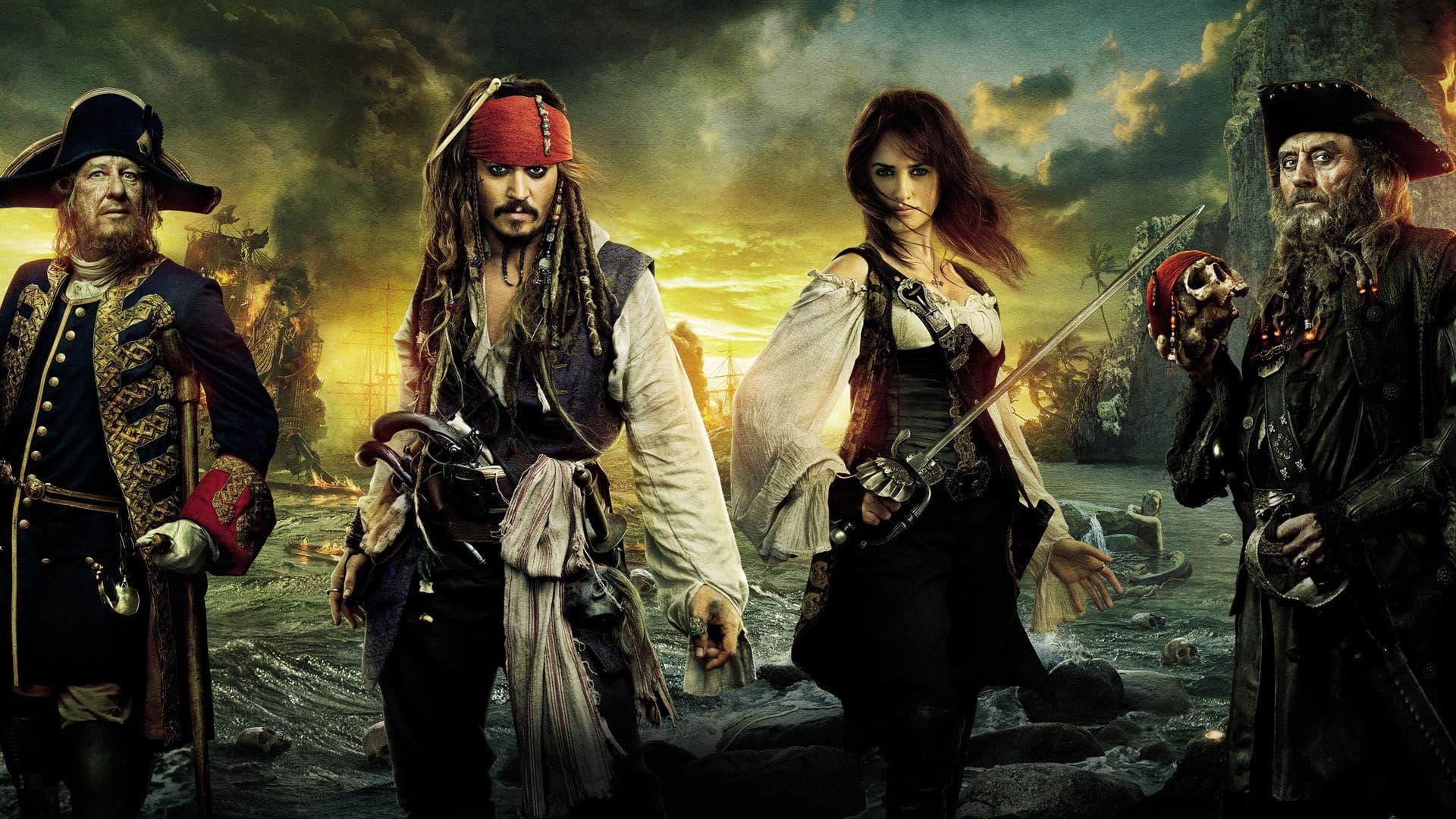
Pirates of the Caribbean: On Stranger Tides Budget
 AdventureActionFantasy2h 16m
업데이트
Synopsis
Captain Jack Sparrow embarks on a quest to find the legendary Fountain of Youth, crossing paths with a woman from his past, Angelica, who forces him aboard the Queen Anne's Revenge, the ship of the feared pirate Blackbeard. As Jack navigates Blackbeard's treacherous schemes, a competing expedition led by Barbossa and the Spanish navy races toward the same prize, leading to a dangerous confrontation involving mermaids, dark magic, and the price of immortality.
What Is the Budget of Pirates of the Caribbean: On Stranger Tides?
Pirates of the Caribbean: On Stranger Tides (2011), directed by Rob Marshall and released by Walt Disney Pictures, was produced on a staggering budget of $410.6 million, making it the most expensive film ever made at the time of its release (a record it held until adjusted-inflation comparisons shifted the rankings). The fourth installment in the Pirates franchise represented a soft reboot of sorts, moving away from the Will Turner/Elizabeth Swann storyline and centering the narrative entirely on Johnny Depp's Captain Jack Sparrow alongside new co-stars Penelope Cruz, Ian McShane, and returning cast member Geoffrey Rush.
The production's extraordinary cost stemmed from a combination of factors: Depp's reported $55 million compensation, extensive 3D filming using then-cutting-edge stereoscopic cameras, location work in Hawaii, England, and Puerto Rico, and the massive infrastructure required for the franchise's signature maritime set pieces. Disney's willingness to spend at this level reflected the franchise's proven earning power, though the ballooning budget would become a cautionary tale about unchecked blockbuster spending.
Key Budget Allocation Categories
The $410.6 million budget was distributed across several major production areas:
- Lead Actor Compensation: Johnny Depp's reported salary of $55 million represented the single largest line item. By the fourth film, Depp had become synonymous with the franchise, and his compensation reflected both his star leverage and the studio's dependence on his portrayal of Captain Jack Sparrow. Supporting cast including Penelope Cruz, Ian McShane, Geoffrey Rush, and Keith Richards also carried significant costs.
- 3D Production Technology: On Stranger Tides was one of the first major blockbusters shot natively in 3D using the Pace Fusion camera system, co-developed by James Cameron's Pace Technologies. The stereoscopic cameras were significantly more expensive to operate than standard digital cameras, required specialized technicians, and slowed the shooting process due to alignment and calibration requirements. This technology premium added tens of millions to the production cost.
- Multiple International Locations: Filming took place across Hawaii (Kauai and Oahu for jungle and beach sequences), Pinewood Studios and various locations in England (for the London sequences), and Puerto Rico. Each location required full crew mobilization, local permits, set construction, and security. The geographic spread of the production multiplied logistics costs significantly.
- Maritime and Practical Set Pieces: The franchise's signature ship-based sequences required extensive practical construction. Full-scale ship sections were built on soundstages and on water tanks, with rigging, lighting, and wave-generation equipment. The mermaid attack sequence alone involved weeks of water tank filming with complex practical and digital effects integration.
- Visual Effects and Post-Production: Industrial Light & Magic handled the visual effects, which included digital water simulation, mermaid creature work, the Fountain of Youth environments, and 3D conversion of certain sequences that could not be captured natively in stereo. The 3D post-production pipeline was significantly more complex than standard post, requiring stereo depth adjustments across the entire film.
How Does Pirates of the Caribbean: On Stranger Tides' Budget Compare to Similar Films?
At $410.6 million, On Stranger Tides occupied unprecedented territory. Comparing it with franchise entries and contemporaries:
- Pirates of the Caribbean: At World's End (2007): Budget $300,000,000 | Worldwide $963,420,425. The third film cost $110 million less and earned nearly double at the box office, demonstrating that the franchise's peak commercial power came with the original trilogy's narrative momentum.
- Avatar (2009): Budget $237,000,000 | Worldwide $2,923,706,026. James Cameron's technological revolution cost 42% less than On Stranger Tides while grossing nearly three times as much, though Avatar's development costs over 12+ years are harder to fully account for.
- The Dark Knight Rises (2012): Budget $250,000,000 | Worldwide $1,081,142,612. Christopher Nolan's Batman conclusion cost 39% less and grossed more worldwide, illustrating how practical filmmaking with a focused vision could deliver better returns than spectacle-driven excess.
- Transformers: Dark of the Moon (2011): Budget $195,000,000 | Worldwide $1,123,794,079. Michael Bay's third Transformers film, released in the same summer, cost less than half of On Stranger Tides and outgrossed it, pointing to the diminishing returns of the Pirates franchise relative to other blockbuster properties.
- Pirates of the Caribbean: Dead Men Tell No Tales (2017): Budget $230,000,000 | Worldwide $795,922,298. Disney significantly reduced the budget for the fifth installment after On Stranger Tides' cautionary cost overruns, though revenue continued to decline.
Pirates of the Caribbean: On Stranger Tides Box Office Performance
On Stranger Tides opened domestically on May 20, 2011, earning $90.2 million in its opening weekend. Despite mixed reviews, the film benefited from strong international demand, particularly in markets where the Pirates brand remained robust.
Box Office Breakdown
Pirates of the Caribbean: On Stranger Tides

At approximately +176%, Pirates of the Caribbean: On Stranger Tides returned roughly $2.76 for every $1 of production budget invested during its theatrical run.
The $1.046 billion worldwide gross made On Stranger Tides the third Pirates film to cross the billion-dollar mark. However, the 155% ROI against the production budget alone is misleading, as the total investment including marketing approached $660 million. After factoring in theatrical distribution fees (studios typically receive 50-55% of domestic and 40% of international grosses), the film's theatrical profitability was marginal at best. Disney reportedly viewed the theatrical run as roughly break-even, with profits coming from home video, merchandise, theme park synergies, and television licensing.
The international/domestic split was heavily skewed at 77% international ($804.6 million) versus 23% domestic ($241.1 million), meaning Disney retained a smaller percentage of the total revenue than a more balanced split would have provided. The domestic performance, in particular, represented a significant decline from At World's End's $309.4 million.
Pirates of the Caribbean: On Stranger Tides Production History
Following the massive success of the original Pirates trilogy (which grossed a combined $2.68 billion worldwide), Disney moved quickly to develop a fourth installment. The studio initially considered adapting Tim Powers' 1987 novel "On Stranger Tides" as the basis for the new film, licensing the rights to use its Fountain of Youth storyline and Blackbeard character. Ted Elliott and Terry Rossio, the writers of the original trilogy, drafted the screenplay.
Gore Verbinski, who directed the first three films, declined to return, citing exhaustion from the demanding production of At World's End. Disney hired Rob Marshall, whose background in musicals (Chicago, Nine) was an unconventional choice for a swashbuckling adventure franchise. Marshall's casting reflected Disney's desire to bring a different creative energy to the series while maintaining the spectacle audiences expected.
Principal photography began in June 2010 at Pinewood Studios in England before moving to locations in Hawaii (Kauai and Oahu) and Puerto Rico. The decision to shoot natively in 3D using the Pace Fusion camera system added significant complexity and time to the production schedule. The stereoscopic cameras required careful calibration between every setup, and the larger, heavier rigs limited the kinetic camera movement that characterized the original trilogy's action sequences.
The production faced several challenges, including Hurricane Irene disrupting location work and the inherent difficulties of water-based filming. The mermaid attack sequence, shot in a massive water tank at Pinewood, required weeks of overnight shoots with performers in prosthetic tails. Post-production extended through early 2011, with ILM handling a visual effects workload that included digital environments, creature animation, and stereoscopic depth refinement.
Awards and Recognition
Pirates of the Caribbean: On Stranger Tides received limited awards recognition, reflecting its status as a franchise continuation rather than a prestige production. The film was nominated for the Razzie Award for Worst Sequel, indicating the critical community's unfavorable view of the enterprise. It received technical nominations at the Visual Effects Society Awards for its digital creature work and stereoscopic photography.
The film's billion-dollar gross earned it recognition in industry trade publications as a demonstration of the Pirates brand's international commercial power, even as domestic performance declined. The production's record-breaking budget also generated significant press coverage and industry discussion about the sustainability of escalating blockbuster costs.
Critical Reception
Pirates of the Caribbean: On Stranger Tides received largely negative reviews, earning a 33% approval rating on Rotten Tomatoes and a 45 out of 100 on Metacritic. Critics found the film an unnecessary continuation that lacked the narrative urgency and ensemble chemistry of the original trilogy.
The primary criticisms centered on the film's overlong 136-minute runtime, an unfocused script that failed to justify the absence of Orlando Bloom and Keira Knightley, and a sense that the franchise had run out of fresh ideas. Rob Marshall's direction was viewed as competent but lacking the kinetic energy Gore Verbinski brought to the original films. The 3D photography, while technically proficient, was criticized for darkening the image and failing to enhance the viewing experience meaningfully.
Johnny Depp's performance as Captain Jack Sparrow received the most divided response. Some critics noted that the character's charm had diminished through repetition, with Jack's drunken antics feeling formulaic rather than spontaneous. Others argued Depp remained the franchise's essential element and found his chemistry with Penelope Cruz's Angelica to be one of the film's few bright spots. Ian McShane's Blackbeard was generally praised as a menacing presence, though critics felt the character was underwritten. Geoffrey Rush, returning as Barbossa, was singled out as the cast member most clearly enjoying himself.
자주 묻는 질문
How much did it cost to make Pirates of the Caribbean: On Stranger Tides (2011)?
On Stranger Tides had a production budget of $410.6 million, making it the most expensive film ever made at the time. The costs were driven by Johnny Depp's reported $55 million salary, native 3D filming with Pace Fusion cameras, location work across Hawaii, England, and Puerto Rico, and extensive maritime set pieces.
Why was Pirates of the Caribbean: On Stranger Tides so expensive?
The budget was inflated by several factors: Depp's record-setting compensation, the decision to shoot natively in 3D (which required expensive specialized cameras and slowed production), filming across three countries, massive practical ship sets, and the water-based mermaid sequences that required weeks of tank filming at Pinewood Studios.
How much did On Stranger Tides earn at the box office?
The film grossed $241,071,802 domestically and $804.6 million internationally for a worldwide total of $1,045,713,802. It was the third Pirates film to cross $1 billion worldwide.
Was On Stranger Tides profitable despite its massive budget?
Marginally. While the $1.046 billion gross appears strong, after factoring in the estimated $200-250 million in marketing costs and theatrical distribution fees (studios receive roughly 50% domestic and 40% international), the theatrical run was approximately break-even. Profits came from home video, merchandise, and theme park synergies.
Who directed Pirates of the Caribbean: On Stranger Tides?
Rob Marshall directed the film, replacing Gore Verbinski who declined to return after the original trilogy. Marshall, known for musicals like Chicago and Nine, was an unconventional choice for the swashbuckling franchise.
Why didn't Orlando Bloom and Keira Knightley return for On Stranger Tides?
The fourth film was designed as a soft reboot centering entirely on Johnny Depp's Captain Jack Sparrow, with Penelope Cruz and Ian McShane as new co-leads. The Will Turner/Elizabeth Swann storyline was considered concluded after At World's End.
Where was On Stranger Tides filmed?
The film was shot at Pinewood Studios in England, on location in Hawaii (Kauai and Oahu for tropical sequences), and in Puerto Rico. The production used native 3D cameras throughout, making it one of the first major blockbusters shot entirely in stereoscopic 3D.
What did critics think of On Stranger Tides?
The film received largely negative reviews: 33% on Rotten Tomatoes and 45 on Metacritic. Critics found it an unnecessary continuation lacking the energy and ensemble chemistry of the original trilogy. Rob Marshall's direction was seen as competent but uninspired compared to Gore Verbinski's kinetic style.
Is On Stranger Tides still the most expensive film ever made?
It was the most expensive at the time of its release in 2011. Since then, several films have approached or exceeded that figure when adjusting for inflation, though exact production budgets are often contested. The film remains one of the five most expensive productions in cinema history.
How does On Stranger Tides compare to the other Pirates films at the box office?
It ranks third in the franchise's worldwide gross behind Dead Man's Chest ($1.066 billion) and At World's End ($963.4 million). Domestically, its $241.1 million was the weakest of the first four films, reflecting audience fatigue with the franchise in the U.S. market while international audiences remained enthusiastic.
Filmmakers
Pirates of the Caribbean: On Stranger Tides

Official Trailer
Saturation에서 이런 예산을 만들어 보세요
업계 표준 장편 영화 템플릿으로 시작해 이미 가진 일정과 요율을 가져오고, 지출과 함께 비용 보고서가 자동으로 최신 상태를 유지하게 하세요. 실시간 협업, 스프레드시트 없이.