Zack Snyder's Justice League Budget
 ActionAdventureFantasy4h 2m
Updated
Synopsis
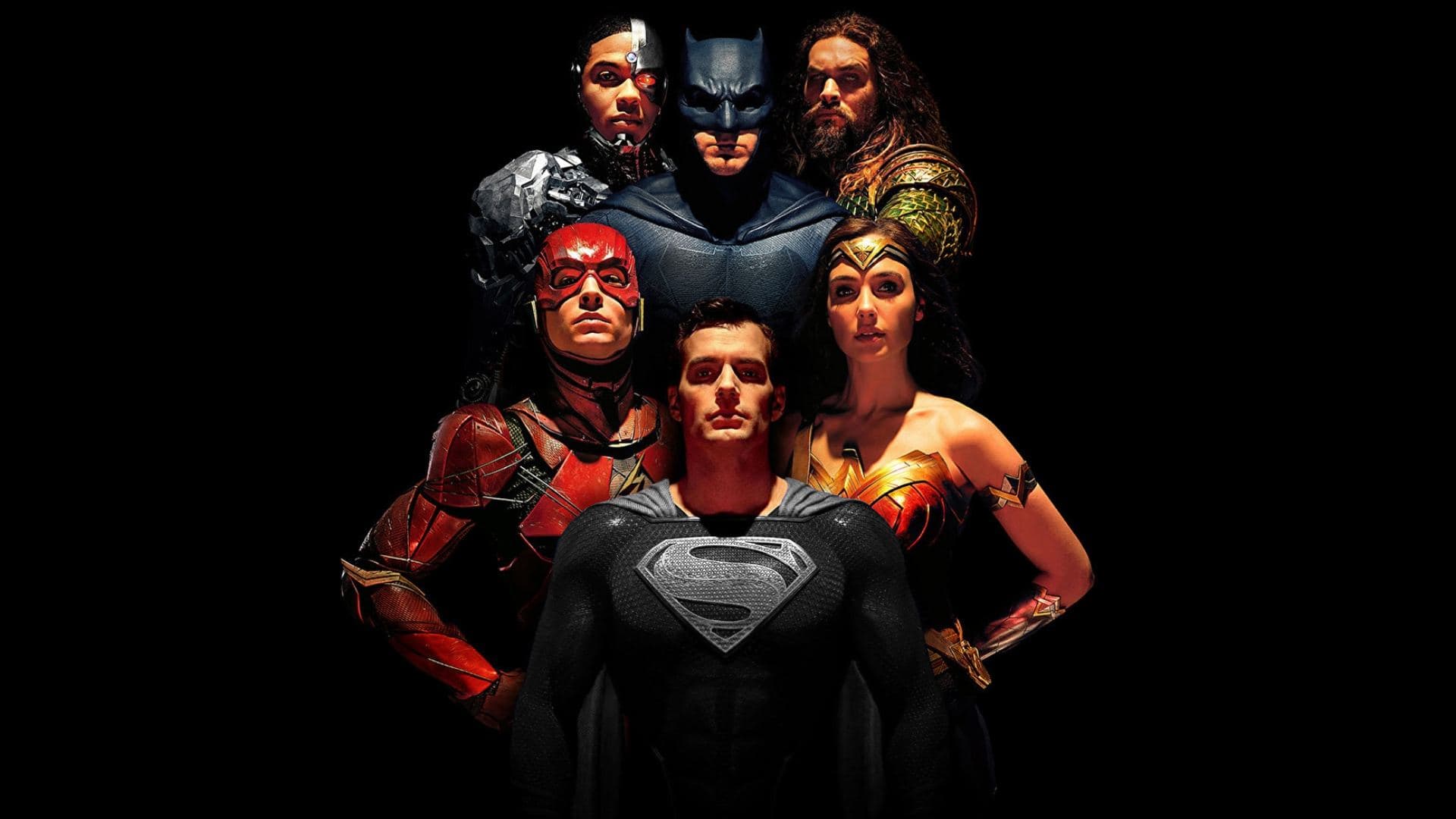
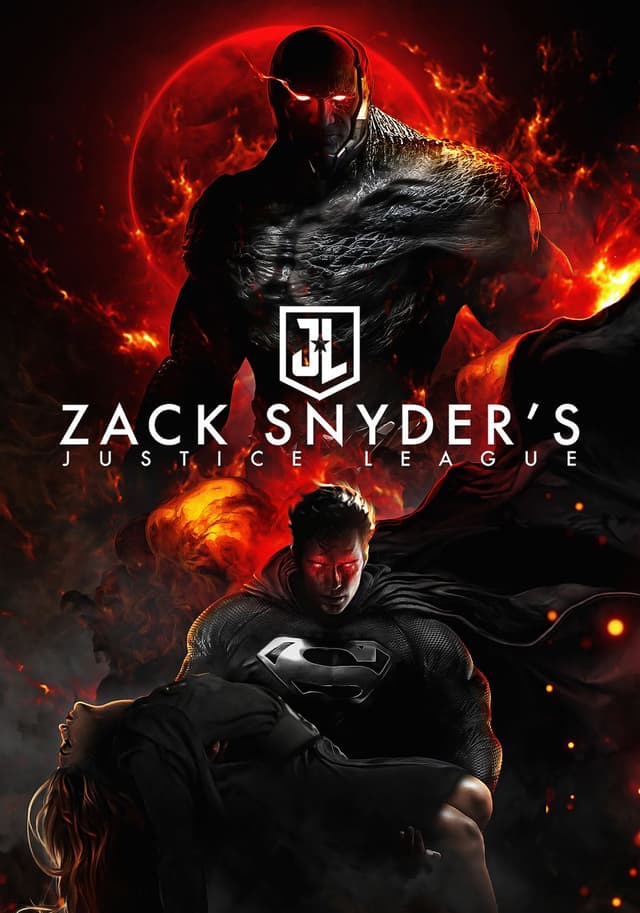
Determined to ensure Superman's ultimate sacrifice was not in vain, Bruce Wayne aligns forces with Diana Prince with plans to recruit a team of metahumans to protect the world from an approaching threat of catastrophic proportions.
What Is the Budget of Zack Snyder's Justice League?
The original Justice League (2017) carried a production budget of approximately $300 million, making it one of the most expensive films ever made. When Warner Bros. greenlit the Snyder Cut for HBO Max in 2020, the studio allocated an additional $70 million to complete Zack Snyder's vision, bringing the total investment in the project to roughly $370 million. That supplemental budget covered extensive visual effects work, a completely new musical score by Tom Holkenborg (Junkie XL), additional photography with returning cast members, and the integration of Jared Leto as the Joker in newly shot sequences.
The $70 million figure is notable because it effectively funded what amounted to a different film. Snyder's four-hour cut shares only a fraction of the footage that appeared in Joss Whedon's 2017 theatrical version. New VFX shots numbered in the thousands, and the 4:3 IMAX aspect ratio required reformatting and regrading nearly every frame. For a streaming exclusive with no theatrical revenue path, the investment represented a significant bet by Warner Bros. on the drawing power of a passionate fan base.
Key Budget Allocation Categories
- Visual Effects and Post-Production accounted for the largest share of the additional $70 million. Thousands of new VFX shots were created or substantially reworked, including the redesign of Steppenwolf, expanded Darkseid sequences, and the Knightmare timeline. Multiple VFX houses worked simultaneously to meet the March 2021 release window.
- Musical Score required a complete replacement. Tom Holkenborg (Junkie XL) composed an entirely new score after his original work for the 2017 production was discarded when Whedon brought in Danny Elfman. The new score spans over four hours of music, one of the longest original scores in modern blockbuster history.
- Additional Photography took place in October 2020 on a controlled set. Ben Affleck, Gal Gadot, Ray Fisher, Amber Heard, Joe Manganiello, and Jared Leto all returned for new footage. Leto's scenes as the Joker, set in the Knightmare future, were written specifically for the Snyder Cut and did not exist in any prior version of the film.
- Cast and Crew Compensation covered both the returning principal cast for additional photography and the post-production teams. Snyder himself reportedly worked without a salary, though crew members and actors were paid at union rates for the new shoot days.
- Sound Design and Color Grading were rebuilt from scratch. The 4:3 IMAX aspect ratio meant every shot required new framing consideration, and Snyder's preferred desaturated color palette differed substantially from the brighter look of the theatrical cut.
- Original Production Costs from the 2017 shoot remained the foundation. The $300 million base budget covered principal photography across locations in London, Iceland, and various studio facilities, along with the massive ensemble cast led by Ben Affleck, Gal Gadot, Jason Momoa, Ezra Miller, Ray Fisher, and Henry Cavill.
How Does Zack Snyder's Justice League's Budget Compare to Similar Films?
At a combined $370 million, the total investment in Zack Snyder's Justice League places it among the most expensive film productions in history, though the comparison is complicated by the fact that this figure spans two distinct production cycles separated by three years.
- Avengers: Endgame (2019) carried a budget of $356 million and earned $2.8 billion worldwide. As the culminating chapter of a 22-film saga, it demonstrates the theatrical revenue potential that the Justice League franchise was originally positioned to capture.
- Avengers: Age of Ultron (2015) cost $365 million and grossed $1.4 billion globally. Its budget scale is comparable to the combined Justice League investment, but Ultron had a clear theatrical distribution path from the start.
- Justice League (2017 theatrical) earned only $657 million worldwide against its $300 million production budget, falling well short of its estimated $750 million break-even point after marketing. That underperformance was a key factor in Warner Bros. initially declining to release the Snyder Cut.
- Army of the Dead (2021) cost $90 million and was Snyder's next project after the Snyder Cut, also for a streaming platform (Netflix). The contrast highlights how streaming budgets for major directors were expanding rapidly during this period.
- The Batman (2022) had a budget of $185 million and earned $771 million at the box office, showing that DC properties could perform well theatrically when given a distinct creative vision and proper marketing support.
Zack Snyder's Justice League Box Office Performance
Zack Snyder's Justice League was released exclusively on HBO Max on March 18, 2021, with no theatrical distribution in the United States. This means traditional box office metrics do not apply. The film was part of Warner Bros.' controversial 2021 strategy of simultaneously releasing its entire theatrical slate on HBO Max, though the Snyder Cut was always conceived as a streaming exclusive.
The film did receive limited theatrical releases in international markets where HBO Max was not yet available. In those territories, it grossed a modest amount but was never intended to generate significant theatrical revenue. Warner Bros. has not disclosed specific streaming viewership numbers, though third-party analytics firm Samba TV reported that 1.8 million U.S. households watched the film in its first four days, a strong debut for the platform at the time.
Using standard theatrical math, the original 2017 Justice League needed roughly $600 million to $750 million in worldwide gross to break even (approximately 2x its $300 million production budget, accounting for prints and advertising). It earned $657 million, placing it in the narrow zone between modest loss and marginal break-even depending on ancillary revenue. The additional $70 million for the Snyder Cut was justified not by direct revenue but by its value as a subscriber acquisition tool for HBO Max during the platform's critical launch year.
The Snyder Cut's real financial impact is measured in subscription growth and brand recovery rather than ticket sales. HBO Max positioned the release as a marquee event, and the sustained cultural conversation around the #ReleaseTheSnyderCut campaign gave the platform months of organic marketing that would have cost far more than $70 million to buy through traditional advertising channels.
Zack Snyder's Justice League Production History
The story behind the Snyder Cut is one of the most unusual in modern Hollywood. Principal photography for Justice League began in April 2016 at Warner Bros. Studios, Leavesden, with Snyder directing from a script he co-wrote with Chris Terrio. The film was conceived as a two-part epic before being condensed into a single feature by the studio. Shooting wrapped in late 2016, with extensive reshoots and additional photography scheduled for 2017.
In March 2017, Snyder's daughter Autumn died by suicide. After attempting to continue working through his grief, Snyder stepped away from the project in May 2017. Warner Bros. brought in Joss Whedon to oversee post-production, but Whedon's involvement extended far beyond finishing touches. He wrote and shot approximately 80 new pages of material, fundamentally altering the film's tone, structure, and visual approach. The studio also mandated a runtime under two hours, forcing the removal of entire character arcs, particularly Ray Fisher's Cyborg storyline.
The theatrical cut opened in November 2017 to mixed reviews (40% on Rotten Tomatoes) and disappointing box office returns. Almost immediately, fans began circulating a petition under the hashtag #ReleaseTheSnyderCut, arguing that Snyder's original vision was a fundamentally different and superior film. The campaign grew for three years, attracting hundreds of thousands of signatures, celebrity endorsements from the cast, and sustained media coverage.
In May 2020, Snyder confirmed that HBO Max would release his cut. Production on the new version began that summer, with Snyder working from his home editing suite. Additional photography took place in October 2020 on a single stage, bringing back key cast members for new scenes. Jared Leto filmed his Joker scenes during this period, marking his first appearance in the role since Suicide Squad (2016). The new footage was integrated with Snyder's original assembly cut, thousands of VFX shots were completed or redone, and Tom Holkenborg delivered his replacement score.
The finished film runs four hours and two minutes, divided into six chapters and an epilogue. It was released in the 4:3 IMAX aspect ratio that Snyder originally intended, a choice that proved divisive among viewers watching on widescreen televisions but was praised by IMAX purists. The film debuted on HBO Max on March 18, 2021, exactly as Snyder had envisioned it, three and a half years after he left the project.
Awards and Recognition
Zack Snyder's Justice League received recognition primarily from fan-voted and genre-focused awards rather than traditional industry ceremonies, reflecting both its streaming release and its status as a cultural phenomenon driven by audience advocacy.
- 2021 Oscar Fan Favorite Award: Won the inaugural #OscarsFanFavorite vote conducted by the Academy via Twitter, receiving the most votes among all eligible films. While not an Academy Award itself, the poll highlighted the organized enthusiasm of the Snyder Cut fan base.
- 2021 IGN Summer Movie Awards: Won Best Movie and Best Director for Snyder, chosen by audience vote across the genre and entertainment community.
- Critics Choice Super Awards 2022: Nominated for Best Superhero Movie, competing against theatrical releases with significantly higher profiles in the traditional awards circuit.
- Hollywood Critics Association: Nominated for Best Streaming Film, acknowledging its significance as a prestige streaming release during the platform wars era.
- Saturn Awards 2021: Nominated in the Best Streaming Superhero/Comic Book Film category by the Academy of Science Fiction, Fantasy, and Horror Films.
Beyond formal awards, the film's most significant recognition may be the cultural precedent it set. The success of the #ReleaseTheSnyderCut campaign demonstrated that organized fan movements could influence studio decisions at the highest level, a dynamic that has since been referenced in industry discussions about audience engagement and the power of social media advocacy in shaping distribution strategy.
Critical Reception
Zack Snyder's Justice League holds a 71% approval rating on Rotten Tomatoes based on over 350 reviews, a dramatic improvement over the 40% score earned by the 2017 theatrical cut. The audience score sits even higher at 94%, reflecting the passionate support of the fan base that campaigned for the film's release.
Critics who praised the Snyder Cut pointed to its coherent narrative structure, particularly the restored Cyborg arc featuring Ray Fisher, which many called the emotional heart of the film. The expanded runtime allowed each of the six Justice League members a meaningful origin or development sequence, addressing one of the primary criticisms of the theatrical version. Tom Holkenborg's score was widely praised as an improvement over the theatrical cut's soundtrack, and the darker, more mythological tone was seen as a natural extension of Snyder's work on Man of Steel and Batman v Superman.
Detractors argued that the four-hour runtime was self-indulgent, with certain sequences (particularly slow-motion montages) stretching scenes well beyond their dramatic necessity. The 4:3 aspect ratio was polarizing: some critics appreciated the IMAX framing as an artistic choice, while others found it distracting on consumer displays. Several reviewers noted that while the Snyder Cut was clearly superior to the theatrical version, it still inherited structural issues from the DCEU's rushed approach to building a shared cinematic universe without the individual character films that Marvel used to lay groundwork for The Avengers.
The consensus among most critics was that Zack Snyder's Justice League represented a genuine creative vision realized on its own terms, even if opinions varied on the quality of that vision. As a document of what one filmmaker intended before studio interference, it stands as a rare case study in the tension between directorial ambition and corporate filmmaking.
Frequently Asked Questions
How much did it cost to make Zack Snyder's Justice League (2021)?
The production budget was $70,000,000, covering principal photography, visual effects, cast and crew salaries, locations, sets, post-production, and music. Marketing and distribution (P&A) costs are estimated at an additional $35,000,000 - $56,000,000, bringing the total studio investment to approximately $105,000,000 - $126,000,000.
How much did Zack Snyder's Justice League (2021) earn at the box office?
Box office figures are not publicly available.
Was Zack Snyder's Justice League (2021) profitable?
Insufficient data for a profitability assessment.
What were the biggest costs in producing Zack Snyder's Justice League?
The primary cost drivers were above-the-line talent (Ben Affleck, Henry Cavill, Gal Gadot); visual effects, practical stunts, and A-list talent compensation.
How does Zack Snyder's Justice League's budget compare to similar action films?
At $70,000,000, Zack Snyder's Justice League is classified as a mid-budget production. The median budget for wide-release action films in the 2020s ranges from $30 - 80M for mid-budget to $150M+ for tentpoles. Comparable budgets: A Civil Action (1998, $70,000,000); Babylon A.D. (2008, $70,000,000); Beowulf (2007, $70,000,000).
Did Zack Snyder's Justice League (2021) go over budget?
There are no widely reported accounts of significant budget overruns for this production. However, studios rarely disclose precise budget overrun figures publicly. The reported production budget reflects the final estimated cost.
What awards did Zack Snyder's Justice League (2021) win?
5 wins & 6 nominations total.
Who directed Zack Snyder's Justice League and who were the key crew members?
Directed by Zack Snyder, written by Will Beall, Chris Terrio, Zack Snyder, shot by Fabian Wagner, with music by Tom Holkenborg, edited by David Brenner.
Where was Zack Snyder's Justice League filmed?
Zack Snyder's Justice League was filmed in United States of America.
Filmmakers
Zack Snyder's Justice League

Official Trailer
Build budgets like this one in Saturation
Start from an industry-standard feature film template, import the schedule and rates you already have, and let the cost report keep itself current as you spend. Real-time collaboration, no spreadsheets.