Rise of the Planet of the Apes Budget
 ThrillerActionDramaScience Fiction1h 45m
Updated
Synopsis
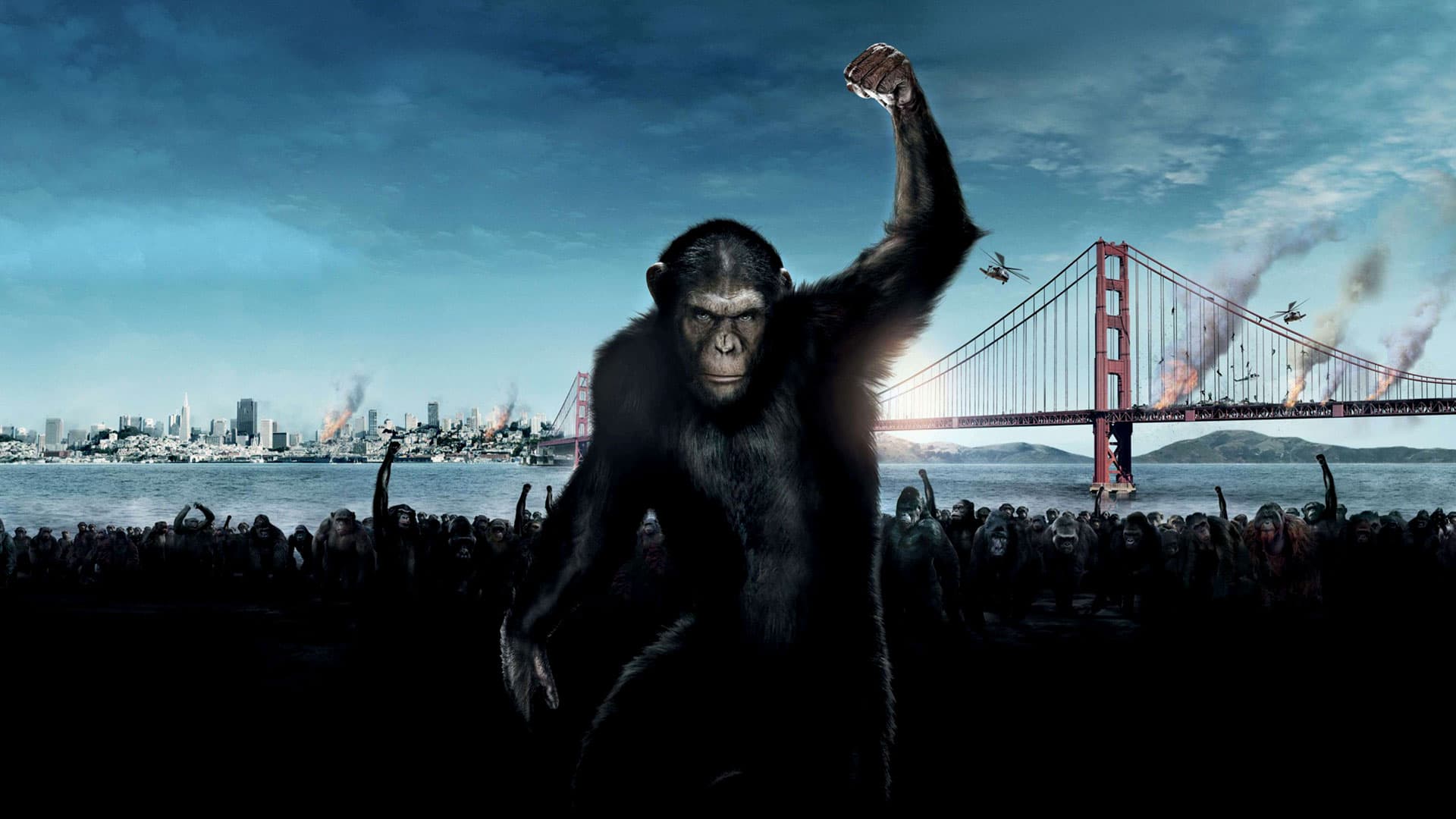
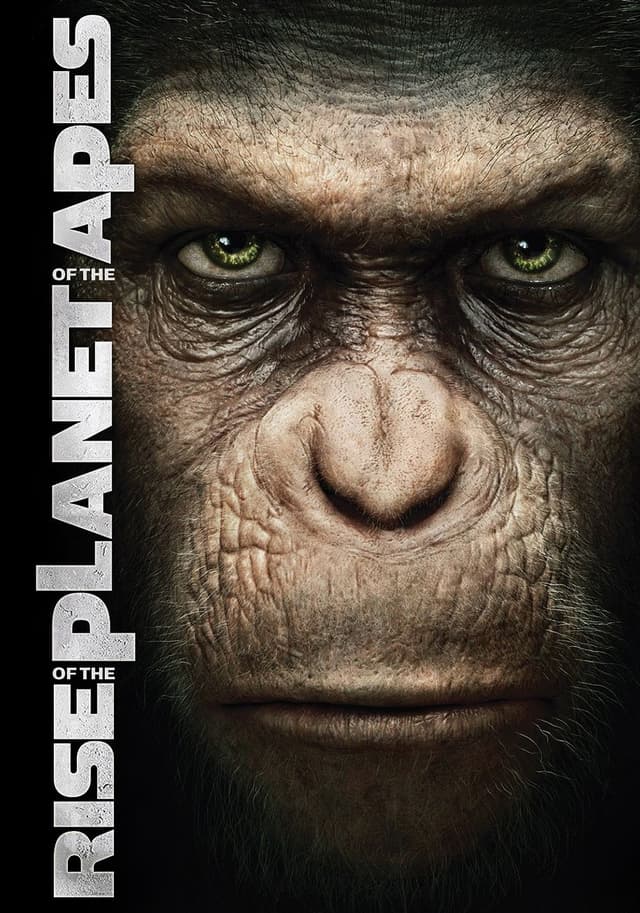
A single act of both compassion and arrogance leads to a war unlike any other - and to the Rise of the Planet of the Apes.
What is the budget of Rise of the Planet of the Apes?
"Rise of the Planet of the Apes," a thriller released in 2011, was directed by Rupert Wyatt and stars Andy Serkis, James Franco. The production budget was $93,000,000, placing it in the high-budget range for thriller productions of its era.
Key Budget Allocation Categories
While specific budget breakdowns are not publicly available, typical cost drivers for a thriller production like this include:
- Talent & Director Compensation: Thrillers depend on compelling lead performances to sustain tension, making cast compensation a primary budget concern. Directors with proven thriller credentials command premium fees.
- Cinematography & Location Photography: Thriller aesthetics demand specific visual languages , surveillance-style photography, claustrophobic framing, or expansive location work across multiple cities or countries.
- Editorial & Sound Post-Production: Precision editing , controlling information flow, building suspense through pacing, and orchestrating reveals , requires extended post-production schedules.
- Development: In 2006, screenwriter-producer Rick Jaffa was searching for a script idea.
What were the major cost factors in Rise of the Planet of the Apes?
Several factors contributed to the overall production costs of "Rise of the Planet of the Apes."
- Talent: Talent & Director Compensation is one of the primary cost drivers in thriller productions of this scale.
- Cinematography: Cinematography & Location Photography is one of the primary cost drivers in thriller productions of this scale.
- Editorial: Editorial & Sound Post-Production is one of the primary cost drivers in thriller productions of this scale.
How Does Rise of the Planet of the Apes's Budget Compare to Similar Films?
At $93,000,000, Rise of the Planet of the Apes sits in the high-budget range. Here is how it compares to productions with a similar budget:
- Jurassic Park III (2001): Budget $93,000,000, Worldwide Gross $368,780,809
- A Good Day to Die Hard (2013): Budget $92,000,000, Worldwide Gross $304,654,182
- Black Hawk Down (2001): Budget $92,000,000, Worldwide Gross $172,989,651
- Finding Nemo (2003): Budget $94,000,000, Worldwide Gross $940,335,536
- Cats (2019): Budget $95,000,000, Worldwide Gross $77,276,321
The median budget for wide-release thriller films in the 2010s ranges from $30 to 80M for mid-budget to $150M+ for tentpoles.
Rise of the Planet of the Apes Box Office Performance
"Rise of the Planet of the Apes" earned $176,760,185 domestically and $481,800,873 worldwide at the box office. Against a production budget of $93,000,000, the film performed strongly at the box office.
A film typically needs to earn approximately twice its production budget to cover marketing and distribution costs. For "Rise of the Planet of the Apes," that break-even threshold was roughly $186,000,000. With worldwide earnings of $481,800,873, the film cleared that threshold comfortably.
Box Office Breakdown
Rise of the Planet of the Apes

At 418.1%, "Rise of the Planet of the Apes" earned roughly $5.18 for every $1 invested in production.
Rise of the Planet of the Apes Production History
In 2006, screenwriter-producer Rick Jaffa was searching for a script idea. As Jaffa searched a newspaper articles clipping, one about pet primates that become troublesome to their owners and not adapted well to the human environment intrigued him. As Jaffa eventually realized it fit the Planet of the Apes series, he called his wife and screenwriting partner Amanda Silver to express his ideas of such a chimpanzee eventually starting the ape revolution, and then the couple started developing the character of Caesar.
Filming began on July 27, 2010, in Vancouver, British Columbia. Filming also happened in San Francisco, California (the primary setting of the film), [Filming] Filming began on July 27, 2010, in Vancouver, British Columbia. Filming also happened in San Francisco, California (the primary setting of the film),
The score for the film was composed by Patrick Doyle, performed by the Hollywood Studio Symphony and conducted by James Shearman. The main concern was to have the music help progress the plot in the scenes without dialogue, for instance, conveying the emotions of Caesar's relationships with Will and Charles. To turn the score into a "driving force that keeps audiences paying attention," Doyle employed an African-American chorus and focused on percussion and "low and deep" orchestra sounds.
Awards and Recognition
Nominated for 1 Oscar. 21 wins & 45 nominations total
- Saturn Award for Best Science Fiction Film (38th Saturn Awards)
- Annie Award
- Genesis Award
Critical Reception
On review aggregator Rotten Tomatoes, the film holds an 82% approval rating based on 272 reviews, with an average rating of 7.20/10. The website's critics consensus reads, "Led by Rupert Wyatt's stylish direction, some impressive special effects, and a mesmerizing performance by Andy Serkis, Rise of the Planet of the Apes breathes unlikely new life into a long-running franchise." Metacritic, which uses a weighted average, assigned the film a score of 68 out of 100 based on 39 critics, indicating "generally favorable reviews".
Frequently Asked Questions
How much did Rise of the Planet of the Apes cost to make?
The production budget was $93,000,000. Twentieth Century Fox financed and distributed the franchise reboot, with Chernin Entertainment producing under Peter Chernin. The figure reflects extensive motion-capture and CGI work delivered by Weta Digital.
How much did Rise of the Planet of the Apes earn at the box office?
The film grossed $176,760,185 domestically and $304,200,000 internationally, for a worldwide total of approximately $481,000,000. It opened to $54,807,000 on August 5, 2011, finishing first in a weekend that ended The Smurfs run at the top of the chart.
Who directed Rise of the Planet of the Apes?
Rupert Wyatt directed the film, his second feature following the British prison thriller The Escapist (2008). Wyatt left the sequel Dawn of the Planet of the Apes (2014) over scheduling disputes, with Matt Reeves taking over.
Who plays Caesar in Rise of the Planet of the Apes?
Andy Serkis plays Caesar through motion-capture performance. The role established the post-Gollum credibility of CGI-driven lead performances and was widely cited as a milestone moment for performance-capture acting. Serkis reprised Caesar in Dawn (2014) and War for the Planet of the Apes (2017).
Who stars in Rise of the Planet of the Apes besides Andy Serkis?
James Franco plays Will Rodman, a research scientist whose ALS treatment for his father accidentally creates Caesar. Supporting cast includes Freida Pinto, John Lithgow, Brian Cox, Tom Felton, and David Oyelowo. Tom Felton delivers the franchise-defining line "Get your stinking paws off me, you damn dirty ape."
Where was Rise of the Planet of the Apes filmed?
Principal photography took place in Vancouver, British Columbia, taking advantage of the province's Film Incentive BC tax credit. Vancouver doubled for San Francisco throughout the production, with the climactic Golden Gate Bridge sequence executed as a complete digital build by Weta Digital in Wellington, New Zealand.
What did critics think of Rise of the Planet of the Apes?
The film received strong reviews, with an 82% approval rating on Rotten Tomatoes and a 68 out of 100 score on Metacritic. Critics universally praised Andy Serkis' motion-capture performance and Weta Digital's photoreal ape work, with multiple outlets calling for an Oscar performance category for motion capture.
Was Rise of the Planet of the Apes profitable?
Yes. Against the $93,000,000 production budget and an estimated $90,000,000 in marketing spend, the worldwide gross of $481,000,000 produced a substantial theatrical profit. The film's success rebooted a dormant Twentieth Century Fox franchise that has now produced four sequels.
Did Rise of the Planet of the Apes win any awards?
The film received a BAFTA Award nomination and won the Saturn Award for Best Science Fiction Film. Andy Serkis was widely advocated for an Oscar nomination for Best Supporting Actor but was not nominated, prompting renewed industry debate over performance-capture eligibility.
How does Rise of the Planet of the Apes compare to the original 1968 film?
The 2011 reboot grossed $481,000,000 worldwide against the original Planet of the Apes (1968, $5,800,000 budget, approximately $33,000,000 in 1968 dollars worldwide). Adjusting for inflation, the reboot remained the higher-grossing entry. The franchise has subsequently produced Dawn (2014), War (2017), and Kingdom of the Planet of the Apes (2024).
Official Trailer
Build budgets like this one in Saturation
Start from an industry-standard feature film template, import the schedule and rates you already have, and let the cost report keep itself current as you spend. Real-time collaboration, no spreadsheets.