Z Budget
Updated
Synopsis
A prominent politician is murdered during a demonstration. The government and army are trying to suppress the truth, but a tenacious magistrate is determined to not to let them get away with it.
What Is the Budget of Z?
The production budget for Z (1969) was approximately $500,000, funded as a French-Algerian co-production between Reggane Films and O.N.C.I.C. (the Algerian national cinema center). Director Costa-Gavras secured financing outside the traditional French studio system, partly because the film's politically explosive subject matter made major studios reluctant to back it. The modest budget reflected the realities of independent European filmmaking in the late 1960s, where lean productions relied on creative resourcefulness rather than lavish spending.
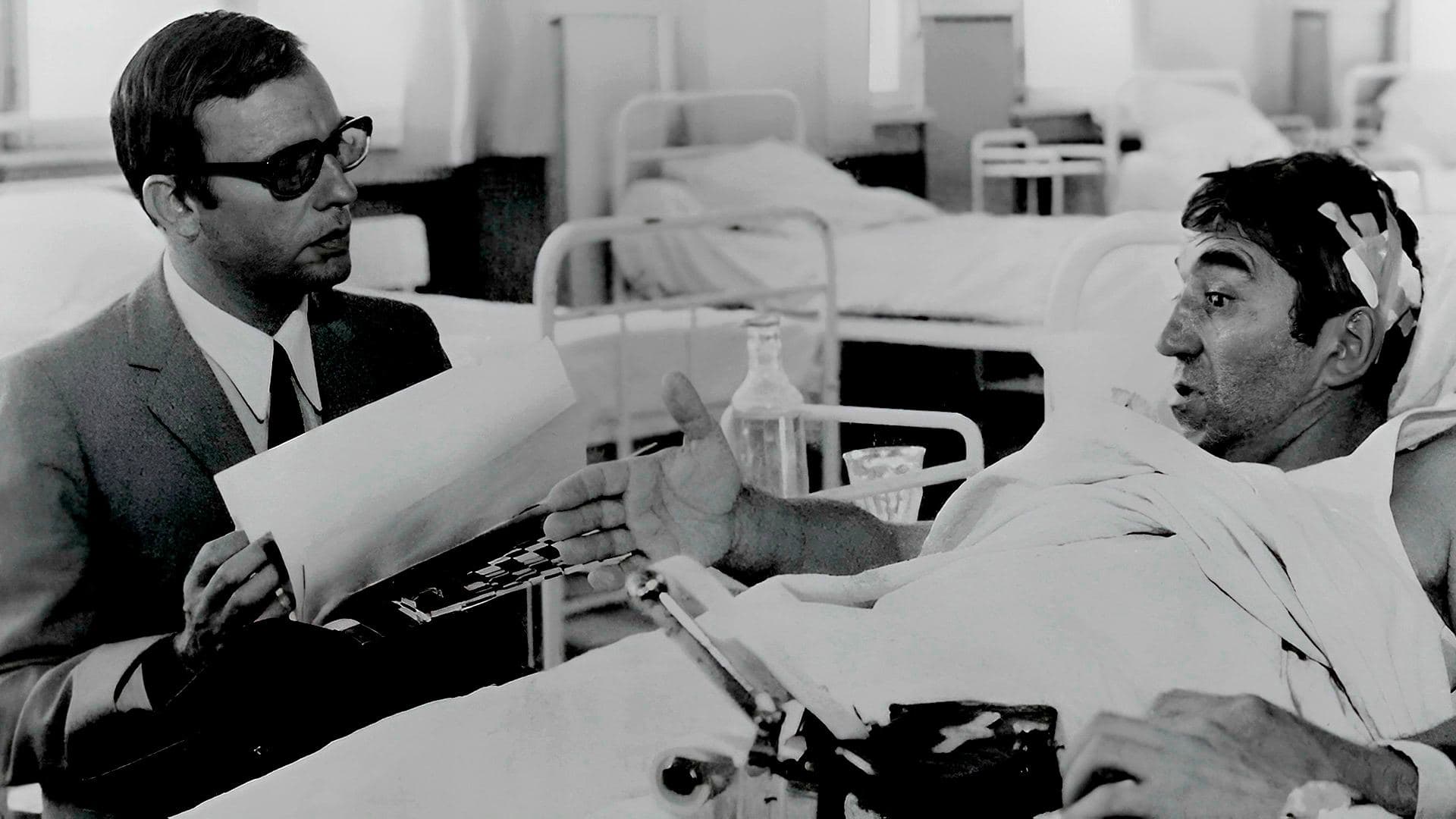
Despite the tight purse, Costa-Gavras assembled a cast of top-tier French and Greek talent, including Yves Montand, Irene Papas, and Jean-Louis Trintignant, all of whom worked for reduced fees because they believed in the project's political urgency. Cinematographer Raoul Coutard, already legendary for his work with Godard and Truffaut, brought a raw, documentary-inflected visual style that turned the budget constraint into an aesthetic advantage.
Key Budget Allocation Categories
- Cast Salaries accounted for a significant portion of the budget, though the ensemble accepted below-market rates. Yves Montand, Irene Papas, Jean-Louis Trintignant, and Jacques Perrin all committed to the project out of political conviction rather than financial incentive.
- Location Shooting took place primarily in Algiers, which doubled for the unnamed Mediterranean country in the story. Filming in Algeria kept costs lower than shooting in France or Greece while providing an authentic atmosphere of political tension.
- Cinematography and Equipment costs were managed by Raoul Coutard's preference for handheld cameras and natural lighting. His approach, honed on French New Wave productions, eliminated the need for expensive lighting rigs and elaborate setups.
- Music and Score presented a unique situation: composer Mikis Theodorakis wrote the score while under house arrest by the Greek military junta. His music was smuggled out of Greece, making its creation essentially cost-free to the production but invaluable to the film's emotional power.
- Post-Production and Editing was handled efficiently in Paris. Editor Francoise Bonnot shaped the film's propulsive narrative rhythm, cutting between the political assassination, the investigation, and the courtroom proceedings with a pace that would become a template for the genre.
- Production Design relied on real locations in Algiers rather than constructed sets, keeping art department costs minimal. The city's architecture and street life provided a convincing stand-in for a Greek urban environment under authoritarian control.
How Does Z's Budget Compare to Similar Films?
Z was produced on a fraction of what other political and thriller films of its era cost, yet it outperformed most of them at the box office and award podiums.
- The Battle of Algiers (1966) had an estimated budget of $800,000 and grossed roughly $2 million worldwide. Both films share Algerian production roots and documentary-style cinematography, but Z achieved far greater commercial penetration in the American market.
- The French Connection (1971) cost approximately $1.8 million and grossed $75 million worldwide. William Friedkin has acknowledged Z as a direct influence on his film's handheld chase sequences and procedural tension.
- All the President's Men (1976) was budgeted at $8.5 million and earned $70 million domestically. As a Hollywood studio production, it had seventeen times Z's budget but tackled a comparable theme of institutional corruption exposed through dogged investigation.
- Missing (1982) cost approximately $9 million and earned $14 million domestically. Costa-Gavras's own later English-language political thriller demonstrates how his budgets grew once Hollywood recognized his commercial viability, a reputation built almost entirely on Z's success.
- The Conformist (1970) had a budget of roughly $750,000 and achieved modest theatrical returns. Bertolucci's politically charged Italian drama shared Z's European art-house ambitions but lacked the pulse-pounding thriller structure that made Z accessible to mainstream audiences.
Z Box Office Performance
Z became one of the most commercially successful foreign-language films ever released in the United States at that time. The film earned approximately $17 million domestically during its American theatrical run, a staggering figure for a French-language political thriller released without major studio marketing support. Worldwide grosses pushed the total significantly higher, though precise international figures from this era are difficult to verify.
With a production budget of $500,000, the break-even threshold (accounting for prints and advertising) sat at roughly $1 million. Z surpassed that figure within its first weeks of limited release in France. The return on investment was extraordinary: using the domestic gross alone, ROI calculates to approximately (17,000,000 - 500,000) / 500,000 x 100 = 3,300%. The film's commercial performance proved that politically charged foreign-language cinema could find a mass audience in the American market, a lesson distributors would remember for decades.
Cinema V handled the American distribution, opening the film in select cities before expanding to wider release as word of mouth and critical acclaim built momentum. The Oscar nominations, including the rare Best Picture nod for a foreign-language film, further extended the theatrical window and drove additional ticket sales well into 1970.
Z Production History
The story behind Z begins with the real-world assassination of Greek politician Grigoris Lambrakis in Thessaloniki on May 22, 1963. Lambrakis, a left-wing pacifist member of parliament, was struck by a delivery truck driven by right-wing extremists after a peace rally. The subsequent investigation revealed that the killing was orchestrated with the complicity of police and military officials. Greek novelist Vassilis Vassilikos fictionalized these events in his 1966 novel "Z," which Costa-Gavras optioned almost immediately.
Costa-Gavras, a Greek-born director working in France, had personal stakes in the material. He had left Greece as a young man partly because his father's leftist political activities made the family targets of state harassment. Securing financing proved difficult; French studios considered the subject too controversial and commercially risky. Producer Jacques Perrin (who also played the journalist in the film) helped assemble the independent funding through Reggane Films and the Algerian national cinema center.
Principal photography took place in Algiers during the spring of 1968, coincidentally overlapping with the global political upheavals of that year. The Algerian government welcomed the production because the film's anti-authoritarian themes aligned with their own revolutionary narrative. Raoul Coutard shot on location using a mixture of handheld and steadied camera work, creating the urgent, almost journalistic visual texture that became the film's signature.
The score by Mikis Theodorakis carried its own dramatic backstory. The composer had been arrested by the Greek military junta in 1967, and his music was banned throughout Greece. He composed the score for Z while under house arrest, and the recordings were smuggled out of the country to reach the production team in Paris. The driving, rhythmic compositions became inseparable from the film's identity.
Editing by Francoise Bonnot proved crucial to the film's impact. She structured the narrative as a procedural thriller that builds from the assassination through the investigation to a courtroom climax, intercutting timelines with a precision that was innovative for its era. Her work would earn one of the film's two Academy Awards.
Awards and Recognition
Z received extraordinary recognition across the major international film institutions, cementing its place as one of the most decorated political films in cinema history.
At the 42nd Academy Awards, Z won Best Foreign Language Film and Best Film Editing (Francoise Bonnot). It was also nominated for Best Picture and Best Director, making it one of the very few foreign-language films in Oscar history to compete in the top category. The Best Picture nomination was remarkable given that foreign-language films were generally segregated into their own category and rarely crossed over.
At the 1969 Cannes Film Festival, Z won the Jury Prize and also received the Best Actor award for Jean-Louis Trintignant's portrayal of the investigating magistrate. The Cannes recognition preceded the Oscar campaign and helped establish the film's international reputation.
The film also won the BAFTA Award for Best Film Music for Mikis Theodorakis's score, the Golden Globe for Best Foreign Language Film, and the New York Film Critics Circle Award for Best Film. Its sweep across American, British, and European award bodies was virtually unprecedented for a non-English-language film in 1969.
Critical Reception
Z holds a 92% approval rating on Rotten Tomatoes, reflecting the near-universal critical admiration the film has maintained for over five decades. Upon its initial release, critics recognized it as something genuinely new: a film that fused the formal rigor of European art cinema with the propulsive energy of a Hollywood thriller.
Roger Ebert gave the film four stars, writing that Costa-Gavras had created "a film of such power and conviction that it becomes a thriller in spite of its political content, rather than because of it." Pauline Kael praised the film's refusal to simplify its politics into hero-and-villain archetypes, noting that the investigation scenes carried genuine intellectual weight alongside their suspense.
The film's influence on subsequent cinema has been widely acknowledged by critics and filmmakers alike. The procedural structure, handheld cinematography, and refusal to offer a comforting resolution became the template for an entire genre of political thrillers. Films from The Parallax View (1974) to The Constant Gardener (2005) owe direct debts to the grammar Z established. Costa-Gavras essentially invented the modern political thriller, proving that cinema could engage with state violence and institutional corruption while still functioning as gripping popular entertainment.
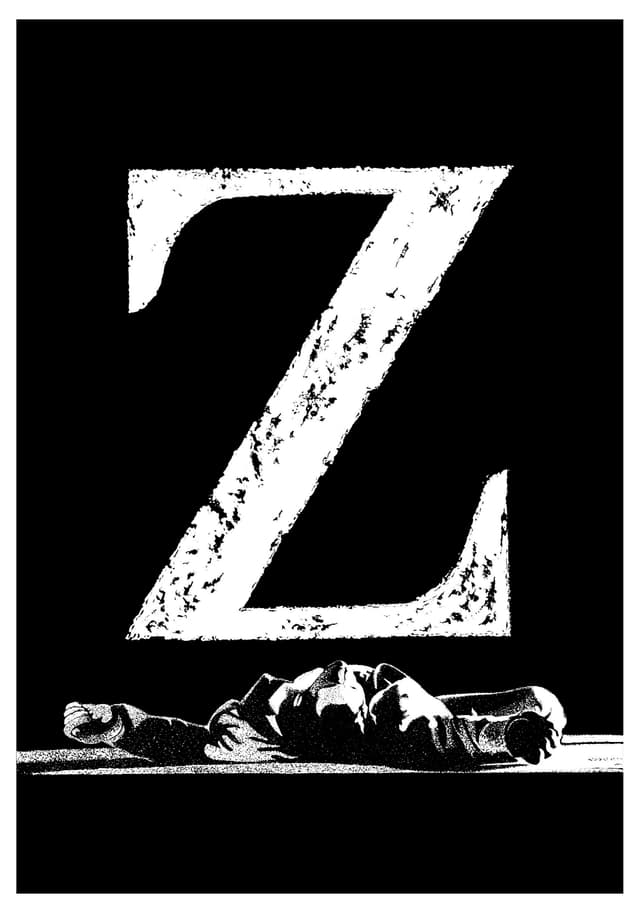
Contemporary reassessments have only strengthened the film's reputation. Critics have noted how Z's themes of state-sponsored violence, media complicity, and the fragility of democratic institutions feel persistently relevant. The film's final title card, listing everything banned by the Greek junta (including the letter Z itself, which in Greek means "he lives"), remains one of cinema's most chilling political statements.
Frequently Asked Questions
How much did it cost to make Z (1969)?
The production budget has not been publicly disclosed.
How much did Z (1969) earn at the box office?
Z grossed $17,300,000 domestic, $-17,216,695 international, totaling $83,305 worldwide.
Was Z (1969) profitable?
Insufficient data for a profitability assessment.
What were the biggest costs in producing Z?
Specific cost breakdowns are not publicly available.
How does Z's budget compare to similar thriller films?
Without a confirmed budget, comparison is not possible.
Did Z (1969) go over budget?
There are no widely reported accounts of significant budget overruns for this production. However, studios rarely disclose precise budget overrun figures publicly. The reported production budget reflects the final estimated cost.
What awards did Z (1969) win?
Won 2 Oscars. 12 wins & 13 nominations total.
Who directed Z and who were the key crew members?
Directed by Costa-Gavras, written by Jorge Semprún, Costa-Gavras, shot by Raoul Coutard, with music by Míkis Theodorakis, edited by Françoise Bonnot.
Where was Z filmed?
Z was filmed in Algeria, France.
Filmmakers
Z

Official Trailer
Build budgets like this one in Saturation
Start from an industry-standard feature film template, import the schedule and rates you already have, and let the cost report keep itself current as you spend. Real-time collaboration, no spreadsheets.