Yojimbo Budget
Updated
Synopsis
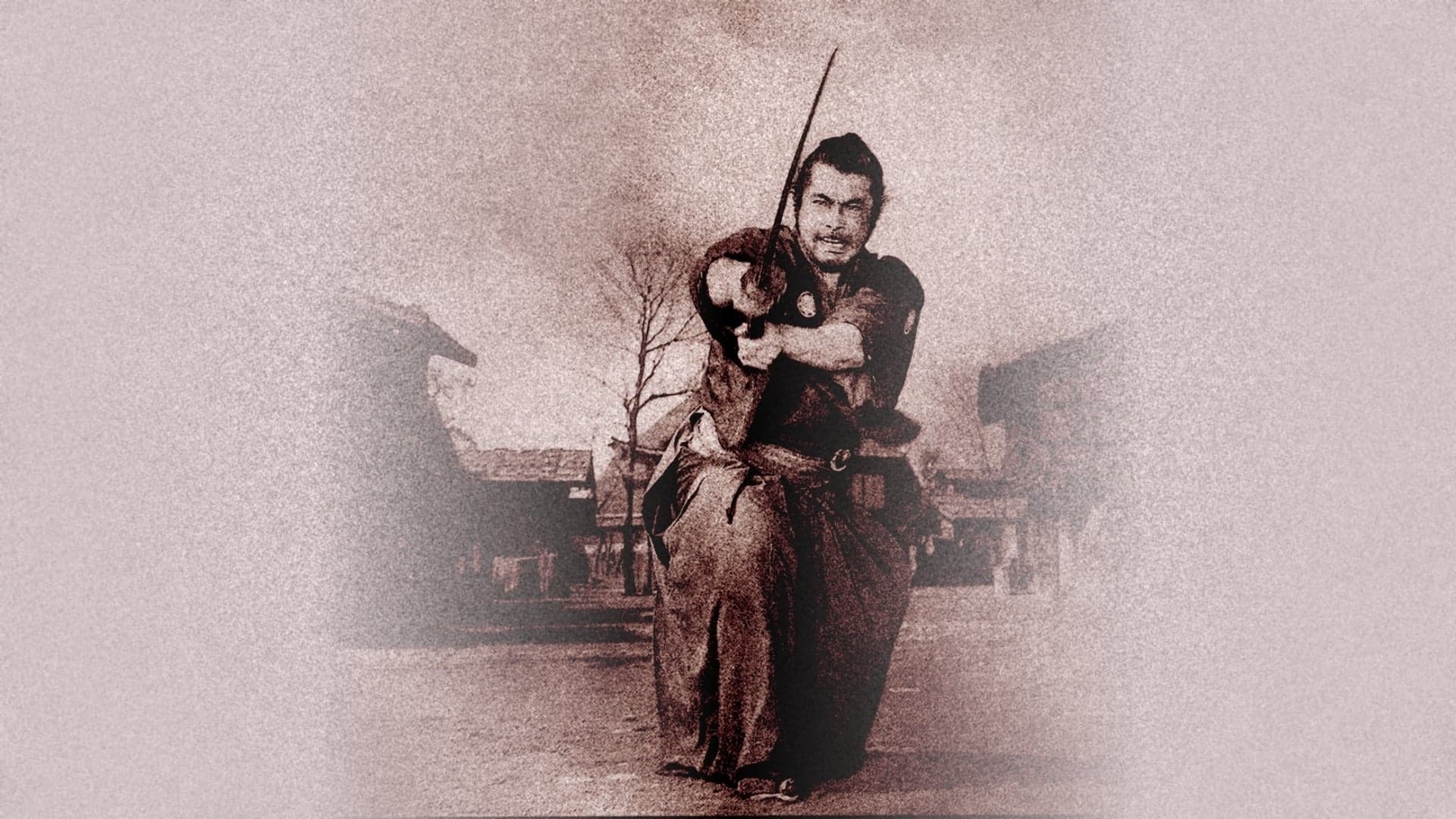
A nameless ronin, or samurai with no master, enters a small village in feudal Japan where two rival businessmen are struggling for control of the local gambling trade. Taking the name Sanjuro Kuwabatake, the ronin convinces both silk merchant Tazaemon and sake merchant Tokuemon to hire him as a personal bodyguard, then artfully sets in motion a full-scale gang war between the two ambitious and unscrupulous men.
What Is the Budget of Yojimbo?
The production budget for Yojimbo (1961) was approximately ¥100 million, equivalent to roughly $278,000 USD at 1961 exchange rates. While modest by Hollywood standards of the era, this figure represented a substantial investment for Toho Studios and the Japanese film industry at the time. Director Akira Kurosawa commanded significant resources for his projects, and Toho recognized that his films consistently delivered strong commercial returns both domestically and through festival exposure.
The budget reflected Kurosawa's meticulous approach to production design and his insistence on extended rehearsal periods with his cast. Toho allocated premium resources knowing that a Kurosawa samurai film starring Toshiro Mifune was virtually guaranteed to become one of the year's top-grossing Japanese releases.
Key Budget Allocation Categories
- Talent and Direction Kurosawa served as both writer and director, commanding Toho's top creative fee. Toshiro Mifune, Japan's biggest international star, anchored the cast alongside veteran character actors Tatsuya Nakadai, Takashi Shimura, and Kamatari Fujiwara.
- Production Design and Set Construction The film's fictional post town required extensive set building at Toho Studios. Art director Yoshiro Muraki constructed a full-scale town street designed to convey decay and moral emptiness, with every building weathered and deliberately dilapidated.
- Cinematography Kazuo Miyagawa, one of Japan's most celebrated cinematographers (known for Rashomon and later Kagemusha), brought a widescreen compositional style that required careful lighting setups for the dusty, wind-swept exteriors.
- Musical Score Composer Masaru Sato created an unconventional score blending jazz-influenced percussion with traditional Japanese instrumentation, a distinctive sound that became one of the film's most recognizable elements.
- Costumes and Period Detail The Edo-period setting demanded historically informed wardrobe and props. Kurosawa was known for requiring costumes to be pre-worn and weathered before filming to achieve an authentic lived-in appearance.
- Extended Shooting Schedule Kurosawa's reputation for perfectionism meant longer shooting days and more takes than a typical Toho production. His willingness to wait for ideal weather conditions, particularly the film's signature wind and dust effects, added to the schedule.
How Does Yojimbo's Budget Compare to Similar Films?
Comparing Yojimbo's budget against other period action films of the late 1950s and early 1960s reveals where it sat in the landscape of international cinema production costs.
- Seven Samurai (1954) Budget ¥125 million | Domestic gross undisclosed but massive. Kurosawa's earlier epic ran significantly over budget and nearly bankrupted Toho, which made the studio more cautious but still willing to fund his subsequent projects at a premium.
- The Hidden Fortress (1958) Budget ¥110 million | Strong domestic and international returns. This film directly preceded Yojimbo in Kurosawa's filmography and proved the commercial viability of his widescreen samurai adventures, helping secure Yojimbo's financing.
- A Fistful of Dollars (1964) Budget $200,000 | Worldwide $14.5 million. Sergio Leone's unauthorized remake of Yojimbo was produced on an even smaller budget in Spain and became a global phenomenon, demonstrating just how influential Kurosawa's storytelling template was.
- Harakiri (1962) Budget undisclosed | Masaki Kobayashi's samurai drama was produced at Shochiku Studios on a comparable scale to Yojimbo and competed at the same festivals, showing that Japanese period films could achieve both critical prestige and commercial success.
- Sanjuro (1962) Budget ¥90 million | Strong domestic returns. Kurosawa's direct sequel reused much of the same creative team at a slightly lower cost, benefiting from established production workflows and Mifune's proven star power in the role.
Yojimbo Box Office Performance
Yojimbo was a massive commercial hit in Japan upon its release in April 1961. The film became one of the highest-grossing Japanese films of the year, cementing Kurosawa's status as the country's most bankable director. Toho's investment was recovered many times over through domestic theatrical distribution alone.
International distribution in 1961 was limited compared to modern global release strategies. The film played at select art-house theaters in the United States and Europe, where it built a devoted following among cinephiles and critics. Its commercial reach expanded significantly through re-releases in later decades, particularly after the success of its unofficial remakes brought wider attention to the original.
Using the standard break-even threshold of roughly 2x the production budget (to account for prints and advertising), Yojimbo needed approximately ¥200 million to reach profitability. Japanese domestic returns alone cleared this threshold comfortably, making the film a strong financial success for Toho. The studio greenlit the sequel Sanjuro within months of Yojimbo's release, a direct indicator of the original's commercial performance.
Yojimbo Production History
Kurosawa developed the screenplay for Yojimbo after studying Dashiell Hammett's 1929 novel Red Harvest and the broader tradition of American hardboiled fiction. The core premise of a lone outsider playing two rival factions against each other was transplanted from a Prohibition-era American setting to Japan's turbulent late Edo period. Kurosawa wrote the script with Ryuzo Kikushima and Hideo Oguni, his frequent collaborators.
The role of the unnamed ronin was written specifically for Toshiro Mifune, who had starred in nearly every Kurosawa film since Drunken Angel in 1948. Mifune's physical comedy, improvisational instincts, and screen presence defined the character's swagger. The supporting cast included Tatsuya Nakadai as the gun-wielding Unosuke, in what became one of cinema's great hero-villain pairings.
Principal photography took place at Toho Studios in Tokyo and on location. Kurosawa worked closely with cinematographer Kazuo Miyagawa to develop the film's distinctive visual language: wide compositions that emphasized the emptiness of the town, punctuated by sudden bursts of violence. The director famously used wind machines and dust effects to create the film's oppressive atmosphere, sometimes halting production to wait for the right natural wind conditions.
The editing process was characteristically thorough. Kurosawa, who edited his own films, crafted the action sequences with a rhythmic precision that influenced decades of filmmakers. The final cut ran 110 minutes, tight and propulsive compared to the longer running times of his earlier epics.
Yojimbo's influence extended far beyond Japan. Sergio Leone adapted its plot almost scene-for-scene for A Fistful of Dollars (1964) without securing rights, leading to a lawsuit that Toho won. Leone's film launched the Spaghetti Western genre and made Clint Eastwood an international star, all built on Kurosawa's narrative framework. Walter Hill later produced an authorized remake, Last Man Standing (1996), set during Prohibition, closing the loop back to the Hammett source material that inspired Kurosawa in the first place.
Awards and Recognition
Yojimbo premiered at the Venice Film Festival in 1961, where it competed for the Golden Lion and received significant critical attention. The film's festival run helped establish it as one of the year's most important international releases and reinforced Kurosawa's reputation as a master of world cinema.
In Japan, the film won numerous domestic awards and was recognized by the Kinema Junpo critics' poll, one of the most prestigious film rankings in the country. Toshiro Mifune's performance was singled out as one of his finest, blending physical comedy with genuine menace in a way that created an entirely new archetype for action cinema.
Over the decades, Yojimbo has appeared consistently on greatest-films lists worldwide. It is regularly cited as one of the most influential action films ever made, with its lone-warrior narrative template replicated across genres from Westerns to crime thrillers to science fiction. The film's cultural footprint extends well beyond cinema into television, video games, and graphic novels.
Critical Reception
Yojimbo holds a 97% approval rating on Rotten Tomatoes, reflecting near-universal critical acclaim across more than six decades of reviews. Critics have praised the film for its darkly comic tone, Mifune's iconic performance, and Kurosawa's masterful control of pacing and composition.
Contemporary reviews in 1961 recognized the film as a departure from Kurosawa's more solemn earlier works. The director's injection of black humor into the samurai genre surprised audiences and critics alike. Bosley Crowther of The New York Times praised the film's "violence and crackling drama," while Japanese critics noted its irreverent take on period film conventions.
Modern critical assessment has only elevated Yojimbo's standing. Film scholars highlight its innovative use of widescreen cinematography, its economy of storytelling, and its creation of the "man with no name" archetype that became a cornerstone of global action cinema. The film is widely studied in film schools as a masterclass in visual storytelling, character economy, and genre reinvention. Its influence on filmmakers from Sergio Leone to the Coen Brothers to Quentin Tarantino ensures its place in the canon of essential cinema.
Frequently Asked Questions
How much did it cost to make Yojimbo (1961)?
The production budget has not been publicly disclosed.
How much did Yojimbo (1961) earn at the box office?
Box office figures are not publicly available.
Was Yojimbo (1961) profitable?
Insufficient data for a profitability assessment.
What were the biggest costs in producing Yojimbo?
Specific cost breakdowns are not publicly available.
How does Yojimbo's budget compare to similar drama films?
Without a confirmed budget, comparison is not possible.
Did Yojimbo (1961) go over budget?
There are no widely reported accounts of significant budget overruns for this production. However, studios rarely disclose precise budget overrun figures publicly. The reported production budget reflects the final estimated cost.
What awards did Yojimbo (1961) win?
Nominated for 1 Oscar. 5 wins & 2 nominations total.
Who directed Yojimbo and who were the key crew members?
Directed by Akira Kurosawa, written by Ryuzo Kikushima, Akira Kurosawa, shot by Kazuo Miyagawa, with music by Masaru Satō, edited by Akira Kurosawa.
Where was Yojimbo filmed?
Yojimbo was filmed in Japan. After Kurosawa scolded Mifune for arriving late to the set one morning, Mifune made it a point to be ready on set at 6:00a.m. every day in full makeup and costume for the rest of the film's shooting schedule. This was the second film where director Akira Kurosawa worked with cinematographer Kazuo Miyagawa (the first being Rashomon in 1950). The sword instruction and choreography for the film were done by Yoshio Sugino of the Tenshin Shōden Katori Shintō-ryū and Ryū Kuze. [Filming] After Kurosawa scolded Mifune for arriving late to the set one morning, Mifune made it a point to be ready on set at 6:00a.m.
Filmmakers
Yojimbo

Official Trailer
Build budgets like this one in Saturation
Start from an industry-standard feature film template, import the schedule and rates you already have, and let the cost report keep itself current as you spend. Real-time collaboration, no spreadsheets.